

Executive Overview
The video game industry is notoriously quick to write off its legends. In recent years, legendary developer BioWare—once heralded as the undisputed titan of single-player role-playing games (RPGs)—has found itself under an unprecedented microscope. Following a turbulent era defined by the critical missteps of Mass Effect: Andromeda and the live-service disaster of Anthem, alongside the polarising, mixed reception of Dragon Age: The Veilguard, public confidence in the studio has undeniably wavered. Whispers and outright declarations have echoed across gaming forums and analysis firms alike, suggesting that the upcoming, highly anticipated next installment in the Mass Effect franchise might stumble, or perhaps fail to materialize entirely under corporate restructuring.
Yet, amidst this wave of industry cynicism, voices from BioWare’s golden age are stepping forward to push back against the narrative. Armando Troisi, a veteran cinematic designer who helped shape the original Mass Effect trilogy and served as the lead cinematic designer on the landmark Mass Effect 2, has offered a stout defense of his former studio. In a recent interview, Troisi argued that external stakeholders, corporate mandates, and reactionary skepticism are missing the forest for the trees. According to Troisi, when BioWare is allowed to focus on what it does best—crafting deep, interactive, narrative-driven single-player adventures anchored by robust combat and progression systems—there is simply no studio on earth that can touch them.
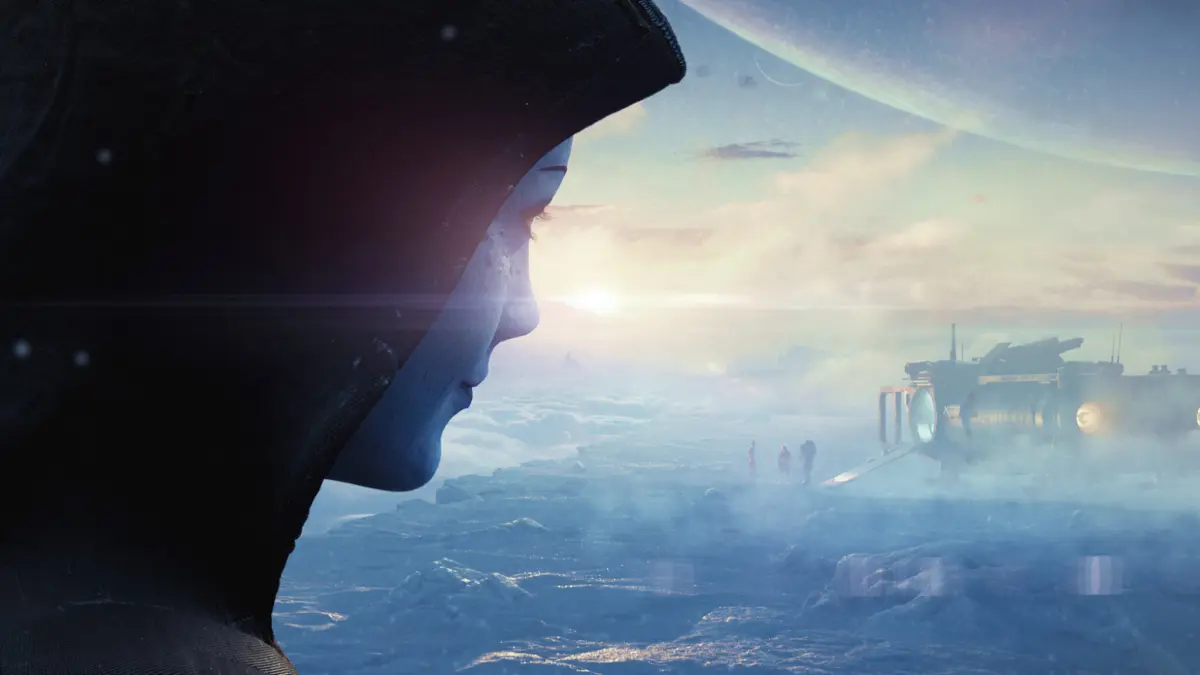
As BioWare presses forward into development on Mass Effect 4, the core question facing the studio is not whether its talent has vanished, but whether corporate leadership will grant the team the autonomy necessary to recapture its former glory. This comprehensive report examines the current state of BioWare, the legacy of its creative missteps, the pressures of the modern live-service era, and why industry veterans remain firmly convinced that the studio’s best days may still lie ahead.
Detailed Chronology: From Golden Age Titans to Corporate Crossroads
To understand the skepticism surrounding the next Mass Effect, one must trace the evolutionary and operational trajectory of BioWare over the past decade and a half. The studio’s journey is a tale of soaring ambitions, creative friction, and the perilous transition from a beloved independent-spirited RPG powerhouse to a cog in Electronic Arts’ vast corporate machinery.
The Pinnacle of Cinematic RPGs (2007–2012)
During the late 2000s and early 2010s, BioWare set the gold standard for storytelling in interactive entertainment. The release of the original Mass Effect in 2007 established a rich, sci-fi universe defined by hard choices, cinematic pacing, and memorable companion characters. This momentum culminated in Mass Effect 2 (2010), widely regarded as one of the greatest video games of all time, and Mass Effect 3 (2012). Concurrently, the studio dominated the fantasy realm with Dragon Age: Origins (2009) and Dragon Age II (2011).
During this era, the creative vision was remarkably clear. As Armando Troisi notes, the studio operated under a well-defined "BioWare formula." Teams iterated on established systems, focusing intensely on cinematic direction, writer-driven branching narratives, and satisfying tactical progression.
The Shift Toward Live-Service and Fractured Development (2013–2019)
Troubled waters began to surface with Mass Effect: Andromeda (2017). Developed largely by BioWare’s Montreal studio—the team previously responsible for Mass Effect 3’s multiplayer suite—Andromeda suffered from a disjointed production cycle, engine transitions (shifting to EA’s Frostbite engine), and a departure from the tonal gravity of the original trilogy. While mechanically fluid, the game launched in a famously buggy state and failed to resonate with fans of the franchise’s deep lore and mature character interactions.
Worse was yet to come with Anthem (2019). Commissioned in response to the booming financial success of persistent online titles like Destiny, Anthem represented a radical and uncomfortable pivot for a studio built on single-player narratives. Stripped of its core strengths, BioWare spent years struggling to define Anthem‘s gameplay loop on the Frostbite engine, resulting in a rushed crunch period and a critically panned release that ultimately failed to capture an audience, dealing a severe blow to the studio’s reputation.
The Long Shadow of The Veilguard and Modern Realities (2020–Present)
The development cycle of Dragon Age: The Veilguard further highlighted BioWare’s internal struggles during the modern corporate era. Originally conceived as a live-service multiplayer game, The Veilguard underwent a significant, late-stage pivot back to its single-player roots in 2021 following the disastrous trajectory of Anthem and the commercial failure of other industry live-service experiments.
While The Veilguard eventually launched as a single-player RPG, its lengthy, multi-reboot development cycle left visible scars. The game received a divisive reception from both critics and long-time fans, fueling ongoing debates about whether modern BioWare could still deliver the magic of its past masterpieces. Today, as the studio pours its resources into the next chapter of Mass Effect, it does so under the heavy gaze of industry analysts, skeptical investors, and a fanbase desperate for redemption.
Supporting Context & Metrics: The Anatomy of BioWare’s Struggles
The challenges facing BioWare are not isolated incidents; rather, they reflect broader systemic issues within AAA game development, particularly under major publishing conglomerates.
The Frostbite Engine Hurdle
One of the most frequently cited technical bottlenecks in BioWare’s recent history has been Electronic Arts’ mandate to utilize the Frostbite game engine across its internal studios. Originally built by DICE for first-person shooters like Battlefield, Frostbite lacked native support for the complex save states, inventory management, branching dialogue trees, and third-person RPG mechanics required by BioWare titles. Forcing developers to build custom RPG tools on top of an ill-fitting engine resulted in wasted man-hours, technical debt, and immense staff burnout.

The Siren Song of Live-Service Economics
The push toward live-service games—driven by the promise of recurring player spending and long-term monetization—fundamentally disrupted BioWare’s creative DNA. Both Anthem and the early iterations of Dragon Age: The Veilguard demonstrate the friction that occurs when story-driven developers are ordered to chase market trends.
| Project | Original Intent | Pivot / Outcome | Critical/Public Reception |
|---|---|---|---|
| Mass Effect: Andromeda (2017) | Open-world exploration RPG | Developed by the ME3 multiplayer team; launched with technical issues | Mixed to negative; put the franchise on ice |
| Anthem (2019) | Co-op action live-service game | Rushed development cycle; stripped of core RPG identity | Widely considered a critical and commercial disappointment |
| Dragon Age: The Veilguard (2024) | Live-service multiplayer game | Pivoted back to single-player RPG in 2021 | Divisive reception; highlighted years of structural redirection |
| Next Mass Effect (TBD) | Single-player narrative-driven RPG | Led by veteran "OG" developers | Highly anticipated, yet met with acute industry skepticism |
As market data over the last several years has shown, the live-service bubble has burst for many traditional publishers, leading to massive layoffs and cancelled projects industry-wide. BioWare’s return to its single-player roots for the upcoming Mass Effect aligns with where the studio’s true competencies lie, but repairing broken trust remains a monumental hurdle.
Official Statements & Veteran Perspectives
Despite the pessimistic outlook voiced by some market analysts—with some former industry managers publicly stating they will "believe it when I see it" regarding Mass Effect 4‘s eventual release—industry veterans maintain that the underlying creative talent at BioWare remains formidable.
Armando Troisi’s remarks to FRVR cut straight to the heart of the matter. Troisi emphasizes that the primary obstacle to BioWare’s success is not a lack of talent or institutional knowledge, but rather external interference and shifting corporate mandates:
"I think BioWare, when they break it down and do that singleplayer, interactive narrative-driven, deep combat, progression-driven game, really, there’s nobody that can touch them," Troisi stated. "It’s kind of like the Chief, it’s like going on a walkabout and finding themselves and coming back. I think BioWare can do it if we just leave them alone to do what they do best."
Troisi reflects on the clarity of vision that defined his time at the studio, contrasting it with the chaotic corporate pressures of the live-service boom:
"The vision was always clear. There was a BioWare formula and they were going to iterate on that formula and keep turning out best-in-class cinematic RPGs and that’s basically what the mandate was. And then they had to live through the live service era—which is still happening but is maybe not as prevalent—and we’re all beholden to companies and stakeholders and all the rest of that."
Crucially, Troisi points out that the upcoming Mass Effect project still boasts a significant contingent of industry veterans—the "OGs" who built the foundations of the franchise. In his view, these developers do not need outside advice or corporate micromanagement:
"There are a lot of people working on it who were responsible for the original games, and they’re the OGs, you know? I don’t think there’s anything that I could tell them that they don’t know what to do. What they actually need is for people to get out of the way and let them get on with it. I think that they can do it. I’m rooting for them."
Future Outlook: Can BioWare Stick the Landing?
As development on the next Mass Effect continues behind closed doors at BioWare’s Edmonton headquarters, the stakes could not be higher. The project represents a critical inflection point not just for the studio, but for the viability of high-budget, single-player narrative RPGs within Electronic Arts’ portfolio.
What BioWare Must Do to Succeed
- Embrace Core Competencies: The studio must lean entirely into what made the original trilogy timeless: intricate character writing, meaningful moral choices, cinematic presentation, and tactical squad-based combat.
- Resist Trend-Chasing: The disastrous experiments with multiplayer-first designs (Andromeda) and live-service paradigms (Anthem, early Veilguard) proved that trying to capture fleeting market trends dilutes BioWare’s unique artistic voice.
- Corporate Autonomy: As Armando Troisi stresses, EA management must afford the development team the time, creative freedom, and technical stability needed to craft a cohesive vision without disruptive mid-cycle reboots.
The Verdict
The gaming landscape has changed dramatically since Commander Shepard last saved the galaxy in 2012. Players demand higher fidelity, more reactive worlds, and deeper systemic complexity. While skepticism surrounding BioWare is understandable given its recent misfires, writing off a studio harboring decades of collective RPG-design wisdom would be premature.
If corporate stakeholders heed the advice of veterans like Troisi and "get out of the way," BioWare just might find its way home—delivering a sci-fi epic that proves the architects of the Milky Way still know how to command the stars.









Belum ada komentar. Jadilah yang pertama berkomentar!