

Executive Overview
The concept of the afterlife has long served as a cultural mirror, reflecting the fears, values, and administrative predilections of the societies that conceive it. While Western paradigms of hell often center on an absolute, fire-and-brimstone eternity governed by a singular adversarial force, Japan’s historical and religious architecture presents a starkly different panorama. Known locally as Jigoku, the Japanese Buddhist netherworld is a complex, multi-tiered bureaucratic maze. It features thousands of distinct domains tailored meticulously to individual karmic infractions, presided over by a panel of judges, and characterized just as often by freezing cold, piercing blades, and horrifying psychological torments as by raging infernos.
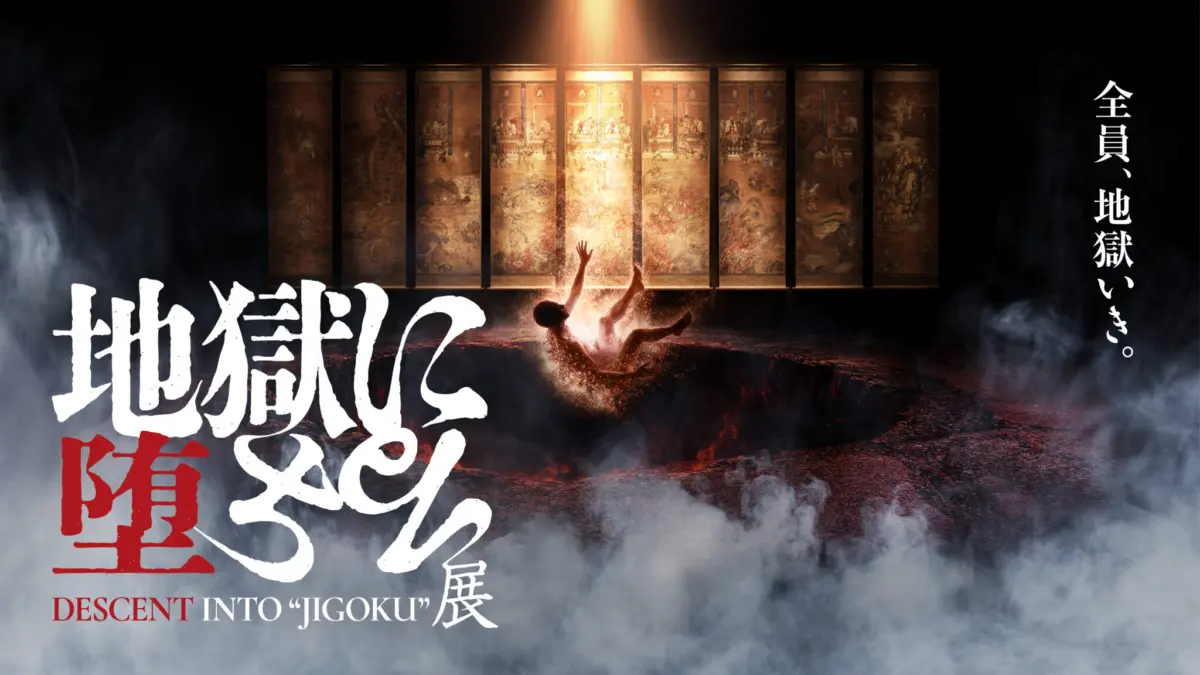
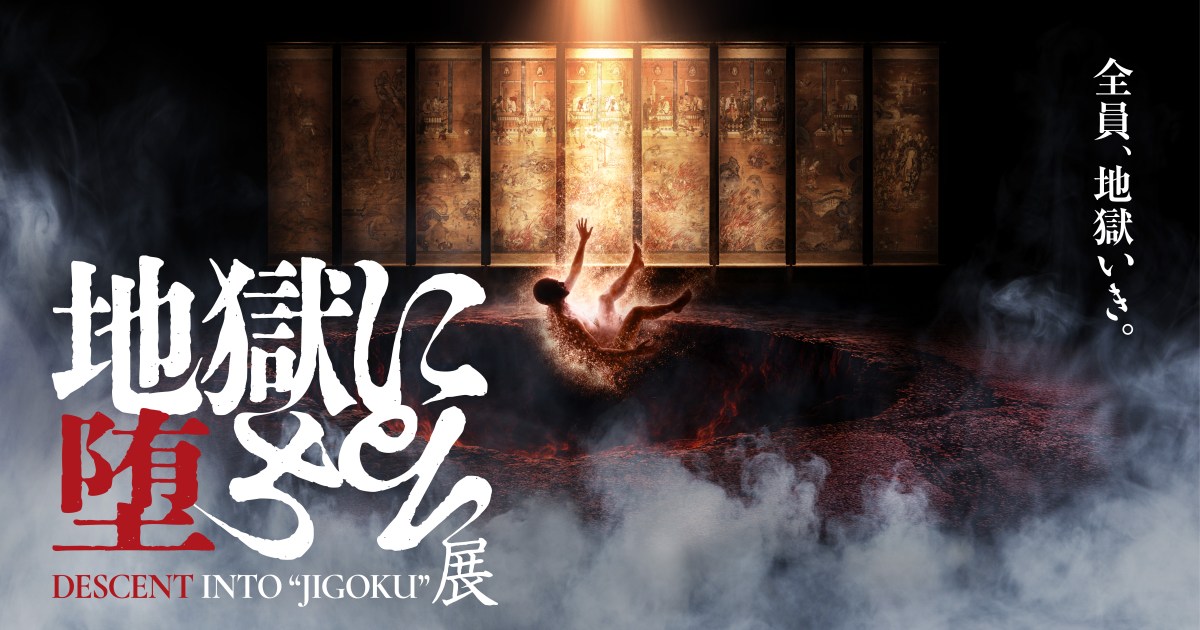
To demystify these intricate historical traditions for contemporary audiences, the Descent into Jigoku Exhibition Production Committee has launched a striking traveling art exhibition. Blending priceless national cultural treasures with cutting-edge visual effects, projection mapping, and spatial design courtesy of creative firm KOO-KI, the exhibition guides visitors through the chronological horrors of death, judgment, and karmic purification. Following successful runs elsewhere, the immersive retrospective is set to occupy the Namba Parks Museum in Osaka from November 28 to December 27. Offering a deep dive into centuries of esoteric Buddhist art and folklore, the exhibition invites the public to explore an underworld that is shockingly bureaucratic, terrifyingly visceral, and—perhaps most surprisingly—finite.
Detailed Chronology: The Evolution of Japanese Underworld Traditions
The architecture of the Japanese netherworld did not emerge in a vacuum; rather, it evolved through centuries of syncretism, blending indigenous Shinto worldviews with imported continental philosophies. Understanding Jigoku requires tracing this historical trajectory from ancient mythological darkness to the hyper-detailed penal systems of medieval Buddhism.
The Indigenous Foundations: Yomi and the Prototypical Darkness
Long before the introduction of foreign religious frameworks, early Japanese society held a nebulous, shadowy concept of the afterlife known as Yomi (or Yomi-no-kuni), rooted in indigenous Shinto traditions. Unlike the moral purgatories of later centuries, Yomi was not designed as a place of divine punishment or karmic retribution for earthly sins. Instead, it was conceptualized as a subterranean, gloomy, and stagnant realm of the dead—a place associated with physical decay and ritual impurity (kegare).
In foundational Japanese mythologies, such as those recorded in the Kojiki and Nihon Shoki, the deity Izanagi famously journeys into Yomi to retrieve his deceased spouse, Izanami. Upon finding her rotting and infested with thunder deities, he flees in horror, sealing the entrance to the land of the dead with a colossal boulder. While Yomi lacked the moral architecture of a judicial hell, it established a foundational cultural association between death, subterranean confinement, and the terrifying realities of physical decomposition.
The Continental Import: The Influx of Buddhist Hells
Around the sixth century, Buddhism arrived in the Japanese archipelago via China and the Korean Peninsula. By this era, Chinese civilization had already synthesized its indigenous Daoist administrative concepts with Indian Buddhist cosmology, producing an exceptionally intricate, highly bureaucratized vision of the underworld.
While Indian Buddhism featured early conceptions of naraka (hells), Chinese and subsequently Japanese iterations expanded these exponentially. They conceptualized tens of thousands—and potentially an infinite number—of distinct subterranean domains. Each realm was carefully engineered to punish specific spiritual and moral failures, transforming the afterlife into a vast, cosmic correctional facility managed by celestial magistrates.
As Japanese Buddhism integrated these teachings, it synthesized a sprawling cosmology known as Jigoku. Because this system was remarkably vast, convoluted, and rich with regional variations, its exact mechanics remained historically obscure to the general populace. This very obscurity served as the primary catalyst for modern curators and historians to assemble the Descent into Jigoku exhibition, bridging a centuries-old cultural knowledge gap through immersive modern artistry.
Supporting Context & Metrics: Navigating the Realms of Jigoku
The Descent into Jigoku exhibition structures its narrative chronologically, mirroring the soul’s terrifying trajectory from the final breath of mortal life through the grueling gauntlet of karmic processing.
Phase One: Kusozu – The Nine Stages of Decay
The exhibition initiates visitors into the afterlife not with fire, but with biology. Kusozu refers to the traditional Buddhist meditation and artistic genre depicting the nine progressive stages of a human corpse’s decay. Historical texts indicate that contemplating these brutal physical realities—ranging from initial swelling and discoloration to blood exudation, putrefaction, and final skeletal reduction—served a dual purpose: overcoming human vanity, subduing earthly lusts, and internalizing the absolute impermanence (mujō) of the physical form. To the modern observer, the unflinching artistic depiction of these stages reads like a masterclass in gothic horror.
Phase Two: Chu-u – The Bardo and the Ten Bureaucratic Judges
Following the physical dissolution of the body, the soul enters Chu-u (known in Tibetan traditions as the Bardo), a precarious transitional purgatory separating death from rebirth. During this phase, the soul encounters the Ten Kings of Jigoku (Jūō).
Operating with a chillingly bureaucratic efficiency, these judges review mortal deeds against cosmic ledgers. They preside over a divine court system where deceit is impossible and administrative oversight is absolute. Depending on the weight of one’s misdeeds, a soul is assigned to an appropriate subterranean correctional level.
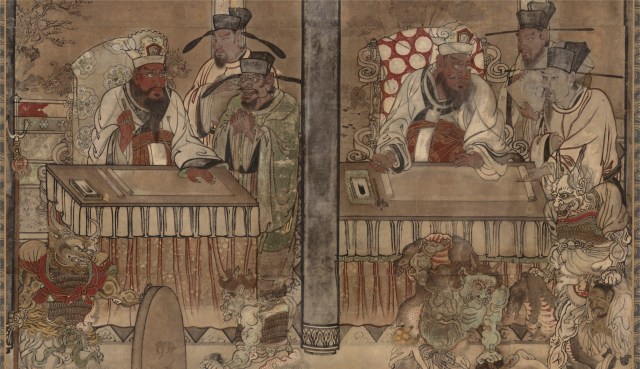
Despite the grim nature of these proceedings, Buddhist cosmology offers a profound note of optimism: with rare exceptions for the most heinous offenses, Jigoku is not eternal. The purpose of punishment is strictly purgative—to incinerate, freeze, or wash away accumulated bad karma until the soul is purified enough to cycle back into the wheel of rebirth. As exhibition organizers cheekily note, minor infractions—such as returning a library book late—might only net a brief, painful trek up the Hell of the Mountain of Knives for a day or two.
Phase Three: The Eight Great Hells and the Extremes of Torment
For those whose karmic debts are heavier, the exhibition details the Eight Great Hells (also frequently referred to as the Eight Hot Hells due to the centrality of searing fire). These realms feature staggering varieties of corporal punishment. Souls are subjected to flesh-devouring beasts, relentless cycles of execution and instant cellular regeneration, and grotesque indignities such as having molten metal poured into their orifices.
Historical masterworks showcased in the exhibition capture these horrors in agonizing detail. A notable 13th-century hanging scroll depicts the lowest depths of the Eight Great Hells. In this vision, souls plummet for 2,000 years before slamming into an iron mesh, where they are instantly diced upon impact, regenerated, and continually attacked by iron dogs and wardens wielding spiked clubs amid unending sheets of flame.
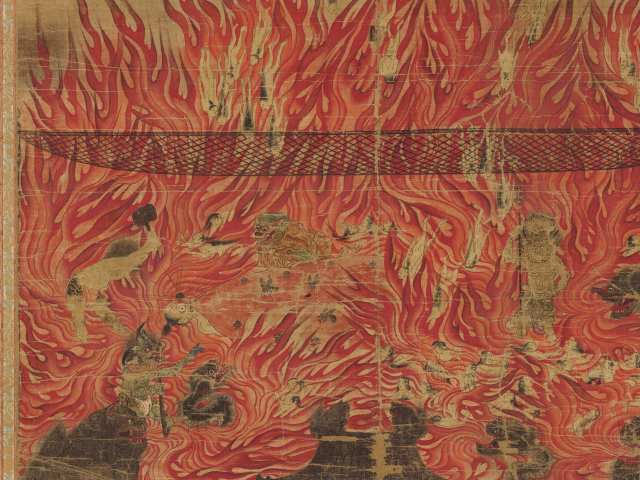
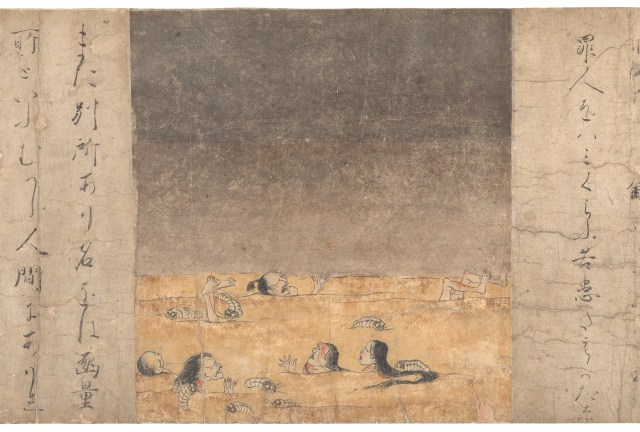
Counterbalancing the infernal heat are the Eight Cold Hells, where victims freeze to death in desolate, shattering landscapes, only to be instantaneously restored to life and subjected to the same cryogenic agony anew. Ancillary sub-hells add further niche suffering, such as the infamous Hell of Excrement, a 12th-century artistic depiction where the spiritually corrupt and greedy wade neck-deep through oceans of feces and urine while tormented by giant, needle-toothed maggots.
Official Statements and Curatorial Vision
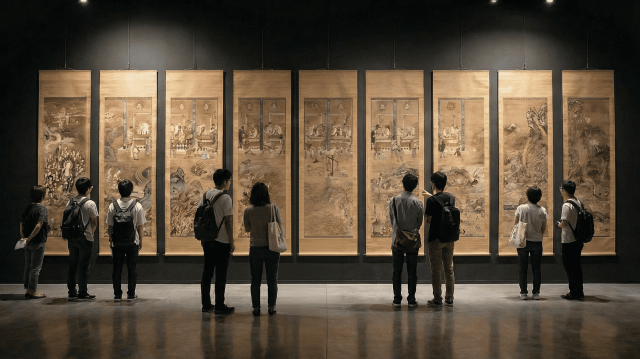
Bringing centuries-old, fragile religious art to a modern metropolitan audience required an innovative synthesis of historic preservation and technological wizardry. Because many of the definitive artistic representations of Jigoku—such as the hanging scrolls preserved at Chogaku Temple in Nara Prefecture—are designated as National Treasures and Important Cultural Properties, their physical display is subject to strict regulatory constraints.
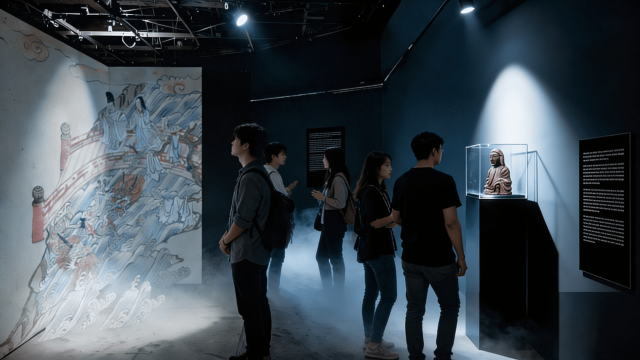
To circumvent these limitations while maximizing emotional and visual impact, the exhibition production committee partnered with KOO-KI, a renowned visual effects and spatial design studio. Utilizing advanced projection mapping, dynamic digital animation, and immersive soundscapes, KOO-KI’s digital wizards have effectively made the terrifying wardens, writhing sinners, and infernal landscapes of medieval scrolls leap off the gallery walls and surround the viewer.
Complementing these digital marvels are physical artifacts, most notably an authentic statue of King Enma—the supreme judge of the Ten Kings—curated from the private collection of exhibition supervisor and prominent Japanese hell scholar Masahiko Tamura. Through this dual approach of digital recreation and genuine antiquity, the exhibition bridges the gap between historical scholarship and experiential entertainment, offering visitors an authoritative yet visceral encounter with Japanese folklore.
Future Outlook & Exhibition Details
As cultural interest in alternative spiritualities, historical art, and immersive museum experiences continues to surge across Japan, the Descent into Jigoku exhibition represents a landmark achievement in cultural education. By stripping away modern squeamishness and presenting historical religious concepts in their full, unedited glory, the exhibition encourages a profound philosophical meditation on morality, mortality, and the human condition.
Following its upcoming engagement in Osaka, industry observers will be watching closely to see if the exhibition extends its domestic tour to other major metropolitan hubs. For those eager to face the Ten Kings and evaluate their own karmic standing ahead of time, essential logistical information for the Osaka engagement is as follows:
- Exhibition Name: Descent into Jigoku (Jigoku Meguri Tan / 地獄めぐり探)
- Venue: Namba Parks Museum (Namba Parks 7F, 2-10-70 Nambanaka, Naniwa-ku, Osaka-shi, Osaka-fu)
- Dates: November 28 – December 27
- Hours: 11:00 AM – 7:00 PM
- Admission Fees:
- Adults: ¥2,800 (~$18 USD)
- Elementary to High School Students: ¥1,500
- Children 3 and Under: Free (Parental discretion is strongly advised given the explicit nature of historical tortures).
- Official Website: Event TD Jigoku Exhibition





Belum ada komentar. Jadilah yang pertama berkomentar!