

Executive Overview
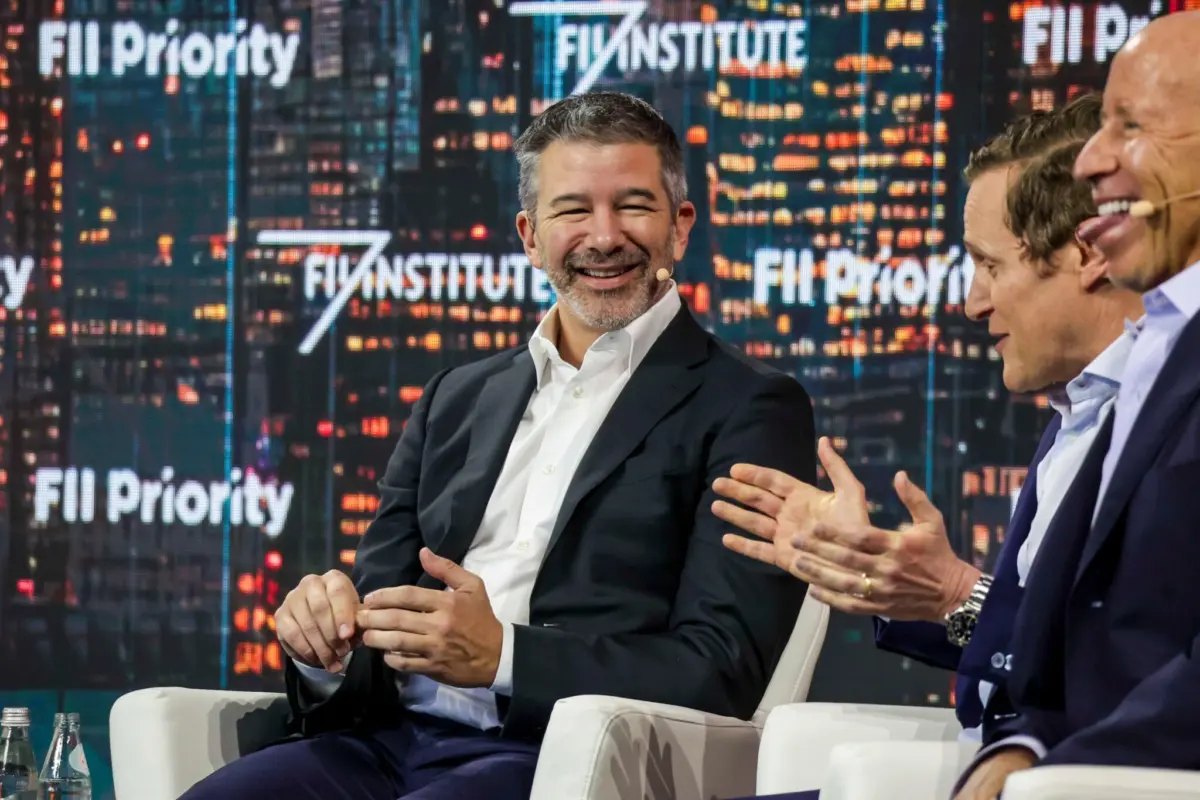
Earlier this summer, the technology landscape was shaken by a massive financial maneuver: Atoms, a secretive robotics and autonomous vehicle startup helmed by Uber co-founder Travis Kalanick, closed a staggering $1.7 billion funding round led by venture capital titan Andreessen Horowitz (a16z). Despite the jaw-dropping scale of the capital injection, Kalanick remained uncharacteristically tight-lipped about the definitive operational roadmap for the firm. To the outside observer, Atoms was a high-stakes black box flush with capital, operating under the charismatic yet polarizing shadow of its founder’s storied past.
However, recent reporting from the Financial Times has begun to lift the veil. Atoms is actively preparing for an aggressive, multi-pronged expansion that includes a massive hiring spree and strategic industry acquisitions. These aggressive moves signal a clear ambition: Atoms is positioning itself to become a foundational heavyweight in the global autonomous vehicle (AV) and robotics ecosystem.
Most notably, the startup has held high-level discussions with Uber—the very giant Kalanick built, disrupted, and was ultimately forced out of—regarding the deployment of Atoms’ proprietary robotaxi technology on Uber’s ubiquitous ride-hailing platform. Adding fuel to this reunion, financial disclosures reveal that Uber has quietly poured $100 million directly into Atoms, a figure corroborated by industry tracking.
While autonomous passenger transit does not encapsulate the entirety of Atoms’ grand design, it firmly aligns with Kalanick’s own evocative characterization of the fundraising milestone as "unfinished business." As Atoms integrates previous strategic acquisitions—such as Pronto, the autonomous mining outfit spearheaded by former Uber self-driving chief Anthony Levandowski—the industry is forced to reckon with a familiar narrative: Travis Kalanick is back in the arena, armed with unprecedented capital, a network of seasoned operators, and an unyielding drive to redefine urban mobility.
Detailed Chronology: From Underground Stealth to Mega-Funding
To fully comprehend the strategic gravity of Atoms’ current trajectory, one must trace the chronological evolution of Kalanick’s post-Uber career. Following his departure from the ride-hailing pioneer in 2017, Kalanick pivoted quickly to real estate and cloud kitchens through City Storage Systems, managing the troubled CloudKitchens venture. While cloud kitchens occupied his immediate post-Uber years, Kalanick’s long-term fascination with logistics, automation, and physical-world infrastructure never waned.
Over the past few years, whispers began circulating in Silicon Valley regarding a clandestine robotics venture backed by Kalanick. Operating under strict stealth conditions, the entity that would become Atoms began assembling top-tier engineering talent from institutions like Tesla, Waymo, and various elite academic robotics laboratories.

The timeline accelerated sharply leading up to the summer of 2026:
- Early 2026 (Strategic Acquisitions): Atoms executed a series of calculated M&A maneuvers, most notably acquiring Pronto, an autonomous off-road and industrial vehicle startup. Pronto was founded by Anthony Levandowski, the former head of Uber’s self-driving division whose career was famously upended by high-profile intellectual property litigation with Google’s Waymo, a federal conviction, and a subsequent presidential pardon. By absorbing Pronto, Atoms instantly acquired battle-tested hardware-software integration capabilities and seasoned autonomy veterans.
- July 2026 (The $1.7 Billion Mega-Round): Atoms officially shattered stealth mode by announcing a monumental $1.7 billion Series A/growth funding round spearheaded by Andreessen Horowitz. The sheer magnitude of the round immediately vaulted Atoms into the upper echelons of well-funded deep-tech startups, drawing intense scrutiny and speculation from financial analysts worldwide.
- August 2026 (Financial Alignment with Uber): It was revealed that Uber partook in the capital build-up, cutting a $100 million check to back Kalanick’s new venture. Concurrently, Atoms secured high-profile executive talent, tapping former Uber finance chief Nelson Chai (or equivalent institutional financial leadership) to steer the startup’s aggressive balance sheet management.
- September 2026 (The Strategic Unveiling): Reporting from the Financial Times pierced the corporate veil, detailing Atoms’ active preparations for a sweeping hiring campaign, corporate takeovers, and direct commercial integration talks with Uber’s ride-sharing architecture.
Supporting Context & Metrics: The Financial and Technological Ecosystem
The architecture of Atoms cannot be understood in a vacuum; it exists within a hyper-competitive, capital-intensive autonomous vehicle landscape that has spent the last decade burning tens of billions of dollars chasing the holy grail of Level 4 and Level 5 autonomy.
Financial Breakdown of the $1.7 Billion Raise
- Lead Investor: Andreessen Horowitz (a16z), signaling massive venture backing for capital-heavy infrastructure plays.
- Strategic Investor: Uber Technologies Inc., contributing $100 million—a fascinating bridge-building exercise between the current Uber executive team (led by CEO Dara Khosrowshahi) and the company’s foundational architect.
- Valuation & Runway: While exact post-money valuations remain heavily guarded, a $1.7 billion influx grants Atoms a multi-year runway capable of sustaining heavy R&D burn rates, fleet fabrication, sensor procurement, and aggressive talent acquisition wars against entrenched players like Waymo and Tesla.
The Pronto Factor and Legacy Engineering
The acquisition of Pronto serves as a cornerstone for Atoms’ technical credibility. Pronto was notable for developing rugged, highly reliable autonomy kits designed for industrial and mining environments—settings significantly more unpredictable and physically punishing than structured urban street grids.
Anthony Levandowski’s history casts a long shadow over this technical lineage. Levandowski, once considered a wunderkind of autonomous engineering, pled guilty in 2020 to stealing trade secrets from Google’s Waymo prior to his tenure at Uber, resulting in an 18-month prison sentence before receiving a commutation. Despite the regulatory and ethical baggage of its past leadership connections, the engineering DNA embedded within Pronto provides Atoms with a distinct head-start in physical sensor fusion, localization, and off-road navigation algorithms.
Uber’s Evolving AV Strategy
For Uber, partnering with Atoms represents a calculated hedging of bets. Uber has historically taken an asset-light approach to the modern AV era, opting to integrate various autonomous developers onto its platform rather than building proprietary hardware entirely in-house. Uber has already established an extensive mosaic of partnerships—collaborating with Waymo, Motional, and others to allow users to hail driverless vehicles via the Uber app. Adding Atoms to this ecosystem ensures that Uber captures a piece of the autonomous value chain regardless of which tech stack ultimately dominates consumer adoption, while simultaneously aligning with its former CEO.
Official Statements and Industry Reactions
The resurgence of Travis Kalanick into the bleeding edge of transportation technology has elicited a mixture of awe, skepticism, and tactical recalculation across Silicon Valley and Wall Street.

When Kalanick addressed his inner circle regarding the $1.7 billion funding round, he reportedly described the venture simply as "unfinished business." This phrase speaks volumes about his departure from Uber in 2017, an exit that occurred just as the company’s internal Advanced Technologies Group (ATG) was racing to commercialize the very technology Kalanick had envisioned as Uber’s ultimate destiny. By launching Atoms, Kalanick is attempting to reclaim his narrative as a visionary mobility pioneer who was ousted just before the finish line.
Venture capitalists and industry analysts have offered mixed interpretations of the move:
- The Bull Case: Proponents argue that Kalanick possesses an unmatched killer instinct for scaling logistics platforms globally. Paired with Andreessen Horowitz’s financial firepower and an elite engineering roster inherited from Pronto and top-tier labs, Atoms has the capital and the ruthless operational focus required to cut through the bureaucratic and technical bottlenecks that have bogged down older AV firms.
- The Bear Case: Skeptics point out that autonomous driving is notoriously unforgiving of hubris. Billions have been incinerated by well-funded companies over the past decade due to the intractable edge cases of computer vision, safety validation, and shifting regulatory frameworks. Furthermore, managing the corporate cultural baggage associated with both Kalanick and Levandowski could complicate high-level regulatory approvals in municipal markets hypersensitive to safety and corporate ethics.
Future Outlook: What Lies Ahead for Atoms?
As Atoms transitions from a heavily funded stealth entity into an operational powerhouse, several key milestones will define its trajectory over the next 12 to 24 months:
- The Talent War and Hiring Spree: With $1.7 billion burning a hole in its pocket, Atoms is positioned to launch an aggressive poaching campaign targeting senior researchers, software architects, and safety validation engineers from Waymo, Zoox, Tesla, and traditional automotive giants.
- Strategic M&A Expansion: Beyond the acquisition of Pronto, financial analysts expect Atoms to scoop up specialized hardware vendors, sensor manufacturers, and artificial intelligence startups specializing in simulation and world-model generation.
- The Uber Integration Roadmap: The operational feasibility of deploying Atoms’ robotaxis on Uber’s network will be closely scrutinized. If successful, Atoms gains immediate access to tens of millions of active riders worldwide, bypassing the colossal customer-acquisition and dispatch-infrastructure hurdles that plague independent robotaxi operators.
- Regulatory and Geopolitical Hurdles: Deploying autonomous vehicles at scale requires navigating a labyrinth of state, federal, and international regulatory bodies. Atoms will need to prove that its technology meets—and exceeds—the stringent safety baselines established by municipal transit authorities.
Conclusion
Travis Kalanick’s return to the vanguard of autonomous transportation via Atoms marks one of the most compelling corporate storylines of the decade. Armed with a historic $1.7 billion war chest, strategic backing from his former creation Uber, and a hardened core of autonomy veterans, Atoms is no longer just an experimental stealth project—it is a formidable contender poised to reshape the future of human mobility and industrial robotics. Whether "unfinished business" translates into enduring market dominance remains to be seen, but one thing is certain: the race for autonomous supremacy just accelerated.






Belum ada komentar. Jadilah yang pertama berkomentar!