

Executive Overview
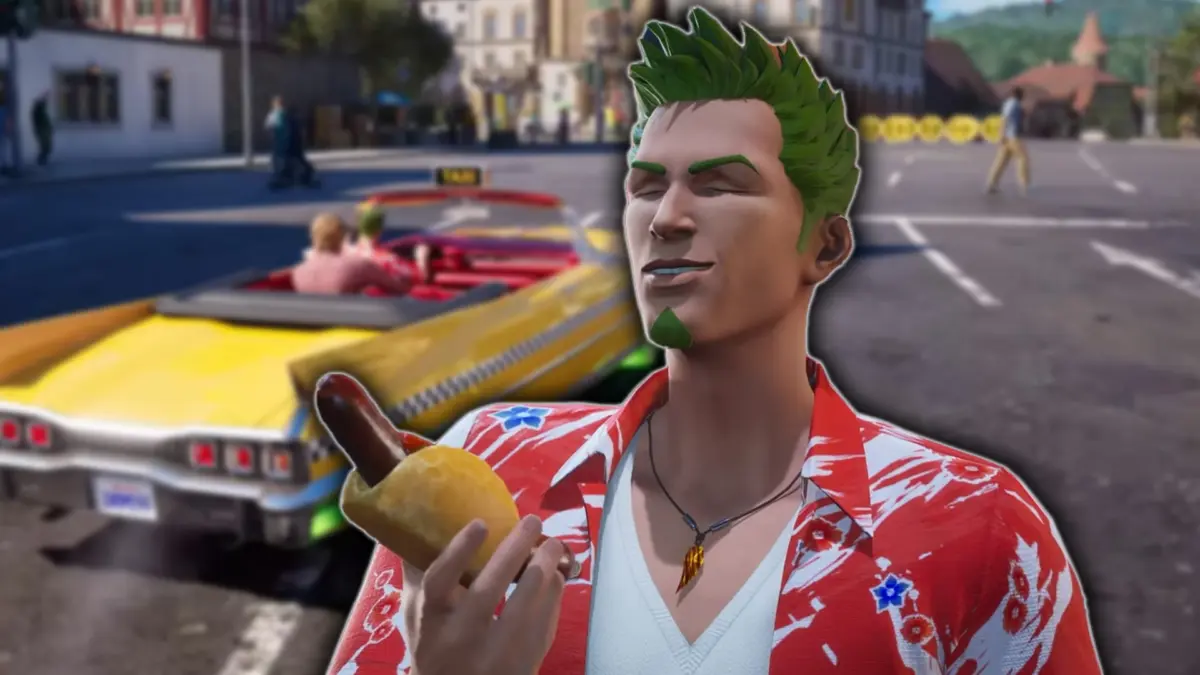
At Gamescom in Cologne, Germany, Sega presented an early hands-on build of Crazy Taxi: World Tour, one of the flagship titles in the publisher’s ambitious initiative to revitalize its treasured legacy intellectual properties. Coming decades after the original arcade and Dreamcast releases redefined high-velocity action, this modern iteration attempts to translate the franchise’s frantic fare-delivery formula into an expansive, open-world sandbox structure.
While the fundamental driving physics—specifically drifting, cornering, and sudden braking in iconic protagonist Alex’s cab—demonstrate mechanical fidelity, our extended preview revealed substantial structural and technical vulnerabilities. The move toward a sprawling, timer-free exploration model undermines the frantic momentum that historically defined the series. Compounded by noticeable visual stuttering, low-resolution environmental textures, uncanny NPC animations, and a restricted soundtrack loop, Crazy Taxi: World Tour currently struggles to reconcile modern open-world design with its tight arcade roots.
As Sega conducts closed-network tests without an officially announced release window, this hands-on evaluation examines whether the title can refine its core game loop to capture the relentless urgency fans expect, or if it risks diluting one of gaming’s most celebrated arcade experiences.
Detailed Chronology of the Gamescom Hands-On Session
+-----------------------------------------------------------------------------------+
|                        GAMESCOM DEMO FLOW & OBSERVATIONS                          |
+-----------------------------------------------------------------------------------+
| 1. Technical Setup      | PC hardware executing build; Xbox Series controller     |
|                         | Frame drops, low-res textures, uncanny NPC animations   |
+-------------------------+---------------------------------------------------------+
| 2. Audio & Atmosphere   | Repetitive audio pipeline (~4-5 tracks)                 |
|                         | Heavy rotation of The Offspring's "All I Want"          |
+-------------------------+---------------------------------------------------------+
| 3. Handling Dynamics    | Intuitive controls for Alex's cab                       |
|                         | Drift mechanics and braking feel responsive             |
+-------------------------+---------------------------------------------------------+
| 4. Structural Shifts    | Germany map features historic plazas & Autobahn          |
|                         | Timer removal introduces unexpected downtime           |
|                         | Chaining fares lacks classic velocity & thrill          |
+-------------------------+---------------------------------------------------------+
| 5. Secondary Activities | Pizza delivery, recycling, catapulting stuntmen         |
|                         | Scattered gonzo charm amid diluted pacing               |
+-----------------------------------------------------------------------------------+
The Demonstration Environment and Technical Performance
The preview session took place directly following a demonstration of Alien: Isolation 2, offering a stark tonal shift from survival horror to neon-tinted vehicular chaos. Rather than running natively on target handheld hardware such as the Nintendo Switch or its anticipated successor, Sega hosted the demo on a PC setup utilizing an Xbox Series wireless controller—a standard trade show configuration for titles still undergoing optimization.
From the opening moments, the build’s unpolished state was evident:
- Visual Fidelity: Textures across urban buildings and environmental assets lacked crispness, exhibiting muddy filtering even at standard preview viewing distances.
- Performance Stability: Frame rates fluctuated frequently during high-speed navigation and sharp turns through dense geometric areas.
- Character Rendering: Non-player characters (NPCs) exhibited stiff geometry, unnervingly static expressions, and stilted walking cycles that broke immersion during drop-off sequences.
Navigating the Digital German Landscape
The hands-on session highlighted the "Crazy Rush" mode within a newly designed Germany map—a location choice tailored for Gamescom’s Cologne venue. The environment captures a European motif, featuring traditional beer gardens, historical town squares, cobble-styled plazas, and expansive sections of the Autobahn leading toward a dense mini-metropolis.
Navigating Alex’s yellow cab yields immediate mechanical satisfaction. Within a minute of play, the control scheme proves approachable and responsive:
- Drifting: Power-sliding around tight corner turnarounds feels precise.
- Braking and Acceleration: Stopping on drop-off markers and bursting back into traffic mirrors the heavy, arcade-style weight distribution of earlier entries.
The Breakdown of Arcade Velocity and Downtime
Despite responsive car handling, the macro-level gameplay structure reveals a fundamental design shift. Unlike original arcade builds that imposed an immediate, unrelenting countdown clock, Crazy Taxi: World Tour allows players to roam the map freely without an initial active timer running down.

This design choice creates unexpected downtime. Drivers can cruise expansive stretches of road without encountering an immediate fare, draining the experience of excitement. When passengers are located, the sprawling layout makes it difficult to string fares together into a continuous combo. In classic iterations, spatial memory and split-second pathfinding allowed players to chain drop-offs endlessly; here, the map scale introduces wide spatial gaps that break momentum and dampen the sensation of extreme speed.
Secondary Objectives and Side Quests
To fill the gaps in the expanded map, Sega introduced various localized side quests and mini-games. Scattered across the German cityscape are tasks including:
- Localized Deliveries: Transporting pizzas across town before time expires.
- Environmental Tasks: Collecting scattered recycling materials.
- Extreme Stunts: Assisting a local stuntman in launching himself into the sky via cab-mounted ramps.
While the stuntman missions reflect the series’ absurd humor, these activities feel like isolated distractions rather than organic extensions of a cohesive, high-speed loop.
Supporting Context & Historical Metrics
+----------------------------------------------------------------------------------+
|                    SERIES EVOLUTION & STRUCTURAL COMPARISON                      |
+----------------------------------------------------------------------------------+
| Metric / Feature      | Classic Arcade / Dreamcast    | Crazy Taxi: World Tour   |
+-----------------------+-------------------------------+--------------------------+
| Map Structure         | Compact, highly dense circuits| Massive open-world region|
+-----------------------+-------------------------------+--------------------------+
| Time Pressure         | Instant global countdown clock| Free-roam options; loose |
+-----------------------+-------------------------------+--------------------------+
| Fare Chaining         | High density, rapid combos    | Dispersed drop-offs      |
+-----------------------+-------------------------------+--------------------------+
| Core Audio Identity   | Dynamic punk/skate rock OST   | Restricted playlist demo |
+-----------------------+-------------------------------+--------------------------+
| Secondary Objectives  | None (pure fare delivery)     | Pizza delivery, stunts   |
+----------------------------------------------------------------------------------+
Evolution from Arcade Density to Open-World Sandbox
The original 1999 Crazy Taxi—designed by Kenji Kanno and powered by Sega’s NAOMI arcade hardware before its iconic Dreamcast port—was built around spatial efficiency and immediate risk-reward decisions. Maps like San Francisco were designed with steep hills, tight shortcuts, and high passenger density, ensuring players were always seconds away from failure or success.
Classic Arcade Loop:
[ Pick Up Fare ] ──> [ High-Speed Drift/Shortcut ] ──> [ Drop Off / Time Bonus ] ──> [ Instant Next Fare ]

World Tour Sandbox Loop:
[ Free Roam / Drive ] ──> [ Locate Fare ] ──> [ Extended Transit ] ──> [ Downtime / Side Quest ]
Crazy Taxi: World Tour trades this focused loop for modern sandbox scale. By removing constant time pressure and expanding map dimensions, the game changes its core dynamic from an aggressive arcade dash into an open-world driving sandbox, altering the rhythmic pacing that defined the franchise’s identity.
Audio Licensing and Brand Identity
An integral component of Crazy Taxi’s legacy is its high-energy punk soundtrack, historically featuring bands like The Offspring and Bad Religion. In this preview build, the audio rotation was limited to approximately four or five tracks, leading to heavy repetition of The Offspring’s "All I Want."
For an extended gameplay session, this narrow playlist quickly becomes repetitive. While final licensing agreements will likely broaden the music selection at launch, the restricted music pool in the preview build highlighted the game’s repetition during longer stretches of driving.
Target Hardware and Optimization Challenges
Sega’s decision to target the original Nintendo Switch alongside next-generation platforms like the rumored "Nintendo Switch 2" introduces distinct optimization challenges:

- Low-End Hardware Constraints: Rendering large, seamless urban maps without loading screens requires severe adjustments to geometry detail, draw distance, and NPC density on legacy mobile chipsets.
- Performance Variance: Frame rate drops observed on a high-spec PC development platform suggest that substantial optimization is still required before the game can run smoothly at 60 frames per second on handheld devices.
Official Statements & Development Disclosures
Address of Generative AI in the Design Pipeline
During the preview cycle, public speculation arose regarding Sega’s integration of generative AI tools within its production pipelines. Series creator Kenji Kanno clarified the studio’s stance in a statement provided to Kotaku, outlining the boundary between ideation and production assets:
"The game contains no generative AI-created assets in its final shipped code. Sega utilized generative technology strictly during early conceptual ideation stages to quickly explore environmental visual motifs and structural themes. All final assets, textures, character models, and animations are authored entirely by our internal art teams."
This clarification addresses community concerns regarding asset authenticity, confirming that technical issues seen in the demo—such as rigid character animations and low-resolution textures—are the result of early software builds rather than automated asset generation.
Development Roadmap and Network Testing Phase
Sega has refrained from publishing a firm release date or launch window for Crazy Taxi: World Tour. According to company representatives at Gamescom:
- Closed-Network Testing: Early closed-network infrastructure tests are currently underway to evaluate online multiplayer functionality, leaderboards, and netcode stability.
- Iterative Refinement: Sega emphasizes that the build showcased in Cologne represents a work-in-progress state, with core system tuning, graphic optimization, and balance tweaks actively ongoing based on tester feedback.
Future Outlook & Industry Implications
The Challenge of Modernizing Legacy Arcade IP
Sega’s attempt to modernize Crazy Taxi reflects broader strategic challenges across the gaming industry when reviving classic arcade franchises:
                  ┌────────────────────────────────────────┐
                  │    Sega Legacy Revival Strategy        │
                  └───────────────────┬────────────────────┘
                                      │
         ┌────────────────────────────┴────────────────────────────┐
         ▼                                                         ▼
┌─────────────────────────────────┐                       ┌─────────────────────────────────┐
│     Arcade Pure Paradigm        │                       │    Modern Sandbox Paradigm      │
├─────────────────────────────────┤                       ├─────────────────────────────────┤
│ • Instant time pressure         │   DESIGN FRICTION     │ • Large map scale & free roam   │
│ • Tight, dense map design       │ ◄───────────────────► │ • Non-linear exploration        │
│ • Chained fare momentum         │                       │ • Diluted pacing & downtime     │
└─────────────────────────────────┘                       └─────────────────────────────────┘
Modernizing classic IPs often creates friction between preserving nostalgia and adding contemporary game design features:
- The Pacing Dilemma: Classic arcade loops were built around short, intense 3-to-5-minute sessions. Translating this approach to multi-hour console experiences often leads developers to add open-world mechanics that can dilute the original gameplay core.
- Impact on Broader Slate: Sega’s current initiative includes revivals of franchises like Jet Set Radio, Shinobi, Golden Axe, and potentially OutRun. How Crazy Taxi: World Tour resolves its pacing and scale issues will serve as an indicator for how Sega balances modern trends with classic arcade design across its upcoming portfolio.
Critical Takeaways for Release Readiness
To deliver a revival that satisfies both long-time fans and new players, Sega’s development team must address several key areas before launch:
- Restoring Fare Chaining Dynamics: Rebalancing passenger density and navigation markers to eliminate empty downtime and keep drivers moving at top speed.
- Aggressive Technical Optimization: Fixing frame rate drops, improving texture quality, and polishing NPC animations to ensure smooth performance across target hardware.
- Refining Optional Activities: Integrating side quests cleanly into the main fare-delivery loop so they feel like rewarding extensions of the core action rather than isolated distractions.
While the fundamental driving controls in Crazy Taxi: World Tour feel sharp and responsive, the preview build highlights a title caught between two eras. Unless Sega sharpens its core gameplay loop and fixes its technical performance, this high-profile revival risks trading the wild, focused energy of the original games for an overly large, unfocused open world.







Belum ada komentar. Jadilah yang pertama berkomentar!