

Executive Overview
The landscape of mobile gaming is undergoing a seismic shift. No longer confined to casual, bite-sized puzzle experiences and microtransaction-heavy arcade titles, modern smartphones are increasingly becoming legitimate platforms for triple-A, console-grade blockbusters.
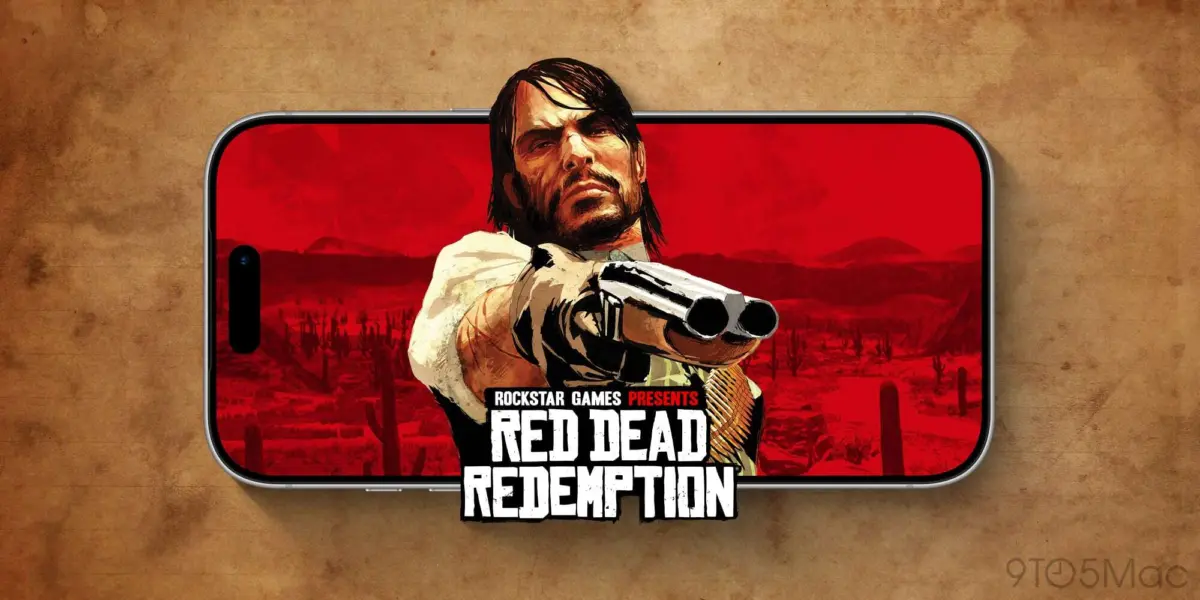
This transformation takes its most ambitious leap yet on December 2, when Rockstar Games brings its universally acclaimed Western epic, Red Dead Redemption, alongside its critically adored zombie-horror expansion, Undead Nightmare, to iOS and Android devices.
Announced via an official Rockstar Games newswire update, the port represents a major milestone not only for Apple’s mobile ecosystem—which has steadily courted high-end developers through increasingly powerful silicon and graphics APIs like Metal—but also for subscription services like Netflix. In a strategic maneuver that bridges traditional digital storefront purchases with streaming-era subscription perks, Red Dead Redemption will be available at no additional cost to Netflix subscribers, while also being offered as a standalone purchase on the App Store for non-subscribers.
For veteran gunslingers and fresh-faced outlaws alike, the upcoming release offers a chance to experience the poignant, dusty twilight of the Wild West directly on an iPhone or iPad. Featuring the complete single-player campaigns of both titles, alongside all the bonus content previously packaged in the Game of the Year Edition, this release promises an uncompromised narrative journey.
However, bringing a massive 2010 open-world epic to pocket-sized hardware raises significant questions regarding device compatibility, thermal management, battery life, and control schemes. As the industry watches closely, this launch could redefine what consumers expect from mobile hardware, cementing the iPhone and iPad as viable destinations for the heavy-hitters of console and PC gaming.
Detailed Chronology: From the Dust of 2010 to the Glass Screens of Mobile
To understand the magnitude of Red Dead Redemption arriving on iOS, it is necessary to retrace the title’s storied history across the gaming landscape over the past decade and a half.
1. The Genesis: A Modern Western Classic (2010)
Originally released in May 2010 for the PlayStation 3 and Xbox 360, Red Dead Redemption was developed by Rockstar San Diego as a spiritual successor to 2004’s Red Dead Revolver. Set in 1911—during the decline of the American frontier—the game follows John Marston, a former outlaw whose wife and son are taken hostage by federal agents to force him to bring his former gang members to justice.
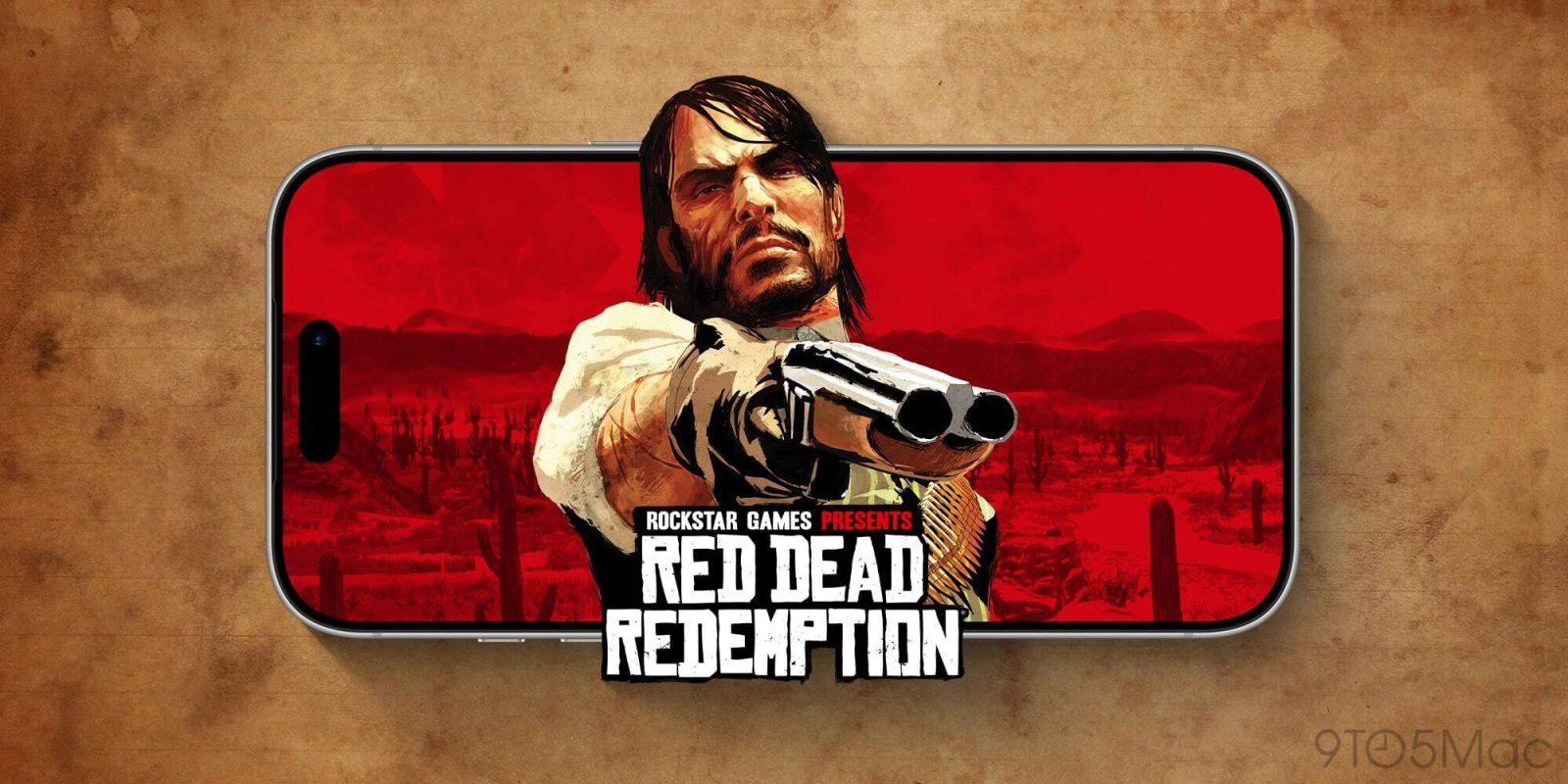
Praised for its breathtaking depiction of the American West, its morally complex narrative, and its innovative open-world mechanics, the game quickly became a cultural touchstone and a critical darling, selling millions of copies worldwide and sweeping numerous Game of the Year awards. Later that same year, Rockstar released Undead Nightmare, a standalone supernatural expansion that reimagined the frontier as a battleground against a devastating zombie plague.
2. The Long Wait for Modern Platforms
Despite its monumental success, Red Dead Redemption remained famously sequestered on seventh-generation hardware for over a decade. While its monumental prequel, Red Dead Redemption 2 (set chronologically before the events of the first game), pushed graphical boundaries on eighth-generation consoles and PC, fans clamored endlessly for a modern port or remaster of the original game.
That wait began to break in August 2023, when Rockstar surprised the gaming community by releasing the game on Nintendo Switch and PlayStation 4, later expanding to PC in late 2024. These releases proved that the classic codebase could be successfully adapted to newer, more diverse architectures without losing its foundational appeal.
3. The Mobile Frontier (December 2, 2025)
The announcement that Red Dead Redemption and Undead Nightmare are heading to iOS and Android on December 2 marks the culmination of advanced mobile porting technology. Powered by Apple’s high-performance custom silicon (such as the M-series chips in iPads and the A-series Pro chips in recent iPhones), mobile devices now possess the raw computational muscle required to render expansive open worlds, complex physics engines, and detailed character models that once required dedicated home consoles.
Simultaneously, Rockstar is rolling out enhancements for current-generation consoles (PS5 and Xbox Series X|S), highlighting a comprehensive, multi-platform revitalization of the intellectual property that bridges the gap between classic gaming heritage and modern multi-device ecosystems.
Supporting Context & Metrics: The Convergence of Mobile Hardware and Netflix Gaming
The arrival of Red Dead Redemption on iOS does not happen in a vacuum. It is the product of converging trends in hardware capability, consumer habits, and corporate distribution strategies.
Apple’s Silicon Advantage and the "Console Quality" Push
Over the past several years, Apple has systematically positioned the iPhone and iPad as serious gaming machines. With the introduction of hardware-accelerated ray tracing in the A17 Pro and M4 chips, alongside advanced developer tools like the MetalFX Upscaling API, iOS devices have gradually attracted heavy-hitting ports. Titles like Resident Evil Village, Death Stranding, and Assassin’s Creed Mirage have already blazed the trail.

Red Dead Redemption benefits immensely from this foundation. While the game originated on hardware with a fraction of modern smartphone RAM and CPU performance, scaling it to run smoothly on iOS requires optimization that leverages Apple’s unified memory architecture and high-efficiency graphics pipelines.
The Netflix Gaming Strategy
Perhaps just as significant as the technical achievement is the distribution model. Netflix has spent the last few years aggressively expanding its footprint in the interactive entertainment sector. By bundling critically acclaimed titles—ranging from indie darlings like Hades to heavyweights like Grand Theft Auto trilogy definitive editions—into standard Netflix subscriptions, the streaming giant has bypassed traditional mobile monetization models (which rely heavily on microtransactions and intrusive advertising).
For subscribers, getting Red Dead Redemption and Undead Nightmare included at no extra cost is a staggering value proposition. For Rockstar and Take-Two Interactive, the partnership guarantees a massive, built-in audience of millions of active users who can download and engage with the game instantly, mitigating the friction of upfront digital purchases on mobile storefronts.
Compatibility and Control Hurdles
While enthusiasm is high, industry analysts note several logistical hurdles that accompany high-end mobile ports:
- Storage Footprint: Given the expansive world, high-resolution textures, and audio files of both the base game and the Undead Nightmare expansion, the installation size is expected to be substantial—likely demanding tens of gigabytes of free device storage.
- Thermal Throttling: Sustained open-world gameplay pushes smartphone processors to their thermal limits. Players on older or non-Pro iPhone models may experience frame rate degradation during intense gunfights or fast-paced horseback riding unless efficient thermal management is maintained.
- Control Adaptations: Rockstar’s announcement explicitly notes the inclusion of "mobile-friendly control options." While fully customizable on-screen touch controls are standard, the precision required for the game’s "Dead Eye" targeting system makes Bluetooth controller support (such as Backbone One, Razer Kishi, PlayStation DualSense, or Xbox Wireless Controllers) practically mandatory for an optimal experience.
Official Statements: What Rockstar Games and Industry Insiders Are Saying
The announcement from Rockstar Games has set off waves of excitement across the gaming community. In their official newswire post detailing the December 2 release, the studio emphasized the completeness and accessibility of the upcoming versions:
"On December 2, the epic Western adventures Red Dead Redemption and Undead Nightmare will be available for the latest mobile devices and on current generation consoles — with free upgrades, the ability to carry over game progress, and a number of enhancements."
Rockstar further elaborated on the narrative continuity for players transitioning between generations or devices:

"Step into the events immediately following the blockbuster Red Dead Redemption 2, in the critically acclaimed tale of John Marston’s journey to bury his blood-stained past. In its zombie-horror companion Undead Nightmare, fight to find a cure for the zombie plague that has overrun the frontier. All these new versions feature the complete single-player experiences of both games, and also include bonus content from the Game of the Year Edition."
Industry analysts have pointed out that releasing the game simultaneously across current-generation consoles (PS5, Xbox Series X|S) and mobile platforms via Netflix underscores a dual-pronged strategy: capturing traditional core gamers while aggressively recruiting mobile-first consumers into the franchise ecosystem.
Furthermore, integration with Apple’s ecosystem is expected to benefit from upcoming software adjustments. As noted in recent tech reports regarding iOS 26.2’s overhauled Apple Games app—which introduces centralized game management, social features, and performance tracking—the timing could not be better for Apple to spotlight blockbuster software arrivals on its platform.
Future Outlook: What This Means for the Future of Mobile Gaming
The December 2 launch of Red Dead Redemption on iOS is much more than a nostalgic trip back to New Austin and Nuevo Paraíso; it is a stress test for the future of interactive entertainment.
If the port achieves technical stability, maintains consistent frame rates, and delivers an intuitive control experience—especially when paired with physical controllers—it will dismantle long-held industry dogmas about what kinds of games can and should be played on mobile devices. It signals to major publishers that consumers are willing to engage with deep, narrative-heavy, 40-hour-plus experiences on hardware that fits inside their pockets.
Moreover, the hybrid distribution model pioneered by Netflix and traditional app storefronts may become the blueprint for future high-end mobile releases. By lowering the financial barrier to entry through subscription integration while retaining standalone sales options for non-subscribers, publishers can maximize monetization and player acquisition simultaneously.
As the clock ticks down to December 2, all eyes are on Rockstar Games and Apple. Will John Marston’s ride into the sunset translate seamlessly to the OLED screens of modern iPhones and iPads? If early technical indicators and the power of modern mobile silicon are any indication, the frontier is about to get a whole lot busier.






Belum ada komentar. Jadilah yang pertama berkomentar!