

Executive Overview
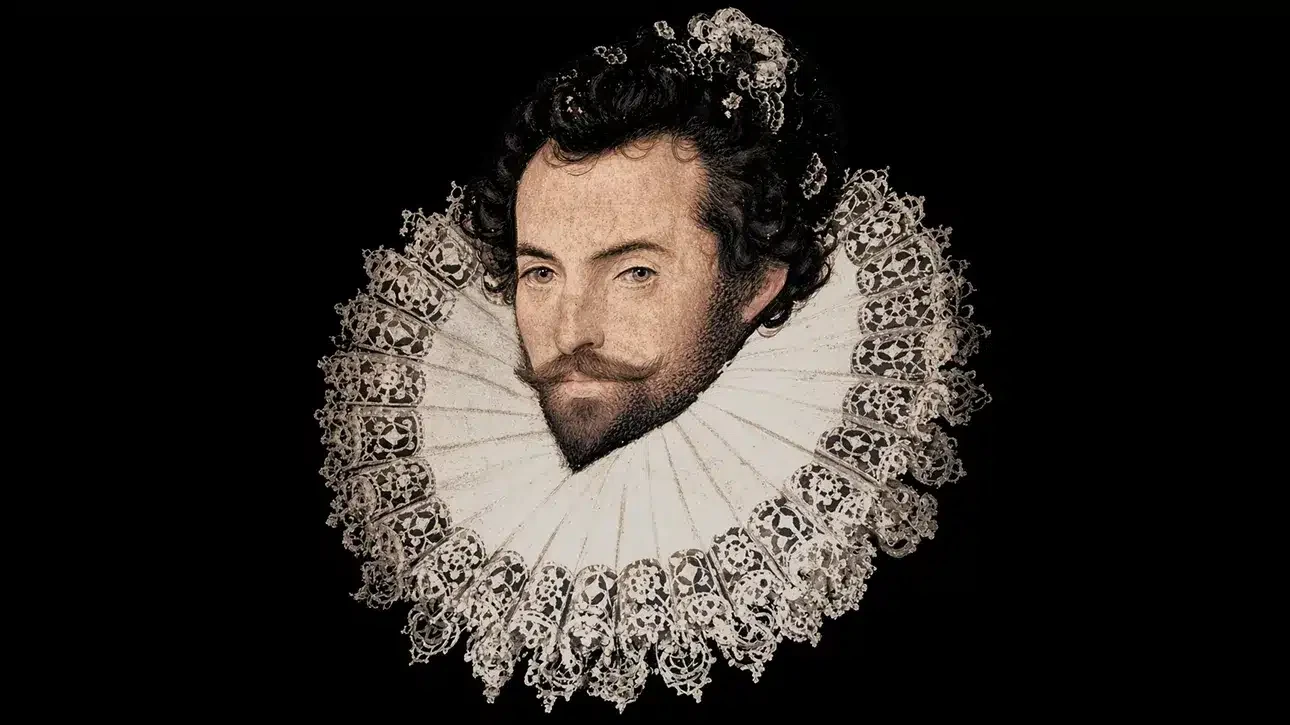
The enduring public fascination with the Elizabethan era—evident in a continuous stream of cinematic and televisual adaptations such as Hamnet (2025), Becoming Elizabeth (2022), My Lady Jane (2024), and Shekhar Kapur’s Elizabeth: The Golden Age (2007)—proves that the magnetic theatricality of the sixteenth-century English court still captivates the modern imagination. Whether recalling the apocryphal yet vivid legend of Sir Walter Raleigh placing his ornate velvet cloak over a muddy puddle to shield the dainty slippers of Queen Elizabeth I, or watching Clive Owen stride across the silver screen as the dashing explorer, contemporary audiences remain intoxicated by the Tudor mythos.
It is within this cultural zeitgeist that Yale University Press has reissued Sir Walter Ralegh: The Renaissance Man and His Roles, the seminal 1973 scholarly masterwork by renowned literary historian and public intellectual Stephen Greenblatt. Originally emerging from Greenblatt’s doctoral dissertation, this profound monograph transcends traditional academic boundaries. By framing Raleigh not merely as a historical figure, but as a historical precursor to Konstantin Stanislavski’s method acting, Greenblatt positions the iconic courtier, soldier, adventurer, and tragic martyr as a man who consciously inhabited multiple personas.
Operating simultaneously as a literary psychoanalyst delving into Raleigh’s fractured inner identity and as a sociological theatre critic examining Elizabethan performance, Greenblatt uncovers striking, sometimes unsettling parallels between the mediated reality of the Tudor court and our own hyper-performative digital age. As Greenblatt notes in a compelling new foreword to this edition, Raleigh’s entire existence—his writing, his explorations, his political maneuvers, and ultimately his execution—was executed as an exercise in self-fashioning, treating his very life as a high-stakes work of art.
Detailed Chronology: From Humble Beginnings to the Scaffold
To understand Sir Walter Raleigh is to trace a trajectory of dizzying ascents and catastrophic falls, a narrative arc driven entirely by a relentless drive for self-representation.
- Circa 1552: Raleigh is born into a Protestant family of relatively modest means in Devonshire, England, laying the psychological foundation for an outsider’s fierce ambition to conquer the inner sanctums of power.
- 1569–1580s: Early military service as a mercenary in the French Wars of Religion and a brutal campaign to pacify and subjugate Ireland for the English crown. These formative years harden his worldview, teaching him the violent mechanics of statecraft and the necessity of martial reputation.
- 1585: Knighted by Queen Elizabeth I following his sponsorship of early colonization voyages to the New World (naming the territory "Virginia" in honor of the Virgin Queen). Raleigh reaches the zenith of his royal favor, entering the inner circle of the monarch’s favorites.
- 1591: Composes the sprawling, melancholic epic poem The Ocean to Cynthia while temporarily imprisoned or out of favor. The text serves as an intense psychological mechanism to navigate his relationship with the queen, casting Elizabeth as the omnipotent moon and Raleigh as the ocean tides she perpetually controls.
- 1592: Secretly marries Elizabeth Throckmorton, one of the queen’s maids of honor, without royal consent. This monumental breach of courtly protocol triggers a furious reaction from the absolute monarch, resulting in swift imprisonment in the Tower of London.
- October 29, 1618: Following years of imprisonment, a disastrous final expedition to Guiana in search of El Dorado, and the erosion of royal patronage under King James I, Raleigh faces execution for treason. He stages his death with chilling precision, turning the scaffold into his final, masterful theatrical performance.
Supporting Context & Metrics: The Mechanics of Self-Fashioning and New Historicism
The intellectual architecture of Greenblatt’s study rests upon the framework of New Historicism, a critical movement of which Greenblatt was an early and defining pioneer. New Historicism rejects the rigid formalist separation of art from history, insisting instead that literary texts must be interpreted fluidly within their broader cultural, political, and material matrices. For Raleigh, Greenblatt demonstrates that writing was never merely a passive act of self-expression; it was a potent, kinetic form of political and social action.
+--------------------------------------------------------------------------+
                    THE STANISLAVSKIAN SPECTRUM OF RALEIGH
+--------------------------------------------------------------------------+
  Constantin Stanislavski (1936)       |  Sir Walter Raleigh (1570–1618)
  ------------------------------------ |  ---------------------------------
  "An Actor Prepares"                  |  The Courtier as Method Actor
  "What would I feel in this moment?"  |  "What would Ralegh say or do?"
  Adopting the psychological motive    |  Believing one's own fictions
  The Method as theatrical survival    |  The Scaffold as ultimate curtain call
+--------------------------------------------------------------------------+
As Greenblatt reflects in the new material accompanying this reissue, he was repeatedly struck by an internal phenomenon within Raleigh’s private papers:
"What would Ralegh feel at this moment? What would he say? How would he act?"
These queries mirror precisely Stanislavski’s famous “magic if” methodology outlined decades later in An Actor Prepares (1936). Raleigh was perpetually auditioning for history.
This performative impulse was mirrored by the queen herself. Elizabeth I engineered a staggering cult of personality, relying on annual "progresses" across her realm, heavy white lead makeup to mask the scarring of smallpox, elaborate wigs, and jeweled gowns to project an aura of ageless, untouchable divinity. Court life was a high-stakes theater where failure to sustain the illusion meant immediate political or physical death.
When Raleigh breached this code through his clandestine marriage, his elaborate poetic appeals to "Cynthia" demonstrated not simple hypocrisy, but a terrifying capacity to genuinely believe in his own fictions. As Greenblatt argues, Raleigh’s emotional energies were entirely subsumed by his roles—oscillating wildly between the swaggering bravado demanded by courtly machismo and the paralyzing anxieties of his inner vulnerability.
Official Statements & Academic Reappraisal
The re-release of Sir Walter Ralegh: The Renaissance Man and His Roles has drawn renewed attention from literary critics, historians, and publishers alike, validating the enduring significance of Greenblatt’s analytical lens.
In his newly penned foreword, Greenblatt addresses the evolution of his academic career, noting that while his later works—such as the massively popular The Swerve (2011) and Dark Renaissance (2025)—found ways to speak fluidly to mass audiences, the foundational DNA of his intellectual project was already fully formed in this 1973 volume.
Yale University Press editors emphasized the timeliness of bringing back the monograph:
"At a moment when society is hyper-fixated on curated online personas, manufactured digital identities, and performative public relations, Greenblatt’s analysis of Elizabethan self-fashioning reads less like dusty sixteenth-century history and more like a mirror held up to the twenty-first century."
Prominent literary theorists have similarly praised the reissue for bridging the gap between rigorous archival scholarship and psychological depth. By examining Raleigh’s unedited, private papers rather than merely his officially sanctioned public documents, Greenblatt successfully unmasks the man behind the myth, proving that the Elizabethan court was the historical crucible of modern identity politics.
Future Outlook: Parallels in the Age of AI and Authoritarianism
Why does a deep-dive academic study of an Elizabethan courtier matter profoundly in the modern era? The answer lies in the striking convergence of historical epochs.
During the Renaissance—the era of Shakespeare, Galileo, and Michelangelo—human intelligence and artistic production underwent an unprecedented flowering, radically realigning humanity’s relationship with the cosmos. Today, as Greenblatt notes, humanity has "swerved" into an entirely new trajectory defined by artificial intelligence, algorithmic automation, and a fundamental questioning of human cognitive supremacy.
Furthermore, the political architecture of the late sixteenth century—marked by the absolute monarchy of Elizabeth I, where political dissent was treated as treason and capital crime—finds uncomfortable resonance in the modern resurgence of authoritarian political movements, autocratic regimes, and unprecedented concentrations of wealth among multinational corporations and digital oligarchs.
Most importantly, the theatrical courtier culture of Elizabeth’s reign has found its direct modern descendant in the ecosystem of social media influencers, political meme-makers, and hyper-stylized digital avatars. Just as Raleigh constructed his life to satisfy the demanding gaze of the Queen and the court, millions of contemporary citizens curate their daily existence for the algorithmic validation of invisible digital crowds.
While Greenblatt’s prose—rooted as it is in doctoral-level academic rigor and peppered with unmodernized Elizabethan spelling and extensive historical quotations—presents a formidable challenge to casual readers, the reward is immense. Sir Walter Ralegh: The Renaissance Man and His Roles remains an essential, dazzlingly perceptive text. It reminds us that the urge to script our own identities, to wear our public armor as a second skin, and to turn our lives into performance art is not a modern invention, but an enduring human drama scripted centuries ago in the muddy courtyards and candlelit chambers of Tudor England.






Belum ada komentar. Jadilah yang pertama berkomentar!