

Executive Overview
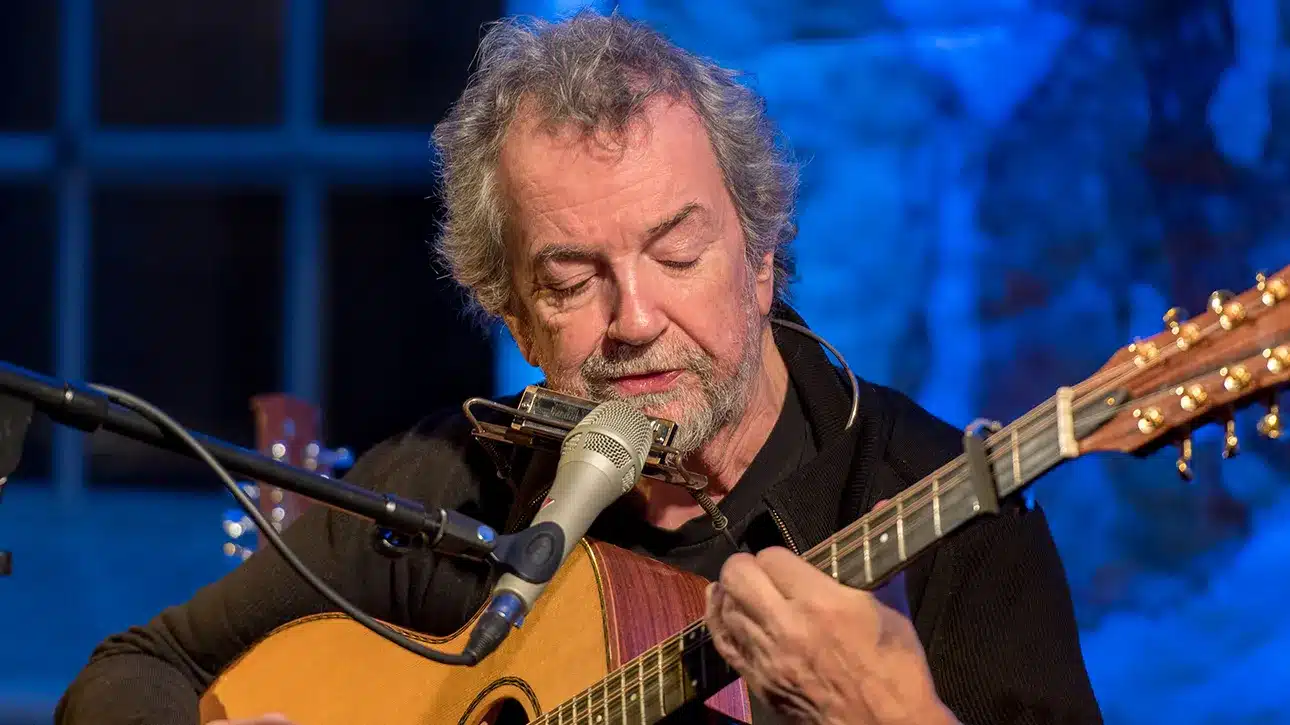
In the summer of 1968, aboard a dusty lorry grinding its way down a Bulgarian highway, a young Irish musician named Andy Irvine experienced a moment of auditory revelation. Unable to communicate with the driver due to a complete lack of a shared language, Irvine watched as the man reached out and switched on the dashboard radio. What emerged from the speaker was not merely background noise, but a complex, emotionally charged tapestry of Bulgarian traditional folk music. For Irvine—then a burgeoning figure in the Irish folk revival and fresh from his departure from the seminal band Sweeney’s Men—the experience sparked a lifelong obsession that would reshape the boundaries of modern Celtic music.
More than two decades later, this chance encounter culminated in the 1992 release of EastWind, a landmark collaborative album featuring Irvine and uilleann piping maestro Davy Spillane, produced and arranged by composer Bill Whelan. Released through Tara Records, the album stood as a daring cross-cultural experiment that merged the uneven metres, asymmetrical rhythms, and haunting modalities of the Balkans with the distinct vernacular of Irish traditional instrumentation.
Though major international record labels struggled to categorize the genre-defying project—famously passing on it despite praising its sheer brilliance—EastWind proved that musical traditions are not fragile artifacts to be preserved under glass, but living, breathing entities capable of profound cross-pollination. This report chronicles Irvine’s decades-long journey from an unscripted hitchhiker behind the Iron Curtain to the mastermind of a trans-European musical synthesis, examining the chronology of his travels, the technical challenges of Balkan rhythms, the making of the album, and the lasting legacy of a bridge built between Dublin and Sofia.
Detailed Chronology: From Counterculture Detours to the Birth of EastWind
1968: The Road Behind the Iron Curtain
While much of the 1960s counterculture youth movement pointed its compass toward the spiritual and psychedelic promise of India, Andy Irvine chose a different geographic trajectory. Fascinated since boyhood by the Cyrillic spelling of Bulgaria—България—collected from postage stamps, he viewed Eastern Europe as a realm that was tantalizingly remote without requiring a journey off the continent.
Leaving Sweeney’s Men behind, Irvine and his girlfriend, Muriel, embarked on an 18-month trek across Bulgaria, Romania, Yugoslavia, Greece, and Turkey. Traveling primarily on foot, via thumb, and living hand-to-mouth through busking, the pair navigated the geopolitical anxieties of the Cold War. At the Bulgarian border, Irvine harbored deep apprehensions that a long-haired Western hitchhiker carrying a mandolin would be summarily turned away. Instead, border guards greeted the instrument with fascination, trading a brief performance of Irish jigs while fiddling with a radio trying to catch popular singer Emile Dimitrov.
Not all authorities were so accommodating. In Ljubljana, Irvine was arrested for busking and hauled before an official on suspicion of vagrancy—an accusation he fiercely contested, insisting he was a professional artist rather than a beggar. Yet, moments of cultural triumph outweighed bureaucratic hostility. Sundays outside the Bucharest Zoo saw crowds swell around his open mandolin case, filled by afternoon’s end with multi-colored banknotes before the police inevitably intervened to disperse the gathering.
The 1970s: Absorbing the Asymmetrical Metres
The true hurdle wasn’t political suspicion, but musical literacy. Drawn instinctively to Bulgarian and Macedonian melodies, Irvine found himself intellectually and physically confounded by their rhythmic structures.
"I loved the music, but I didn’t quite understand it," Irvine recalled years later to folk publication fRoots. "It wasn’t exactly 1,2,3,4… Wow! That’s amazing! But when does it begin and end?"
Unlike the familiar 4/4 and 6/8 meters of Irish reels and jigs, Balkan dance music relied on additive, uneven meters featuring 7, 9, or 11 beats per measure. Undeterred, Irvine cleared out record shops wherever he found them, purchasing local vinyl with little to no knowledge of the artists. Back in Ireland, he subjected these records to rigorous, obsessive listening until the mathematical chaos resolved into intuitive motion.
By the mid-1970s, these influences began bleeding into his work with the legendary supergroup Planxty. Early attempts like "Mominsko Horo" paved the way for more ambitious numbers like "Smeceno Horo," recorded by a reunited Planxty in 1979. Traditional Irish musicians accustomed to standard time signatures approached these irregular grooves with a blend of awe and intimidation; master flutist Matt Molloy, despite performing "Smeceno Horo" with virtuosic precision, routinely required a refresher on the tune’s architecture before stepping on stage.
1991–1992: The Genesis and Realization of EastWind
For over a decade, the idea of recording a dedicated Balkan-Irish fusion album remained a recurring topic of late-night pub discussions in Dublin. The project finally crystallized when Irvine played a selection of Balkan tunes to composer Bill Whelan. Recognizing the weight of the concept, Whelan dialed John Cook at Tara Records, setting an immediate production machine into motion.
Whelan’s masterstroke was recruiting uilleann piper Davy Spillane. Having previously witnessed the aggressive, modern edge Spillane brought to the band Moving Hearts—where his pipes locked horns with saxophones—Whelan envisioned a similar dynamic for the Balkan material. Alongside Bulgarian multi-instrumentalist Nikola Parov, accordionist Máirtín O’Connor, fiddle player John Sheahan, singer Rita Connolly, and the peerless Hungarian vocalist Márta Sebestyén, the ensemble entered the studio.
The recording sessions yielded a breathtaking programmatic sweep of musical geography:
- "Chetvorno Horo": Opening the album, this track from Bulgaria’s western Śop region plunges the listener directly into high-octane dance structures, anchored by Irvine’s driving bouzouki and O’Connor’s accordion.
- "The Bear’s Rock" & "Kadana": Featuring the haunting vocals of Márta Sebestyén, these pieces shift the focus away from instrumental gymnastics toward the ancestral storytelling and social rituals of Macedonia and the Rhodope Mountains.
- "Illyrian Dawn": Serving as the emotional epicenter of the project, this piece reworks a slow Bulgarian air, beginning with Spillane’s low whistle before blooming into full uilleann pipes over Whelan’s spacious, cinematic keyboard arrangements.
- "Hard on the Heels": Closing the album, Irvine returned to his old Planxty staple "Smeceno Horo," pushing it through cascading meter changes to prove that the cross-cultural synthesis was no studio trick, but the natural culmination of a twenty-year artistic evolution.
Supporting Context & Metrics
To understand the magnitude of EastWind, one must examine the insular nature of both Irish traditional music and Eastern European folk preservation during the late 20th century.
- Geographic Span: Irvine’s initial overland journey covered approximately 5,000 kilometers across five nations, executed entirely via hitchhiking, walking, and public transit.
- Production Timeline: While the concept was conceived during Planxty’s active years in the 1970s, the physical recording of EastWind did not occur until the early 1990s—a gestation period of nearly 15 years of informal research, rehearsal, and persuasion.
- Distribution Bottlenecks: Upon completion, the album sat in limbo for 18 months at Tara Records. Major international distributors repeatedly rejected the master tapes not on the grounds of artistic merit, but due to a failure of industry imagination regarding marketing categories. It fit neither cleanly into "World Music," "Celtic Folk," nor "Contemporary Instrumental."
- Rhythmic Complexity: Traditional Bulgarian horos integrated into the album frequently operated on asymmetric divisions of time, such as 11/16 time (split into 2-2-3-2-2) or 7/8 time (split into 2-2-3), requiring Irish traditional players trained in binary forms to radically recalibrate their muscle memory.
Official Statements and Industry Reception
The friction between artistic innovation and commercial conservatism defined the early life of EastWind. Executives at major transnational labels praised the album’s brilliance while simultaneously turning it away due to marketing anxieties.
“This is one of the best records I have ever heard in my life, it’s really fantastic music… unfortunately we’re going to have to pass on it,” recalled Irvine of one executive’s verdict, perfectly capturing the corporate paralysis that plagued genre-fluid projects in the pre-internet era.
When the album was finally unleashed independently through Tara Records in 1992, it received critical acclaim for refusing to pander to superficial "world music" clichés. Rather than treating Balkan music as a museum piece or an exotic novelty, Irvine and his collaborators treated it as an equal partner in dialogue.
The ultimate validation came from within the tradition itself. Upon listening to the completed master recordings, Bulgarian virtuoso Nikola Parov delivered a verdict that delighted Irvine to his core:
"Well, it is not Bulgarian music, but it’s very good."
This succinct review validated Irvine’s foundational philosophy: true cross-cultural exchange does not seek mimicry or cultural appropriation, but rather permits foreign elements to pass entirely through the instincts, instruments, and living habits of the musicians in the room, creating an entirely new vernacular.
Future Outlook: The Enduring Legacy of Trans-European Folk
Decades after its initial release, EastWind stands as a masterclass in borderless artistic collaboration. In an era increasingly dominated by hyper-nationalism, cultural gatekeeping, and rigid genre classifications, the story of Andy Irvine’s journey offers a vital counter-narrative.
The album proved that folk music is, by its very DNA, an immigrant. It travels across borders via lorry drivers, hitchhikers, refugees, and vagabond musicians. It adapts, mutates, struggles against unfamiliar rhythms, and ultimately finds harmony in unexpected places.
As contemporary folk artists continue to explore the fringes of transnational collaboration, the blueprint laid down by Irvine, Spillane, Whelan, and Parov remains remarkably modern. The bridge built in 1968 on a Bulgarian highway—fortified by decades of listening, failing, learning, and recording—remains wide open. The distance between Dublin and Sofia was never a matter of geography; it was simply waiting for someone brave enough to step to an uneven beat.







Belum ada komentar. Jadilah yang pertama berkomentar!