

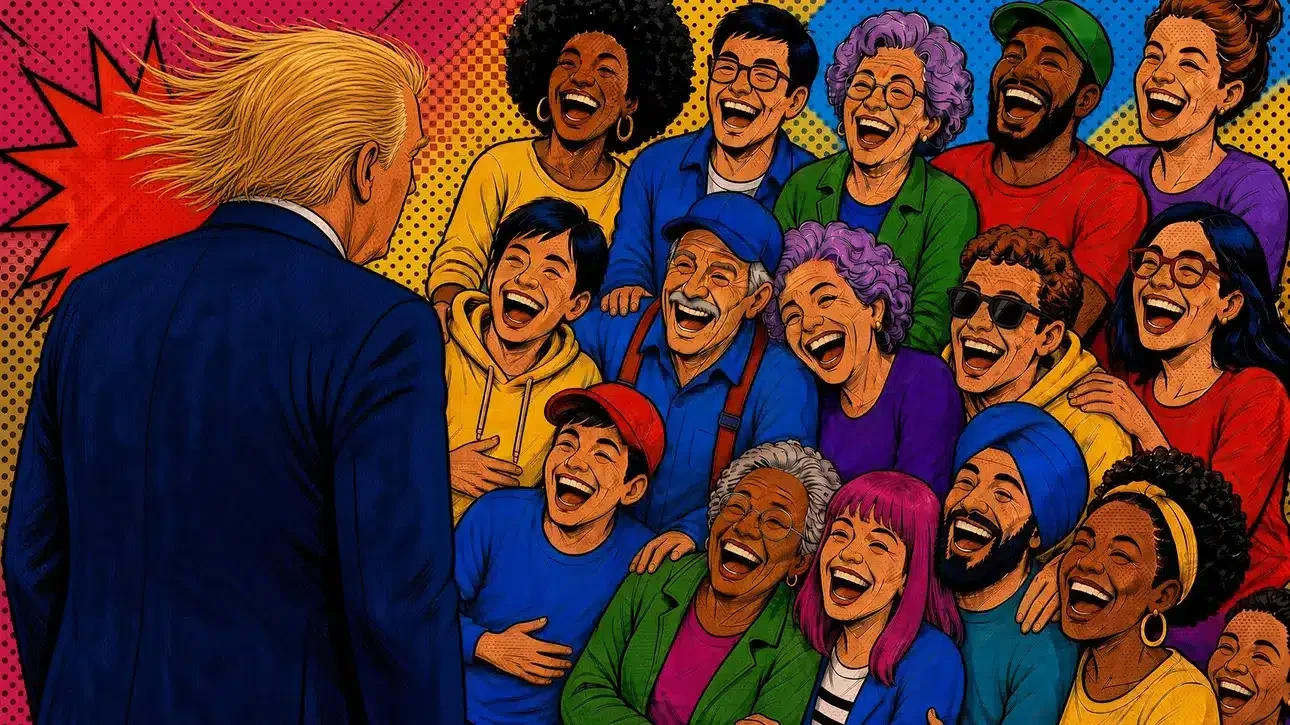
Executive Overview
As democratic institutions face unprecedented strain and the specter of autocracy looms over the American political landscape, traditional avenues of opposition have frequently found themselves gridlocked. With the legislative branches often hamstrung by partisan polarization and the judiciary increasingly permitting executive overreach, frustrated citizens have looked beyond conventional politics for a defense of democratic norms. Into this vacuum has stepped an unlikely vanguard: late-night television comedians and political satirists.
Far from being mere purveyors of late-night entertainment, figures such as Jimmy Kimmel, Stephen Colbert, and their historical forebears have evolved into vital guardians of the collective conscience. Utilizing humor as both a shield and a weapon, these satirists challenge the infallible image demanded by aspiring autocrats, cutting through state-sanctioned narratives and offering a model of deliberative democracy.
This dynamic culminated in a high-stakes showdown in late 2025, when the Trump administration—leveraging regulatory bodies and corporate vulnerabilities—sought to silence Jimmy Kimmel following a political controversy. Yet, the attempt triggered a massive public backlash, stock plunges, and consumer boycotts that ultimately forced a humiliating retreat by corporate media executives and the administration alike. This pivotal event underscores a fundamental truth of modern politics: while authoritarianism demands unthinking obedience, fear, and solemn hero worship, a public armed with humor and economic leverage remains uniquely equipped to resist the erosion of free speech.
Detailed Chronology: The Showdown Over Late-Night Television
The tensions between the current administration and the fraternity of late-night talk show hosts have steadily escalated from uneasy coexistence to open confrontation. For decades, an unwritten social contract dictated that American presidents—regardless of party—would endure late-night mockery as a routine cost of holding public office. However, as the political climate has grown increasingly authoritarian, this tolerance has evaporated.
The Ousting of Stephen Colbert
The systematic targeting of critical voices began in earnest in July 2025. Amid complex corporate negotiations requiring federal regulatory approval, CBS’s parent company, Paramount, announced the imminent cancellation of Stephen Colbert’s late-night program. For media observers, the timing was far from coincidental; it served as a clear demonstration of how corporate vulnerabilities could be exploited by political actors to muzzle prominent critics.
The Charlie Kirk Assassination and the Targeting of Jimmy Kimmel
Buoyed by the removal of Colbert, the administration set its sights on its next target: Jimmy Kimmel. The flashpoint arrived in September 2025 in the wake of the Charlie Kirk assassination, an incident that ignited intense fury within far-right information ecosystems.
- September 25, 2025: During his nightly monologue, Kimmel openly criticized the "MAGA gang" for attempting to weaponize the tragedy for political gain regardless of the emerging facts.
- The Regulatory Pounce: Swiftly capitalizing on the manufactured outrage, Federal Communications Commission (FCC) Chairman Brendan Carr publicly threatened regulatory retaliation against ABC and its parent company, Disney, accusing the network of broadcasting inflammatory content.
- Corporate Capitulation: Pressured by the threat of regulatory hurdles affecting a major pending business merger, Nexstar Media Group pulled Jimmy Kimmel Live! from its ABC-affiliated stations. Disney swiftly intervened, instructing ABC to halt all broadcasts and suspending Kimmel indefinitely.
- The Administration’s Triumph: Celebrating the development, the administration signaled that the comedy world’s most persistent critic had finally been neutralized.
The Resistance and Reversal
Unlike previous instances of silencing, the reaction to Kimmel’s suspension sparked immediate, asymmetric warfare from the American public and the broader entertainment community:
- Industry Solidarity: Competing networks and comedians rallied around Kimmel, offering unreserved condemnations of the suspension as a direct assault on the First Amendment.
- Consumer Power: Drawing on years of earned trust, the viewing public mobilized. Threats of coordinated boycotts against Disney products sent the company’s stock price tumbling.
- The Retreat: Recognizing the immense economic and political fallout, Disney, ABC, and the administration quickly backed down. Kimmel returned to the airwaves to a hero’s welcome, his national approval ratings soaring as the administration’s vindictive maneuver backfired.
Supporting Context & Metrics: The Cognitive and Historical Mechanics of Satire
To understand why humor provokes such visceral reactions from authoritarian figures, one must examine the cognitive and historical functions of satire.
Humor as the Antidote to Authoritarianism
Philosophers and social scientists have long noted the incompatibility between totalitarian control and genuine laughter. As scholar John Morreall observes in Taking Laughter Seriously, “[People] with a sense of humor can never be fully dominated.” While fascism demands rigid conformity, absolute obedience, and solemn hero worship, humor relies on incongruity, critical thinking, and moral clarity.
When satirical humor exposes hypocrisy, it shatters the illusion of omnipotence that autocrats desperately project. Narcissistic and egotistical leaders require an environment devoid of humor—a space where obedience is normalized and dissent is criminalized. Throughout history, repressive regimes from Nazi Germany—where citizens were imprisoned for naming pets after dictators—to the Soviet Union have sought to stamp out independent comedy. Because modern populists operate within nominal democracies, they cannot employ outright purges, yet their rhetorical attacks on talk-show hosts reveal an identical authoritarian impulse.
The Journalistic Void and the Rise of Comedic Reporters
The importance of late-night satirists has been exponentially magnified by the systemic failure of traditional American journalism. In contrast to nations like the United Kingdom, where journalists relentlessly press politicians during interviews, American media figures have increasingly practiced a weak-kneed brand of reporting. Fearing exclusion from favored press corps or hostile reprisals, many mainstream journalists drop critical lines of inquiry at the first sign of a dismissive insult.
Consequently, a majority of citizens now place more trust in late-night comedians for their news and analysis than in traditional broadcasters. Programs modeled after The Daily Show have pioneered a form of "discursive integration," utilizing parody and sharp interrogation to expose the false equivalency inherent in "objective journalism." As media scholar Geoffrey Baym argues, these satirists offer a "rhetoric of challenge" that fosters civic participation by engaging audiences on a moral plane rather than merely a partisan one.
Official Statements and Reactions
The war of words surrounding the late-night purge brought forth starkly contrasting viewpoints from government officials, network executives, and cultural figures.
- The Administration’s Stance: Celebrating the silencing of critical voices, leadership framed the actions of regulatory bodies as a restoration of public accountability. Following the initial suppression of critical hosts, triumphant statements from the administration signaled zero tolerance for commentary deemed insulting to executive authority. FCC Chairman Brendan Carr defended regulatory scrutiny as a necessary check on broadcast standards, though critics viewed it as a thinly veiled weaponization of state power.
- The Comedic Community: In the wake of the suspensions, late-night hosts mounted a united defense of free expression. Comedians across various networks emphasized that the role of satire is not to endear itself to those in power, but to serve as a mirror reflecting the moral shortcomings of governance.
- Public and Economic Reponse: Consumer advocacy groups and financial analysts noted that the swift drop in corporate valuations during the boycotts sent an unmistakable message to boardrooms across the nation: pandering to authoritarian overreach carries a devastating economic price.
Future Outlook: Guardrails and Consumer Power
The saga surrounding Jimmy Kimmel, Stephen Colbert, and the broader late-night television landscape serves as both a cautionary tale and a blueprint for democratic resilience in the twenty-first century.
As long as aspiring autocrats seek to dismantle democratic guardrails, attacks on free expression and independent media will remain a primary tactic. However, the events of late 2025 demonstrated that the ultimate power rests not within executive boardrooms or regulatory agencies, but with the citizenry.
When traditional journalistic watchdogs falter, political satire fills the breach, offering a moral compass and maintaining the psychological resistance necessary to prevent total domination. The willingness of ordinary citizens to deploy their economic power—boycotting complicit corporations and demanding accountability—proves that authoritarian overreach can be checked. Ultimately, as long as critical humor openly flourishes and a vigilant public stands ready to defend it, the foundational liberties of American democracy possess a resilient, unyielding defense.








Belum ada komentar. Jadilah yang pertama berkomentar!