

Executive Overview
While grounded action thrillers like Die Hard or the gritty realism of the Jason Bourne franchise rely on our immediate, everyday understanding of physics, geography, and geopolitics, a distinct elite category of action cinema demands something vastly different. These films construct immersive, self-contained universes that operate on their own internal logics, hyperreal physics, and distinct cultural codes. When executed with precision, world-building acts as the ultimate amplifier for the standard good-versus-evil narrative or high-stakes MacGuffin chase.
World-building in the action genre is not merely about set design or CGI vistas; it is an exercise in tone, lore, and atmosphere. It transforms a routine sequence of gunfights and explosions into an exploration of alternate societal norms, dystopian survivalism, or mythic underworlds. This comprehensive examination explores ten landmark films and cinematic franchises that have successfully leveraged intricate, visionary world-building to transcend traditional genre boundaries, cementing their legacies in motion picture history.
Detailed Chronology of World-Building Milestones in Action Cinema
The evolution of world-building within the action genre has transitioned from subtle background atmospheric design to elaborate, rule-bound mythologies.

1. The James Bond Franchise (1962–Present)
Operating for over six decades, Eon Productions’ James Bond series has continuously adapted source material to reflect shifting geopolitical realities while maintaining a hyper-consistent internal mythos. From Sean Connery’s Cold War espionage to Daniel Craig’s gritty, fallible modern iteration, the Bond universe relies on unwavering narrative touchstones: far-reaching villainous syndicates with inexhaustible finances, clandestine mountain fortresses, and high-society galas.
The premier entry of the modern era, Casino Royale (2006), directed by Martin Campbell, serves as a masterclass in re-contextualizing established lore. By stripping away the invisible-car gadgets of the late Brosnan era, Campbell grounded the franchise in a moody, visceral reality while retaining the grand-scale spectacle. The blistering opening parkour foot chase established a new standard for the character’s physical vulnerability and kinetic momentum.
2. The Warriors (1979)
Walter Hill’s cult classic presents an alternative, hyper-stylized vision of a New York City entirely subjugated by sprawling, costumed street gangs and subjected to strict municipal curfews. The narrative follows the titular Coney Island gang on a perilous, nocturnal trek across the five boroughs after being framed for a leader’s assassination. Hill’s vision of urban tribalism creates an immediate sense of geographic anxiety and immediacy, influencing decades of subsequent urban thrillers and video game aesthetics through its tightly paced, 90-minute operational efficiency.
3. Mad Max Franchise (1979–Present)
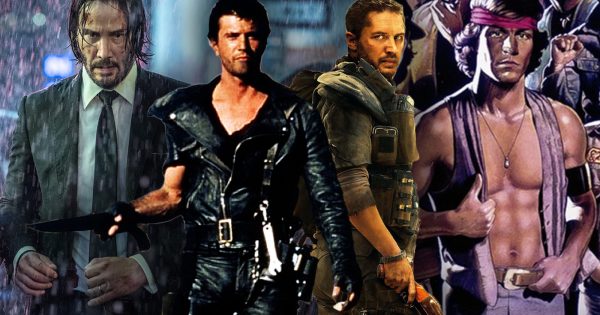
George Miller’s post-apocalyptic saga represents the gold standard of environmental world-building. What began as a low-budget, grindhouse-adjacent thriller set on the fringes of a dying Australian civilization in the original Mad Max (1979) rapidly mutated into myth-making operatic chaos with The Road Warrior (1981).
Miller’s universe is defined by scarce resources—gasoline, water, and automotive parts—and an unyielding reliance on vehicular warfare. While recent entries like Furiosa: A Mad Max Saga expanded the broader geopolitical lore of the Wasteland, The Road Warrior and Mad Max: Fury Road remain the high-water marks. They present a fully realized tribal wasteland driven by stark visual motifs and relentless momentum, anchored by Mel Gibson and Tom Hardy’s varying portrayals of the haunted, stoic drifter.
4. Desperado (1995)
Robert Rodriguez took the micro-budget aesthetic of El Mariachi and transformed it into a sun-baked, sweaty mythic western in Desperado. The film’s structural brilliance lies in its world-building through exposition: Steve Buscemi enters a Mexican dive bar, recounting Antonio Banderas’s previous rampage in hyperbolic, legendary proportions.

When Banderas finally steps on screen, his execution of violence matches Buscemi’s myth-making tall tales. The universe of Desperado operates on a cartoonish, graphic-novel logic where the heat is sweltering, the guitars double as weapons cases, and the anti-hero is practically unstoppable.
5. Demolition Man (1993)
Blending science fiction satire with high-octane action, Demolition Man constructs an ingenious two-era world. It contrasts a crime-ridden, dystopian Los Angeles of the late 20th century with "San Angeles" of 2032—a hyper-sanitized, utopian society where offensive language, salt, and physical contact are banned.
Sylvester Stallone’s hyper-masculine, anti-authoritarian protagonist clashes against Wesley Snipes’s anarchic villain, Simon Phoenix, within a society that has legislated away its own survival instincts. The film’s satirical world-building has proven remarkably prescient regarding modern cultural discourse, elevated by dynamic performances from Sandra Bullock and Snipes.
6. The Matrix (1999)
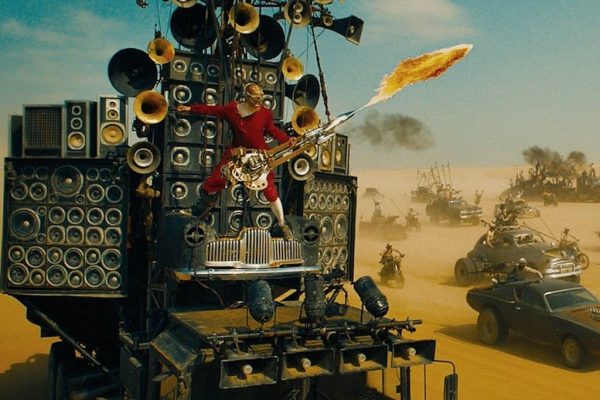
The Wachowskis redefined modern science-fiction action by constructing a deeply philosophical, multi-layered digital dystopia. Drawing from manga, cyberpunk literature, martial arts cinema, and Gnostic philosophy, The Matrix created a world where humanity is harvested as energy by sentient machines within a simulated reality.
The introduction of "bullet time" and gravity-defying wire-fu was not merely a visual gimmick; it was intrinsically tied to the physics of the simulated world (the Matrix) versus the stark, industrialized reality of Zion and the Nebuchadnezzar. While the sequels expanded the lore exponentially—sometimes to the detriment of narrative clarity—the original film remains a monumental achievement in world-building and conceptual design.
7. Mission: Impossible Franchise (1996–Present)
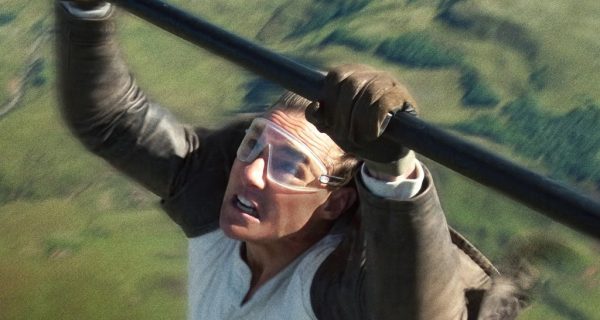
Beginning with Brian De Palma’s Hitchcockian, espionage-driven original, the Mission: Impossible franchise established a distinct cinematic language centered around bureaucratic paranoia, rogue agencies, and elusive MacGuffins (from NOC lists to the nebulous "Rabbit’s Foot").

Over the decades, under the stewardship of directors like Christopher McQuarrie and the death-defying commitments of lead actor Tom Cruise, the franchise evolved its world-building around a meta-narrative: what death-defying, practical stunt can the narrative organically justify next? This meta-structural focus has kept the IMF (Impossible Missions Force) relevant, blending classic Cold War spycraft with high-tech, modern threat matrices.
8. Charlie’s Angels (2000)
Director McG’s big-screen adaptation of the television classic discarded gritty realism in favor of a bright, infectious, bubblegum hyperreality. Cameron Diaz, Drew Barrymore, and Lucy Liu portray elite operatives who glide through martial arts brawls and spontaneous dance numbers with physics-defying grace.
Operating under the enigmatic directives of the unseen Charlie Townsend, the agency’s infrastructure allows for endless costume changes, globe-trotting espionage, and tongue-in-cheek pop culture references. This carefree approach provided a distinct flavor of campy action that recent, overly grounded reboots failed to capture.
9. The Fast and the Furious Franchise (2001–Present)
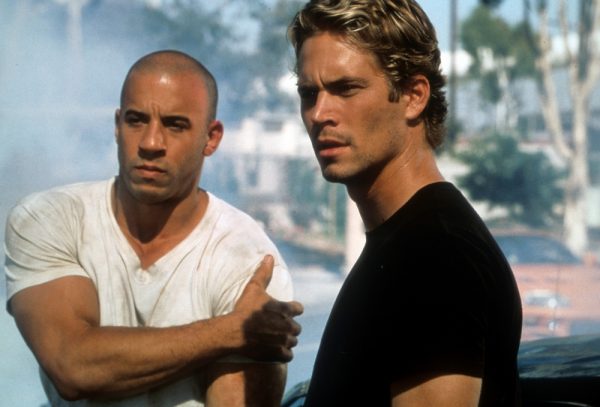
Few franchises have undergone a world-building metamorphosis as extreme as Fast & Furious. Originating as a modest, Los Angeles street-racing riff on Point Break, the series progressively expanded its scope into a globe-trotting, superhero-adjacent saga featuring international espionage, orbital space travel, and quasi-immortal protagonists.
Vin Diesel’s central mantra of "family" anchors a world where physics are treated as mere suggestions, character deaths are routinely reversed, and vehicular stunts defy all laws of momentum. Despite its narrative absurdities, the franchise’s commitment to its own escalating mythology has forged one of modern cinema’s most resilient universes.
10. John Wick Franchise (2014–Present)
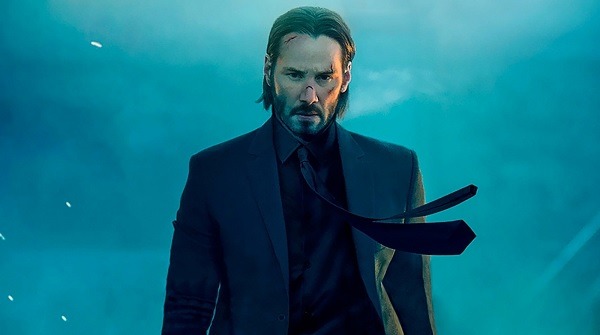
Directly born from the minds behind modern stunt choreography, Chad Stahelski and Derek Kolstad created a meticulously detailed criminal underworld in John Wick. The franchise builds its world on ancient codes, strict underworld etiquette, neutral safe havens (The Continental Hotel), and a global currency system minted in gold coins.
As the series expanded across multiple sequels, this neon-drenched, hyperreal underworld revealed a vast, shadowy administrative body known as the High Table. Coupled with bulletproof tailoring, international assassin syndicates, and Keanu Reeves’s legendary, relentless anti-hero, the John Wick universe represents contemporary action world-building at its most meticulously orchestrated.
Supporting Context & Metrics: The Box Office Value of Lore
The financial viability of world-building in action cinema is supported by historical box office metrics and audience engagement data. Franchises that invest heavily in expanding their internal mythologies tend to exhibit higher audience retention and multi-film sustainability.
| Franchise / Film | Initial Box Office (Worldwide) | Peak Franchise Installment | Key World-Building Element |
|---|---|---|---|
| James Bond | $59.5 Million (Dr. No) | $1.11 Billion (Skyfall) | Secret syndicates, espionage tech, recurring archetypes |
| Mad Max | $100 Million (Mad Max) | $380 Million (Fury Road) | Post-apocalyptic scarcity, vehicular tribalism |
| The Matrix | $466 Million (The Matrix) | $742 Million (Reloaded) | Simulated reality vs. industrialized dystopia |
| Mission: Impossible | $457 Million (Mission: Impossible) | $791 Million (Fallout) | IMF bureaucracy, practical stunt set-pieces |
| John Wick | $86 Million (John Wick) | $440 Million (Chapter 4) | Underworld hotel rules, gold-coin economy |
| Fast & Furious | $207 Million (The Fast and the Furious) | $1.51 Billion (Furious 7) | Found family, escalating vehicle-based espionage |
As indicated by the data, franchises that introduce a concrete, recognizable operational logic (such as the rules of the High Table in John Wick or the covert agency protocols in Mission: Impossible) see exponential financial growth as their universes expand over multiple installments.
Official Industry Perspectives on Universe Construction
Renowned directors and screenwriters have frequently emphasized the necessity of foundational world-building over simple, disconnected action set pieces.
"Action without context is just noise. You can have the most expensive car chase or the most intricate martial arts choreography ever filmed, but if the audience doesn’t understand the rules of the world the characters inhabit—what they stand to lose within that specific reality—it fails to resonate on an emotional level."
— George Miller, Director (Mad Max: Fury Road, Furiosa)
Similarly, action auteur Chad Stahelski has noted the importance of mythology in modern franchise design:
"When we built the world of John Wick, we didn’t just want a guy seeking revenge for a dog. We wanted a mirror-universe of our own society, complete with its own economy, its own hospitality industry, and its own secular priesthood of killers. People return to these movies because they want to inhabit that rules-based playground for two hours."
— Chad Stahelski, Director (John Wick series)
Future Outlook: The Next Frontier of Cinematic Action Universes
As the cinematic landscape continues to adapt to streaming platforms, shared universes, and technological advancements like virtual production and artificial intelligence, the demands for action world-building are shifting.
Audiences increasingly reject generic, cookie-cutter action thrillers that lack a distinct visual and atmospheric signature. Consequently, future action cinema must prioritize immersive, highly stylized world-building to capture the public imagination. Whether through the neon-soaked subterranean networks of modern hitmen or the wind-swept, rusted expanses of dystopian futures, the enduring success of the action genre will continue to rest on the strength, originality, and internal consistency of the worlds it dares to create.









Belum ada komentar. Jadilah yang pertama berkomentar!