

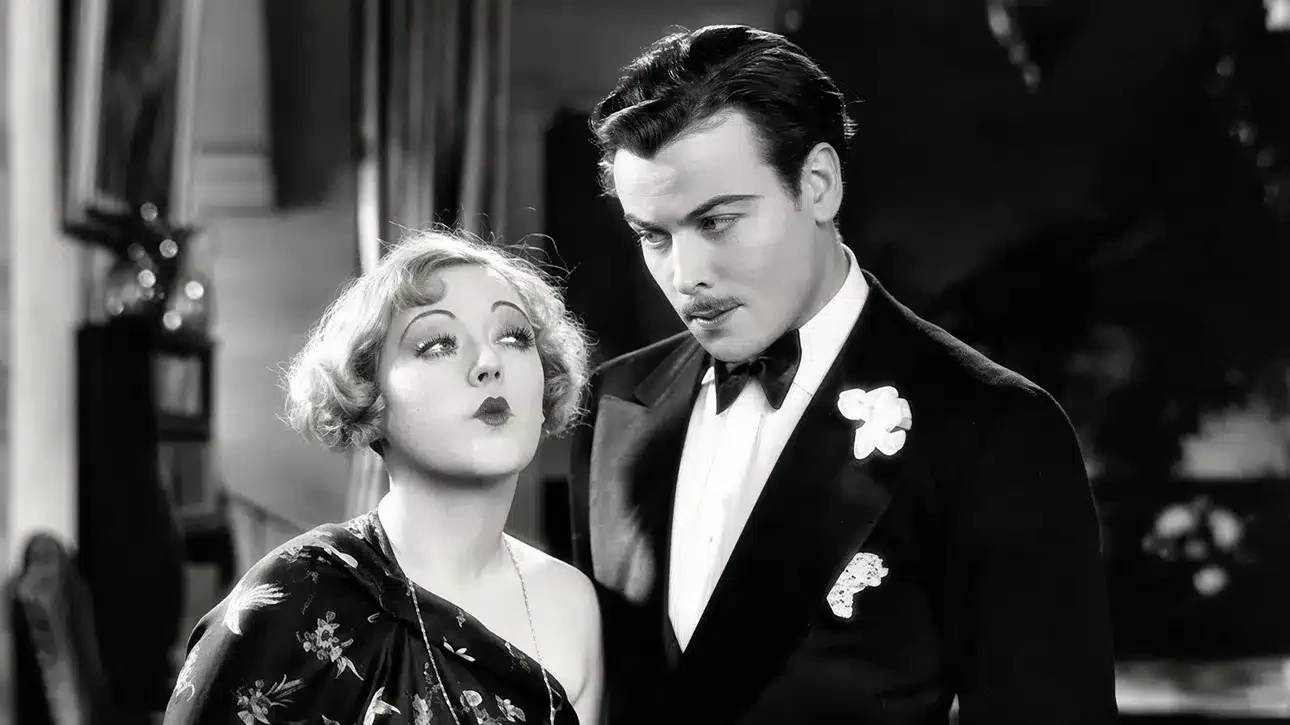
As silent film star Norma Desmond famously declared in Billy Wilder’s masterwork Sunset Boulevard (1950), “We didn’t need dialogue. We had faces!” While the silent era certainly utilized its fair share of title cards to drive exposition, the core truth of Desmond’s proclamation is triumphantly validated in two newly restored Blu-ray releases showcasing the brilliant comedic timing, fierce charisma, and dynamic agency of two of the 1920s’ finest leading ladies: Marion Davies and Laura La Plante.
Arriving via boutique home video distributors Undercrank Productions and Kino Lorber, respectively, Robert Z. Leonard’s The Cardboard Lover (1928) and William Wyler’s The Love Trap (1929) offer a fascinating look at gender dynamics during the twilight of the silent era. Coincidentally or by deliberate design, both films challenge rigid historical gender roles by thrusting their heroines into traditionally aggressive, "masculine" pursuits of romance, subverting the tired tropes of passive womanhood. Nearly a century after their initial theatrical runs, these newly preserved artifacts provide an invaluable window into cinematic history, shedding light on the mechanics of early Hollywood storytelling, studio politics, and the turbulent, experimental transition from silent expressionism to synchronized sound.
Detailed Chronology: The Making and Restoration of Two Silent Gems
The Cardboard Lover (1928): Marion Davies Takes the Driver’s Seat
To understand Marion Davies’ cinematic legacy requires stripping away the heavy veneer of gossip that has long overshadowed her career. While history frequently pigeonholes her as the unmarried companion of publishing titan William Randolph Hearst, such biographical shorthand diminishes her formidable business acumen, her undeniable star power, and her financial independence. Hearst’s Cosmopolitan Pictures heavily financed Davies’ film slate, but it was Davies herself who captured the public imagination. Following her 1917 feature debut in Runaway Romany—a project she wrote and her brother-in-law George W. Lederer directed—Davies starred in 29 films under the Cosmopolitan banner.
While she attempted various genres, audiences and critics agreed that her true forte lay in vivacious, puckish, prankster comedies. The Cardboard Lover, directed by Robert Z. Leonard, stands as one of her three major comedic triumphs of 1928.
The narrative introduces American student Sally Baxter (Davies) on a whirlwind tour of the French Riviera. Brash, impulsive, and delightfully unconcerned with social propriety, Sally announces her arrival by shattering a tour bus window just to get a better view. Driven by an obsession to secure the autograph of aloof, handsome tennis star Andre Briault (Nils Asther)—whom she shamelessly approaches with the declaration, "Because you’re so beautiful!"—Sally embarks on an escalating campaign of comic chaos.
When Andre finds himself trapped between a sleazy opera baritone (played by actual opera star Andrés de Segurola) and his unfaithful, glamorous girlfriend Simone (Jetta Goudal), he enlists Sally to masquerade as his lover to ward off temptation. What follows is a masterclass in comic pursuit. Sally turns the traditional cinematic trope of the "pestiferous male suitor" on its head, tailing Andre relentlessly and invading his home. In one of the film’s most memorable sequences, she coerces a bellboy into trading clothes with her, executing physical comedy with the precision of a seasoned vaudevillian.
The film’s source material marks an intriguing international exchange. Adapted from a 1926 French play by Jacques Deval—translated into English by Valerie Wyngate and legendary comic writer P.G. Wodehouse—the work previously played London’s West End as Her Cardboard Lover, starring Tallulah Bankhead and Leslie Howard. However, Davies and Leonard radically inverted the sexual dynamics present in the original play and its later sound-era remakes (such as Buster Keaton’s 1932 vehicle The Passionate Plumber and George Cukor’s 1942 adaptation starring Norma Shearer and Robert Taylor). In Davies’ hands, the woman is the relentless pursuer, upending conventional expectations of cinematic romance.
Undercrank Productions’ new digital restoration of The Cardboard Lover breathes new life into this lost chapter of cinema history. Sourced primarily from Marion Davies’ personal nitrate print housed at the Library of Congress, supplemented by two additional archival sources, the release features a fresh organ score by silent film accompanist Ben Model. Impressively, the Blu-ray includes a side-by-side "before and after" demonstration of Reel Five, illustrating how advanced digital restoration techniques can mitigate severe nitrate decomposition without flattening the image’s inherent cinematic texture.

The Love Trap (1929): William Wyler and Laura La Plante’s Sonic Experiment
If The Cardboard Lover operates as a pure distillation of late-silent screwball energy, William Wyler’s The Love Trap (1929) captures Hollywood mid-metamorphosis, standing precariously on the fault line between silent visual storytelling and the seismic arrival of "talkies."
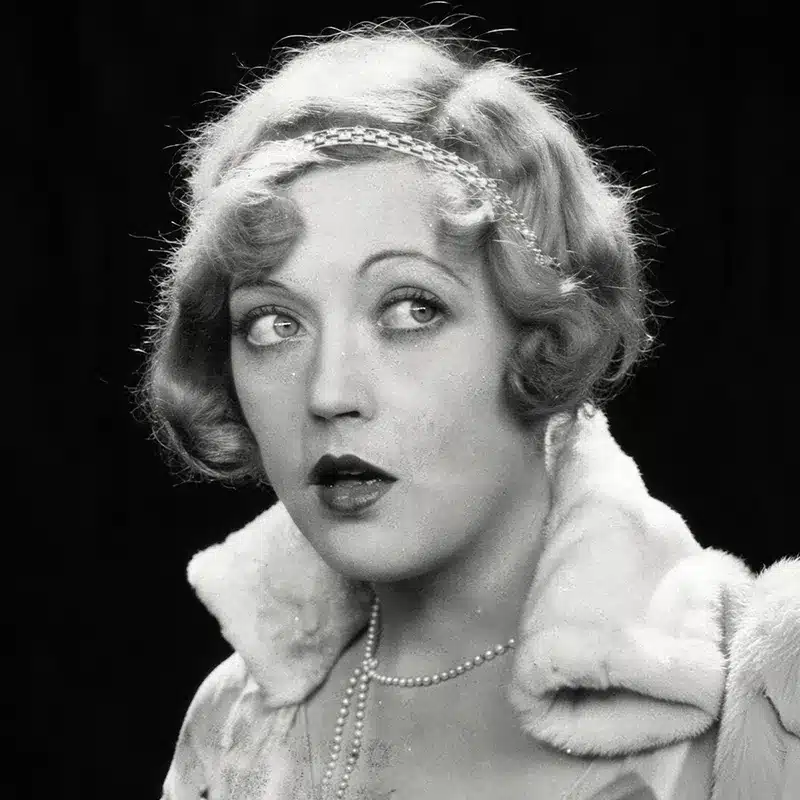
Laura La Plante, instantly recognizable by her signature wave-curled blonde helmet and infectious, bewitching sparkle, possessed an uncanny ability to project rich, complex interiority without uttering a word. Every movement in her performance is a kaleidoscope of meticulous gestures—spontaneous, unforced, and deeply human. Whether executing a devastating pratfall that instantly pivots from slapstick hilarity to genuine pathos, or letting micro-expressions register the quiet devastation of losing a livelihood, La Plante anchors the breezy, 70-minute narrative of The Love Trap with unmatched star power.
The film opens with a brilliantly choreographed sequence that doubles as a meta-textual nod to the changing state of cinema. A chalkboard announces a chorus rehearsal. A musician walks to a piano in total silence, positions his hands over the keys, and begins to play precisely as the pre-recorded soundtrack kicks in. This diegetic cue subtly alerts the audience to the presence of recorded sound, even though spoken dialogue remains absent for the first 40 minutes of the film.
La Plante plays Evelyn Todd, a chorus girl who is unceremoniously fired by a tyrannical dance director. Fleeing to her dressing room to process her impending eviction and job loss, her body betrays her despair; despite her tears, her foot instinctively taps in rhythm to the muffled rehearsal music echoing from the floor below.
Urged on by her friend Bunny (Jocelyn Lee), Evelyn attends a high-society party hosted by wealthy cad Guy Emory (Robert Ellis) under the dubious advice that "there’s no reason for a good-looking kid like you to be broke in New York." After evading Emory’s aggressive advances—which leave her stripped down to a slip and a kimono while her furniture is unceremoniously dumped onto the sidewalk—Evelyn finds herself entangled in a web of class snobbery and sexual double standards.
When the film abruptly transitions into synchronized sound for its final act, it transforms into a talkie that still relies heavily on visual storytelling. The narrative breezes past a whirlwind romance with wealthy heir Paul Harrington (played by busy leading man Neil Hamilton, decades before his immortal turn as Commissioner Gordon in the 1966 Batman television series), hurtling toward a climax where Evelyn leverages high-society hypocrisy to turn the tables on her tormentors.
According to archival commentary by film historian Jason Ney, The Love Trap was so suggestive in its depiction of class and sexual exploitation that it triggered cuts from Pennsylvania’s aggressive film censors and earned an outright ban in British Columbia. Released on the cusp of the Code era, it remains a fascinating relic of pre-Code naughtiness.
Kino Lorber’s Blu-ray presentation is sourced from a pristine 4K digital restoration by Universal Pictures, utilizing a 35mm nitrate print preserved by the Wyler Estate. While the early dialogue recording retains the raw, occasionally uneven sonic qualities characteristic of 1929 sound engineering, the visual presentation is nothing short of breathtaking.
Supporting Context & Metrics
To fully appreciate the cultural and artistic weight of these home video releases, it is vital to examine the institutional infrastructure and historical metrics surrounding their production and preservation:
- The Transition Window (1928–1929): The American film industry experienced its fastest technological overhaul during this brief eighteen-month window. By the end of 1929, major studios had converted nearly all production facilities to sound. Consequently, films like The Cardboard Lover represent the absolute zenith of mature silent comedy technique, while The Love Trap documents the messy, experimental hybrid phase of the "part-talkie."
- Archival Preservation Metrics: Nitrate film stock is notoriously unstable and prone to catastrophic chemical decomposition. Undercrank Productions’ restoration of The Cardboard Lover drew from three distinct archival elements, chief among them being Marion Davies’ personal collection preserved at the Library of Congress. Similarly, Kino Lorber’s release of The Love Trap leverages Universal’s state-of-the-art 4K scanning protocols, reversing decades of physical decay on surviving 35mm nitrate elements.
- Directorial Pedigrees: The Love Trap marks an essential early stepping stone in the career of William Wyler. Brought to Universal Pictures from Germany at the behest of his cousin Carl Laemmle, Wyler would go on to amass a staggering twelve Academy Award nominations for Best Director—securing three wins—making him one of the most celebrated filmmakers in Hollywood history and cementing his early mastery of visual composition alongside cinematographer Gilbert Warrenton.
Official Statements & Archival Insights
Film historians and preservationists have increasingly emphasized the necessity of rescuing these overlooked titles from obscurity to re-evaluate the breadth of female agency in early cinema.
In archival commentaries accompanying these releases, scholars have pushed back against the reductive historical narratives that paint silent-era heroines as helpless damsels. As noted in critical evaluations of Marion Davies’ filmography, her self-financed and carefully curated comedic vehicles consistently subverted the patriarchal structures of the 1920s. By placing women in the role of the aggressive pursuer—a dynamic traditionally reserved for male leads in Hollywood farce—Davies and her contemporaries actively interrogated the gender politics of the Jazz Age.
Furthermore, technical analysts reviewing the restoration processes emphasize the triumph of modern digital tools in recovering lost cinematic heritage. Representatives from Undercrank Productions noted that the side-by-side reconstruction reels included on The Cardboard Lover disc serve an educational imperative, demonstrating to contemporary audiences the microscopic precision required to digitally heal decades of warping, scratching, and emulsion flaking on fragile archival elements without altering the original artistic intent.
Future Outlook
The sustained commercial viability and critical reappraisal of silent cinema in the high-definition era point toward a promising future for physical media preservation. As boutique labels like Kino Lorber, Undercrank Productions, Criterion, and Flicker Alley continue to partner with institutions such as the Library of Congress, the George Eastman Museum, and international cinematheques, lost chapters of film history are steadily being rescued from the vaults.
The renewed availability of The Cardboard Lover and The Love Trap proves that the silent era’s masterworks—and its undervalued comic treasures—possess an enduring resonance. By challenging outdated assumptions about early cinema as primitive or overly melodramatic, these restored Blu-rays invite modern viewers to witness the sophistication, wit, and sheer physical fearlessness of performers like Marion Davies and Laura La Plante. Nearly one hundred years after they first flickered on silver screens, these trailblazing women continue to command our attention, reminding us that true cinematic charisma requires no dialogue at all—just a brilliant face turning the tables on convention.





Belum ada komentar. Jadilah yang pertama berkomentar!