

Executive Overview
For decades, Pulitzer Prize-winning author Colson Whitehead has occupied a rarified tier in the American literary landscape. Celebrated for high-concept, critically lauded fiction that effortlessly commands prestigious awards, sold-out speaking engagements, and reverent features in The New Yorker, Whitehead’s pedigree has long aligned him with the upper echelons of literary modernism. Yet, his relationship with genre fiction—specifically crime fiction—has always possessed a fascinating complexity.
Much like Jonathan Lethem, another quintessential New York-centric writer who navigated the boundary between gritty pulp lineages and high-art acceptance, Whitehead has occasionally dipped his toes into genre tropes before vaulting past them. This dynamic makes his newly concluded "Harlem Trilogy"—stretching from Harlem Shuffle (2021) and Crook Manifesto (2024) to the final installment, Cool Machine—such a thrilling, unexpected cultural event.
These slyly humorous, propulsive page-turners represent a brand of unabashed crime fiction rarely encountered in contemporary letters. Yet, to categorize the trilogy merely as a genre exercise is to miss its heartbeat. While it features classic noir architecture—a sharp, observant operator repeatedly pulled into the underworld—it ultimately subverts the conventions of the traditional mystery. The Edgar Awards may celebrate meticulous puzzle-boxes and definitive resolutions, but the Harlem Trilogy cares remarkably little for the simple satisfaction of a crime solved.
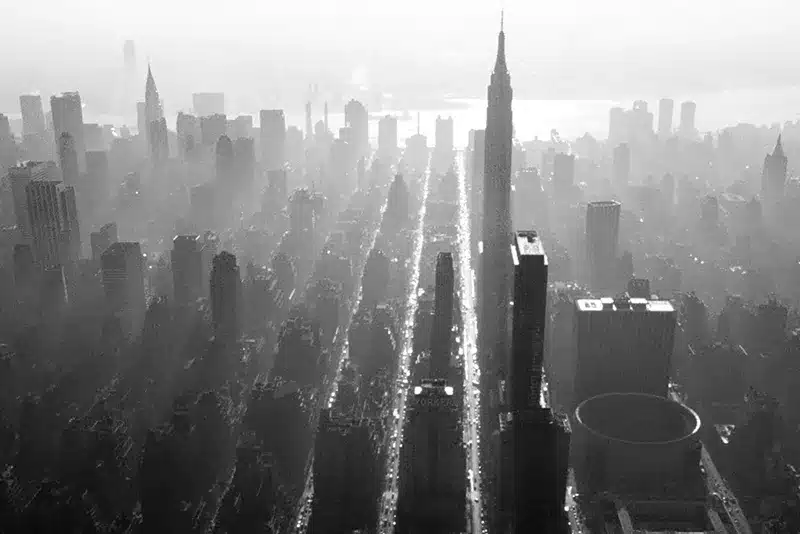
Instead, across three decades of sweeping socio-political transformation, Whitehead has engineered something far grander: an expansive, deeply interior portrait of New York City through the eyes of Ray Carney—a furniture store dealer who moonlights as a fence for stolen goods. Through Carney’s distinct consciousness, Whitehead captures the pulse of a metropolis defined by its bumptious energy, chaotic ambition, and grandiloquent decay. Cool Machine cements the trilogy not as a conventional crime series, but as an asphalt romance—a deeply felt, structurally daring love letter to a city that breaks its inhabitants even as it endlessly inspires them.
Detailed Chronology: The Evolution of the Harlem Trilogy (1959–1980s)
The canvas of the Harlem Trilogy spans a transformative quarter-century in American history, tracking its characters from the precipice of the 1960s to the gritty realities of the mid-1980s. Across this timeline, titanic historical forces crash against the quiet, domestic rhythms of everyday life.
1959: The Launchpad (Harlem Shuffle)
The journey begins in the cusp of 1959. Ray Carney is introduced not as a hardened gangster, but as an ambitious, respectable businessman striving to carve out a legitimate middle-class existence in Harlem. Operating his furniture store on 125th Street, Carney balances the mundane minutiae of retail commerce with his clandestine side-hustle fencing stolen goods. He is a man caught between two worlds: the upwardly mobile expectations of his wife, Elizabeth, and the inherited underworld connections of his cousin, Freddie.
1964: The Crucible of Unrest (Crook Manifesto)
As the series moves into the mid-1960s, the societal landscape shifts dramatically. The historic 1964 Harlem riots erupt, serving as a violent backdrop to Carney’s ongoing balancing act. In Crook Manifesto, the friction between the city’s white power structure—enforced by a notoriously hostile police apparatus below 110th Street—and the vibrant, resilient community of upper Manhattan intensifies. Carney’s ambitions are repeatedly tested by corrupt cops, shifting neighborhood politics, and the relentless gravitational pull of his criminal associations, all while he attempts to shield his growing children from the chaos outside.
The 1970s to the Mid-1980s: The Grand Finale (Cool Machine)
The concluding volume, Cool Machine, pushes the timeline into the Bicentennial era and the mid-1980s. New York City during this period is a pressure cooker of fiscal crisis, infrastructural decay, and shifting urban demographics. Within this environment, Carney orchestrates—and nervously contemplates—what may be his final, staggeringly complex heist: a high-stakes caper targeting the legendary Waldorf-Astoria. Yet, even as the narrative flirts with the high-wire tension of classic heist fiction, its true center of gravity remains anchored in Carney’s internal reflections, his marital devotion, and his evolving relationship with a city that refuses to stand still.
Supporting Context & Metrics: Literary Lineage, Geography, and Interiority
To fully appreciate the scope of Whitehead’s achievement in the Harlem Trilogy, one must examine the literary DNA and geographical precision that inform the text.
The Weight of Tradition and Literary Ancestry
Whitehead’s exploration of New York is deeply conversant with the city’s rich literary history. Figures like legendary Harlem gangster Bumpy Johnson and activist Marcus Garvey hover in the background like ghosts of a mythic era. Similarly, the narrative dialogues with classic Harlem chroniclers such as Chester Himes. However, where Himes often deployed a knuckle-duster bluntness to expose the raw horrors of urban life, Whitehead employs a lighter, sharply ironic touch.
This interiority has been a hallmark of Whitehead’s career since his spectacular 1999 debut, The Intuitionist. That novel established his signature style: a deeply interior narrative where Borgesian surreality is constantly grounded by meticulous observations of human personality and urban bureaucracies. In the Harlem Trilogy, this technique manifests as Carney looks backward at an earlier New York that feels simultaneously foreign to modern readers yet chillingly recognizable in the 21st century.
Mapping the Urban Geography
The trilogy’s geography is rendered with the authenticity of a native cartographer. From the historic Hotel Theresa to the elegant, stately brownstones of Strivers’ Row, Whitehead grounds his narrative in tangible, historical landmarks. He acknowledges the racial hostility of the municipal power structure not through heavy-handed, protracted soliloquies, but as a persistent background hum—an atmospheric pressure of which Carney is perpetually conscious. Whether navigating the avenues of upper Manhattan or casting a watchful eye when venturing below 110th Street, Carney serves as an indispensable, wry guide to the city’s complex topography.
Official Statements & Critical Reception
The publication of Cool Machine and the completion of the Harlem Trilogy have elicited widespread critical acclaim, positioning the series as a landmark achievement in contemporary American fiction.
Literary critics and cultural commentators have repeatedly emphasized how Whitehead transcends the boundaries of standard genre fiction. Reviewers note that while the mechanics of the heists, the barstool griping, and the back-alley exchanges provide immense entertainment value, the true genius of the books lies in their emotional resonance.
In interviews and essays surrounding the trilogy’s rollout, literary analysts have highlighted Whitehead’s unique ability to merge historical fiction with intimate domestic drama. Scholars of urban literature have pointed out that Carney’s internal conflict—his desperate desire to ensure Elizabeth is never disappointed in him, contrasted with the unavoidable temptations of the underworld—elevates the narrative far above standard pulp crime fiction.
Furthermore, trade publications and literary journals have praised Whitehead’s comic timing, specifically noting running gags such as Carney’s simultaneous embarrassment and quiet pride at being selected "Regional Dealer of the Month" for a furniture trade magazine. These humanizing details anchor the titanic historical shifts of the era in relatable, everyday experiences, earning the trilogy universal praise for its psychological depth and stylistic elegance.
Future Outlook: The Enduring Legacy of Whitehead’s New York
With the publication of Cool Machine, the Harlem Trilogy stands complete, securing its place as one of the definitive artistic explorations of New York City in modern literature. As readers and critics alike reflect on the sweep of Carney’s journey from 1959 to the mid-1980s, the cultural conversation inevitably turns to the lasting impact of Whitehead’s work.
Looking ahead, the trilogy is expected to serve as a foundational text for contemporary discussions regarding urban gentrification, race relations in mid-century America, and the evolution of the American crime novel. By proving that a crime series can function simultaneously as an intricate historical document and a tender romance, Whitehead has expanded the structural possibilities of the genre.
For the literary world, the completion of this project raises anticipation for whatever narrative territory Whitehead chooses to conquer next. Yet, for now, the enduring image left in the wake of the Harlem Trilogy is that unforgettable vista from the 106th floor of the World Trade Center’s Windows on the World—where the teeming boroughs, the broke-ass hustlers chasing jackpots, and the nameless heroes of an asphalt romance are rendered both insignificant and gloriously ennobled. Whitehead’s New York remains a place of grime, double-dealings, and relentless grind, but through his masterful prose, it stands revealed as a city worth every price.






Belum ada komentar. Jadilah yang pertama berkomentar!