

Executive Overview
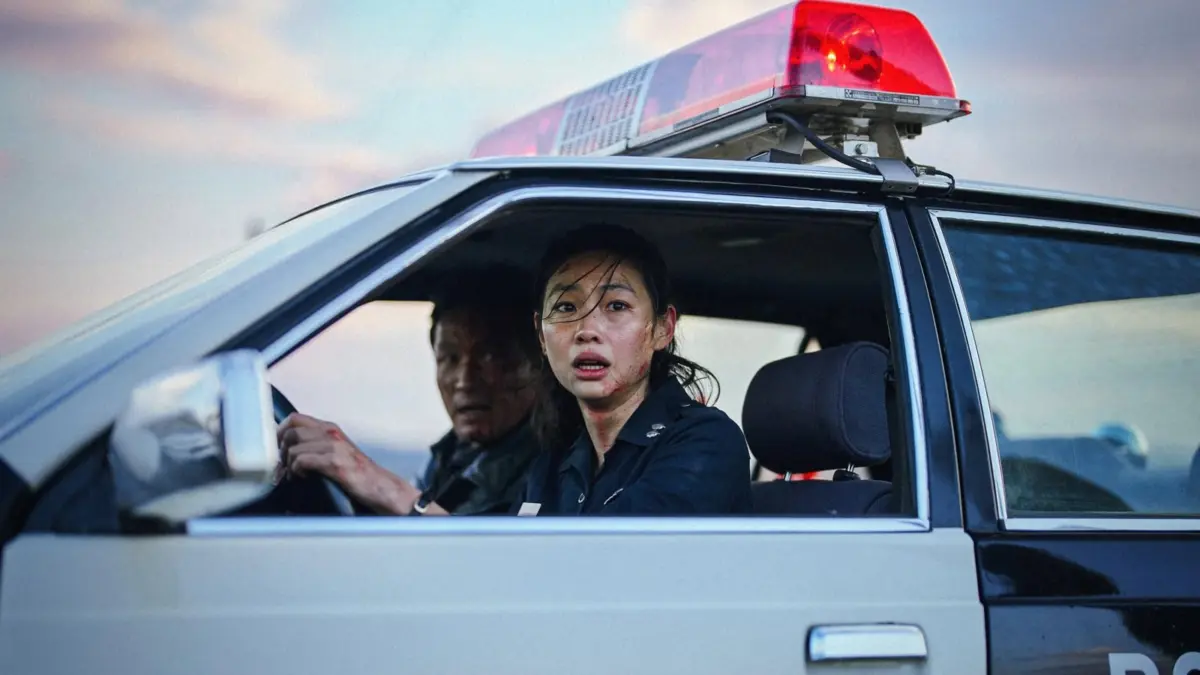
Renowned visionary filmmaker Na Hong-jin returns to the global cinematic stage with Hope (2026), a bold, fiercely original, and polarizing entry into the science-fiction action-horror landscape. Distributed by Neon, the nearly three-hour-long epic represents a radical departure from the director’s previous atmospheric and deeply terrifying horror masterpiece, The Wailing. Instead of relying on slow-burn supernatural dread, Hope adopts the frantic pacing, mechanical logic, and visceral aesthetics of survival horror video games, blending high-octane creature-feature tropes with an irreverent, pitch-black comedic sensibility.
Set in a remote, rugged harbor town in South Korea, the narrative follows a desperate community thrust into an unprecedented fight for survival against towering, relentless humanoid entities. The star-studded international and domestic ensemble cast features powerhouse performances from Hwang Jung-min, Zo In-sung, and Hoyeon, alongside Hollywood heavyweights Michael Fassbender, Alicia Vikander, and Taylor Russell.
Far from a conventional Hollywood blockbuster, Hope functions structurally and stylistically as the sprawling first act of an epic saga. It dares audiences to reconcile traditional narrative pacing with the experiential, gameplay-inspired mechanics of titles like Resident Evil and Final Fantasy. While critics and audiences alike may find themselves divided by its eccentric blend of hyper-gory violence, video game-esque dialogue, and absurdist humor, Hope stands as an impeccably crafted technical spectacle that redefines the boundaries of genre filmmaking in the modern era.

Detailed Chronology: The Unfolding Nightmare of Hope
The Slow Burn: An Extended Tutorial Phase
The structure of Hope breaks traditional cinematic conventions by deliberately withholding its primary antagonists for nearly an hour. For the first 52 minutes, writer-director Na Hong-jin builds agonizing, meticulous suspense centered primarily on the coastal town’s inept police chief, Go Bum-seok (portrayed by Hwang Jung-min).
Functioning much like the tutorial phase of an open-world survival horror game, the opening stretch allows viewers to wander through the sandbox-style mining town environment. Bum-seok stumbles through his duties with bumbling gullibility, initially convinced—alongside his hunting cousin Go Sung-ki (Zo In-sung)—that a runaway tiger is responsible for the strange disturbances on the town’s periphery. This prolonged buildup is equal parts frustrating and masterfully hypnotic. By tethering the perspective to a cowardly law enforcement officer who actively avoids the growing menace, Na establishes an atmosphere of looming dread punctuated by eccentric local flavor, including a supporting character’s hilariously graphic exposition of encountering a monster while relieving himself in the woods.
The Monster Reveal and Escalating Chaos
When the monsters finally emerge from the shadows, the film pivots instantly into relentless, chaotic warfare. The creatures are imposing, towering humanoid beasts that alternate between sprinting upright and crawling at terrifying, dinosaur-like speeds. Visually rendered with an aesthetic heavily reminiscent of PlayStation 4 hardware or Unreal Engine cinematics, these creatures act as terrifying "bullet sponges."
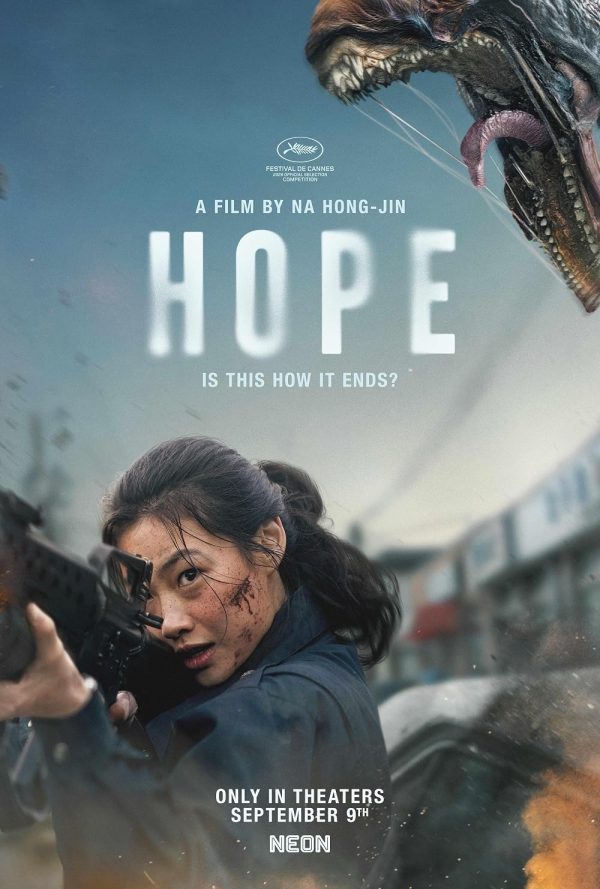
As local authorities and experienced hunters unload clip after semi-automatic clip into the dirt or directly into the thick hides of the beasts, the futility of human weaponry becomes glaringly apparent. The town’s citizens are heavily armed with military-grade arsenals—raising subtle questions about South Korea’s gun culture or serving as another darkly absurd town quirk—yet their firepower merely fuels the carnage. Lim Sung-ae (Hoyeon), a younger and fiercely competent police recruit with an apparent death wish, charges directly into the chaos to counter Bum-seok’s incompetence, while Sung-ki relies on a cartoonish, lucky-horseshoe-level knack for survival.
Narrative Expansion and the Climax
As the runtime progresses toward its staggering three-hour mark, the narrative broadens its scope. The monsters begin communicating with one another, revealing fragments of their own intricate backstory. Portrayed by a roster of global stars—including Michael Fassbender, Alicia Vikander, and Taylor Russell—these entities introduce an acid-trip narrative layer that blurs the lines between terrestrial survival and cosmic displacement.
The film culminates in a breathtaking final sequence that balances the visceral satisfaction of a boss-level video game battle with cinematic grandeur. Characters bark instructions at one another regarding weak spots and heavy ordnance, echoing computer-controlled companion dialogue. Yet, beneath the layers of flying body parts, missed gunfire, and pitch-black humor, the sequence delivers a pulse-pounding spectacle that leaves audiences breathless.
Supporting Context & Metrics
Production Scale and Artistic Vision
Hope represents one of the most ambitious cross-cultural co-productions in recent years, merging top-tier Korean cinematic talent with prominent Western A-listers.
- Runtime: Approximately 180 minutes (nearly 3 hours), structured intentionally as the expansive foundational chapter of a larger, multi-part mythos.
- Principal Cast: Hwang Jung-min, Zo In-sung, Hoyeon, Michael Fassbender, Alicia Vikander, Taylor Russell, Cameron Britton, Lee Sang-hee, Um Mun-suk, Im Hyun-sik, Hwang Seok-jeong, Han Woo-yeol, Chyu Kwang-hyun, Oh Doo-won, Yoo Jun-hong, Seo Beom-sik, and Baek Seung-chul.
- Visual & Technical Design: The film excels technically, boasting immaculate cinematography, intricate production design, and detailed set decoration that transform the remote harbor town into a living, breathing survival sandbox.
- Genre Hybridization: A deliberate fusion of Korean survival-thriller aesthetics, Western science-fiction mythologies, and interactive video game mechanics (specifically drawing inspiration from survival horror and anime tropes).
Critical Reception and Audience Division
Upon its festival and theatrical rollout via distributor Neon, Hope has sparked intense debate among critics. While praised universally for its audacious direction, technical mastery, and willingness to subvert blockbuster clichés, its unconventional tone has yielded mixed reactions:
- The Auteurs and Spectacle-Seekers: Praise the film for its bold experimentation, gorgeous set pieces, and wicked sense of humor that keeps the relentless gore from becoming overwhelmingly bleak.
- Traditional Narrative Purists: Express frustration at the paper-thin character development, the glacial 52-minute monster-reveal delay, and the jarring juxtaposition of high-stakes horror with self-aware video game dialogue.
Official Statements and Director’s Intent
In interviews surrounding the release of Hope, writer and director Na Hong-jin has been candid about his creative inspirations, shedding light on why the film feels so fundamentally different from his celebrated 2016 psychological horror film, The Wailing.

Addressing comparisons to modern interactive media, Na noted that while distributors and critics frequently draw parallels to contemporary video games, his primary narrative and stylistic inspirations are deeply rooted in classic and modern anime traditions. The director sought to capture the kinetic, larger-than-life energy of animated epics, translating the gravity-defying action and exaggerated character dynamics into live-action cinema.
Furthermore, regarding the film’s deliberate pacing—specifically the nearly hour-long delay before the first full monster reveal—Na emphasized the importance of psychological positioning. By anchoring the opening act to a protagonist who is fundamentally unequipped, cowardly, and in denial, the director aimed to mirror the player experience of exploring a dangerous map in a survival video game before encountering the primary threat. The goal was never to deliver a straightforward, comfort-food Hollywood monster movie, but rather to construct an immersive, disorienting environment where the audience learns the rules of the nightmare alongside—and often ahead of—the characters on screen.
Future Outlook
As Hope continues its theatrical run and expands its global footprint through Neon, its long-term impact on the science-fiction and horror genres will likely be profound. By proving that major international features can successfully borrow structural, pacing, and aesthetic cues from the gaming industry without alienating arthouse sensibilities, Na Hong-jin has opened new doors for cross-medium storytelling.

Given the film’s expansive, nearly three-hour runtime and its framing as the monumental first act of an overarching narrative, speculation is already mounting regarding sequels or expanded media adaptations. Whether Neon and Na Hong-jin will immediately greenlight a direct continuation to resolve the complex extraterrestrial and human dynamics introduced by Fassbender, Vikander, and Russell remains to be officially confirmed. However, the sheer commercial curiosity, high-profile international casting, and divisive, conversation-generating execution guarantee that Hope will remain a prominent fixture in cinematic discourse throughout 2026 and beyond. For audiences willing to step onto its chaotic, video-game-inspired wavelength, Hope offers a thrilling, uncompromising glimpse into the future of cinematic spectacle.





Belum ada komentar. Jadilah yang pertama berkomentar!