

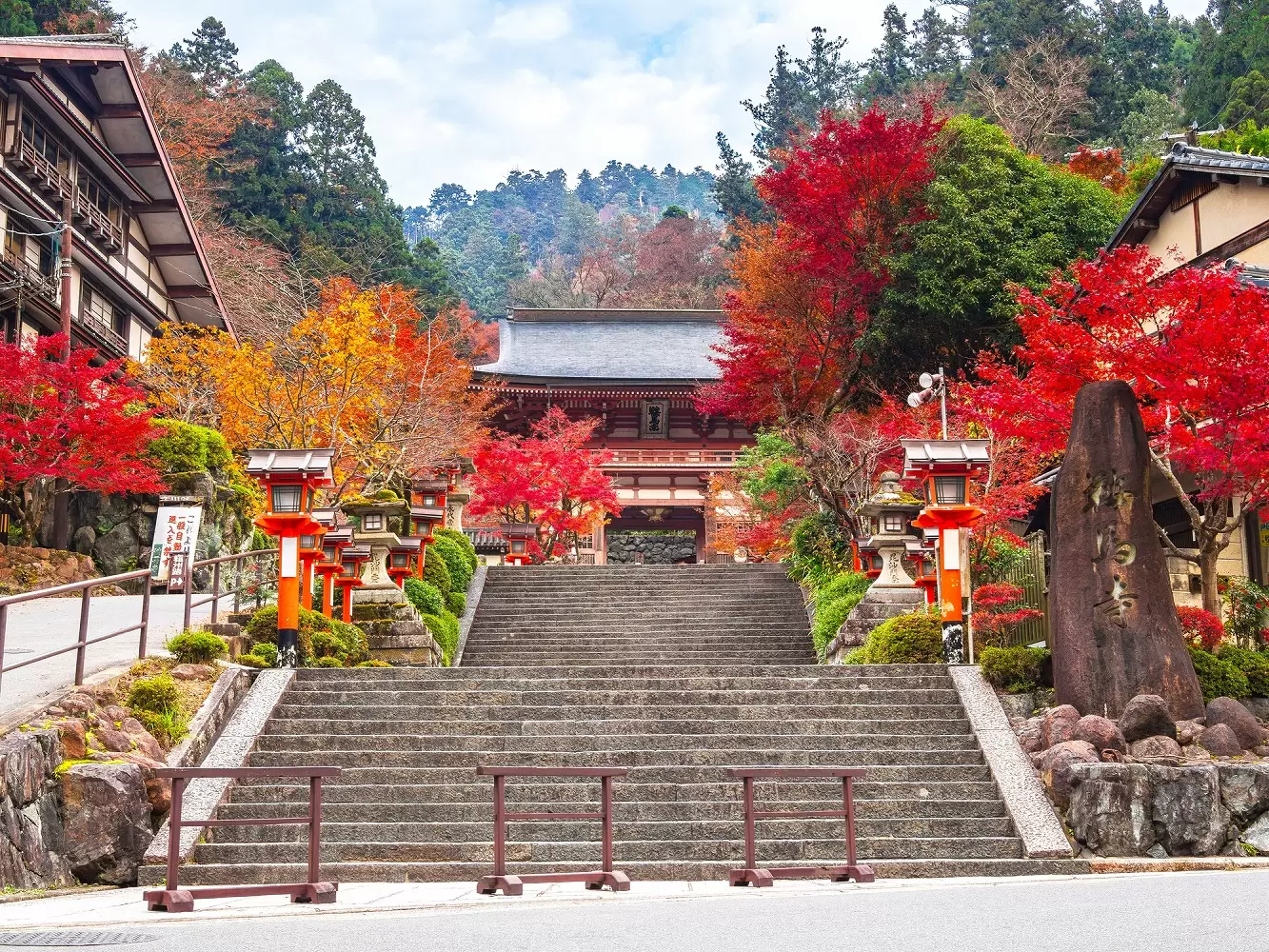
Executive Overview
As the intense heat and humidity of the Japanese summer gradually yield to the crisp, revitalizing breezes of early autumn, Kyoto undergoes a profound atmospheric transformation. September in Japan’s former imperial capital is not merely a seasonal transition; it is a living bridge connecting over a millennium of courtly traditions, agricultural harvest rituals, and classical performing arts with the vibrant, forward-looking pulse of modern subculture.
While global travelers frequently flock to Kyoto during the fleeting cherry blossom season of spring or the fiery maples of late autumn, September offers a more contemplative, deeply authentic encounter with the city’s soul. This transitional month is historically steeped in ancient imperial observances, lunar celebrations, and sacred rites designed to ward off misfortune, invite longevity, and ensure agricultural prosperity.
Yet, Kyoto refuses to remain a static museum piece. Side by side with centuries-old Shinto rituals and Buddhist memorial services, the city hosts the Kyoto International Manga Anime Fair (KYOMAF)—one of western Japan’s largest contemporary pop culture conventions. This juxtaposition of the sacred and the sensational, the feudal and the futuristic, defines Kyoto’s unique cultural ecosystem in September.
This comprehensive report examines the top-tier annual events, historical significance, economic and cultural impact, and logistical framework governing Kyoto’s September calendar. By exploring these events, visitors and cultural historians alike can witness a rare intersection where ancient heritage seamlessly fuels modern creative expression.
Detailed Chronology of September Events in Kyoto
Kyoto’s September calendar is densely packed with events that span centuries of Japanese history. Below is a detailed chronological exploration of the premier festivals and cultural milestones taking place across the city throughout the month.
1. Hassaku Festival at Matsunoo Taisha Shrine (September 5–6)
- Location: Matsunoo Taisha Shrine, near Arashiyama
- Focus: Agricultural bounties, historical sumo wrestling, and regional folk arts
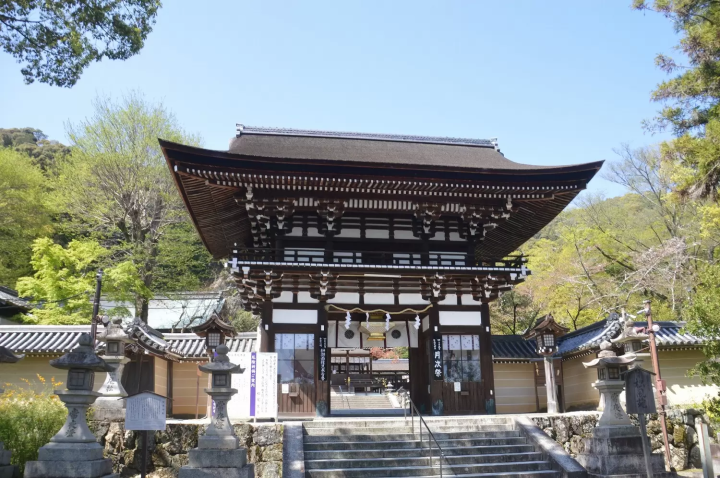
Kicking off the month’s festive schedule on the first Sunday of September—with preliminary celebrations beginning on the eve of September 5—is the Hassaku Festival at Matsunoo Taisha Shrine. Officially observed by the shrine since 1885, this festival has roots tracing back to the ancient practice of marking the first day of the eighth lunar month, a critical threshold in the agricultural calendar for preparing crops against unpredictable early autumn weather.
The festivities commence on the evening of September 5, transforming the shrine grounds into a glowing oasis illuminated by rows of traditional lanterns. Visitors and locals gather among bustling food stalls to participate in lively Bon Odori folk dances.
The main festival day on September 6 features an array of rare cultural performances. Among the most notable are:
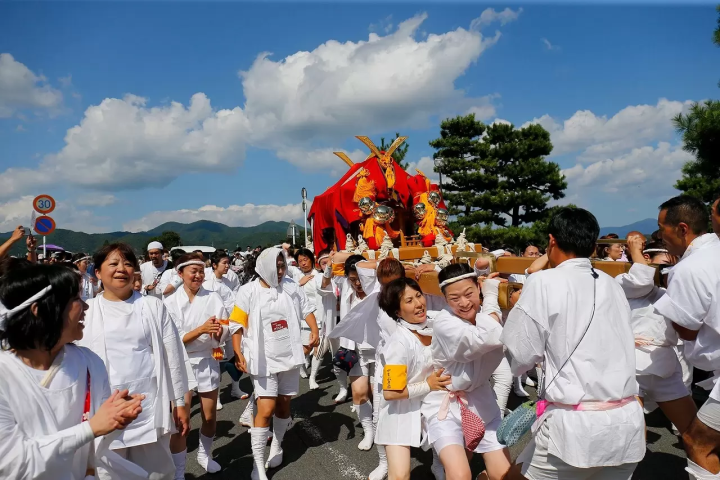
- The All-Female Mikoshi Procession: A striking and relatively rare spectacle where an energetic all-female contingent carries a heavy portable shrine through the precincts.
- Kamakura-Period Hassaku Sumo Matches: Athletic bouts modeled after historical styles preserved since the Kamakura period.
- Sagano Rokusai Nenbutsu: An energetic, rhythmic performance combining dynamic drumming, theatrical chanting, and traditional lion dances designed to pacify spirits and pray for community welfare.
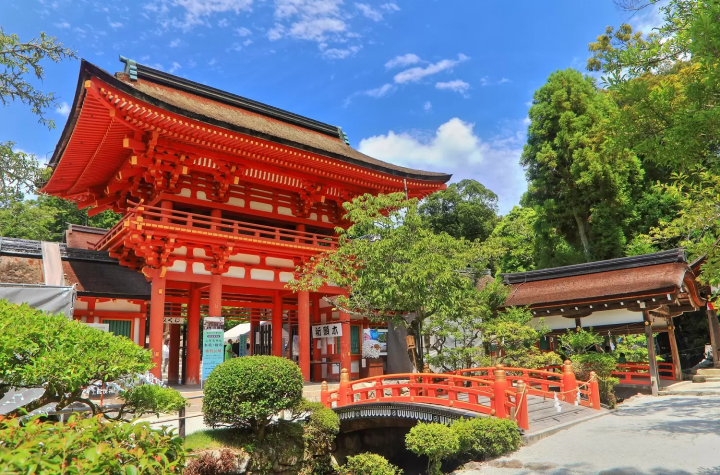
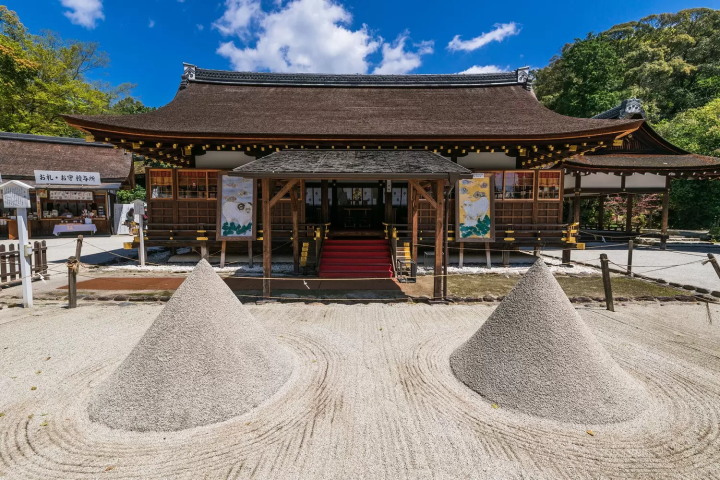
2. Choyo no Sekku – Chrysanthemum Festival at Kamigamo Jinja Shrine (September 9)
- Location: Kamigamo Jinja Shrine
- Focus: Imperial courtly traditions, longevity, and purification rites
Observed annually on the ninth day of the ninth month—following the traditional lunar calendar—Choyo no Sekku is one of Japan’s five sacred seasonal festivals (Gosekku). Dating back centuries, the festival revolves around the medicinal and spiritual properties of the chrysanthemum, a flower long believed in East Asian traditions to possess powerful purifying qualities capable of warding off evil spirits and granting longevity.
At Kyoto’s prestigious Kamigamo Jinja Shrine, a UNESCO World Heritage site, the day begins promptly at 10:00 AM with the sacred Choyo Ritual. Shinto priests delicately place fresh chrysanthemums upon the main altar, offering prayers for the preservation of health and protection from societal disasters.
Following the solemn religious rites, the atmosphere shifts to lively community engagement. Local boys participate in sacred sumo wrestling bouts within a dedicated ring situated outside the historic Hosodono Hall. Before the matches commence, shrine attendants dressed in pristine white garments perform ritualistic movements mimicking the calls and flight patterns of crows, all under the watchful gaze of the Saio-dai (the honorary high priestess). Throughout the ceremonies, attendees are offered chrysanthemum-infused sacred sake, accompanied by the ethereal strains of traditional court music (gagaku).
3. Yoshitsune Festival at Kuramadera Temple (September 15)
- Location: Kuramadera Temple, nestled in the northern mountains of Kyoto
- Focus: Commemoration of Minamoto no Yoshitsune and classical martial arts
On September 15, the serene mountain slopes of Kuramadera Temple echo with the solemn remembrance of one of Japan’s most celebrated military commanders, Minamoto no Yoshitsune (1159–1189). Yoshitsune’s brilliant tactical maneuvers during the Genpei War (1180–1185) cemented his legacy in Japanese folklore and literature.
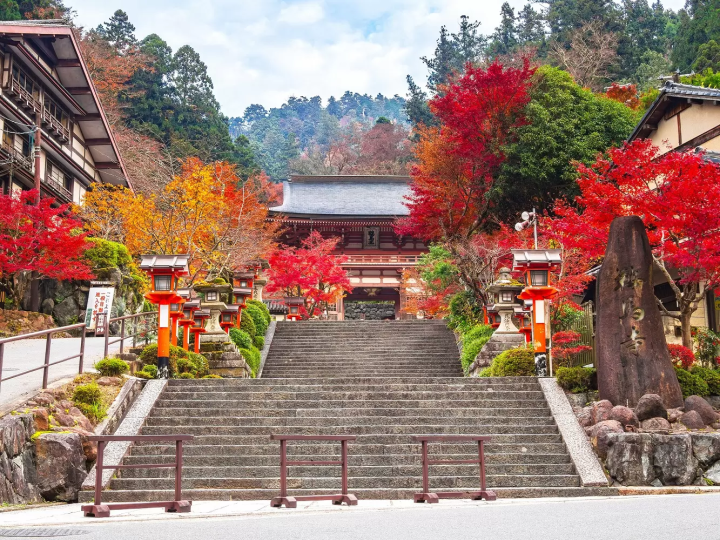
According to temple tradition, Yoshitsune spent his formative childhood years training in martial arts and discipline on Mount Kurama under the tutelage of mountain ascetics and legendary figures. Believers hold that his spirit ultimately returned to reside at the mountain’s sacred Yoshitsune Hall.
Commencing at 11:00 AM within the Main Hall, the festival features a deeply moving Buddhist memorial service. This spiritual tribute is followed by rotating dedicatory martial arts demonstrations, showcasing disciplines ranging from classical swordsmanship to traditional weaponry. Set against the breathtaking, misty backdrop of Mount Kurama, the festival offers an immersive pilgrimage into the heroic lore of medieval Japan.
4. Iwashimizu Festival at Iwashimizu Hachimangu Shrine (September 15)
- Location: Iwashimizu Hachimangu Shrine, Yawata City, Southern Kyoto
- Focus: Imperial festival pageantry, deity transfers, and ecological compassion
Held concurrently with the Yoshitsune Festival on September 15, the Iwashimizu Festival stands as one of Japan’s Three Great Imperial Festivals (Nihon Sandai Chokusa), boasting a continuous lineage dating back to 863 AD.
The logistical scale of this event is staggering. The ceremonial proceedings begin in pitch darkness at 2:00 AM, when Shinto priests solemnly transfer three principal deities into sacred portable shrines (mikoshi) stationed atop Mount Otokoyama. By 3:00 AM, a mesmerizing torchlit procession comprising roughly 500 participants in traditional ceremonial attire escorts the deities down the steep mountain slopes to a temporary sanctuary established at the base.
As daylight breaks, an official imperial envoy presents formal offerings on behalf of the state, accompanied by classical court music, ritualistic food dedications, and elegant Azuma-asobi dances. In an expression of compassion and prayers for global peace, priests and participants also release fish and birds into the nearby Hojo River. Following a full day of sacred rites, the deities are ceremoniously carried back up the mountain under the evening stars.
5. KYOMAF – Kyoto International Manga and Anime Fair (September 19–20)
- Location: Miyako Messe and Kyoto International Manga Museum
- Focus: Contemporary subculture, global pop culture, and creative enterprise
Proving that Kyoto is not bound solely by its antiquities, the Kyoto International Manga Anime Fair (KYOMAF) dominates the city’s cultural landscape in mid-September. As western Japan’s premier pop culture convention, KYOMAF draws tens of thousands of domestic and international enthusiasts, industry executives, manga creators, and cosplayers.
The weekend-long convention brings together major publishing houses, animation studios, and broadcasting networks to preview upcoming media titles, exhibit rare concept artwork, and release exclusive merchandise. Attendees can engage with prominent voice actors and directors during live stage panels, explore sprawling photography zones tailored for cosplayers, and sample themed culinary creations inspired by popular anime franchises.
By merging cutting-edge creative media with Kyoto’s historic creative industries—such as traditional printing and graphic arts—KYOMAF provides a vital modern counterweight to the city’s traditional autumn heritage.
6. Kushi Matsuri – Comb Festival at Yasui Konpiragu Shrine (September 28)
- Location: Yasui Konpiragu Shrine, Gion district
- Focus: Preservation of hairstyling heritage, gratitude toward everyday tools, and geisha arts
Concluding Kyoto’s major September events on September 28 is the colorful and poignant Kushi Matsuri (Comb Festival), held in the historic Gion district. Dedicated to honoring the history of Japanese hairstyling and expressing gratitude to old, discarded combs and hair ornaments for their years of service, the festival is a unique celebration of craftsmanship and daily utility.
At 1:00 PM, a solemn ritual takes place at the shrine’s Kushizuka memorial mound, where accumulated used combs are consecrated, followed by the graceful Kurokami (Black Hair) dance.
The undeniable highlight occurs at 2:00 PM, when a vibrant historical procession winds through the streets of Gion. Participants—including traditional dancers, local volunteers, and working maiko (apprentice geisha)—wear authentic period attire representing eras spanning from the ancient Kofun period through the Edo period up to modern times. Crucially, all historical hairstyles featured in the parade are meticulously crafted using the participants’ natural hair rather than synthetic wigs, offering an uncompromisingly authentic window into historical Japanese aesthetics.
Supporting Context & Metrics: Cultural Tourism and Urban Dynamics
To fully understand the significance of September in Kyoto, one must analyze the socio-economic and demographic shifts occurring within the prefecture.
Seasonal Weather Transition
Historically, Kyoto experiences oppressive heat and high humidity throughout July and August due to its basin geography, which traps warm air. By September, meteorological indicators show a steady decline in both temperature and relative humidity, particularly moving into the second half of the month. This climatic relief acts as a vital catalyst for outdoor religious processions, open-air shrine dances, and walking tours, directly contributing to increased pedestrian engagement across temple and shrine precincts.
Tourism Demographics and Economic Impact
According to data compiled by municipal tourism bureaus, September serves as a strategic shoulder month. While domestic Japanese travelers capitalize on long weekends (such as Silver Week holidays when they align), international tourist arrivals experience a balanced equilibrium before the massive influx of visitors during the November autumn foliage peak.
This window allows cultural institutions, local craft artisans, and hospitality providers to test innovative tourism products—such as the hybrid cultural-modern appeal generated by combining events like KYOMAF with historical temple tours—without facing the severe over-tourism strains seen in peak seasons. Furthermore, festivals like the Kushi Matsuri and Choyo no Sekku provide vital financial and promotional support to traditional craft industries, including traditional comb makers (kushi-shi), kimono textile weavers, and lacquerware artisans.
Official Statements and Cultural Preservation Perspectives
City officials, Shinto priests, and cultural preservationists frequently emphasize the necessity of balancing heritage conservation with contemporary relevance.

In a recent municipal cultural symposium addressing autumn festival management, a Kyoto City Tourism Association spokesperson noted:
"Kyoto’s identity is built upon an unbroken continuum of memory. Festivals like the Iwashimizu Festival and Choyo no Sekku are not theatrical performances staged for temporary amusement; they are living prayers passed down through generations. At the same time, welcoming contemporary movements like KYOMAF proves that Kyoto remains a living, breathing creative capital rather than a preserved relic of the past. Our mandate is to protect the spiritual integrity of our ancestors while giving space to the modern creators who will define Kyoto’s heritage for the next century."
Similarly, temple administrators at Kuramadera and Kamigamo Jinja have increasingly leveraged digital archiving and multilingual web portals to educate international audiences on the complex theological underpinnings of rituals like the Yoshitsune Festival and the Chrysanthemum purification rites. By providing transparent, accurate English-language documentation, temple leadership aims to foster respectful cross-cultural engagement among foreign visitors attending these sacred observances.
Future Outlook: Sustainable Heritage Tourism in Kyoto
As Kyoto looks toward the future, the management of September events highlights broader trends in sustainable urban tourism and cultural resource management.

- Staggered Event Promotion: To prevent overcrowding at major cultural hubs, municipal authorities are increasingly promoting regional events located slightly outside the central urban core—such as the Hassaku Festival at Matsunoo Taisha near Arashiyama and the Iwashimizu Festival in southern Yawata City. This geographic decentralization encourages visitors to explore wider regional prefectures while alleviating foot traffic in congested historic districts like Gion.
- Digital Integration and Crowd Management: The successful execution of large-scale conventions like KYOMAF alongside solemn religious rites requires sophisticated logistical planning. Future initiatives are expected to integrate real-time crowd-monitoring applications, encouraging attendees to visit cultural sites during off-peak hours and utilizing timed-entry frameworks for popular shrine exhibitions.
- Transmission of Intangible Cultural Heritage: A primary focus for local artisans and shrine administrators remains the transmission of endangered traditional arts—such as the intricate hair-dressing techniques displayed during the Kushi Matsuri or the musical compositions of gagaku at Kamigamo Shrine. Educational workshops and apprentice-support programs funded by municipal cultural grants are actively working to ensure that younger generations master these ancient skills.
Ultimately, September in Kyoto offers an unparalleled window into the duality of Japanese culture. Whether one is watching an imperial envoy offer quiet prayers before dawn on Mount Otokoyama or marveling at cutting-edge digital animation artwork at Miyako Messe, the city demonstrates an extraordinary capacity to honor its profound historical roots while boldly embracing the future.







Belum ada komentar. Jadilah yang pertama berkomentar!