

Executive Overview
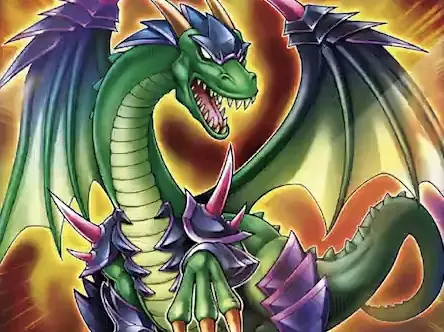
In the fast-paced, high-stakes ecosystem of the Yu-Gi-Oh! Rush Duel card game, meta-defining shifts often arrive without warning. Konami’s alternative format—designed for rapid-fire decision-making, massive field swings, and accessible yet deep strategic play—continues to expand with inventive card designs that bridge traditional archtypes with modern speed. The latest card to capture the competitive community’s attention is RD/CA01-JP012: Ankoku no Magic Dragon (Magic Dragon of Darkness), widely translated and discussed by duelists as the Blackland Magic Dragon.
As encapsulated by the community axiom, "Sometimes you need a dragon to slay a wizard," this Level 4 DARK Dragon Effect Monster is more than just a thematic nod to fantasy tropes; it is a meticulously engineered piece of removal and setup utility designed to disrupt backrow dominance. Boasting respectable baseline statistics—1500 ATK and 800 DEF—alongside a potent removal effect, the Blackland Magic Dragon forces players to rethink how they manage resource allocation, hand composition, and graveyard setup in DARK-centric strategies.
This comprehensive investigative report examines the mechanics, meta implications, community reactions, and broader trajectory of Yu-Gi-Oh! Rush Duel. Through an exhaustive breakdown of its gameplay text, strategic synergy, and developmental context, we explore why this unassuming Level 4 monster is poised to leave a lasting footprint on competitive play.
Detailed Chronology
The reveal of Ankoku no Magic Dragon sent ripples through dedicated trading card game (TCG) forums and video platforms upon its initial debut. To understand its current standing, we must trace the timeline of its announcement, community reception, and integration into the broader Rush Duel landscape.
Phase 1: The Initial Reveal and Teaser Wave
The card first broke cover via official promotional channels and preview streams, highlighted by a dedicated YouTube showcase (referenced via identifier 4i7ao6TPSdA). In typical Konami fashion for the Rush Duel format, the reveal was engineered to generate immediate speculative discussion among players who favor aggressive, synergistic deck-building.
Content creators and competitive analysts quickly zeroed in on the card’s dual typing and attribute. As a DARK Dragon, it immediately inherited a rich legacy of support within the format, positioning itself not merely as a standalone tech choice, but as a potential linchpin for strategies looking to bridge Dragon and Spellcaster resources.
Phase 2: Translation, Text Dissection, and Initial Theorycrafting
As translation groups and database editors broke down the Japanese card text (RD/CA01-JP012), the true scope of its utility became clear. Duelists recognized that the card’s ability to interact with the hand, graveyard, and opponent’s Spell/Trap zones offered a versatile toolkit.
Theorycrafting sessions on community Discord servers and forums immediately began evaluating its cost-to-reward ratio. The requirement to send a DARK Dragon or Spellcaster monster from the hand to the Graveyard was identified not as a strict detriment, but as a potential enabler for graveyard-dependent archetypes. Within days, players were drafting experimental deck lists featuring high-density DARK packages designed to maximize the card’s efficiency.
Phase 3: Competitive Integration and Meta Assessment
As physical and digital testing commenced, players began stress-testing Ankoku no Magic Dragon against established meta threats. The ability to pressure opponent backrows—often the bane of aggressive Dragon strategies—while simultaneously priming the graveyard proved invaluable. While the restriction preventing non-DARK attacks for the rest of the turn required careful sequencing, skilled duelists quickly integrated the card into mid-game push sequences, solidifying its reputation as a high-skill, high-reward tactical asset.
Supporting Context & Metrics
To fully appreciate the impact of Ankoku no Magic Dragon, one must examine the card’s specific parameters alongside the structural design philosophy of Yu-Gi-Oh! Rush Duel.
Card Profile: Ankoku no Magic Dragon (Blackland Magic Dragon)
- Card Number: RD/CA01-JP012
- Card Type: Effect Monster
- Monster Type: Dragon / Effect
- Attribute: DARK
- Level: 4
- ATK: 1500
- DEF: 800
Operational Text Breakdown
- [REQUIREMENT]: "During your Main Phase that this card was Normal or Special Summoned, send 1 DARK Dragon or Spellcaster monster from the hand to the Graveyard."
- [EFFECT]: "Choose 1 Spell/Trap on your opponent’s field and destroy it. For the rest of the turn, you cannot attack with monsters, except DARK monsters."
Quantitative Analysis and Stat Distribution
At Level 4 with 1500 ATK, Ankoku no Magic Dragon sits comfortably at the standard offensive benchmark for low-level aggressive monsters in Rush Duels. This baseline attack allows it to contest standard opening plays and apply immediate pressure without requiring a Tribute Summon. Its 800 DEF, while modest, is largely secondary given that the card is engineered primarily for proactive utility rather than defensive stalling.
The activation cost—sending a DARK Dragon or Spellcaster from the hand to the Graveyard—operates as a dual-purpose mechanic. In modern card game design, sending cards to the graveyard is frequently less of a cost and more of a resource generation tool. By selectively dumping specific resources, duelists can set up subsequent plays, revival targets, or threshold requirements for other boss monsters.
The restriction limiting subsequent attacks exclusively to DARK monsters for the rest of the turn acts as the primary balancing mechanism. While this locks out non-DARK auxiliary attackers, it aligns seamlessly with dedicated DARK strategies, rendering the restriction negligible for optimal deck builds.
Official Statements & Community Reactions
The discourse surrounding Ankoku no Magic Dragon has been robust, characterized by tactical debates among competitive players and enthusiastic commentary from casual collectors alike.
Community Synthesis and Tactical Discourse
Within the community hub—accessible via active Discord channels dedicated to Rush Duel discussion—members have dissected every conceivable interaction involving the card. A consensus has emerged praising its design philosophy.
One prominent community analyst noted:
"The beauty of Ankoku no Magic Dragon lies in its economy of action. Rush Duels are defined by momentum. By combining backrow removal with graveyard setup in a single package that doesn’t sacrifice board presence, Konami has given DARK strategies a versatile scalpel rather than a blunt instrument."
Another user highlighted the thematic and mechanical synergy:
"People look at the cost and worry about hand economy, but in a format where graveyard recursion is king, pitching a resource you wanted in the graveyard anyway while blowing up a set Mirror Force or disruptive trap is pure value. Plus, the name and artwork perfectly capture that classic dark fantasy aesthetic."
Developer Philosophy in Rush Duels
While direct corporate statements from Konami regarding individual set filler are often minimal, the recurring design trends in sets featuring cards like Ankoku no Magic Dragon point toward a deliberate effort to diversify deck options. By supporting hybrid potential between Dragons and Spellcasters under a shared DARK umbrella, designers encourage creative deck-building that breaks rigid archetype boundaries, keeping the meta dynamic and unpredictable.
Future Outlook
As the Yu-Gi-Oh! Rush Duel format continues to evolve, cards like Ankoku no Magic Dragon serve as indicators of future design trajectories. What does the road ahead look like for this dark reptilian spell-slayer?
1. Expanded Synergy with Upcoming Sets
As future card sets introduce more support for DARK Dragon and Spellcaster hybrid strategies, the utility of cards that bridge these two types will naturally appreciate. The ability to manipulate the graveyard while maintaining targeted backrow removal ensures that Ankoku no Magic Dragon will remain a relevant consideration for deck builders exploring non-traditional archetypes.
2. Meta Adaptation and Side-Decking Trends
Backrow disruption is a perpetually critical component of competitive card games. As formats fluctuate and defensive Trap cards gain or lose popularity, flexible main-deck and side-deck options that address opponent setups without sacrificing offensive output become invaluable. Ankoku no Magic Dragon provides a proactive answer that fits neatly into aggressive frameworks, securing its longevity in competitive consideration.
3. Format Longevity and Collector Appeal
Beyond pure competitive metrics, the card appeals to collectors who appreciate the rich aesthetic heritage of dark-themed dragon monsters in the Yu-Gi-Oh! universe. Its striking visual design, combined with practical playability, ensures that physical copies will remain sought-after items within the secondary market.
Conclusion
Ankoku no Magic Dragon (Blackland Magic Dragon) encapsulates everything that makes modern Yu-Gi-Oh! Rush Duel design compelling: high-tempo plays, tactical resource management, and rewarding strategic depth. By demanding careful sequencing in exchange for potent backrow destruction and graveyard priming, it rewards skilled players who master its nuances. Whether slaying opposing wizards, dismantling treacherous backrows, or simply bolstering DARK-attribute synergies, this Level 4 powerhouse has firmly established its place in the ongoing narrative of the Rush Duel format.







Belum ada komentar. Jadilah yang pertama berkomentar!