

Executive Overview
The landscape of urban transportation is undergoing a tectonic shift, and the epicenter has officially moved to the neon-lit boulevards of Southern Nevada. Waymo, the autonomous vehicle pioneer owned by Alphabet, has officially launched its commercial robotaxi service in Las Vegas. This milestone arrives mere weeks after the company secured final regulatory clearance from Nevada transportation authorities, positioning Sin City as Waymo’s 15th major operational market.
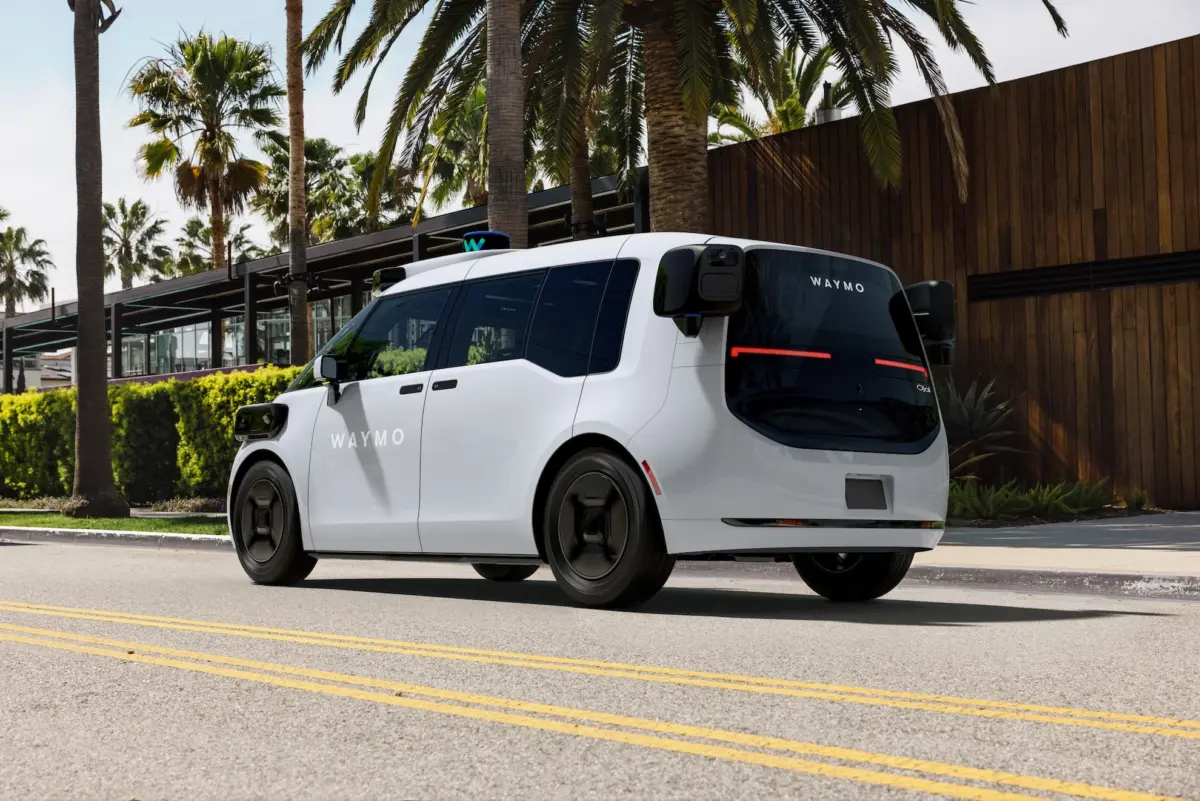
Initially deploying "dozens" of its next-generation Ojai minivan robotaxis, Waymo is adopting its tried-and-true rollout playbook: a rolling invitation system designed to scale user access gradually. Currently, the geofenced service area covers portions of the iconic Las Vegas Strip south of Highway 589 and extends deep into Boulder Junction. However, this modest beginning is just the opening salvo in what promises to be a massive commercial and technological contest.
Waymo’s aggressive push into Nevada is not an isolated event; it is part of a broader, high-stakes sprint. As competitors like Tesla, Amazon’s Zoox, and Hyundai-backed Motional close the gap on Waymo’s market-leader status, the autonomous vehicle (AV) industry is accelerating faster than ever. In tandem with its Las Vegas launch, Waymo recently introduced its driverless fleets to invited riders in Denver, San Diego, and Tampa.
Yet, Las Vegas represents a uniquely high-density, high-stakes battlefield. Following a sweeping regulatory decision in August by the Nevada Transportation Authority (NTA), Waymo, Tesla, and Uber have been greenlit to deploy up to a combined 8,000 autonomous vehicles across Clark County over the next year. If realized, this influx would fundamentally transform the city’s traffic ecosystem, turning the entertainment capital of the world into one of the most densely saturated autonomous testing and commercial zones on the globe.
Detailed Chronology of the Las Vegas Launch
The path to Waymo’s Las Vegas debut has been meticulously planned, closely regulated, and executed with the tactical precision characteristic of Alphabet’s autonomous subsidiary.
The Regulatory Breakthrough
The genesis of the Las Vegas launch dates back to late summer 2026, when the Nevada Transportation Authority granted pivotal commercial operating licenses. This administrative green light was not exclusive to Waymo; it was part of a landmark omnibus authorization that also cleared Tesla and Uber to scale up their respective autonomous fleets in Clark County. For Waymo, the NTA’s approval removed the final legal and bureaucratic hurdles required to transition from testing phases to commercial operations in the state.
The Phased Rollout Strategy
True to form, Waymo is executing its standard deployment playbook. Rather than flinging open the digital doors to the entire population of Las Vegas—and the millions of tourists who visit annually—the company is taking a measured, safety-first approach.
On a Monday announcement, Waymo confirmed that it is inviting public riders on a rolling basis. Interested residents and visitors must request an invitation through the Waymo One application and hope to secure an access code. Historically, this incubation period is brief; Waymo typically transitions from an invite-only model to open public access within one to two months of its initial commercial launch.
Operational Footprint and Fleet Specifications
Waymo is entering the Las Vegas market with a specialized deployment of its newest vehicle architecture: the Ojai minivan. While the initial fleet size is modest—consisting of "dozens" of vehicles—the geographic footprint is strategically chosen to capture high-density traffic.
The initial service territory encompasses:
- The Las Vegas Strip: Specifically focusing on the bustling corridors south of Highway 589.
- Boulder Junction: Integrating commercial and transit-heavy zones to test the vehicles’ navigation in complex, multi-modal traffic environments.
As demand dictates and regulatory comfort expands, Waymo’s spokesperson confirmed that both the physical fleet size and the operational boundary will scale upward.
Supporting Context & Metrics: The 8,000-Vehicle Question
While Waymo’s arrival is a significant milestone, the broader regulatory framework approved by the Nevada Transportation Authority introduces a staggering economic and logistical question: Can Clark County absorb thousands of robotaxis, and will the companies actually deploy them?
The Nevada Permit Breakdown
Under the NTA permits issued in August 2026, three major entities have been authorized to scale operations aggressively across Clark County over the next 12 months:
- Tesla: Authorized to deploy up to 5,000 autonomous vehicles (leveraging its Cybercab technology).
- Waymo: Authorized to operate up to 1,000 autonomous vehicles.
- Uber: Authorized to deploy up to 1,000 robotaxis, managed through strategic operational partnerships with Zoox and Motional (a Hyundai subsidiary).
Combined, these permits pave the way for up to 8,000 robotaxis to flood the streets of Las Vegas within a single year.

Reality Versus Regulatory Ambition
Despite the expansive figures written into the state permits, industry insiders and corporate executives agree that reaching the absolute ceiling of 8,000 vehicles is highly improbable in the near term.
To put the numbers in perspective, Waymo currently operates a total active fleet of more than 4,000 robotaxis distributed across more than a dozen metropolitan areas nationwide. Deploying a quarter of that total fleet size into a single municipal market like Las Vegas within a year would represent a massive concentration of resources.
Similarly, competitors are managing expectations. During an NTA hearing in August, Eric Early, chief engineer for Tesla’s Cybercab program, offered a grounded assessment of his company’s deployment trajectory. Early noted that Tesla leadership would not be "extremely happy and satisfied if we could get ourselves up to 2,500, maybe a bit higher than that in the next year."
Even if these companies fall short of their maximum permitted caps, the simultaneous rollout of thousands of autonomous vehicles means Las Vegas is on the cusp of intense market saturation. The convergence of Waymo, Tesla, Zoox, and Motional in a single urban grid will create a live-fire laboratory for autonomous ride-hailing supremacy.
Official Statements and Industry Dynamics
The competitive landscape of the autonomous vehicle industry has evolved from a technological proof-of-concept race into a brutal commercial slugfest. Waymo’s expansion into Las Vegas—and its simultaneous September launches in Denver, San Diego, and Tampa—underscores an urgent corporate imperative: scale fast or risk being overtaken.
The Competitive Pressures
For years, Waymo enjoyed a relatively unchallenged monopoly as the undisputed standard-bearer for fully driverless commercial robotaxis, particularly after major competitors like Cruise faced severe regulatory setbacks and restructuring. However, the playing field is rapidly redrawing itself.
- Tesla’s Aggressive Push: Armed with its dedicated Cybercab hardware and massive manufacturing ambitions, Tesla is making a heavy play for commercial autonomy fleets, aiming to leverage its massive consumer vehicle footprint and vision-only AI stack.
- Zoox and Motional: Backed by deep-pocketed parent companies (Amazon and Hyundai, respectively), these competitors are focusing on custom-built, bilateral robotaxis designed entirely without traditional driver controls, targeting dense urban environments like Las Vegas directly.
Navigating Market Expansion
Waymo’s geographic portfolio now spans 15 distinct markets. Alongside its newest additions (Las Vegas, Denver, San Diego, and Tampa), the company maintains established operations in Austin, Dallas, Houston, Los Angeles, Miami, Nashville, Phoenix, and the San Francisco Bay Area. Notably, the company’s trajectory has not been entirely linear; a previous launch in San Antonio was initiated and subsequently paused, illustrating the delicate regulatory and logistical tightrope AV companies must walk.
Industry analysts note that every new market entry serves a dual purpose: capturing lucrative ridership revenue in tourist-heavy hubs like Las Vegas, and gathering vital neural-net training data to outpace algorithmic competitors.
Future Outlook: What Lies Ahead for Las Vegas and Beyond
As Waymo’s Ojai minivans begin silently navigating the neon-lit corridors of Boulder Junction and the southern Strip, the broader implications for urban mobility come into sharp focus.
The Tourist Factor
Las Vegas is arguably the ultimate proving ground for autonomous vehicles due to its unique demographic composition. Unlike traditional cities dominated by daily commuters, Las Vegas hosts tens of millions of tourists annually who are inherently unfamiliar with local geography, prone to late-night entertainment schedules, and eager to experiment with novel technologies. If Waymo and its competitors can master the chaotic pedestrian traffic, impaired visitors, and complex hotel drop-off zones of the Strip, they will have proven their technology’s viability in one of the most punishing urban environments on Earth.
Infrastructure and Traffic Evolution
Over the next 12 to 24 months, city planners, traffic engineers, and local governance in Clark County will closely monitor the operational footprint of these burgeoning fleets. Questions regarding curb space management, passenger pickup and drop-off congestion, and emergency vehicle interactions will take center stage.
If the promised influx of up to 8,000 vehicles materializes—even partially—it will fundamentally alter how people move through Nevada’s tourism capital. Traditional rideshare drivers, taxi syndicates, and public transit systems will face structural competition from an ever-expanding robotic workforce that never sleeps, never takes a break, and relies entirely on machine-learning precision.
For Waymo, successfully cementing its footprint in Las Vegas is more than just checking off market number 15. It is a vital defensive and offensive maneuver in a multi-billion-dollar war for the future of transportation. As the rollout shifts from invite-only codes to open public access in the coming weeks, the world will be watching to see how the driverless revolution handles the entertainment capital of the world.







Belum ada komentar. Jadilah yang pertama berkomentar!