

Executive Overview
“I have something to say.”
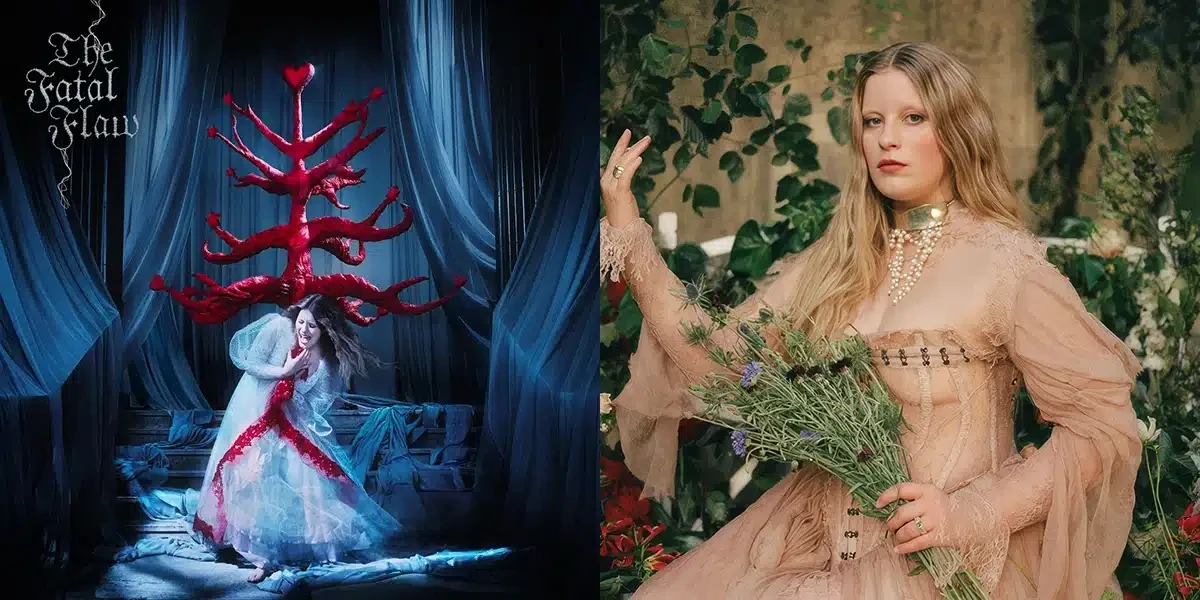
With these five deceptively simple words, British singer-songwriter Paris Paloma opens her raw, visceral, and conceptually fearless sophomore studio album, The Fatal Flaw. To call the opening line an understatement would be to drastically diminish the gale-force impact of the record that follows. In an era where commercial pop often plays safely within the boundaries of palatable relatability, Paloma has crafted a project that functions simultaneously as a high-art manifesto, a sociopolitical autopsy, and a deeply personal confession.
The Fatal Flaw arrives at a pivotal cultural juncture. In a socio-economic climate where viewing the world explicitly through the female gaze—and ruthlessly exposing the systemic rot of misogyny, superficiality, and late-stage capitalism—is still frequently penalized or dismissed as “radical,” Paloma leans into the label with open-armed defiance. She understands implicitly that the only way to genuinely challenge entrenched power structures is to stare them down without blinking.
Spanning an ambitious tracklist that reads less like a traditional contemporary LP and more like a collection of biting short stories, the album cements Paloma’s status at a rare, sophisticated intersection: pop accessibility, literary intellect, and unvarnished humanity. Throughout The Fatal Flaw, she explores the tension between artistic authenticity and the commodification of creativity, arguing that true art is never just a polished final product. Instead, it is the messy, bleeding culmination of an artist’s unique perspective, lived experiences, and unyielding refusal to be silenced.
Detailed Chronology: The Evolution from Labour to The Fatal Flaw
To understand the weight and urgency of The Fatal Flaw, one must trace the trajectory that brought Paris Paloma to this creative peak. In 2023, Paloma captured the global cultural zeitgeist with her breakout single, “Labour.” The track became an anthem for millions of women worldwide, striking a raw nerve with its unflinching indictment of the invisible, exhausting domestic and emotional labor historically expected of women. It was a song that galvanized a movement, cementing her reputation as an artist capable of weaponizing folk-pop traditions to dismantle patriarchal expectations.
Rather than attempting to replicate the exact sonic blueprint of “Labour,” Paloma’s sophomore effort expands the canvas. The Fatal Flaw shifts its lens from domestic exploitation to broader, more modern systemic threats, while retaining the same sharp, thematic fury.
The Opening Salvo: AI, Art, and Artificiality
The album wastes no time establishing its high stakes. The opening track, “Miyazaki,” serves as a spiritual successor to “Labour” in terms of its reverberating fury, but redirects its ire toward a different kind of existential threat: the encroachment of the AI-driven landscape.
Over breathless, syrupy, almost hypnotic vocals that could easily trick an inattentive listener into thinking they are hearing a breezy tune about schoolyard romances, Paloma delivers a chilling warning. She sings of artificial intelligence systematically destroying everything human artists have poured their souls into building. It is a masterful juxtaposition: wrapping a devastating critique of technological homogenisation in a melodic, deceptively sweet package.
The Art of Juxtaposition: Sonic Softness and Lytic Steel
Part of what makes Paloma’s artistic formula so potent on The Fatal Flaw is her careful annihilation of dark, heavy subject matter through an angelic, profoundly captivating vocal delivery. Her voice is largely devoid of traditional, aggressive rock-and-roll snarl; instead, it is at times imbued with a haunting, melancholic resignation.
Rather than diluting the impact of her lyrics, this vocal restraint acts as a pressure valve. It frees up ample space for her urgency and passion to slice through the mix via cutting lyrics and meticulously crafted, understated instrumentals.
This dynamic is showcased brilliantly in tracks like “Silhouette on the Hill” and “Rothko.” While “Rothko” may not be the most sonically gripping song on the tracklist, it stands out as a intellectual triumph. It functions as a brilliant psychological study of the inextricable link between art and romance, contrasting the profound emotional resonance (or jarring absence thereof) evoked by visual art with the complicated emotional investments made in a human lover.
Supporting Context & Metrics: Deconstructing the Tracklist
The Fatal Flaw is meticulously constructed, with every track—from the soaring highlights to the intentionally abrasive deep cuts—carrying significant thematic weight. The album acts as a sprawling exploration of modern societal anxieties, bodily autonomy, and the commodification of human emotion.
Confronting the Digital Age and Modern Masculinity
The album tackles a vast spectrum of cultural flashpoints:
- “Good Girl” & “Good Boy”: Serving as complementary sides of the same societal coin, these tracks tackle the toxic dichotomy of gender conditioning. While “Good Girl” examines the crushing weight of body positivity and internalized perfectionism, “Good Boy” trains its crosshairs directly on the toxic underbelly of the modern “manosphere.”
- “Stem the Flow”: In this track, Paloma interrogates how human beings are systematically molded into products of their cultural environment. Featuring the striking, chilling lyric, "I wasn’t born an angry child, but I became an angry man," the song serves as a scathing condemnation of a society increasingly shaped by algorithmic echo chambers, chatbots, and systemic toxic masculinity.
- “Get her the fucking flowers”: Perhaps one of the most fascinating creative choices on the album, this track is a ballad in disguise that evolves into a devastating indictment of romantic gestures rendered hollow by societal expectation. Paloma leans heavily into the dichotomy here: the track’s title is the sole entry on the entire album that deliberately eschews traditional title-case capitalization, while also containing the tracklist’s only explicit profanity. It acts as a brilliant symbolic tug-of-war between enforced subservience and suppressed aggression.
The Optimistic Undercurrent
Despite tackling the ruthless endeavor of chronicling society’s deepest pitfalls, The Fatal Flaw refuses to succumb to utter cynicism. An optimistic, healing undercurrent pulses beneath the record’s darker moments.
The penultimate track, “Beautiful Birds,” offers a moment of grace, praising men who consciously choose to humble themselves while engaging in romance—thus offering a restorative counter-narrative to the gender dynamics explored elsewhere on the record.
This leads directly into the album’s emotional thesis statement, the closing track “I Cry in Front of Paintings.” Backed by lush, dreamlike string arrangements, the song serves as a cathartic, emotional counterpart to the earlier track “Rothko.” With the poignant revelation, "I cry in front of paintings now / But not the ones I thought," Paloma brings the listener full circle, celebrating the unpredictable, healing power of genuine artistic connection.
Official Statements & Artistic Philosophy
Paris Paloma has spoken extensively about the philosophical underpinnings of her work, consistently emphasizing that art must remain an extension of the human spirit rather than a manufactured commodity designed for mass consumption.
In promotional interviews surrounding the rollout of The Fatal Flaw, the artist noted that the album was conceived as a reaction against the sanitization of modern culture. "We are living in a moment where art is increasingly expected to be frictionless, instantaneous, and compliant," Paloma shared. "I wanted to create something that pushes back against that impulse. Art should be difficult; it should interrogate you just as much as you interrogate it."
Critics and musicologists have echoed these sentiments, pointing out that Paloma’s work represents a vital reclamation of folk-pop as a vehicle for socio-political discourse. Industry analysts note that The Fatal Flaw positions Paloma not merely as a pop star of the moment, but as an enduring voice for a generation grappling with the intersections of digital alienation, identity, and artistic survival.
Furthermore, cultural commentators have praised the album’s refusal to offer easy answers. By centering the female gaze without apologizing for its intensity, Paloma’s official statements have continually reinforced her belief that vulnerability is not a liability, but a revolutionary act.
Future Outlook: The Enduring Legacy of The Fatal Flaw
As The Fatal Flaw makes its indelible mark on the global music landscape, it raises critical questions about the future trajectory of contemporary singer-songwriters. In an industry increasingly dominated by algorithmic trend-chasing and hyper-shortened attention spans, Paris Paloma has achieved something remarkably rare: a critically cohesive, conceptually dense record that demands to be listened to from start to finish.
The success of The Fatal Flaw signals a broader cultural appetite for music that respects the listener’s intellect. By drawing from a myriad of artistic inspirations—spanning literature, visual art, film, and classical music—Paloma has successfully synthesized humanity’s most painful byproducts: fury, desire, restlessness, repression, and self-loathing.
By the time the final notes of “I Cry in Front of Paintings” fade out, the album accomplishes its ultimate mission. It proves definitively that these turbulent human traits are not “fatal flaws” at all. Rather, they are the vital life force behind every movement, every story, and every creative endeavor—the very irreplaceable essence of humanity that technology can never automate, and that the patriarchy can never fully stifle.
Looking forward, Paris Paloma has firmly established herself not just as a breakout artist of 2023, but as a generational talent with staying power. As she takes The Fatal Flaw on the road and continues to challenge the cultural status quo, one thing remains abundantly clear: Paris Paloma has something to say, and the world is finally, crucially, listening.






Belum ada komentar. Jadilah yang pertama berkomentar!