

Executive Overview
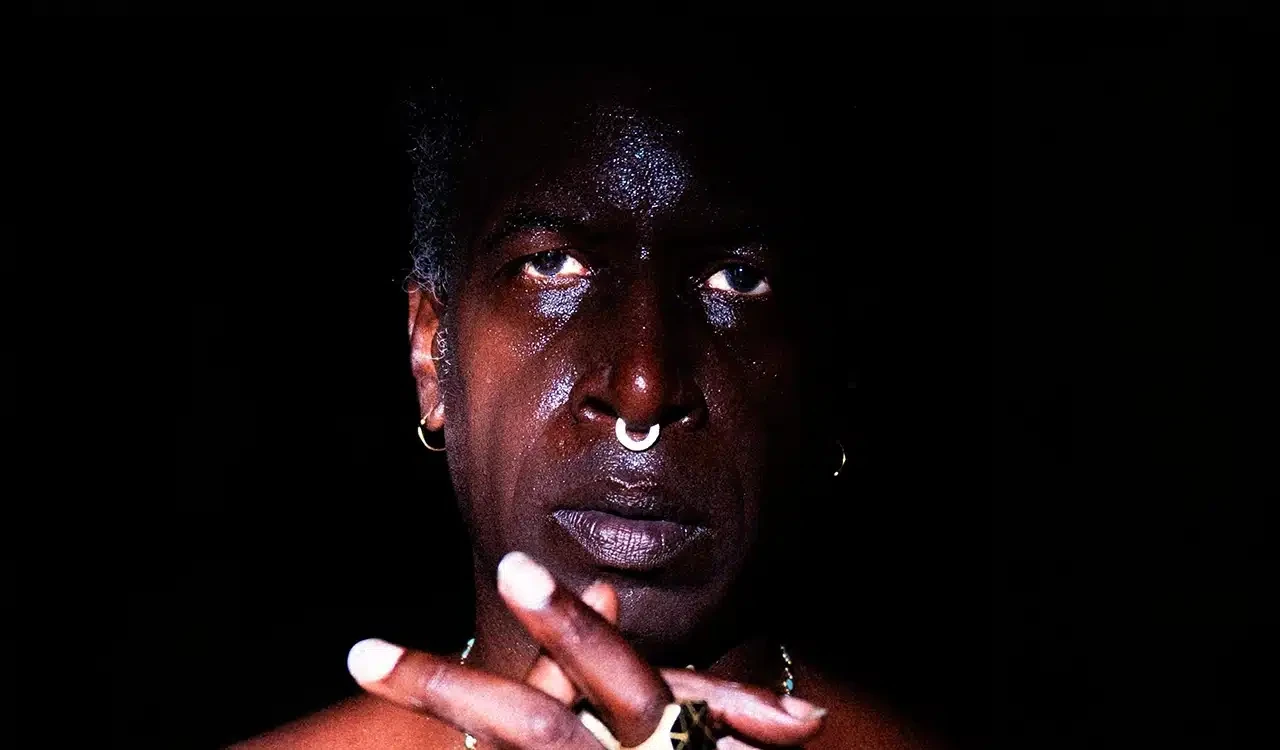
Saul Williams has never been an artist content to color within the lines. Over a career spanning more than two decades, his footprint has left indelible marks across poetry, hip-hop, independent cinema, and theatre. Whether starring in Ryan Coogler’s cinematic triumphs, directing the visionary sci-fi musical Neptune Frost, or earning critical acclaim for his debut feature Slam, Williams operates as a cultural polymath whose intellectual rigor matches his artistic output. Yet, for all his multidisciplinary achievements, his core pulse remains rooted in sound and verse.
His latest artistic statement, the eclectic and uncompromising album Leap Life, arrives as both a culmination of his storied journey and a sharp recalibration of his mission. Released via Big Dada, the record moves fluidly through spoken word, jazz, hip-hop, ambient textures, and West African rhythms. Titled in honor of his February 29th birthday, Leap Life is far more than a personal milestone; it is a deliberate act of cultural resistance.
In an era where popular music has increasingly leaned toward escapism and systemic pacification, Williams is stepping into what he describes as "warrior mode." Refusing to operate from a place of fear or complacency, he is utilizing the undeniable pull of rhythm and melody to bypass intellectual defenses and reawaken public consciousness. Through a meticulous creative process steered by longtime collaborator Carlos Niño, and featuring contributions from heavyweights like Massive Attack’s Robert Del Naja, Moor Mother, Gonjasufi, and Georgia Anne Muldrow, Leap Life represents a masterclass in modern protest art. It proves that seduction and subversion can coexist within the same four-minute track.
Detailed Chronology: The Genesis of Leap Life
The path to Leap Life was neither linear nor intentionally planned. What ultimately materialized as a cohesive, genre-defying LP began during the isolating depths of the COVID-19 pandemic as a disjointed collection of sonic experiments.
Phase One: Isolation and Experimentation
Confined by global lockdowns, Williams initially turned inward, crafting individual beats and exploring the architecture of sound design. Unsure of whether the public would ever hear the material, he spent months operating without the pressure of an overarching album concept. At various points, the project resembled a cinematic film score interwoven with spoken word elements; at others, it took a sharp classical detour, drawing inspiration from Vivaldi as Williams meticulously chopped and reconfigured classical compositions.
Phase Two: The Catalyst in Los Angeles
The turning point arrived when Williams crossed paths with longtime friend and visionary producer Carlos Niño in Los Angeles. At the time, Williams was constantly on the move, maintaining a rigorous international travel schedule, including touring alongside André 3000. Recognizing the window of opportunity, Niño intervened.
"Carlos said to me, ‘You are in town for a month. I know you are going to travel forever. I can get the studio right now. Let’s do it right fucking now,’" Williams recalls.
Reluctantly at first, Williams brought his disparate demos to the studio. He confessed to Niño that he wasn’t even sure if he was making an album, or if the tracks were simply three different records fighting for space. Niño’s response, however, was instantaneous and decisive. He requested all the demos, spent a single evening sequencing them, and returned a master blueprint the very next day. That exact sequence became the spine of Leap Life.

Phase Three: Naming and Shaping the Vision
Recognizing Williams’ nomadic lifestyle, his tendency to drift across creative dimensions, and his unique birth date, Niño proposed the title Leap Life. With the name locked in, the project transformed from a loose compilation of pandemic-era soundscapes into a unified, breathing artistic entity. Big Dada—the very label that released Williams’ debut single back in 1997—immediately recognized the record’s commercial and artistic gravity, pulling the team into a cyclical moment of full-circle completion.
Supporting Context & Metrics: Art, Propaganda, and the Seductive Beat
To fully understand Leap Life, one must examine Williams’ piercing critique of contemporary pop culture. In his view, mainstream music has largely abdicated its historical role as a vehicle for social mobilization, devolving instead into an arm of state propaganda and corporate pacification.
The Machinery of Escapism
"Music, and that speaks through many genres, has operated as an arm of state propaganda," Williams asserts. "It has been the place where people go to let off steam and escape, to seek and feel distraction."
Drawing parallels to modern television and film, Williams argues that exhausted labor forces return home from work with just enough residual energy to seek disengagement. Rather than interrogating systemic inequities—such as wage stagnation and institutional oppression—audiences are funneled toward entertainment ecosystems designed to neutralize dissent. Art, which once served to direct the steam of social movements, has increasingly been weaponized to uphold the status quo.
Reclaiming the Pop Sensibility
Yet, Williams harbors no illusions about preaching to an already converted choir. He understands that outright didacticism often fails to penetrate the broader public consciousness. Instead, Leap Life relies on what he terms a "seductive force"—hypnotic beats and intoxicating sonic textures that engage the listener’s pleasure centers before confronting their intellect.
"Pop is just what’s popular, and we can always shift that. It may take a conscious decision. It will also take a hypnotic or seductive beat," he explains.
By building tracks that casually cross over into accessible, infectious territory—a trait immediately flagged by Big Dada executives who heard upwards of seven viable singles—Williams ensures the album possesses multiple points of entry. Listeners may initially be drawn in by the sheer kinetic energy of the music, only to experience a "holy shit moment" when the lyrical depth and conceptual gravity finally sink in.
Official Statements & Industry Collaborations
Leap Life is anchored by a powerhouse collective of avant-garde architects and boundary-pushing musicians. The album’s dense sonic fabric is woven together by friendships forged over decades in the independent underground music scene.

A Network of Visionaries
The album features stellar contributions from an elite roster of collaborators:
- Robert Del Naja (Massive Attack): Bringing his signature dark, atmospheric weight to the proceedings.
- Moor Mother: Infusing the project with her uncompromising avant-garde urgency.
- Gonjasufi & Georgia Anne Muldrow: Providing raw, earthy, and psychedelic vocal and instrumental textures.
- Jimetta Rose: Elevating the spiritual and vocal resonance of the compositions.
Williams notes that his creative synergy with these artists extends even further than what is captured on Leap Life. He hints at an unreleased, fully realized collaborative solo project titled The Plastic Shields, which features himself, Gonjasufi, and Del Naja. "It is fucking awesome," Williams says. "I keep asking them about when we are going to release it."
Navigating Personal and Political Rifts
Such uncompromising artistic stances do not come without personal cost. Over the past two and a half years, amidst escalating global crises—particularly regarding the humanitarian catastrophe in Palestine—Williams has experienced profound shifts in his personal and professional relationships.
"The most shocking thing to me has been the realization that not everybody I thought was on my team is actually on my team," Williams reflects candidly. Confronted with former friends, dinner guests, and long-standing professional allies who condoned or justified atrocities, Williams was forced to re-evaluate his inner circle.
While describing the culling of these relationships as a painful and sobering revelation, he notes that it has ultimately clarified who truly stands with him. This period of ideological purification has coincided with a profound sense of spiritual alignment, marked by his reconnection with Big Dada and the serendipitous creation of Leap Life.
Future Outlook: Teaching, Mobilizing, and the Road Ahead
As Saul Williams looks toward the future, Leap Life stands as a blueprint for how veteran artists can navigate a fractured world without compromising their integrity. By refusing to chase fleeting social media influencer metrics, Williams has doubled down on his true vocation: poet, musician, and cultural provocateur.
The release of Leap Life is not merely an album cycle; it is an invitation for a new generation of listeners to wake up. By merging high-concept political discourse with irresistible, rhythm-driven production, Williams is proving that the steam of public frustration can be successfully directed toward collective action.
As he continues to tour internationally and shape future cinematic and literary projects, Williams remains a vital, unyielding voice in modern culture. Leap Life challenges us to look past the distractions of modern entertainment, listen with fresh ears, and step boldly into our own warrior mode.





Belum ada komentar. Jadilah yang pertama berkomentar!