Across the United States, a high-stakes collision is unfolding between the relentless expansion of artificial intelligence and the socio-ecological resilience of local communities. Big Tech companies, driven by an unquenchable thirst for computational dominance, are racing to secure land, water, and power to feed a new generation of massive AI data centers. Armed with multi-million-dollar PR campaigns, corporate developers pitch these multi-story server farms as catalysts for local economic vitality, promising job creation, robust tax revenues, and technological leadership.
Yet, this utopian narrative has failed to win over the American public. Recent polling data reveals a striking paradigm shift: a clear majority of Americans now actively oppose data center construction in their local neighborhoods. These mounting reservations are rooted in pragmatic, urgent concerns over soaring electricity bills, depleted municipal water supplies, chronic noise pollution, and devastating environmental degradation.
For residents of historically overburdened industrial hubs—such as Grays Ferry in Southwest Philadelphia—the corporate promises ring hollow. Having spent generations living in the shadows of heavy industry, toxic emissions, and systemic municipal neglect, these neighborhoods recognize the early warning signs of a new extractive economy. As municipal officials nationwide weigh the short-term allure of tech-sector investments against the long-term health of their constituents, a growing wave of grassroots activism, state-level executive orders, and municipal moratoriums is beginning to push back, demanding that the true human and environmental toll of the AI revolution be accounted for before another acre of land is cleared.
Detailed Chronology: From Industrial Scars to the AI Threat
To understand why communities like Southwest Philadelphia are mobilizing against prospective tech infrastructure, one must trace the timeline of industrial extraction that has defined the region for over a century.
The Grays Ferry Legacy and the 2019 Awakening
For decades, Shawmar Pitts lived alongside the East Coast’s largest oil refinery—the sprawling Philadelphia Energy Solutions (PES) facility. Growing up in the Grays Ferry neighborhood, chronic illnesses among family, friends, and neighbors were accepted as a grim, inescapable fact of urban life. It was not until 2018, when environmental justice organizers from Philly Thrive set up a neighborhood tabling event to protest a proposed refinery expansion, that the connective tissue between corporate pollution and public health became clear to Pitts.
Reading through diagnostic lists detailing the health impacts of refinery proximity, Pitts experienced a chilling epiphany. Every chronic illness listed—respiratory failure, severe cardiovascular disease, and rare cancers—mirrored the medical charts of his own household and immediate neighbors. "My mother has this, my sister has that, my next-door neighbor suffers from this," Pitts recounted. "From that point, I was all the way in."
The tipping point for Grays Ferry arrived on June 21, 2019, when a catastrophic series of explosions ripped through the PES refinery, sending towering fireballs into the Philadelphia skyline and releasing thousands of pounds of toxic hydrofluoric acid into the atmosphere. Although the disaster miraculously resulted in no fatalities, it forced the eventual permanent closure of the facility, which had processed up to 335,000 barrels of crude oil daily.
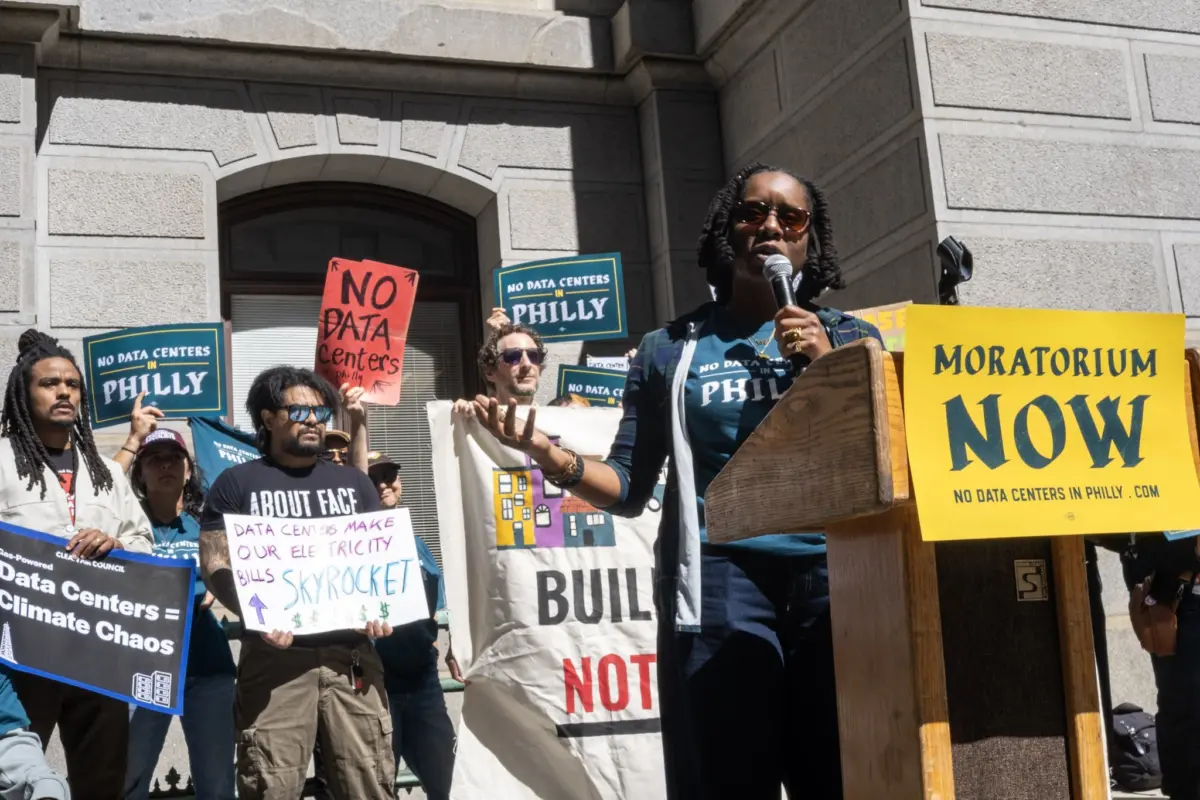
However, the closure did not erase the neighborhood’s trauma. In 2020, Philly Thrive board president Sonya Sanders lost her husband to a rare bone cancer. A lifelong non-smoker and non-drinker who had also grown up next door to the giant refinery, Sanders firmly attributes his death to industrial toxicity. At a recent anti-data center rally outside Philadelphia’s City Hall, Sanders delivered a searing indictment of corporate profit motives: "In my eyes, they killed him. The pollution killed him. I believe he would be here today if he wasn’t silently murdered, because it was the pursuit of profit that killed him."
The New Frontier: Philadelphia’s Data Center Debate
Fast forward to the present day: although no formal proposals have yet been filed for data center construction in Philadelphia, city planners have quietly identified two potential development zones—one in Northeast Philadelphia and the other directly in Pitts’ backyard of Grays Ferry.
In response, a coalition of more than 100 residents, environmental lawyers, and community organizers descended on City Hall on a Monday morning to launch the "No Data Centers in Philly" campaign. Now serving as managing co-director of Philly Thrive, Pitts is leading the charge for a municipal data center moratorium. The local coalition’s stance is uncompromising: they do not want the noise, the intensive resource drain, or the atmospheric pollution, and they flatly reject the notion that these automated facilities will deliver meaningful, long-term employment for local workers.
Supporting Context & Metrics: The Staggering Resource Footprint of AI
While data centers are often perceived as clean, silent warehouses filled with humming computers, their physical and environmental reality is staggeringly resource-intensive. The international race to capture market share in generative artificial intelligence has fundamentally altered energy projections across the globe.
Natural Gas and the Global Energy Crisis
According to updated projections from BloombergNEF, the energy demands of U.S. data centers are scaling at a pace that defies previous models. By the year 2035, American data centers are projected to consume more natural gas than the combined national totals of Germany and Japan—nearly doubling BloombergNEF’s own predictions made just nine months prior.
While natural gas burns cleaner than heavy crude oil, it is far from an environmentally benign fuel source. The combustion of a single cubic foot of natural gas releases approximately 60 grams of carbon dioxide equivalent. Cumulatively, the surging power demands of AI infrastructure are expected to inject an additional one million metric tons of greenhouse gas pollution into the atmosphere every single day. This single industrial sector surge accounts for roughly 12% of all present-day U.S. greenhouse gas emissions.
Public Health and the Diesel Generator Reality
The environmental threat posed by modern data centers extends far beyond the power plants feeding them from afar. Individual server farms routinely house massive arrays of backup infrastructure. Annie Fox, an attorney with the Clean Air Council, highlighted a grim reality at the Philadelphia City Hall rally:
"A typical data center planned in Pennsylvania has hundreds of diesel engines that spew air pollution, and even if they’re supposedly reserved for emergencies, the government has already said that the data center should use those rather than drawing from an overstressed electrical grid during some heat waves. We can expect that to get more frequent… Fossil fuel-hungry data centers will worsen climate change, making those heatwaves more frequent and severe."
This localized pollution intersects directly with established epidemiological research. A landmark 2021 study by researchers at Harvard University found that fossil fuel air pollution is responsible for an astonishing one in five deaths worldwide—a global mortality burden that environmental advocates fear will only escalate as the energy grid buckles under the weight of AI expansion.
Official Statements and Legislative Pushback
The grassroots resistance observed in Philadelphia is far from an isolated phenomenon. Across the country, citizens, municipal councils, and state executives are beginning to construct legislative speed bumps against the unchecked spread of digital infrastructure.
New York’s Executive Action
In a major victory for environmental advocates, New York Governor Kathy Hochul signed a sweeping executive order temporarily halting the state’s approval of new permits for large-scale data center projects. Addressing reporters at a press conference, Governor Hochul drew a firm line regarding corporate responsibility:
"Progress shouldn’t arrive with a higher utility bill, deleted water supply, or noise pollution. These data centers can only be built, should only be built in places that want them."
A Nationwide Wave of Moratoriums
New York is far from alone. Municipalities across the United States are utilizing zoning pauses and formal moratoriums to hit the brakes and study the long-term infrastructural impacts of AI facilities. Notable legislative actions include:
Denver, Colorado: Implemented stringent planning reviews and zoning code adjustments for high-density tech infrastructure.
Indianapolis, Indiana: The Metropolitan Development Commission unanimously approved a comprehensive data center moratorium.
Asheville, North Carolina: Enacted a one-year pause on new AI data center developments to protect local neighborhoods and watersheds.
Charlotte, North Carolina: Actively considering extensions to existing data center restrictions as community input mounts.
Reno, Nevada: Extended its municipal data center moratorium well into 2027 to evaluate grid stability and water security.
The universal goal behind these legislative halts is simple: to give local governments time to catch their breath, gather independent data, and assess whether their local resources can endure the staggering demands of the tech sector.
Future Outlook: The Intersection of Tech and Community Sovereignty
As the United States hurtles deeper into the artificial intelligence boom, the ideological battlelines between Silicon Valley and Main Street have never been clearer. On one side stand venture-backed tech giants and utility conglomerates projecting an inevitable, high-growth digital future. On the other stand frontline communities like Grays Ferry, armed with the generational trauma of past industrial exploitation and a refusal to be sacrificed on the altar of technological progress.
Local residents like Donna Greenberg, who stood among the protestors at City Hall, encapsulate the multi-faceted anxieties driving the movement. "I’m worried about pollution," Greenberg told reporters. "I’m worried about surveillance and the fact that they’re going to have access to information they have no business knowing, and I’m concerned that they’re going to be using water and electricity that takes away from the people and the neighborhoods who need it."
The success of campaigns like "No Data Centers in Philly" signals a profound cultural shift. Communities that were once treated as disposable sacrifice zones are demanding a seat at the table—and veto power over what is built in their backyards. Whether tech companies will adapt by investing in genuinely green, off-grid infrastructure, or whether they will continue to face institutional roadblocks and moratoriums across the nation, remains the defining question of the AI era. What is certain, however, is that the cost of progress will no longer be paid in silence by the people who live next door.












Belum ada komentar. Jadilah yang pertama berkomentar!