

Executive Overview
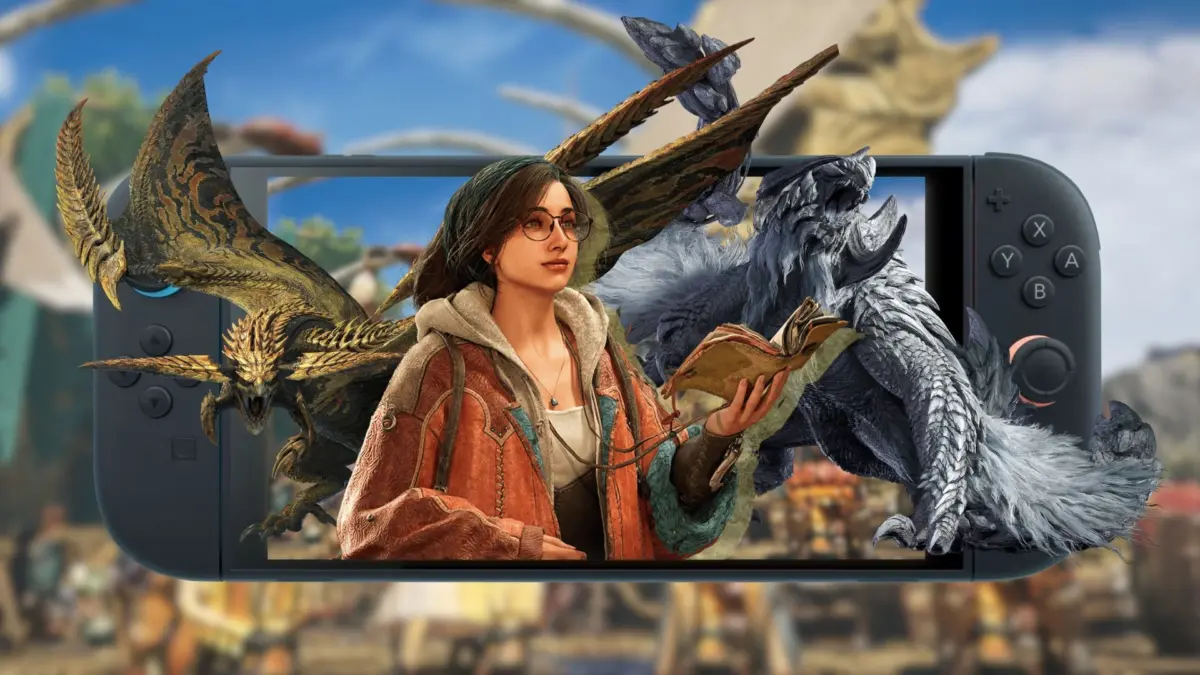
In what marks a significant milestone for current-generation handheld hardware, Capcom has officially showcased Monster Hunter Wilds running on Nintendo’s successor platform, the Nintendo Switch 2. Following a press preview at Capcom’s regional offices, early technical evaluations indicate that the publisher has managed to port one of the most graphically demanding titles built on the RE Engine to Nintendo’s upcoming hybrid console.
Capcom has confirmed an official platform release date of December 4, 2026, for the base game, with the major expansion Ascendance scheduled to follow in 2027. This roadmap signals Capcom’s long-term commitment to parity across console ecosystems, despite the severe performance challenges that plagued the title’s initial PC launch on Steam.
While the preview revealed necessary visual compromises—including dynamic resolution scaling and localized foliage pop-in—the implementation of dual performance profiles (a locked 30 FPS mode and an uncapped frame rate option) demonstrates an ambitious optimization strategy. This report delivers an exhaustive technical breakdown of Monster Hunter Wilds on Switch 2, contextualizes its performance against existing platforms, and evaluates the high-difficulty Ascendance expansion showcased during the press event.
Detailed Chronology: Hands-On Technical Breakdown
+-----------------------------------------------------------------------------+
|                           RELEASE & TESTING ROADMAP                         |
+-----------------------------------------------------------------------------+
|  [Q3 2026]           [DEC 4, 2026]                [2027]                    |
|  Press Preview       Base Game Launch             'Ascendance' DLC Launch   |
|  Capcom Offices      Nintendo Switch 2            Nintendo Switch 2         |
|  * Testing 30FPS     * Full Single/Multiplayer    * Master Rank Expansion   |
|    & Uncapped        * Portable & Docked          * Next-Gen Feature Parity |
+-----------------------------------------------------------------------------+
The Preview Session & Hardware Setup
The hands-on technical preview took place during a controlled briefing at Capcom’s offices, utilizing plugged-in Nintendo Switch 2 development units configured for both docked and handheld display modes. Assessment focused on environmental stability, frame pacing during high-intensity combat, asset streaming efficiency, and general combat fluidity across multiple hunting quests.

Visual Fidelity vs. Rendering Trade-offs
Porting a title designed around expansive, seamless biomes and dynamic weather systems onto a mobile SoC (System on Chip) requires aggressive rendering adjustments.
- Foliage and Geometry Alpha Passes: The primary visual defect identified during active camera movement involves transparent and dithered grass textures. As the camera pans around the player character, low-density foliage periodically phases in and out, displaying checkerboard-style alpha dithering artifacts.
- Texture Streaming and Distant Vistas: Long-distance draw distances remain broad, preserving the macro-geography of the open ecosystems. However, terrain textures at a distance suffer from noticeable texture compression and resolution downsampling, resulting in a softened, somewhat muted visual presentation compared to higher-end home consoles.
- Character and Monster Rendering: Micro-level detail on player armor sets, weapons, and large monster models remains surprisingly intact at close proximity. Texture resolution scales down dynamically during intense multi-monster interactions, prioritizing geometry rendering over material sharpness.
+-----------------------------------------------------------------------------+
|                       SWITCH 2 PERFORMANCE PROFILE COMPARISON              |
+-----------------------------------------------------------------------------+
|  Metric               | 30 FPS Locked Profile     | Uncapped Frame Profile  |
+-----------------------+---------------------------+-------------------------+
|  Target Frame Rate    | 30 FPS                    | Variable (30-45+ FPS)   |
|  Frame Pacing         | Consistent                | Variable                |
|  Animation Smoothness | Standard                  | High (Fleeing Monsters) |
|  Visual Artifacting   | Dynamic Scaling Active    | Reduced Stuttering      |
|  Thermal / Battery    | Untested (Power Plugged)  | Untested (High Load)    |
+-----------------------+---------------------------+-------------------------+
Frame Rate Options: Locked 30 FPS vs. Uncapped
Capcom’s build includes a toggleable performance profile, offering players a choice between a strict 30 FPS cap and an Uncapped (Unlimited) mode:
- 30 FPS Mode: Delivers predictable frame timing, suitable for docked play on standard displays. However, high-velocity movement—such as large monsters fleeing between zones—can display minor stutters as animation interpolation adapts to the capped throughput.
- Uncapped Mode: Significantly improves motion clarity and input responsiveness. In this mode, character movement, camera adjustments, and monster behavior exhibit smoother motion paths. The visual micro-stuttering observed during monster zone transitions in 30 FPS mode is visibly mitigated.
Note on Power and Thermals: Because the preview hardware was tethered to constant AC power within the preview suite, critical metrics regarding battery discharge rates, fan acoustics, and thermal throttling under prolonged load in portable mode remain unverified.
Supporting Context & Metrics: Technical Legacy and Hardware Capabilities
The PC Launch Context
To contextualize the achievement of running Monster Hunter Wilds on a handheld hybrid platform, one must examine the game’s initial multiplatform deployment.

+-----------------------------------------------------------------------------+
|                        PLATFORM OPTIMIZATION HISTORY                        |
+-----------------------------------------------------------------------------+
|  PC / Steam Launch                                                          |
|  ├── Widespread reports of heavy CPU/GPU utilization                       |
|  ├── Frame-pacing instability across mid-to-high-tier systems               |
|  └── Steam Deck struggles with visual fidelity & sub-30 FPS drops           |
|                                                                             |
|  Nintendo Switch 2 Port (Dec 2026 Target)                                   |
|  ├── Custom RE Engine hardware profiles tailored for ARM Architecture        |
|  ├── Dynamic Resolution Scaling & Variable Rate Shading implementation     |
|  └── Dual-profile graphics options (30 FPS Lock vs. Uncapped Target)        |
+-----------------------------------------------------------------------------+
When Monster Hunter Wilds debuted on PC via Steam, it encountered severe criticism regarding optimization. The game demands high processing throughput, stretching both CPU frame times and VRAM allocations. Even on the Linux-based Steam Deck—which carries a "Verified" or playable rating for many modern titles—Wilds experienced significant frame drops, low render resolutions, and unstable texture delivery.
Given these systemic optimization struggles on x86 architectures, the industry consensus anticipated that a Nintendo Switch 2 port would either be heavily delayed or delivered as a cloud-streamed product. Capcom’s choice to execute a native client port indicates deep modification of the RE Engine pipelines, utilizing hardware-assisted upscaling, dynamic variable rate shading (VRS), and aggressive memory management tailored to the Switch 2’s specific architecture.
Nintendo’s Historical Ecosystem Parity
The announcement reflects a broader historical relationship between Capcom and Nintendo hardware platforms, where Monster Hunter has repeatedly driven handheld innovation.
+-----------------------------------------------------------------------------+
|                       MONSTER HUNTER NINTENDO TIMELINE                      |
+-----------------------------------------------------------------------------+
|  Wii                 Monster Hunter Tri (2009)                              |
|  Wii U               Monster Hunter 3 Ultimate (2012)                       |
|  Nintendo 3DS        Monster Hunter 4 Ultimate / Generations (2014-2015)   |
|  Nintendo Switch     Monster Hunter Generations Ultimate / Rise (2017-2021) |
|  Nintendo Switch 2   Monster Hunter Wilds (Dec 4, 2026)                      |
+-----------------------------------------------------------------------------+
While previous entries like Monster Hunter Rise were built natively for the original Switch hardware from the ground up, Monster Hunter Wilds represents a top-down porting effort—taking a game designed for high-end consoles and scaling it downward rather than building upward.

Official Statements & Strategic Content: The ‘Ascendance’ Expansion
In addition to base-game evaluation, Capcom allowed hands-on access to the upcoming expansion pack, titled Monster Hunter Wilds: Ascendance. While the DLC demo was deployed on PlayStation 5 hardware to demonstrate its target presentation, Capcom confirmed that Ascendance will arrive on Nintendo Switch 2 in 2027, establishing feature and content parity across platforms.
+-----------------------------------------------------------------------------+
|                       'ASCENDANCE' EXPANSION OVERVIEW                       |
+-----------------------------------------------------------------------------+
|  Category             | Specification                                       |
+-----------------------+-----------------------------------------------------+
|  Difficulty Rank      | Master Rank (Endgame Escalation)                    |
|  Story Continuation   | Direct extension of Wilds base campaign             |
|  Mechanic Expansion   | New weapon move-sets, advanced armor skill trees    |
|  Featured Encounter   | Fiery Winged-Lion Elder Dragon (Teostra Class)      |
|  Environment          | High-hazard volcanic/lava biomes                    |
+-----------------------+-----------------------------------------------------+
Combat Analysis & Environmental Mechanics
The Ascendance expansion follows the tradition established by previous major expansions like Monster Hunter World: Iceborne and Monster Hunter Rise: Sunbreak.
- Master Rank Progression: The expansion introduces Master Rank quests, raising monster attack aggressiveness, altering telegraph patterns, and increasing health pools.
- Featured Boss Encounter: The hands-on preview highlighted an encounter against an Elder Dragon featuring distinct fiery, winged-lion characteristics—evoking design traits of the classic Elder Dragon Teostra, historically featured in Monster Hunter 2, Iceborne, and Sunbreak.
- Hazardous Arena Design: The encounter took place within an active volcanic zone characterized by ambient heat damage, flowing lava hazards, and dynamic terrain collapse. The boss utilized multi-stage flame attacks, area-of-effect blast detonations, and sweeping aerial dives. During the press preview session, the encounter demonstrated an extreme failure rate among testers, emphasizing Capcom’s intent to position Ascendance as endgame content for veteran players.
        [Base Campaign: Monster Hunter Wilds]
                         │
                         ▼
        [Master Rank Gateway: 'Ascendance' DLC]
                         │
         ┌───────────────┴───────────────┐
         ▼                               ▼
 [Expanded Move-Sets]          [Apex Elder Dragons]
 (New Armor / Skills)          (Teostra-Class Threats)
Future Outlook: Industry Implications and Market Strategy
The confirmation of Monster Hunter Wilds for the Nintendo Switch 2 on December 4, 2026, accompanied by the 2027 Ascendance DLC roadmap, carries broader implications for both Capcom and Nintendo:
+-----------------------------------------------------------------------------+
|                         STRATEGIC IMPACT SUMMARY                            |
+-----------------------------------------------------------------------------+
|  1. Handheld Viability                                                      |
|     Validates the Switch 2 as a capable platform for current-generation     |
|     AAA engine ports without relying on cloud streaming.                    |
|                                                                             |
|  2. Revenue & Ecosystem Expansion                                           |
|     Unlocks Nintendo's massive handheld player base for Capcom's flagship   |
|     action franchise, securing long-term DLC monetization into 2027.        |
|                                                                             |
|  3. Technical Benchmark                                                     |
|     Sets a baseline for dynamic resolution scaling and frame rate options  |
|     for third-party publishers targeting Nintendo's next-gen architecture.  |
+-----------------------------------------------------------------------------+
Crucial Milestones to Watch
- Portable Battery Optimization: Real-world testing will be required upon release to gauge how the uncapped frame rate mode affects battery life and thermal output during untethered play.
- System Scalability: How well Capcom’s custom RE Engine scalability options handle complex multiplayer hunts with four players, four Palicos/Seikrets, and multiple large monsters rendering simultaneously on Switch 2 hardware.
- Post-Launch Feature Parity: Ensuring the 2027 release of the Ascendance expansion launches cleanly on Switch 2 alongside other modern platform versions.
For both new players and veteran Hunters looking to take the full next-generation experience on the go, Monster Hunter Wilds on Switch 2 represents a significant technical accomplishment—proving that modern AAA game engines can indeed thrive on hybrid handheld hardware when given targeted optimization.





Belum ada komentar. Jadilah yang pertama berkomentar!