


Executive Overview
The evolution of Apple’s AirPods has traditionally been viewed through the lens of audio fidelity, active noise cancellation, and seamless ecosystem integration. From the introduction of spatial audio to the incremental software upgrades arriving via recent iOS deployment cycles—including the feature drops accompanying iOS 26—Apple’s iconic wireless earbuds have continually redefined what compact personal audio hardware can achieve. However, a clever and unexpected new application on the App Store is disrupting traditional paradigms of mobile gaming interaction.
Enter RidePods, an innovative racing title that leverages the sophisticated built-in motion-tracking sensors of compatible Apple AirPods to serve as an entirely hands-free game controller. Rather than requiring users to tap, swipe, or rely on traditional external gamepads, RidePods captures the subtle, real-time spatial movements of a player’s head, translating those physical tilts directly into steering mechanics for an on-screen motorcycle.
While the concept of motion-controlled gaming is hardly novel within the broader industry—having previously been explored through platforms like Nintendo’s Wii, PlayStation Move, and various virtual reality headsets—bringing this level of spatial telemetry to ubiquitous everyday consumer earbud hardware represents a fascinating design milestone. It highlights how underlying hardware features, originally engineered for immersive media consumption, can be creatively repurposed by third-party developers to breathe new life into mobile software experiences.
This article provides an in-depth examination of RidePods, exploring its underlying mechanics, technical requirements, the broader implications for the future of casual iOS gaming, and the evolving utility of Apple’s audio ecosystem.
Detailed Chronology: From Spatial Audio to Spatial Gaming
To understand the engineering achievement behind RidePods, it is essential to trace the developmental timeline of Apple’s hardware and software integration that made such an application possible.
The Foundation of Motion Telemetry in AirPods
Apple’s journey toward motion-aware audio began in earnest with the introduction of dynamic head tracking. Powered by custom-designed internal inertial measurement units (IMUs)—comprising micro-electromechanical system (MEMS) gyroscopes and accelerometers embedded within the earbud housing—AirPods gained the ability to track the precise spatial orientation of a user’s head relative to their connected Apple device.

Initially, this technology was deployed exclusively to anchor multichannel audio fields in space, creating the illusion that sound was emanating from a fixed physical location in a room, even as the listener turned their head. Over successive hardware generations, this sensor suite became more refined, ultra-low latency, and deeply integrated into core operating systems like iOS, iPadOS, and macOS.
The Rise of Novelty App Store Implementations
As Apple gradually opened up APIs allowing deeper programmatic access to device sensors and motion data, independent developers began experimenting beyond standard media playback use cases. While accessibility features have long utilized head gestures for navigation, entertainment software lagged behind in exploring these avenues for mainstream users.
The conceptual spark for RidePods arrived as developers sought ways to simplify mobile game mechanics without sacrificing interactivity. Racing games, in particular, have long struggled with touch-screen steering controls, which often feel imprecise, overly sensitive, or simply disconnected from the physical act of driving. By bypassing the touch screen entirely and mapping directional input directly to vestibular and cervical movements—the physical turning of the neck—RidePods effectively bridges the gap between player and avatar.
Upon its recent launch and subsequent spotlight by industry outlets such as The Verge, RidePods quickly captured the attention of the iOS enthusiast community. The game reframes how users interact with their mobile devices, requiring nothing more than a compatible pair of AirPods, an iPhone, and a willingness to nod and turn one’s head in public or private spaces alike.
Supporting Context & Metrics: How RidePods Works
At its core, RidePods is a classic arcade-style racing game. Players control a virtual motorcycle speeding down dynamic tracks, dodging obstacles, and aiming for high scores. However, the true differentiator lies entirely within the input schema.
The Mechanics of Head-Steering
When a player launches RidePods and connects their AirPods, the application initiates a background data stream utilizing Apple’s core motion frameworks. As the user tilts their head to the left or right, the IMUs inside the AirPods instantly measure the angular velocity and gravitational orientation changes.
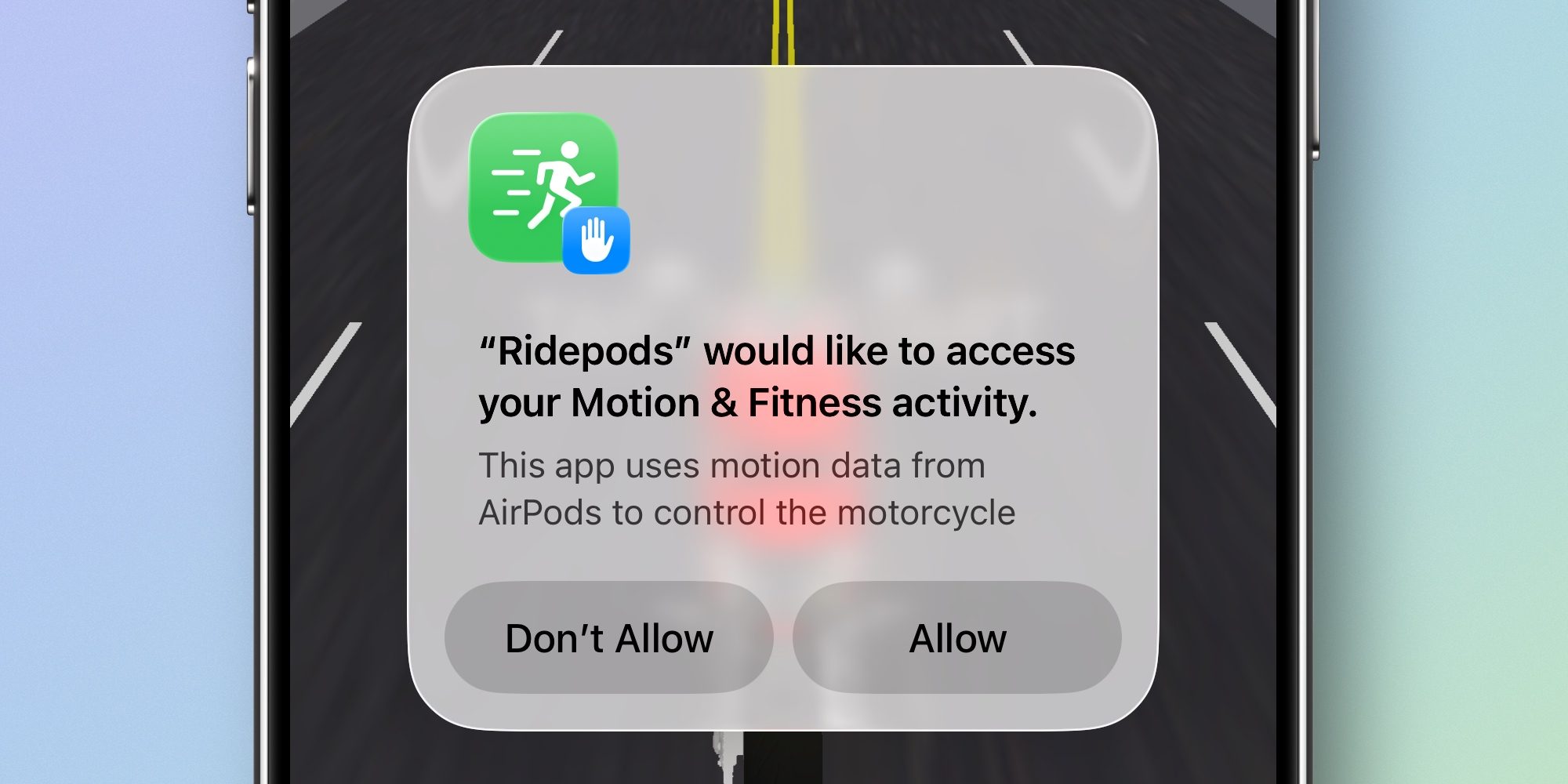
The game software translates these inputs in real time:
- Head Tilt Left: The motorcycle maneuvers toward the left side of the track.
- Head Tilt Right: The motorcycle steers toward the right side of the track.
- Neutral Position (Center): The vehicle maintains a straight trajectory.
This zero-touch methodology eliminates the need for cumbersome physical controllers or cramped thumb placements on glass screens. However, developers and early testers note that the experience is deliberately tailored for short, casual play sessions rather than multi-hour marathons. The physical exertion of sustained head movement—while entertaining and surprisingly intuitive—makes short-form arcade gaming the ideal use case for this form factor.
Hardware Compatibility Matrix
Because RidePods relies on the advanced sensor arrays found in specific Apple audio products, the application requires hardware equipped with native spatial audio and dynamic head tracking capabilities.
Users seeking to experience RidePods must utilize one of the following compatible Apple devices:
- AirPods (3rd generation or later)
- AirPods Pro (1st generation or later)
- AirPods Max
Older or entry-level audio accessories lacking dedicated spatial tracking sensors are incompatible with the software’s core input architecture. The app itself is distributed free of charge through the iOS App Store, lowering the barrier to entry for curious iPhone and iPad users looking to test the boundaries of their existing tech ecosystem.
Official Statements and Industry Reception
The release of RidePods has sparked broader conversations across the tech and gaming communities regarding the untapped potential of everyday accessories as peripheral input devices.

Industry analysts and software engineers have noted that Apple’s walled-garden ecosystem offers a unique advantage for this type of development. Because hardware standards across AirPods and iOS devices are tightly controlled, developers can rely on uniform sensor calibration, predictable latency thresholds, and robust APIs.
Early user reviews and journalistic evaluations highlight the novelty and cleverness of the implementation:
"I found the mechanic a fun, intuitive twist on iPhone gaming. Would I want to play anything for hours using head tracking with AirPods? No, but it still makes for a unique experience." — Early iOS Software Reviewer
While mainstream game studios are unlikely to abandon traditional touch or controller inputs for heavy-weight AAA titles anytime soon, the indie scene has frequently proven that constraint-driven design yields the most memorable creative breakthroughs. RidePods serves as a textbook example of transforming a passive listening device into an active gaming peripheral with zero additional hardware purchases required.
Future Outlook: Where Motion-Tracked Audio is Headed
As we look toward the future of mobile computing, spatial audio hardware, and augmented reality, the boundary between passive listening devices and active sensory interfaces is destined to blur even further.
Implications for Spatial Computing and AR
The underlying technology powering RidePods—precise spatial tracking via miniature wearable form factors—is foundational to the broader expansion of spatial computing, including platforms like Apple Vision Pro. As AirPods and future iterations of smart earbuds become more deeply integrated with spatial operating systems, developers will likely find even more imaginative ways to utilize acoustic hardware.

Imagine fitness applications that monitor running posture via earbud motion telemetry, or productivity tools that allow users to manage hands-free workflows through subtle nods and shakes. By demonstrating that AirPods can successfully track dynamic user input in a fast-paced gaming environment, RidePods paves the way for more sophisticated utility-driven applications.
What Lies Ahead for App Store Developers
The positive reception of RidePods poses an intriguing question for the broader app development community: What other everyday items can become controllers?
As sensor technology grows smaller, cheaper, and more pervasive, the expectation for contextual, hands-free interaction will only increase. Whether RidePods remains a brilliant one-off novelty or inspires a wave of motion-tracked audio games remains to be seen. However, for now, it provides iOS users with a compelling, free reason to dust off their AirPods, download a fresh App Store title, and experience the thrill of steering a motorcycle with nothing more than the turn of a head.








Belum ada komentar. Jadilah yang pertama berkomentar!