

Executive Overview
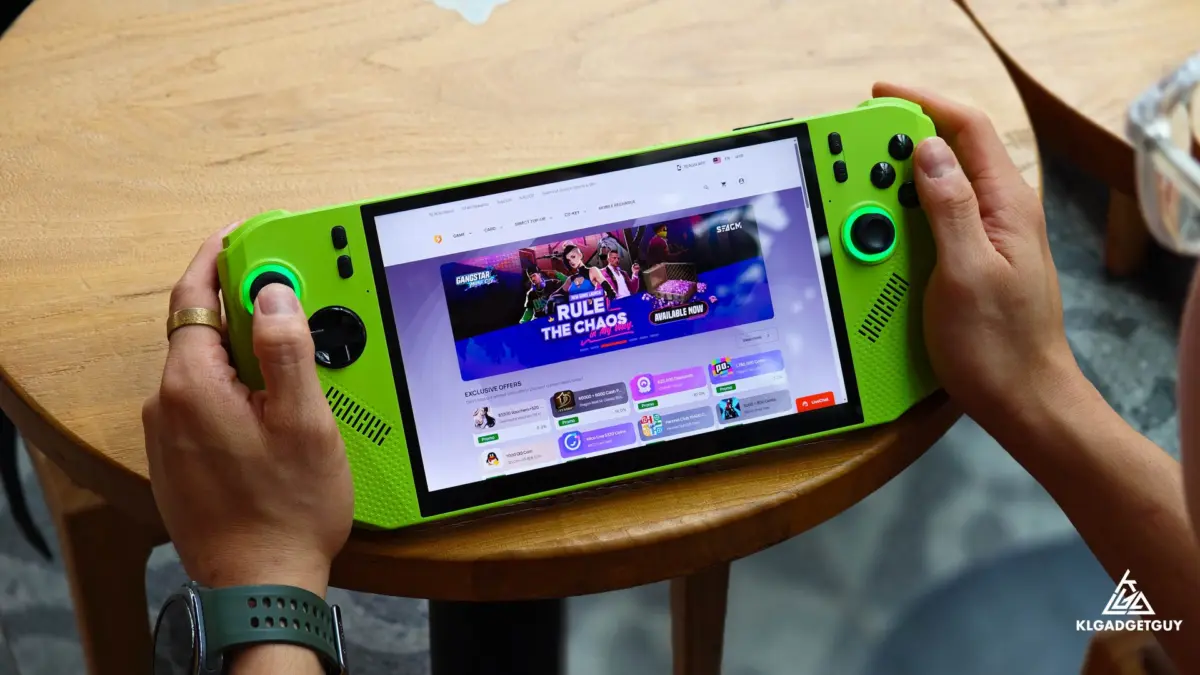
Unboxing a brand-new gaming device—whether it is a high-performance gaming laptop, a portable handheld console, a flagship smartphone, or a living-room powerhouse—remains one of the most exciting rituals in modern entertainment. The dopamine hit of peeling away plastic protection, powering on the device for the first time, and watching the splash screen load sets the stage for hours of immersion. Yet, the physical hardware is merely the vessel. Once the device is configured, the immediate reality sets in: hardware is only half the experience.
Gamers are immediately confronted with the task of populating their devices with software, securing digital subscriptions, acquiring downloadable content (DLC), and, increasingly, managing a dizzying array of in-game currencies. In today’s fractured digital landscape, accomplishing this often requires bouncing between a multitude of native storefronts, each with its own regional locks, proprietary payment gateways, and currency conversion models.
Enter platforms like SEAGM (Sea Gamer Mall). Rather than forcing users to navigate a labyrinth of isolated storefronts every time they need Steam Wallet credit, PlayStation Network cards, Nintendo eShop vouchers, or direct in-game top-ups for titles like Mobile Legends and PUBG Mobile, platforms of this nature have consolidated a massive ecosystem of digital gaming products under a single virtual roof.
This deep-dive investigation examines how third-party digital marketplaces have evolved from niche key-resellers into critical infrastructure for modern cross-platform gamers. By analyzing the structural friction of native digital storefronts, the economics of prepaid gaming budgets, and the security implications of centralized digital commerce, we explore why platforms like SEAGM have become an essential bookmark for the contemporary digital consumer.
Detailed Chronology: The Evolution of Digital Gaming Commerce
To understand the value proposition of modern digital marketplaces, one must first look at how the acquisition of games and digital goods has transformed over the past two decades.
The Physical Era and Fragmented Beginnings
In the era of physical media, purchasing a game or expansion pack was straightforward. Consumers visited a brick-and-mortar retailer, exchanged currency for a disc or cartridge, and walked away. Digital extensions were virtually non-existent outside of rare PC expansion packs found on store shelves.
When digital distribution first took root on PC via platforms like Steam in the mid-2000s, it revolutionized convenience but introduced proprietary ecosystems. Gamers could no longer trade physical copies, and they were tethered to specific client software. As the gaming market expanded onto consoles (via Xbox Live Marketplace and the PlayStation Network) and eventually exploded onto mobile devices (via the Apple App Store and Google Play Store), these digital silos multiplied.
The Rise of the Multi-Platform Gamer
By the 2010s, the archetype of the "single-platform gamer" began to fade. A typical gamer might play competitive multiplayer matches on a high-end gaming PC, unwind with narrative-driven single-player titles on a PlayStation 5, and play live-service mobile games on their smartphone during daily commutes.
Each of these platforms demanded its own payment method, its own account verification, and its own regional currency setup. For users living in regions with underdeveloped banking infrastructure or limited international credit card support, funding multiple digital wallets became a logistical nightmare.
Emergence of Centralized Digital Hubs
Recognizing the friction inherent in managing a dozen different digital wallets, third-party digital marketplaces emerged to bridge the gap. By aggregating gift cards, wallet top-ups, and direct game codes into a single catalog, these platforms provided a unified access point. Over time, they evolved from basic code-reselling sites into sophisticated e-commerce ecosystems supporting localized payment methods, automated instant-delivery systems, and multi-currency transactions, fundamentally changing how millions of users interact with digital gaming economies.
Supporting Context & Metrics: Why Gamers Bypass Native Storefronts
While purchasing digital goods directly from publishers—such as Valve, Sony, Nintendo, or Microsoft—remains the default path for many, a confluence of technical, financial, and geographical factors drives consumers toward third-party digital marketplaces.
1. Payment Friction and Financial Security
One of the most significant barriers in global digital commerce is payment accessibility. Major gaming storefronts often support a standardized suite of international credit cards and localized digital wallets, but these are frequently insufficient for a global audience.
- The Unbanked and Underbanked: Millions of active gamers worldwide lack access to traditional international credit cards (Visa, Mastercard, American Express). Third-party platforms bridge this gap by integrating hundreds of localized payment gateways, including regional e-wallets, carrier billing, over-the-counter cash payments, and regional banking transfers.
- Cybersecurity Concerns: Exposing sensitive credit card information across multiple gaming accounts—some of which may have weaker security infrastructures—presents a persistent risk. By utilizing prepaid digital codes or vouchers purchased securely through a centralized platform, users can isolate their primary financial accounts from direct exposure to gaming networks.
2. The Budgetary and Parental Control Advantage
In an era dominated by live-service games, battle passes, and microtransactions, maintaining financial discipline can be difficult.
- Prepaid Spending Discipline: Many modern gamers prefer a "pay-as-you-go" methodology. Instead of keeping a payment card linked indefinitely to a console or PC profile—which can lead to impulse purchases—users buy a fixed denomination of store credit. This creates a hard psychological and financial boundary for gaming expenditures.
- Empowering Parents: For parents navigating the digital habits of their children, handing over unrestricted access to a credit or debit card is a recipe for accidental overspending. Purchasing fixed-value gift cards or digital wallet codes provides a safe, controllable allowance system without compromising financial security.
3. Navigating Regional Limitations and Currencies
Geographic restrictions frequently complicate digital purchases. Account regions are often locked to where a user originally created their profile, creating complications when traveling, relocating, or attempting to gift items across borders. Centralized digital marketplaces often provide clearer visibility into regional product variations, allowing users to source appropriate digital codes that match their specific account parameters.
Official Industry Insights & Expert Perspectives
Digital commerce analysts and industry veterans frequently point out that the relationship between native storefronts and third-party digital vendors is symbiotic rather than purely adversarial.
Industry analysts note that platforms like SEAGM do not seek to replace titanic distribution channels like Steam or the PlayStation Network. Instead, they act as specialized financial and logistical intermediaries.
"The modern gaming consumer is inherently cross-platform," observes digital commerce researcher Dr. Aris Thorne. "When you have a user base that splits their time between a Windows desktop, a Nintendo Switch, and an iOS smartphone, expecting them to maintain funded, region-compliant wallets across all three ecosystems—using entirely different payment rails—is unrealistic. Intermediary platforms succeed precisely because they smooth out the logistical friction of global digital consumption."
Furthermore, digital marketplace executives emphasize that compliance, security, and consumer education remain paramount. As automated delivery systems have grown more sophisticated, ensuring that customers understand regional locking mechanisms, product denominations, and redemption requirements has become a cornerstone of trustworthy platform operations.
Deep Dive: The Unique Ecosystem of Mobile and Live-Service Gaming
While PC and console gamers benefit from centralized wallet codes, the utility of digital marketplaces shines perhaps brightest within the mobile and live-service gaming sectors.
The Microtransaction Maze
Modern mobile blockbusters—such as Mobile Legends: Bang Bang, PUBG Mobile, Genshin Impact, and Honor of Kings—rely heavily on microtransactions and premium in-game currencies (such as Diamonds, UC, and Genesis Crystals).
Acquiring these currencies typically requires navigating mobile app store billing systems (Apple App Store or Google Play Store), which take substantial revenue cuts and enforce strict regional pricing policies. Alternatively, players must visit disparate publisher-operated top-up portals, each requiring separate account logins and payment setups.
Direct Top-Ups and Account Efficiency
Platforms specializing in digital game commerce have streamlined this process via direct top-ups. By requiring only a user ID and server zone, platforms can credit in-game currency directly to a player’s account within seconds, bypassing the need to redeem clumsy alphanumeric voucher codes.
For competitive mobile gamers who play multiple live-service titles simultaneously, managing these assets through a single user account simplifies what would otherwise be a chaotic administrative chore.
Future Outlook: The Trajectory of Digital Gaming Intermediaries
As the gaming industry races toward a cloud-dominated, digital-first future, the importance of efficient digital commerce infrastructure will only intensify. Several trends are poised to shape the coming years:
- Increased Integration of Instant Delivery APIs: The latency between payment confirmation and digital code delivery continues to shrink. Future platforms will likely leverage deep API integrations with major publishers to deliver game keys and currency instantly upon payment verification.
- Expansion of Hyper-Localized Payment Rails: As emerging gaming markets in Southeast Asia, Latin America, and Africa continue to surge, the demand for hyper-localized payment solutions will drive third-party platforms to adopt even more diverse financial technologies, including blockchain-based micropayments and regional digital currencies.
- Enhanced Security and Authentication Protocols: With digital fraud remaining a persistent challenge across all e-commerce sectors, platforms dealing in digital goods will increasingly rely on advanced biometric authentication, multi-factor verification, and AI-driven fraud detection to protect consumers.
Conclusion
Hardware innovation will continue to push boundaries, delivering lighter handhelds, sharper displays, and faster processors. Yet, the finest gaming device in the world remains inert without the digital content that breathes life into it.
While native storefronts will always serve as the primary foundational pillars of gaming ecosystems, the complex realities of global payments, regional restrictions, and multi-platform habits ensure that specialized intermediaries will maintain a vital role. For the modern gamer juggling a PC, a console, and a smartphone, keeping a reliable, secure digital marketplace bookmarked is no longer just a convenience—it is an essential tool for navigating the modern digital gaming landscape.





Belum ada komentar. Jadilah yang pertama berkomentar!