


Executive Overview
For decades, the video game industry has marched forward under a singular, uncompromising banner: hyper-realism. From the earliest days of pixel art to modern ray-traced, photorealistic 4K masterpieces, the pursuit of graphical fidelity has driven both hardware sales and software development. However, this relentless march has pushed the medium to a dangerous breaking point. Today, the gaming sector finds itself trapped in an unsustainable cycle characterized by ballooning production budgets, skyrocketing hardware component costs, and a wave of devastating industry layoffs.
Veteran game developer Raph Koster—best known for his foundational work on Ultima Online, his role as creative director for Star Wars Galaxies, and his current project, the upcoming MMO Stars Reach—has been warning against this trajectory for nearly twenty years. According to industry insiders and economic analysts, the modern mandate for bleeding-edge graphics is no longer just an artistic preference; it is a financial and systemic liability. As development costs scale exponentially while consumer game prices remain relatively stagnant, the industry is hurtling toward a wall. To survive, developers and hardware manufacturers may need to embrace a counterintuitive revolution: stepping backward in graphical fidelity to move forward in sustainability.
Detailed Chronology: The Escalation of Graphical Overhead
The roots of the modern budgeting crisis trace back decades, though the alarm bells were sounded long before the general public noticed the friction.
The Early Warnings (2005–2010)
As early as 2005, industry veterans like Raph Koster began noticing a troubling trend in software engineering. Applying "Myhrvold’s Law"—the computing adage stating that software expands to fill whatever hardware capacity is available—developers realized that visual assets were consuming an ever-larger share of project resources. During the transition from the sixth generation of consoles (PlayStation 2, Xbox) to the seventh (PlayStation 3, Xbox 360), the jump to high-definition (HD) asset creation multiplied art budgets exponentially. Teams that once required a handful of artists to hand-paint low-resolution textures suddenly needed massive departments dedicated solely to modeling, texturing, rigging, and lighting.
The Mid-Tier Extinction Event (2011–2018)
Throughout the 2010s, the "AAA" blockbuster model solidified its dominance, while the traditional "AA" or mid-tier development studio faced an extinction-level event. Games could no longer afford to be merely good; they had to look indistinguishable from cinema to capture consumer attention. Studios that could not match the graphical output of multinational publishers were squeezed out of the market. Concurrently, tools evolved to help manage this asset explosion—such as procedural texturing software (e.g., Substance Designer) and commercial asset libraries—yet these tools only masked a deeper structural issue rather than solving it.
The Breaking Point: Modern Reality (2019–Present)
Entering the 2020s, the convergence of post-pandemic economic shifts, skyrocketing inflation, and component shortages created a perfect storm. Hardware prices for motherboards, GPUs, and CPUs surged, while major gaming corporations enacted sweeping, industry-wide layoffs affecting tens of thousands of developers. The traditional model—where a single 128×128 pixel texture has ballooned into dozens of interconnected 4K textures, complex shaders, and advanced material graphs—has created an infrastructure so heavy that standard revenue models can no longer support it.
Supporting Context & Metrics: The Mathematics of the Crisis
To understand why the industry is "hitting the wall," one must examine the fundamental economics of modern game development.
Asset Complexity and Downstream Costs
In the past, creating graphical elements was a linear, localized process. Today, scaling a game to support 4K resolution introduces an exponential web of dependencies. Koster highlights that while modern procedural tools prevent artists from having to hand-paint assets pixel by pixel, the downstream costs remain astronomical. Every single texture and shader must be tested against an infinite variety of hardware configurations, lighting engines, and physics interactions.
Consider the mathematics of scale:
- Asset Inflation: A single high-end character model in a modern AAA title can consist of upwards of 100,000 polygons, accompanied by 4K normal maps, roughness maps, albedo maps, and subsurface scattering data.
- Testing Overhead: Quality assurance (QA) pipelines must verify how these massive data sets interact across consoles, handheld PCs, and countless PC GPU/CPU combinations.
- Stagnant Pricing vs. Skyrocketing Budgets: While development budgets for blockbuster titles routinely cross the $200M to $300M threshold (rivaling Hollywood film budgets), consumer software prices have remained anchored around $70. Worse yet, aggressive discounting, subscription services, and key reseller markets mean that a large percentage of players rarely purchase games at full retail price.
Hardware Strains and Consumer Disconnect
The hardware landscape is compounding the issue. Recent industry reports indicate that foundational PC components—such as motherboards and graphics cards—have seen cost spikes of up to 50% due to manufacturing constraints and global supply chain pressures. When a consumer must spend upward of $1,000 just to secure a GPU capable of running modern releases natively at 4K with ray tracing enabled, the addressable market for high-fidelity games naturally shrinks. The industry is effectively building luxury sports cars for a public that is increasingly struggling to afford standard commuter vehicles.
Official Statements and Industry Insights
The debate over graphical fidelity versus sustainable design has drawn commentary from some of the most influential minds in interactive entertainment.

Speaking with Edge Magazine (Issue 428), Raph Koster elaborated on the systemic nature of software expansion:
"I think the first time I spoke about, ‘Hey, cost is going to kill us’ was 2005. Myhrvold’s Law says that software is a gas—it expands to fill whatever computer you have… The place that shows up the most in games, for better or worse, is in content costs."
Reflecting on the viability of traditional game architecture, Koster emphasized that the assembly-line approach to massive online worlds and blockbuster single-player titles is breaking down:
"What used to be a single 128×128 texture is now multiple 4K textures with shaders and all this stuff. And, yes, tools have improved along the way… But there’s still [a] downstream cost, even if it’s just testing how those umpteen textures and shaders interact. It all adds up."
Koster’s insights mirror broader industry anxieties articulated by leaders across the sector. Studios are finding themselves locked into a rat race where visual fidelity dictates market viability, leaving little room for systemic innovation, emergent gameplay, or financial risk-taking.
Future Outlook: How to Reset the Cost Curve
If the current trajectory is unsustainable, what is the solution? According to Koster and historical precedent, saving the gaming industry from itself will require more than minor budget optimizations or incremental tool improvements. It will require a structural platform shift.
The Anatomy of a Cost-Resetting Platform
For a new platform or paradigm to successfully rescue developers from the relentless rise of development costs, it must possess specific, counter-intuitive characteristics:
- Novel Affordances: The platform must provide gameplay experiences and mechanics that are fundamentally impossible to replicate on traditional high-end consoles or PCs. It must rely on system design rather than spectacle.
- Friction for Incumbents: Ironically, the new platform needs to be worse at running traditional, graphics-heavy games. This barrier ensures that major, entrenched publishers cannot simply port their existing pipelines over, dominate the space, and price out independent or mid-tier creators.
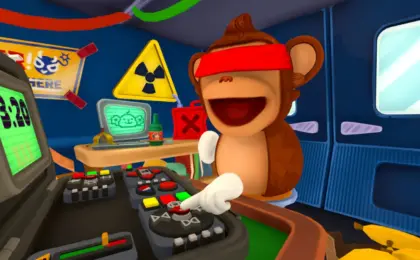
- The Necessity of "Shitty Graphics": As provocative as it sounds, Koster argues that the number-one requirement for a cost-resetting platform is low-fidelity visuals.
Looking back at history, this pattern has repeated multiple times. The explosive growth of early Flash games, social games on Facebook, the casual-focused Nintendo Wii, and early mobile gaming all managed to reset development costs temporarily. They prioritized accessibility, speed of creation, and novel design loops over photorealism.
Of course, these platforms are not immune to long-term inflation. As Koster points out: "They eventually catch up, and then the costs rise in exactly the same way. But we haven’t had a new platform come along to reset that cost curve in a long time. Like, a long time."
Conclusion: Embracing Creativity Over Complexity
The video game industry stands at a crossroads. The pursuit of optical perfection has birthed breathtaking virtual worlds, but it has simultaneously crippled studios with unsustainable financial burdens, making the livelihood of developers increasingly precarious.
If the industry wishes to avoid further structural collapses, mass layoffs, and creative stagnation, it must re-evaluate its priorities. By stepping back from the altar of hyper-realism and championing platforms that prioritize smart design, systemic depth, and low-fidelity charm, developers can reclaim their craft—proving once and for all that a game’s true value lies in how it plays, not how many millions of pixels it forces a graphics card to render.








Belum ada komentar. Jadilah yang pertama berkomentar!