

Executive Overview
The video game industry stands at a fascinating crossroads. As development costs scale exponentially, player expectations diversify, and technological barriers dissolve, studios face unprecedented challenges in balancing legacy intellectual property (IP) preservation with the creation of entirely new franchises.
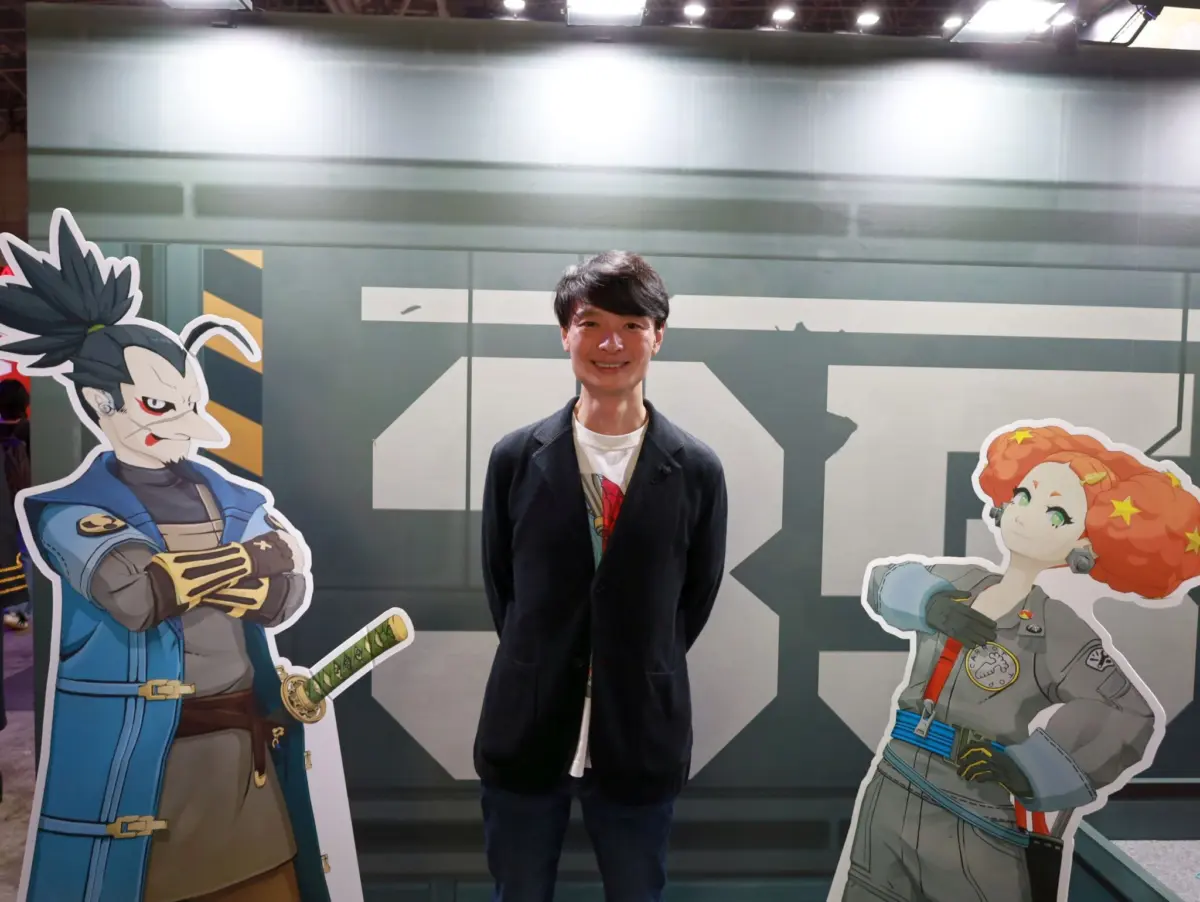
In a recent comprehensive interview series, representatives from AREA35—the visionary development studio behind acclaimed titles such as Tiny Metal and its successor Tiny Metal 2—sat down to discuss the grueling realities of modern game development. Through their transparent commentary, the studio shed light on the economic pressures of sustaining indie-to-mid-tier development pipelines, the delicate art of maintaining legacy IP without alienating modern audiences, and the strategic decisions required to incubate entirely new properties in a hyper-competitive market.
This report delves deep into the economic realities, creative philosophies, and operational strategies of independent development houses, drawing parallels with broader industry shifts—such as Blizzard Entertainment’s evolving IP strategies and the persistent legacy of Kickstarter-era funding models like Project Phoenix. By examining these diverse case studies, industry analysts can better understand the survival mechanisms required to thrive in the modern gaming landscape.
Detailed Chronology: The Journey of AREA35 and Tiny Metal
To understand the current state of independent tactical strategy games, one must trace the trajectory of AREA35 from its inception to its latest milestones.
![IPを愛してもらうために,制作側がすべきこととは? 「タイニーメタル2」の由良浩明氏に聞く[TGS2026]](https://www.4gamer.net/games/948/G094814/20260919024/SS/002.jpg)
The Birth of a Franchise (2017–2019)
AREA35 first captured the industry’s attention in 2017 with the release of Tiny Metal, a tactical turn-based strategy game that paid direct homage to classic military puzzle games while injecting modern 3D rendering and stylized character designs. Building upon the foundational success of the original release, the studio swiftly followed up with Tiny Metal: Full Metal Rumble in 2019.
These early years were characterized by a relentless drive to modernize a niche genre. While traditional turn-based tactical games often struggled to find mainstream footing in an era dominated by high-fidelity action titles and live-service behemoths, AREA35 carved out a dedicated community of enthusiasts. The transition from the original game to its sequel demonstrated a maturation in design philosophy, refining unit balancing, enhancing narrative depth, and optimizing performance across multiple hardware platforms, notably the Nintendo Switch.
Navigating the Mid-Tier Development Landscape
As the studio progressed past its initial launch window, the economic realities of mid-tier game development began to set in. During the recent interview sessions, AREA35 representatives did not shy away from discussing the razor-thin margins that define the independent sector.
Unlike AAA juggernauts backed by limitless capital, mid-tier developers must meticulously calculate every operational expense. For Tiny Metal 2, the development cycle required a careful reallocation of resources. The team had to weigh the benefits of expanding scope against the financial risks of extended production timelines. Every asset, every mechanic, and every line of dialogue was scrutinized to ensure maximum return on investment without compromising creative integrity.
![IPを愛してもらうために,制作側がすべきこととは? 「タイニーメタル2」の由良浩明氏に聞く[TGS2026]](https://www.4gamer.net/games/948/G094814/20260919024/TN/001.jpg)
Supporting Context & Metrics: The Economics of Strategy Games
The tactical strategy genre occupies a unique space in the video game ecosystem. It requires deep intellectual engagement from players, rewarding tactical foresight, positioning, and resource management. However, these very traits often limit the immediate mass-market appeal enjoyed by fast-paced action games or casual multiplayer titles.
Production Constraints and Hardware Optimization
Developing for platforms like the Nintendo Switch and PC presents distinct technical hurdles. For instance, maintaining a stable framerate while rendering complex 3D units, destructible environments, and intricate UI elements demands rigorous optimization. AREA35’s engineering team detailed the iterative processes used to streamline performance, ensuring that tactical depth was never sacrificed for visual fidelity—and vice versa.
The Kickstarter Shadow: Lessons from Project Phoenix
When discussing the broader ecosystem of independent funding and long-term project management, the conversation inevitably touches upon historical cautionary tales, such as the infamous crowdfunding campaign for Project Phoenix.
Originally introduced over a decade ago, Project Phoenix was heralded as an ambitious tactical RPG that captured the imagination of thousands of backers. However, the project’s protracted development cycle and ultimate struggles highlight the perils of scope creep and unverified operational pipelines. For modern studios like AREA35, the legacy of Project Phoenix serves as a stark reminder: community goodwill is finite, and the distance between conceptual ambition and physical delivery requires disciplined milestone tracking.
![IPを愛してもらうために,制作側がすべきこととは? 「タイニーメタル2」の由良浩明氏に聞く[TGS2026]](https://www.4gamer.net/games/948/G094814/20260919024/TN/002.jpg)
Official Statements and Industry Insights
Throughout the interview series, key figures from AREA35 provided candid commentary on the operational philosophies that keep their studio afloat. Below are synthesized highlights from their discussions regarding creative direction, monetization, and industry sustainability.
On Balancing Legacy IP with Fresh Innovation
"When you are working with an established IP, you carry the weight of fan expectations. Every tweak to the formula is scrutinized. However, resting entirely on past laurels is a slow path to irrelevance. The key is to treat established franchises not as static museum pieces, but as living frameworks that can accommodate modern sensibilities." — AREA35 Development Representative
This philosophy is mirrored across the broader industry. Companies like Blizzard Entertainment have long grappled with the challenge of maintaining legacy franchises while adapting to shifting consumer habits. Blizzard’s ongoing cycle of franchise stewardship—balancing the preservation of classic experiences with the introduction of new gameplay loops—demonstrates the universal struggle of IP lifecycle management.
On Crowdfunding and Financial Independence
Crowdfunding platforms once promised total creative freedom for independent developers. However, as the market matured, creators realized that raising initial capital is only half the battle. Ongoing operational costs, marketing expenses, and post-launch support often exceed initial estimates.
![IPを愛してもらうために,制作側がすべきこととは? 「タイニーメタル2」の由良浩明氏に聞く[TGS2026]](https://www.4gamer.net/games/948/G094814/20260919024/TN/003.jpg)
AREA35’s approach emphasizes sustainable, milestone-driven development rather than relying solely on front-loaded crowdfunding campaigns. By maintaining tight control over production scopes and leveraging publisher partnerships where appropriate, the studio has managed to insulate itself from the boom-and-bust cycles that plague less-prepared developers.
Future Outlook: Where Strategy Games Go From Here
Looking toward the horizon, the trajectory of AREA35 and the tactical strategy genre as a whole points toward a period of calculated reinvention.
Embracing New Platforms and Technologies
As cloud gaming, cross-play functionality, and next-generation handheld PCs continue to reshape how players consume media, developers are presented with new avenues for audience acquisition. Tactical games, by their very nature, are exceptionally well-suited for portable play. AREA35’s early adoption of hardware-flexible pipelines positions them advantageously to capture audiences on emerging mobile and hybrid ecosystems.
The Imperative of Original IP Incubation
While nurturing existing franchises like Tiny Metal provides a reliable baseline of revenue and brand recognition, the long-term health of any development studio hinges on its ability to innovate. AREA35’s leadership emphasized that future growth will depend on incubating entirely new intellectual properties.
![IPを愛してもらうために,制作側がすべきこととは? 「タイニーメタル2」の由良浩明氏に聞く[TGS2026]](https://www.4gamer.net/games/948/G094814/20260919024/TN/004.jpg)
However, this is approached with pragmatic caution. The days of unchecked creative indulgence are largely behind the mid-tier sector. Instead, studios are employing rigorous market research, iterative prototyping, and community-driven feedback loops early in the development cycle to validate concepts before heavy capital is committed.
Conclusion
The insights shared by AREA35 offer a masterclass in the realities of modern game development. Surviving as an independent or mid-tier studio requires far more than creative passion; it demands financial discipline, strategic platform adaptation, and a clear-eyed understanding of market limitations.
As the industry continues to evolve, the ability to balance the nostalgic appeal of legacy genres with the relentless push for fresh innovation will separate the thriving studios from the casualties of development hell. For AREA35, a commitment to tactical depth, transparent communication, and disciplined production scaling ensures that they will remain a notable force in the strategy genre for years to come.






Belum ada komentar. Jadilah yang pertama berkomentar!