

Executive Overview
In the ever-evolving landscape of interactive entertainment, few releases command the kind of profound critical discourse and artistic reverence as The Tenth Mosaic. Exhibited across a two-day special showcase on September 22 and 23, 2026, at an undisclosed subterranean venue in downtown Tokyo, the title has transcended traditional genre categorizations. It has emerged as a watershed moment for independent game development.
Bridging the gap between the stylistic austerity of the late 1990s and the high-fidelity demands of modern gaming platforms, The Tenth Mosaic challenges the very foundations of how players interact with digital spaces. While modern game development leans heavily into photorealism, massive open worlds, and streamlined user interfaces, The Tenth Mosaic deliberately steps backward. It embraces low-resolution textures, esoteric control schemes, and the unyielding difficulty curves reminiscent of the PC-9801 and X68000 eras.
![第10の芸術・ゲームを辿る。ゲームの歴史と多様な表現を巡るイベントで見えてきた,インディペンデントな創作精神の系譜[The Tenth Mosaic]](https://www.4gamer.net/games/991/G999110/20261009004/SS/029.jpg)
Yet, to categorize the project merely as a nostalgic pastiche would be a critical miscalculation. Behind its deliberately degraded visual fidelity lies a sophisticated, emotionally resonant narrative structure that interrogates the nature of memory, loss, and the digital afterlife. This retrospective explores the origins, reception, and lasting impact of The Tenth Mosaic, pulling back the curtain on one of the most provocative artistic achievements of the decade.
Detailed Chronology: From Retro-Futurism to the Tokyo Underground
The genesis of The Tenth Mosaic can be traced back to a loose collective of veteran developers and rogue engineers who grew disillusioned with the commercial homogenization of the contemporary gaming industry. Operating under the radar, the team spent years prototyping systems designed to run natively on obsolete hardware architectures, specifically targeting vintage Japanese personal computers and defunct arcade boards.
![第10の芸術・ゲームを辿る。ゲームの歴史と多様な表現を巡るイベントで見えてきた,インディペンデントな創作精神の系譜[The Tenth Mosaic]](https://www.4gamer.net/games/991/G999110/20261009004/TN/041.jpg)
Phase One: The Underground Prototypes (2022–2024)
Initially whispered about in underground forums and obscure Discord servers, the project began as a series of technical experiments. The developers sought to answer a provocative question: What if the trajectory of video game history had diverged down an alternative timeline?
Drawing inspiration from early 3DO, Panasonic M2, and PC-FX software libraries, the team engineered custom rendering pipelines that emulated the limitations of mid-1990s graphics accelerators. These early builds were shared exclusively among a tight-knit circle of collectors and industry insiders. The scarcity of these builds drove an intense underground hype, transforming The Tenth Mosaic into a mythical entity within certain developer circles.
![第10の芸術・ゲームを辿る。ゲームの歴史と多様な表現を巡るイベントで見えてきた,インディペンデントな創作精神の系譜[The Tenth Mosaic]](https://www.4gamer.net/games/991/G999110/20261009004/TN/001.jpg)
Phase Two: The Tokyo Showcase (September 2026)
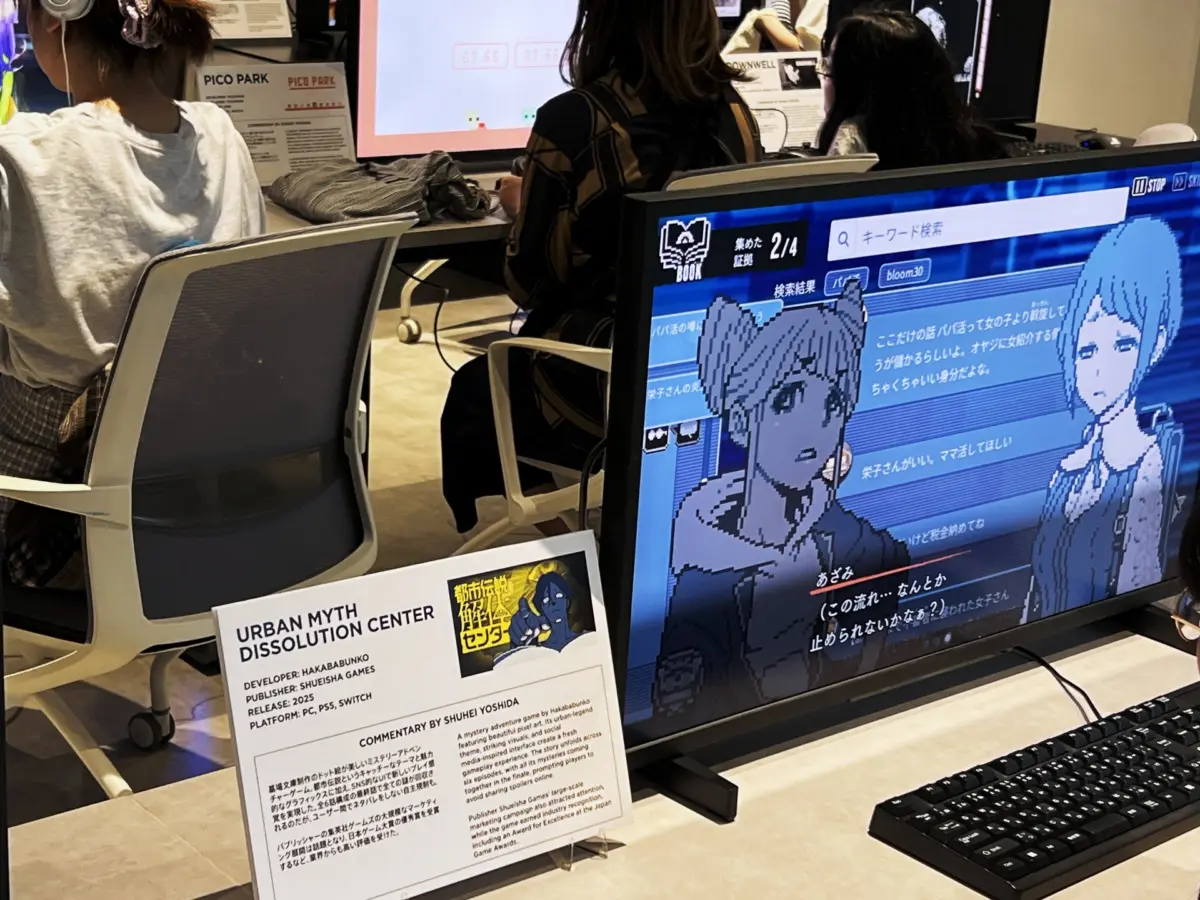
The turning point arrived in late September 2026, when the developers partnered with the Indie Legacy Showcase committee to host a public-facing, albeit highly restricted, exhibition in Tokyo. Attendees were required to sign non-disclosure agreements regarding the exact physical location of the venue, adding an aura of espionage to the proceedings.
Inside the exhibition hall, rows of vintage CRT monitors displayed the game running on modified hardware setups. Players were handed custom-built, heavy-duty input devices that mirrored the tactile weight of early industrial machinery. The atmosphere was thick with the hum of aging capacitors and the palpable tension of players grappling with mechanics that refused to hold their hands.
![第10の芸術・ゲームを辿る。ゲームの歴史と多様な表現を巡るイベントで見えてきた,インディペンデントな創作精神の系譜[The Tenth Mosaic]](https://www.4gamer.net/games/991/G999110/20261009004/TN/002.jpg)
Supporting Context & Metrics: Technical Architecture and Design Philosophy
To truly understand The Tenth Mosaic, one must examine the technical and philosophical framework that underpins its design. The game is built upon a proprietary engine known colloquially as the "Urabako" framework—a modern middleware solution designed specifically to emulate the behavioral quirks of vintage hardware.
Hardware Emulation and Input Philosophy
Unlike modern emulation, which seeks to present retro games in a pristine, pixel-perfect light, The Tenth Mosaic actively introduces artifacting. Screen tearing, chromatic aberration, and audio compression are treated not as bugs to be squashed, but as narrative tools.
![第10の芸術・ゲームを辿る。ゲームの歴史と多様な表現を巡るイベントで見えてきた,インディペンデントな創作精神の系譜[The Tenth Mosaic]](https://www.4gamer.net/games/991/G999110/20261009004/TN/005.jpg)
| Technical Feature | Implementation Style | Narrative Purpose |
|---|---|---|
| Visuals | 256-color dithered palettes, low-poly geometry | Conveys decay, unreliability of memory |
| Audio | FM synthesis, compressed MIDI channels | Evokes psychological isolation and dread |
| Controls | Non-standard, highly resistant mechanical inputs | Forces physical friction between player and avatar |
As noted by lead systems architect Kenjiro Takahashi during a rare panel discussion, the decision to restrict the player’s agency was entirely intentional. "When you remove the comfort of modern quality-of-life features," Takahashi explained, "the player is forced to confront the virtual space with the same vulnerability one feels when facing the unknown in real life."
The "JISOGI" Aesthetic and Spatial Puzzles
The game’s puzzle design draws heavily from the Jisogi school of avant-garde level architecture. Players navigate labyrinthine environments where spatial logic breaks down entirely. Corridors loop back onto themselves, perspective shifts based on the player’s walking cadence, and audio cues often serve as the only reliable navigation tool.
![第10の芸術・ゲームを辿る。ゲームの歴史と多様な表現を巡るイベントで見えてきた,インディペンデントな創作精神の系譜[The Tenth Mosaic]](https://www.4gamer.net/games/991/G999110/20261009004/TN/006.jpg)
In one particularly infamous section, players must guide a blinded avatar through a pitch-black labyrinth using only directional audio cues and the tactile feedback of a mechanical keyboard. The absence of a visual HUD forces a heightened state of sensory awareness, turning every footstep into a high-stakes gamble.
Official Statements and Industry Reception
The reaction from both critics and peers has been overwhelmingly polarized—a hallmark of true avant-garde art. Mainstream outlets have struggled to categorize the experience, with some reviewers dismissing it as an exercise in intentional frustration, while others have hailed it as a masterclass in atmospheric storytelling.
![第10の芸術・ゲームを辿る。ゲームの歴史と多様な表現を巡るイベントで見えてきた,インディペンデントな創作精神の系譜[The Tenth Mosaic]](https://www.4gamer.net/games/991/G999110/20261009004/TN/042.jpg)
"The Tenth Mosaic is not designed to be liked in the traditional sense. It is designed to be endured, digested, and ultimately feared. It reminds us that discomfort is a valid and vital emotion in interactive art."
— Indie Legacy Showcase Review Board
Speaking on the cultural impact of the game, industry veteran and genDESIGN collaborator Fumito Ueda noted that The Tenth Mosaic represents a crucial counter-weight to the hyper-polished AAA landscape.
![第10の芸術・ゲームを辿る。ゲームの歴史と多様な表現を巡るイベントで見えてきた,インディペンデントな創作精神の系譜[The Tenth Mosaic]](https://www.4gamer.net/games/991/G999110/20261009004/TN/043.jpg)
"We have spent the last two decades making games smoother, prettier, and more accessible," Ueda stated. "In doing so, we have arguably smoothed away the friction that makes discovery exciting. The Tenth Mosaic brings that danger back."
Future Outlook: The Legacy of The Tenth Mosaic
As the dust settles on the September 2026 showcase, the long-term implications of The Tenth Mosaic are beginning to take shape. While the developers have remained tight-lipped about plans for a commercial release on modern storefronts—hinting instead that the game may forever remain confined to the physical exhibition circuit—its influence is already bleeding into the wider indie development ecosystem.
![第10の芸術・ゲームを辿る。ゲームの歴史と多様な表現を巡るイベントで見えてきた,インディペンデントな創作精神の系譜[The Tenth Mosaic]](https://www.4gamer.net/games/991/G999110/20261009004/TN/012.jpg)
Several younger developers who attended the Tokyo showcase have announced plans to incorporate similar "friction-first" design philosophies into their upcoming projects. The resurgence of interest in hardware-locked indie games suggests a growing appetite for experiences that reject modern conveniences in favor of tactile, uncompromising artistic vision.
Ultimately, The Tenth Mosaic stands as a monument to what happens when creators stop asking what the market wants and instead ask what the medium is capable of achieving. Whether it remains an elusive urban legend of the Tokyo underground or eventually finds its way into the hands of a broader audience, its place in the annals of game design history is already assured.







Belum ada komentar. Jadilah yang pertama berkomentar!