

Executive Overview
In the world of high-end gastronomy, perfection is traditionally measured by absolute symmetry, pristine presentation, and a price tag reserved for the ultra-wealthy. Yet, a quiet cultural shift is redefining luxury through the lens of sustainability and accessibility. In Japan—a nation celebrated for its uncompromising devotion to aesthetic precision—an unusual culinary trend has captured the public imagination: the embrace of the wake ari, or "imperfect."
This phenomenon recently reached new heights when Natsuki Gojo, a reporter for the digital publication SoraNews24, stumbled upon a heavy-duty, unassuming online listing for a bulk package of sweets. Upon closer inspection, the listing revealed an extraordinary proposition: a full kilogram (approximately 2.2 pounds) of discarded cake off-cuts originating directly from the exclusive dessert line served to Japan Airlines (JAL) international first-class passengers.
Manufactured by Urokoya Sohonten—a legendary, centuries-old confectionery house founded in 1684—these "Premium Cake Ends" are the structural byproducts of industrial baking. Traditionally destined for the waste bin due to irregular dimensions or edge-trimming, these sweet remnants have escaped obscurity thanks to e-commerce and a growing consumer appetite for anti-food-waste initiatives. Priced at a remarkably modest 3,999 yen (approximately $25.84 USD) including shipping for a bounty equivalent to 11 standard shortcake slices, this culinary anomaly bridges the gap between ultra-exclusive aviation luxury and everyday home consumption. This report explores the origins, sensory profile, economic implications, and cultural resonance of JAL’s first-class cake off-cuts, analyzing how high-end aviation catering is finding new life on the ground.
Detailed Chronology: From First-Class Tray to Home Delivery
The journey of the Urokoya Sohonten cake ends from a high-altitude luxury item to an internet-famous pantry staple offers a fascinating look into modern supply chain management and culinary resourcefulness.
The Discovery
The story began during a routine digital expedition for rare sweets. Faced with an oversized, utilitarian package bearing the Japanese classification wake ari (imperfect/flawed), the investigative consumer-journalist immediately recognized the potential value proposition. While mass-market retail typically hides manufacturing flaws, Japanese direct-to-consumer platforms have increasingly normalized the transparent sale of surplus, mislabeled, or aesthetically irregular foodstuffs. When the reporter cross-referenced the manufacturer’s specifications, the connection to JAL’s elite first-class catering catalog became apparent. The "purchase" button was engaged without hesitation, initiating a logistical chain that brought elite airline hospitality straight to a residential doorstep.
Arrival and Unboxing
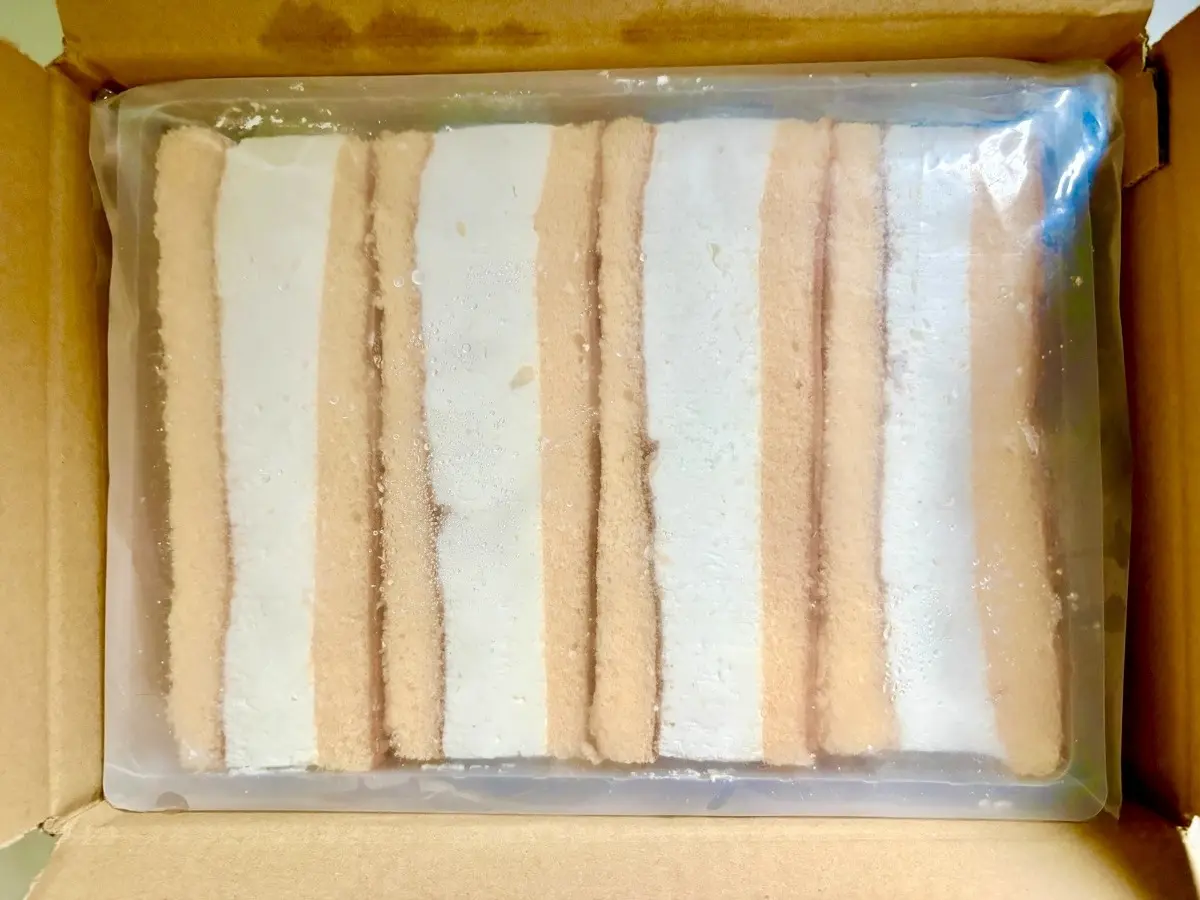
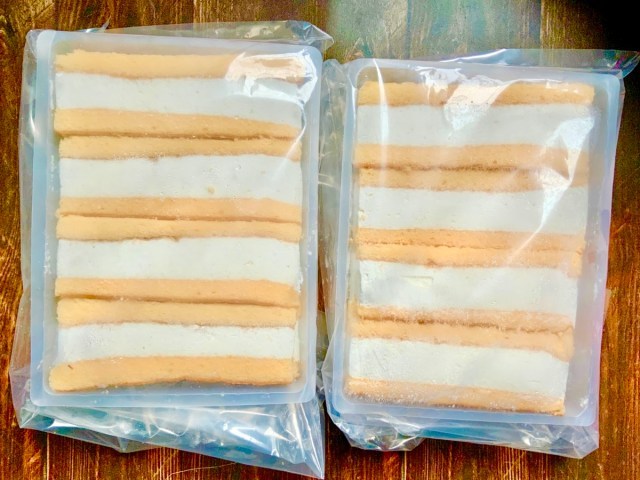
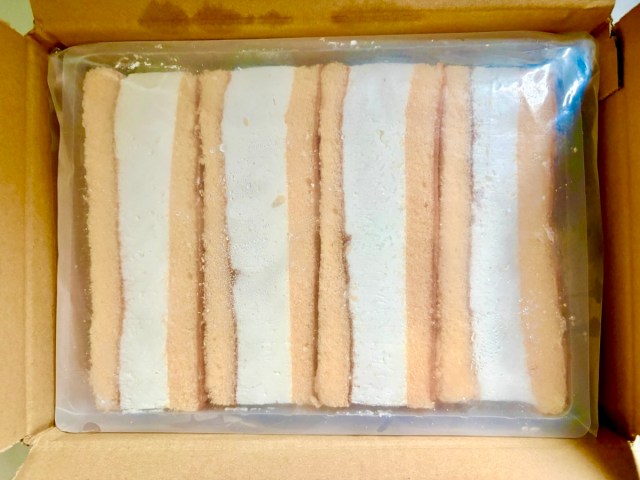
Upon delivery, the product defied expectations. Rather than arriving as a haphazard collection of crumbs, icing smears, and unrecognizable debris—the mental image typically associated with "cake ends"—the shipment arrived in two meticulously organized, vacuum-sealed blocks weighing roughly 500 grams each. In total, the package delivered one full kilogram of sponge and cream architecture.
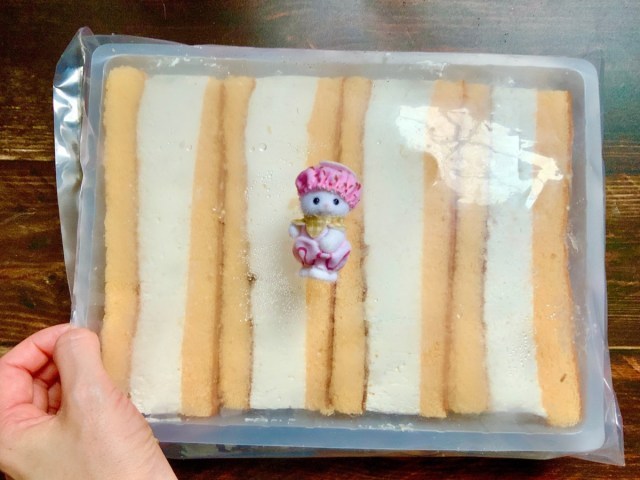
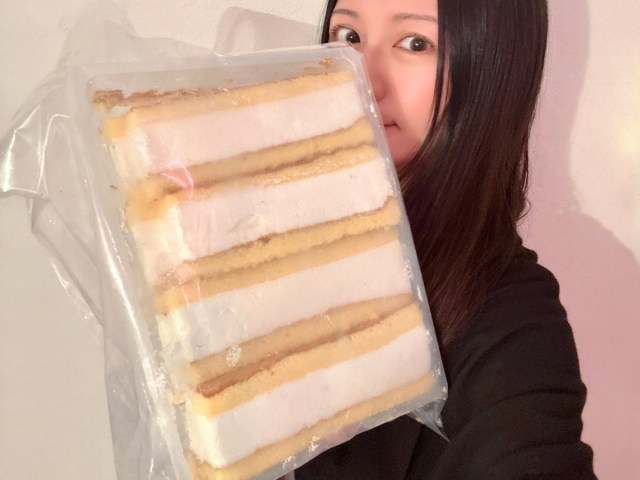
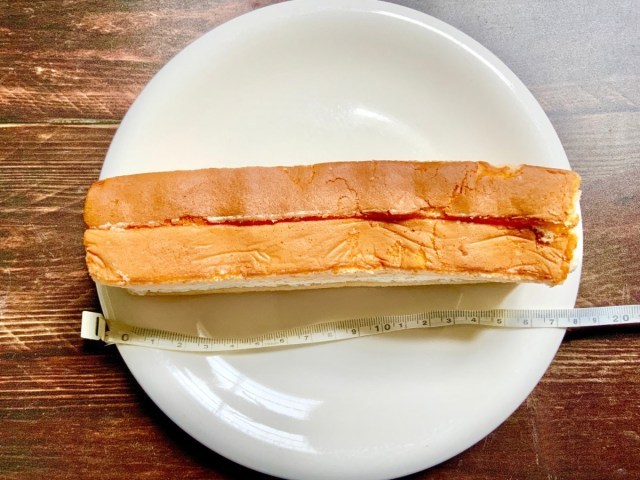
Each individual slice within the towers measured an impressive 16 to 17 centimeters (6.3 to 6.7 inches) in length, maintaining a consistent thickness of slightly more than 1.5 centimeters (0.6 inches). The sheer density of the product became immediately apparent upon handling; attempting a standard promotional selfie with the heavy, frozen blocks proved surprisingly strenuous.
Storage, Thawing, and Preparation
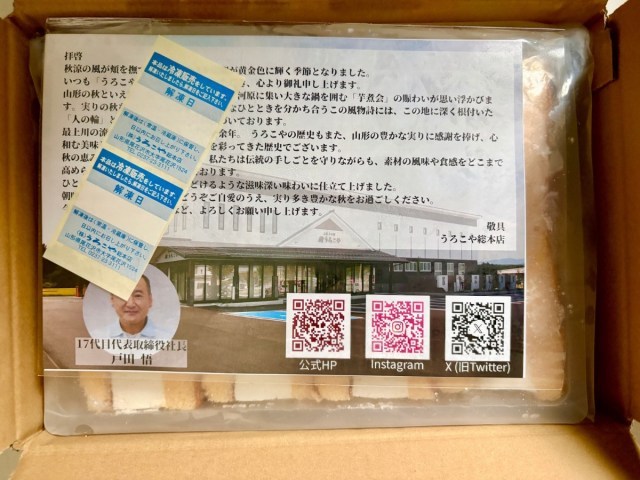
Distributed in a frozen state to preserve structural and microbial integrity, the cake ends offer consumers exceptional portion control. The manufacturer thoughtfully includes specialized tracking stickers, allowing consumers to mark the exact date individual portions are transferred from the freezer to the refrigerator for thawing.
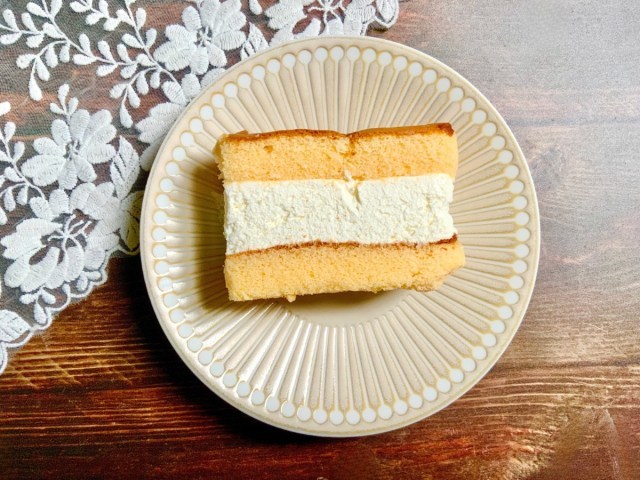
Once deflated of their cryogenic chill and plated, the off-cuts easily match the visual footprint of a conventional cafe slice when bisected. Far from looking like industrial waste, the cross-sections reveal distinct, thick strata of golden sponge cake sandwiching pristine layers of whipped dairy cream.
Supporting Context & Metrics: The Anatomy of an Aviation Sweet
To truly understand why these cake ends are causing a stir, one must examine the intersection of Japanese confectionery history, aviation catering logistics, and the economics of food waste.
Historical Pedigree: Urokoya Sohonten (1684)
The producer behind these luxurious scraps is no ordinary bakery. Founded in 1684 during the Edo period—an era characterized by a flourishing of arts, culture, and refined urban cuisine—Urokoya Sohonten carries over three centuries of baking heritage. Based in Fukushima Prefecture, the confectioner has long balanced traditional Japanese sweet-making techniques with modern Western-style pastry arts. Supplying an airline of the caliber of Japan Airlines requires adherence to rigorous quality control standards, ensuring that even the structural off-cuts maintain the flavor profiles expected by global elite travelers.
Specifications and Cost Breakdown
- Total Product Weight: 1,000 grams (1 kilogram / 2.2 pounds), divided into two 500-gram packs.
- Equivalent Yield: Approximately 11 standard commercial shortcake slices.
- Dimensions per Strip: 16–17 cm length, >1.5 cm thickness.
- Pricing Structure: 3,999 yen (approx. $25.84 USD), inclusive of domestic postage.
- Sales Channels: Urokoya Sohonten official online store, Amazon Japan, and Rakuten.
Sensory Evaluation & Gastronomic Profile
Culinary testing reveals a masterclass in balance. The sponge cake component achieves a rare textural duality: it is simultaneously dense enough to hold its structural integrity during transport yet remarkably fluffy on the palate. It introduces a gentle, natural sweetness that avoids the cloying heaviness often found in mass-market commercial baked goods.
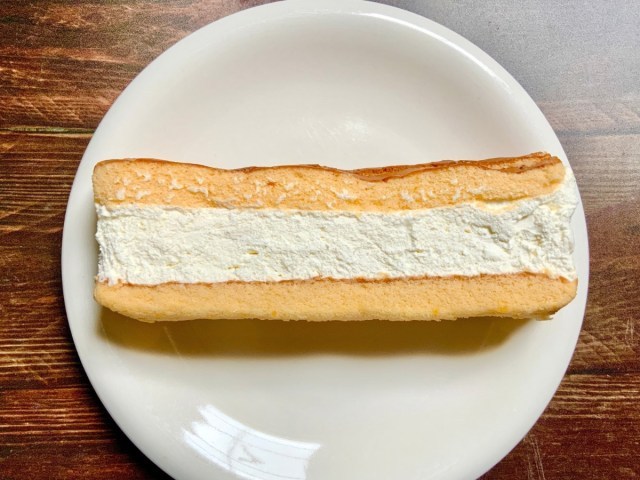
The accompanying fresh cream filling is deliberately formulated with a low sugar content. This restraint prevents flavor fatigue, allowing consumers to enjoy generous portions without experiencing the sensory overload typical of rich pastries. Because the base flavor profile is clean, uncomplicated, and harmonious, the cake ends serve as an ideal blank canvas. Culinary experimentation by reviewers—such as transforming the scraps into decadent mini parfaits accented with chocolate syrup, crushed nuts, and fresh mint—demonstrates the product’s versatility in home kitchens.
Official Statements and Industry Impact
While airlines have historically guarded their supply chains and catering protocols behind a veil of strict confidentiality, the post-pandemic economic landscape has forced a reevaluation of surplus management. Major carriers like Japan Airlines face mounting pressure to optimize sustainability metrics, reduce carbon footprints, and minimize galley food waste.
Though Urokoya Sohonten markets these items pragmatically as wake ari goods, industry analysts point out that the retail release of first-class components serves a dual purpose. First, it converts potential financial loss into a revenue stream while offsetting waste disposal costs. Second, it acts as a brilliant, organic marketing campaign. By allowing everyday consumers to sample the exact ingredients served at 35,000 feet, brands like JAL and Urokoya humanize luxury travel and build goodwill among a demographic that may never regularly purchase a first-class ticket.
Environmental advocates have similarly praised the initiative. In a global food system where millions of tons of edible agricultural and manufactured products are discarded annually simply due to aesthetic non-conformity, normalizing the sale of "ugly" or irregularly shaped luxury goods signals a maturing consumer base—one that values substance, heritage, and sustainability over superficial perfection.
Future Outlook: The Rise of "Upcycled Luxury"
The success of Urokoya Sohonten’s Premium Cake Ends points toward a broader, rapidly expanding market segment: upcycled luxury. As inflation impacts consumer spending habits worldwide, the desire for high-end experiences has not diminished; rather, consumers are actively seeking creative, democratized pathways to access them.
The phenomenon of selling first-class leftovers and industrial off-cuts is poised to expand beyond Japanese aviation. We can anticipate other premium carriers and elite hospitality brands exploring similar direct-to-consumer e-commerce channels to offload surplus ingredients, limited-edition run prototypes, and aesthetic seconds. For the discerning consumer with a penchant for sweets, the message is clear: sometimes, the best things in the culinary world are the ones that industry insiders almost threw away.








Belum ada komentar. Jadilah yang pertama berkomentar!