

Executive Overview
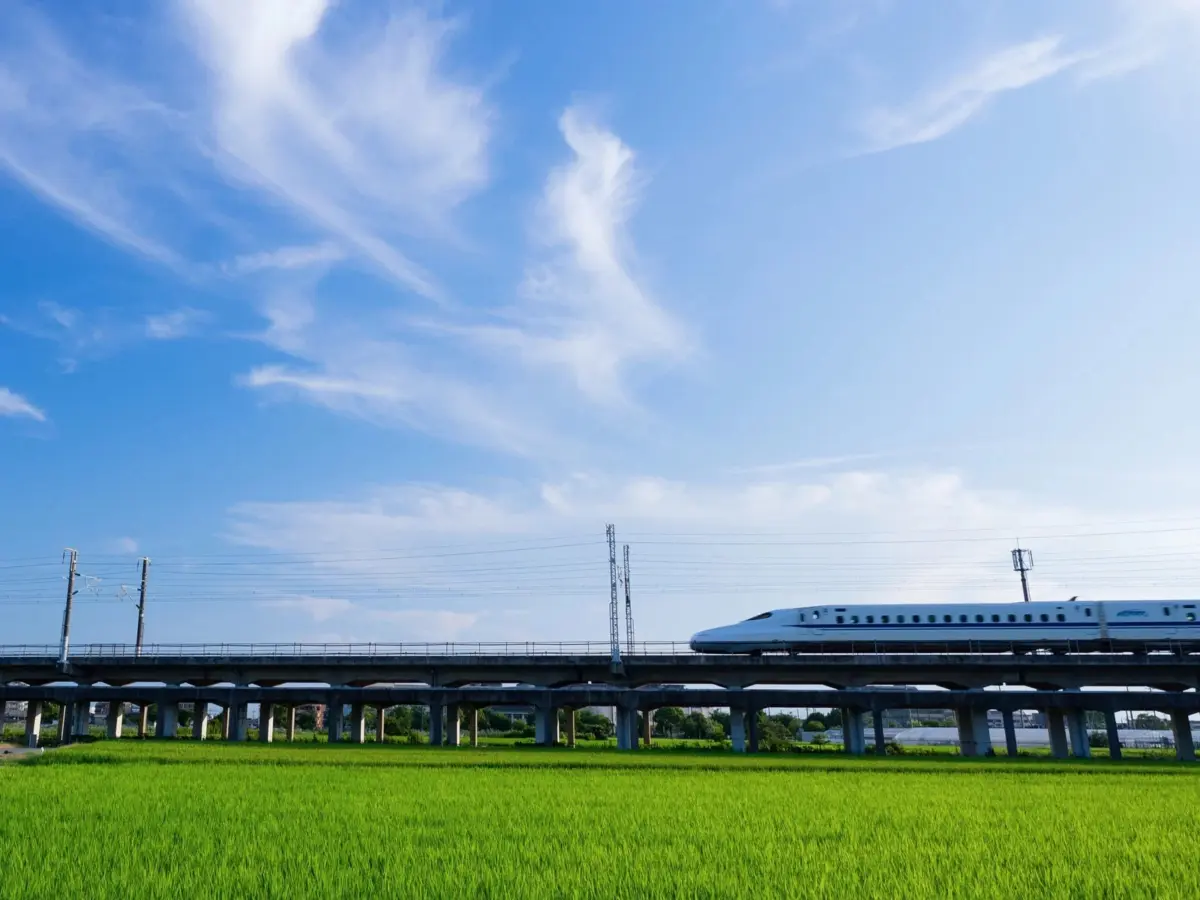
For decades, Japan’s iconic Shinkansen network has been globally heralded as the gold standard of high-speed rail. Renowned for its blistering speeds, unmatched safety record, and surgical punctuality, the system has fundamentally transformed how millions commute and travel across the Japanese archipelago. However, one classic travel tradition has long eluded the bullet train: the overnight sleeper journey.
Unlike traditional locomotive-hauled sleeper trains—which once crisscrossed the nation under the cover of darkness—the Shinkansen has always adhered to strict operational windows. Because of rigorous nighttime track maintenance, strict environmental noise regulations, and the sheer velocity of the journey, a standard Tokyo-to-Osaka run takes a mere two and a half to four hours, leaving virtually no window for an overnight transit.
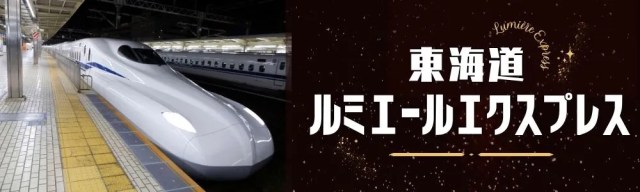
To bridge this operational gap, Central Japan Railway (JR Central) has introduced an innovative, unconventional travel concept: the “Tokaido Lumière Express.” Following a successful, highly publicized debut run earlier this summer from Tokyo to Shin-Osaka, railway operators are preparing a reverse-route journey scheduled for late September.
Marketed as a unique hybrid between a hybrid tour package and a mobile hotel, the service allows travelers to spend the entire night on board a stationary and slowly moving bullet train for a mere nominal fee above a standard reserved seat. This comprehensive report explores the mechanics, the itinerary, the passenger amenities, and the broader economic strategy behind Japan’s bold new experiment in overnight rail travel.
Detailed Chronology of the Journey
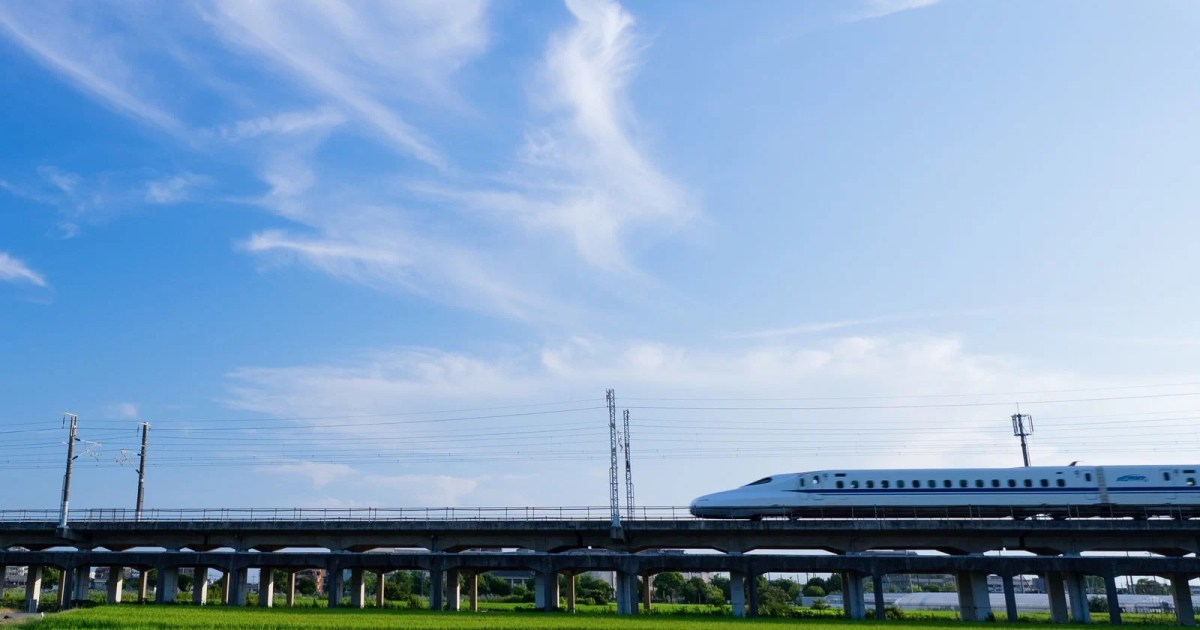
The upcoming Tokaido Lumière Express will operate in reverse of its inaugural summer counterpart, transporting weary travelers and rail enthusiasts alike from the western commercial hub of Shin-Osaka to the nation’s capital, Tokyo. The precise logistical timeline of this heavily anticipated September service reveals a meticulously engineered orchestration designed to maximize onboard rest while accommodating mandatory infrastructure work.
Boarding and Departure
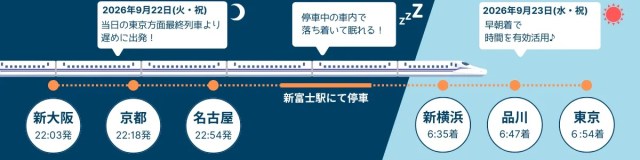
The journey commences on the evening of September 22, with the special service officially pulling out of Shin-Osaka Station at 10:03 PM. Passengers also have designated windows to board at subsequent historical and commercial waypoints, including Kyoto and Nagoya. As the train tracks eastward through the late-night hours, passengers settle into their assigned seats while the high-speed carriages cruise along the Tokaido corridor.
The Six-Hour Midnight Layover at Shin-Fuji Station
Unlike traditional overnight trains that roll continuously through the country, the operational constraints of the Shinkansen network require a creative workaround for a full-night stay. Approximately halfway along the route, the Lumière Express pulls into Shin-Fuji Station, roughly at midnight.
Here, the train initiates an extended, six-hour stationary layover that lasts until approximately 6:00 AM the following morning. During this prolonged pause, passengers are granted unique platform access. JR Central has structured the itinerary to allow travelers to disembark for roughly 30 minutes shortly after arrival, and again right before the morning departure. This affords a rare opportunity to stretch one’s legs and wander a pristine Shinkansen platform in the dead of night.
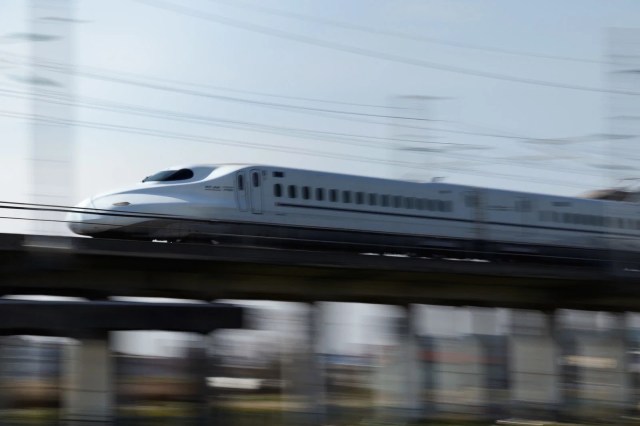
Security protocols mandate that passengers remain strictly within the station’s ticket gates during these platform breaks. While no commercial shops or onboard food vendors operate during the graveyard shift, station vending machines and designated smoking areas remain accessible.
Morning Arrival in Tokyo
As dawn breaks, the train shakes off its slumber, revives its engines, and completes the final leg of its journey toward the capital. Travelers heading toward Tokyo can disembark at strategic commuter hubs, including Shin-Yokohama and Shinagawa, before the train terminates its journey at Tokyo Station at 6:54 AM on the morning of September 23. This schedule ensures that business travelers and tourists alike emerge in the heart of the metropolis with an entire day ahead of them, entirely bypassing the need to check into a traditional hotel for the night.
Supporting Context & Metrics: Economics, Comfort, and Infrastructure
While the prospect of sleeping on a bullet train sounds inherently romantic to rail enthusiasts, the reality of the Tokaido Lumière Express involves several distinct operational compromises and structural trade-offs. Understanding the metrics behind the pricing, passenger comforts, and environmental limitations provides a clearer picture of who this service is truly designed for.
Pricing Structure and Classes
Sold strictly as a bundled one-night, two-day tour package through JR Central Tours, ticket prices vary depending on the passenger’s boarding origin. The service offers options in both standard and premium Green Cars:
- From Shin-Osaka: Standard-class seats are priced at 17,000 yen (approximately $107 USD), while Green Car seats command 23,000 yen.
- From Kyoto: Standard-class tickets cost 16,000 yen, with Green Car accommodations available at 21,500 yen.
- From Nagoya: Passengers pay a reduced fare of 13,500 yen for standard class and 19,000 yen for the elevated comfort of the Green Car.
When compared to traditional bullet train ticket pricing—where a standard reserved seat between Tokyo and Osaka hovers around 15,000 yen—the Lumière Express charges an administrative premium of roughly 2,000 yen. For travelers factoring in the soaring costs of overnight accommodations in metropolitan Tokyo, Kyoto, or Osaka, this nominal upcharge represents a notable financial saving.
Passenger Amenities and Onboard Realities
Because the train is fundamentally designed for high-speed transit rather than hospitality, passengers must temper their expectations regarding plush sleeping quarters. No traditional bedding, blankets, or pillows are provided by the railway operator. However, to enhance baseline comfort, each traveler receives a complimentary care package consisting of:
- An ergonomic eye mask to block out continuous interior security lighting.
- A pair of soft indoor slippers.
- Shoe-drying deodorizing sachets to freshen footwear after a long day of sightseeing.
Furthermore, passengers must bring their own provisions. With no onboard catering, snack carts, or open station kiosks during the middle of the night, purchasing food and beverages prior to boarding is mandatory. Additionally, the entire train—including carriage decks and restrooms—is designated strictly non-smoking.
The Maintenance Factor and Sensory Experience
Perhaps the most critical detail for prospective travelers is the nature of the six-hour stop at Shin-Fuji Station. The Shinkansen network’s survival depends on obsessive, round-the-clock infrastructure upkeep. Consequently, while the train sits stationary at the platform, active maintenance work on the tracks and surrounding equipment may take place.
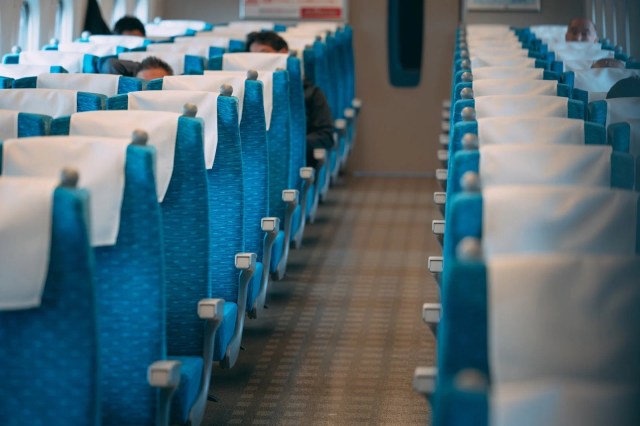
Passengers should anticipate intermittent operational noises, mechanical hums, and mild structural vibrations filtering through the carriage. Coupled with the fact that interior cabin lights remain illuminated throughout the night for security purposes, the Lumière Express is optimized more as an adventurous, budget-friendly transit hack than a tranquil night of deep, uninterrupted slumber.
Official Statements and Strategic Vision
Central Japan Railway has positioned the Tokaido Lumière Express not merely as a novelty stunt, but as a calculated response to shifting post-pandemic tourism trends and evolving consumer demands.
In official statements released by JR Central Tours, representatives emphasized the growing need for flexible, multi-functional travel products. "As tourism demand surges across Japan, accommodation costs in major urban centers like Tokyo and Osaka have risen significantly," a JR Central spokesperson noted. "Our goal with the Lumière Express is to creatively leverage our existing rolling stock during down-time windows, offering domestic and international travelers a novel way to maximize their vacation time while mitigating lodging expenses."
Transportation analysts view this experiment as a potential blueprint for how high-density, high-speed rail networks can maximize asset utilization. By transforming stationary trains into temporary resting pods during mandatory track-maintenance windows, JR Central is effectively monetizing hours that were previously viewed as purely dead time in the rail network’s daily lifecycle.
Future Outlook: The Horizon of Japanese Rail Travel
The rollout of the Tokaido Lumière Express marks a fascinating chapter in the evolution of Japanese public transit. While classic overnight sleeper trains like the Sunrise Izumo and Sunrise Seto continue to capture the romantic imagination of slow travelers, their numbers have dwindled drastically over the decades due to Shinkansen expansion and shifting airline economics.
Whether the Lumière Express transitions from an experimental seasonal tour package into a permanent, recurring fixture of the Tokaido line remains to be seen. Customer feedback from the upcoming September 22 service will undoubtedly dictate future iterations, particularly concerning passenger tolerance for overnight maintenance noise and illumination levels.
For now, the initiative stands as a testament to Japanese engineering pragmatism—a clever, out-of-the-box solution that marries the blistering velocity of the bullet train with the timeless tradition of the overnight journey. Tickets for the September run went on sale on August 20 via JR Central Tours, and despite the unique operational quirks, adventurous travelers continue to snap them up, proving that the allure of the rails burns just as brightly under the cover of night.








Belum ada komentar. Jadilah yang pertama berkomentar!