

Executive Overview
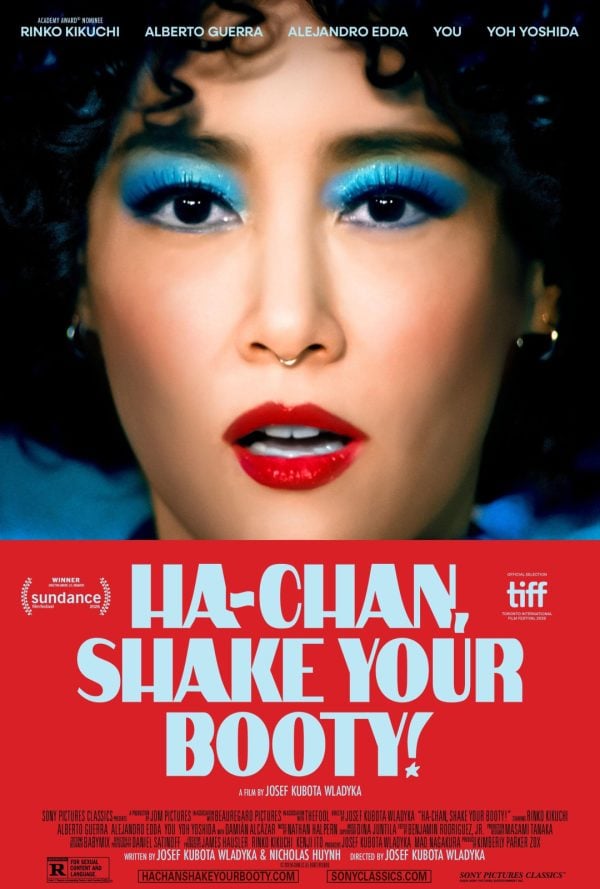
The cinematic landscape is perpetually searching for novel idioms through which to articulate the universal, yet deeply personal, topography of grief. Enter Ha-Chan, Shake Your Booty!, a 2026 feature film directed by Josef Kubota Wladyka that debuted to considerable curiosity and debate on the festival circuit. Co-written by Wladyka and Nicholas Huynh, and deeply personal in its genesis—dedicated as it is to the filmmaker’s own dancer mother—the picture marries the rigid, passionate discipline of Tokyo’s competitive ballroom dance scene with a surrealist, genre-defying exploration of mourning, unconventional relationships, and emotional awakening.
At its core, the narrative centers on Haru (Academy Award nominee Rinko Kikuchi), a woman whose existence is fractured when her husband and rumba-dancing partner, Luis (Alejandro Edda), dies suddenly of a heart attack during practice. What follows is not a standard Hollywood trajectory of rapid acceptance, but rather a delightfully bizarre, intentionally messy, and visually sumptuous odyssey through isolation, hallucination, and reinvigoration. Featuring a stellar international cast that includes Alberto Guerra, You, Yoh Yoshida, Charley Flyte, Soji Arai, Chelsea Gonzalez, Derek Mio, and Damián Alcázar, Ha-Chan, Shake Your Booty! aims to prove that music and dance are universal languages capable of transcending cultural boundaries.
While critics note that the film occasionally stumbles under the weight of its own eccentricities—such as a slightly overlong opening act and uneven dramatic beats—its vibrant color palette, inventive choreography, and unique stylistic choices cement it as one of the most distinctive cinematic experiments of 2026. This comprehensive report explores the film’s structural chronology, thematic underpinnings, stylistic choices, and broader cultural implications within contemporary international cinema.
Detailed Chronology: The Narrative Arc of Ha-Chan, Shake Your Booty!
Act I: The Fracture and the Phantom
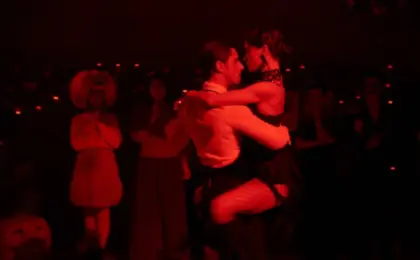
The film opens within the rhythmic, sun-dappled and neon-accented universe of Tokyo’s amateur ballroom circuit. Haru and Luis are introduced as a synchronized unit—a married couple whose mutual devotion is physically manifested through the passionate cadence of the rumba. Their lives move with the predictable, comforting cadence of rehearsal schedules and shared domesticity.
However, this equilibrium is violently shattered when Luis suffers a fatal heart attack directly on the dance floor. Wladyka devotes the opening stretch of the film to establishing the suffocating weight of this loss. Nearly a year (approximately nine months) removed from her husband’s passing, Haru has retreated entirely from the world. She refuses to leave her home, even ignoring her own milestone birthday.

In a touch of magical realism that characterizes the film’s artistic swings, Haru’s unprocessed grief manifests visually: she begins experiencing vivid hallucinations of Luis haunting her apartment at night, dressed absurdly and poignantly in a heavy black bird costume. This avian apparition serves as a potent physical metaphor for a grief that is heavy, trapped, and incapable of taking flight.
Act II: Intervention, Open Marriages, and Fedir
Haru’s self-imposed exile comes to an abrupt end when her inner circle of friends—portrayed with distinct, contrasting energies—stages an intervention. Dragged out of her domestic cocoon, Haru is pushed back onto the polished hardwood of the dance studio. One friend remains relatively grounded, while the other navigates the modern dating landscape through smartphone apps with a hyperactive, hedonistic zeal.
It is within this studio environment that the trio encounters Fedir (Alberto Guerra), a new instructor whose resume is matched only by his striking, almost absurd aesthetic appeal. Fedir is charismatic, accomplished, and, crucially, married. Yet, as Haru’s inquisitive relatives dig deeper into his background, a cultural collision occurs: they discover Fedir is in an open marriage.
For Haru, steeped in traditional Japanese societal norms, the concept of an open marriage is entirely foreign, initially dismissed as sheer madness. However, as she grapples with her loneliness, she begins to view Fedir not merely as a dance teacher, but as a potential conduit—a bridge across the chasm left by Luis, and a radical blueprint for redefining intimacy.
Act III: The Magical Musical Groove and Resolution
Operating largely in secret, away from the watchful eyes of her intrusive friends, Haru makes a decisive romantic play for Fedir. This narrative pivot unlocks the film’s most imaginative gears, transitioning the narrative into a full-blown magical musical groove.
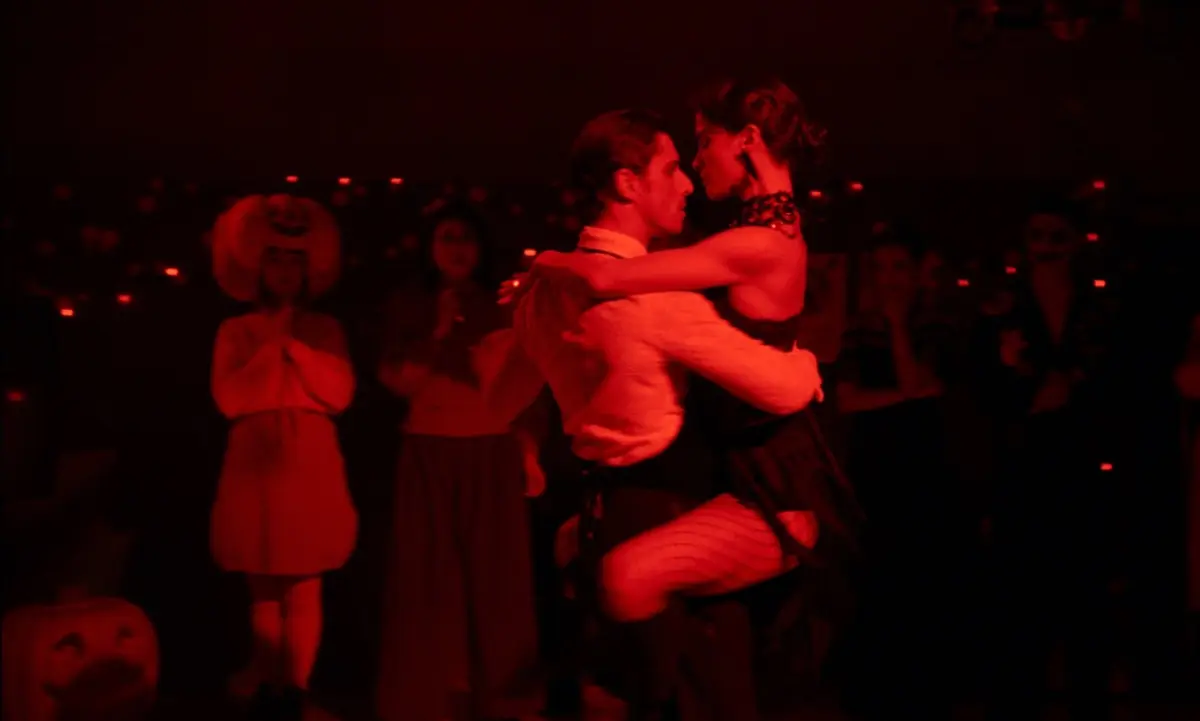
Wladyka orchestrates set-pieces that bend reality to match Haru’s internal emotional thaw. In one standout sequence, a confrontation with aggressive street hoodlums harassing Haru seamlessly dissolves into a kinetic fusion of martial arts-inflected physical altercations and synchronized dance choreography. In another, Haru takes Fedir to an underground Japanese dance show. Though initially skeptical of cultural translation, Fedir watches as the performance erupts into sweeping musical numbers directly inspired by Western classics like Dirty Dancing.
These heightened, visually arresting sequences—bolstered by Japanese arrangements of iconic Western tracks—serve as the film’s emotional core. They represent Haru’s psychological transition from a state of paralyzed mourning to an active, albeit messy, reclamation of her agency, sexuality, and joy.
Supporting Context & Metrics
Cast and Crew Synergy
The success of a film hinging on such wildly disparate tones relies entirely on the caliber of its performances. Rinko Kikuchi anchors the picture with a bruised, fierce vulnerability, charting Haru’s journey from a ghost in her own home to a woman vibrantly stepping back into the light. Alberto Guerra provides the necessary charismatic counterweight as Fedir, navigating the tightrope between object of desire and complex human agent in an open relationship.
+-----------------------------------------------------------------+
|                    KEY PRODUCTION METRICS                       |
+-----------------------+-----------------------------------------+
| Release Year          | 2026                                    |
| Director              | Josef Kubota Wladyka                    |
| Writers               | Josef Kubota Wladyka & Nicholas Huynh   |
| Primary Cast          | Rinko Kikuchi, Alberto Guerra,          |
|                       | Alejandro Edda, You, Yoh Yoshida,       |
|                       | Charley Flyte, Soji Arai                |
| Primary Languages     | Japanese, Spanish, English              |
| Dedicated To          | The Filmmaker’s Dancer Mother           |
+-----------------------+-----------------------------------------+
Linguistic and Cultural Triangulation
One of the most striking technical accomplishments of Ha-Chan, Shake Your Booty! is its multilingual soundscape. The film weaves together Japanese, Spanish, and English. Crucially, the production team went to great lengths to ensure that each language is distinctly colored and stylized within the mix. This linguistic layering mirrors the cultural intersection of the ballroom dance community in Tokyo—a subculture that borrows heavily from Latin American traditions while operating within an East Asian societal framework.
Critical Reception and Ratings Profile
At major festival screenings, particularly the Sundance Film Festival where it generated considerable pre-and-post-premiere buzz, the film was received as an idiosyncratic swing. Reviewers have generally noted a sharp dichotomy between the film’s conceptual ambition and its execution:

- Atmosphere & Style (Visual/Auditory): Consistently rated highly (averaging 3.5 to 4 out of 5 stars for its vibrant color grading, costume design, and soundtrack).
- Narrative Cohesion: Viewed by some critics as uneven, with a protracted opening act and occasional tonal whiplash as it shifts between kitchen-sink realism and hyper-stylized musical fantasy.
- Overall Critical Consensus: Celebrated as an uplifting, intentionally messy exploration of moving on that rewards adventurous viewers willing to embrace its whimsical detours.
Official Statements and Artistic Intentions
Speaking on the genesis of the project, co-writer and director Josef Kubota Wladyka has emphasized the deeply autobiographical and emotional roots of the film. Dedicated explicitly to his mother—a lifelong dancer—Ha-Chan, Shake Your Booty! is framed not just as a piece of narrative fiction, but as an impressionistic monument to the ways art and physical movement can sustain a person through life’s most devastating ruptures.
"We wanted to explore how grief doesn’t follow a straight line," Wladyka noted in festival press materials. "In life, mourning is often awkward, embarrassing, and filled with bizarre detours—hallucinations of bird costumes, awkward cultural clashes over open relationships, and sudden bursts of rhythm where there should only be silence. Dance is the language we use when words fail us completely."
Co-writer Nicholas Huynh echoed these sentiments, highlighting the intentionality behind blending disparate cultural signifiers: "Tokyo’s ballroom scene offered a fascinating microcosm where global dance forms intersect with deeply localized emotional reticence. Haru’s journey had to be chaotic because true healing after profound loss is never clean or formulaic."
Future Outlook
As Ha-Chan, Shake Your Booty! continues its trajectory through the international festival circuit and prepares for wider distribution, its legacy within 20th and 21st-century cinematic conversations about grief appears secure. By refusing to treat mourning as a solemn, monochromatic affair, Wladyka and his creative team have carved out a distinct niche for themselves.
The film challenges contemporary arthouse conventions by injecting unabashed camp, rhythmic exuberance, and magical realism into a traditionally heavy narrative framework. While the open-marriage subplot and the stylistic shifts may polarize hyper-traditionalist audiences, the overarching cultural footprint of the project is undeniable. It positions Rinko Kikuchi at the absolute peak of her powers and signals Josef Kubota Wladyka as a filmmaker unafraid to take maximalist risks in pursuit of emotional truth.
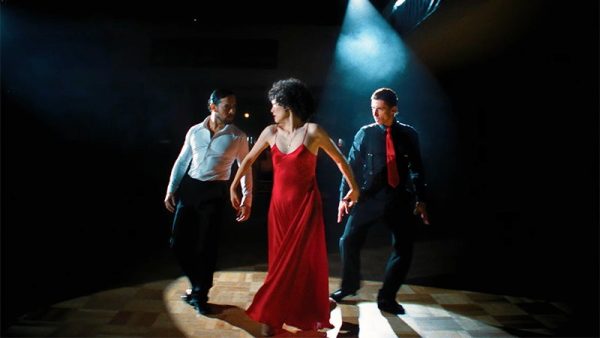
Ultimately, Ha-Chan, Shake Your Booty! serves as an emphatic reminder that whether one is trapped beneath the heavy feathers of a phantom bird or stepping hesitantly onto a dance floor in Tokyo, the imperative remains the same: find your rhythm, embrace the messiness of existence, and keep moving forward.





Belum ada komentar. Jadilah yang pertama berkomentar!