The relentless march of gaming hardware innovation has pushed boundaries that many thought unbreakable a decade ago. Where 60 Hz was once the gold standard of visual fluidity, the industry has rapidly escalated through 144 Hz, 240 Hz, and 360 Hz, ultimately arriving at extreme ultra-high refresh rate tiers reaching 600 Hz. Yet, as monitor manufacturers unveil increasingly rapid panels, a critical question emerges from the competitive gaming community: At what point do hardware improvements become imperceptible to the human eye, and where do diminishing returns begin to bite?
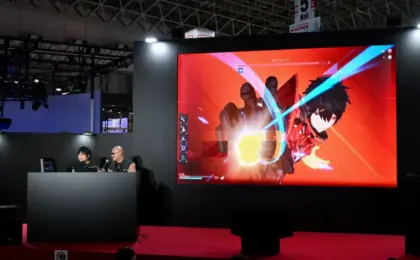
Recent hands-on testing and direct conversations with elite professional Counter-Strike 2 (CS2) players at the Logitech G Play event in Warsaw, Poland, provide a compelling answer. While the industry flirts with monstrous 600 Hz displays, practical testing and professional consensus point firmly toward 360 Hz as the absolute sweet spot for competitive first-person shooter (FPS) titles. Blending raw hardware capabilities, real-world frame rate limitations, and motion-clarity technologies like Zowie’s DyAc, the debate over refresh rates reveals a fascinating intersection of engineering triumph and practical utility.
Detailed Chronology: The Evolution of High Refresh Rate Gaming
To understand why 360 Hz has captured the hearts and minds of both hardware analysts and professional esports competitors, one must trace the rapid acceleration of display technology over the past decade.
From 60 Hz to the Esport Revolution
For years, standard consumer monitors languished at 60 Hz, refreshing the image on screen 60 times per second. While adequate for casual productivity and slower-paced narrative games, this limitation introduced noticeable input latency and motion blur—enemies of competitive precision. As the global esports phenomenon exploded with titles like Counter-Strike: Global Offensive (CS:GO), the demand for lower latency and higher visual feedback triggered a paradigm shift.
The introduction of 144 Hz monitors felt revolutionary, drastically cutting input lag and smoothing out camera panning. Soon, 240 Hz panels became the tournament standard, adopted by major tournament organizers worldwide. However, hardware manufacturers did not stop there. Panel technologies evolved rapidly, driven by improvements in liquid crystal response times and the adoption of advanced backlight strobing methods. This paved the way for the 360 Hz generation, championed by pro-level panels designed specifically to give twitch-shooters an edge.
The Leap to 600 Hz and the Reality Check
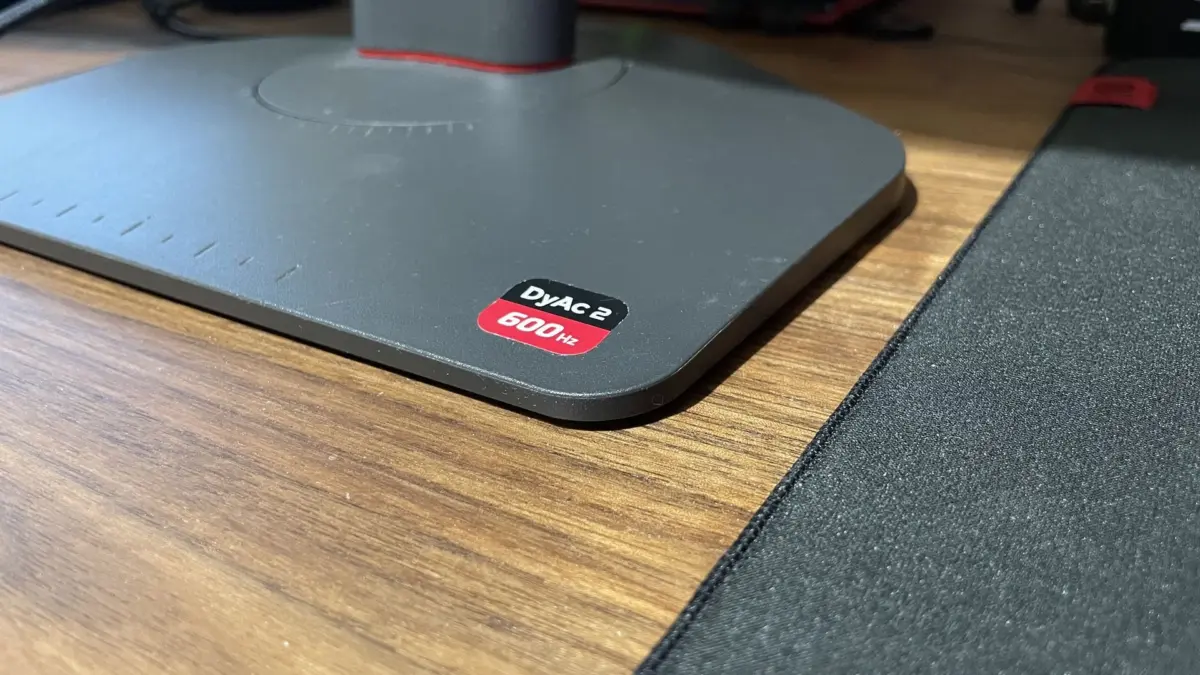
Recently, manufacturers have pushed past the 500 Hz barrier, culminating in extreme displays like the Zowie XL2586X+, boasting a staggering 600 Hz refresh rate. While these monitors represent phenomenal engineering feats, they also cross into a territory where hardware synergy becomes a massive bottleneck. At the Logitech G Play event in Warsaw, industry insiders, hardware journalists, and professional players alike began to critically evaluate whether pushing past 360 Hz yields any tangible competitive benefit or if it simply serves as a marketing milestone.
Supporting Context & Metrics: The Hardware Bottleneck
The debate over ultra-high refresh rates cannot be decoupled from the raw processing power required to feed them. Even the most formidable gaming rigs struggle to consistently output the frame rates necessary to saturate a 600 Hz display in modern, cpu-intensive competitive titles.
The Rig Performance Reality
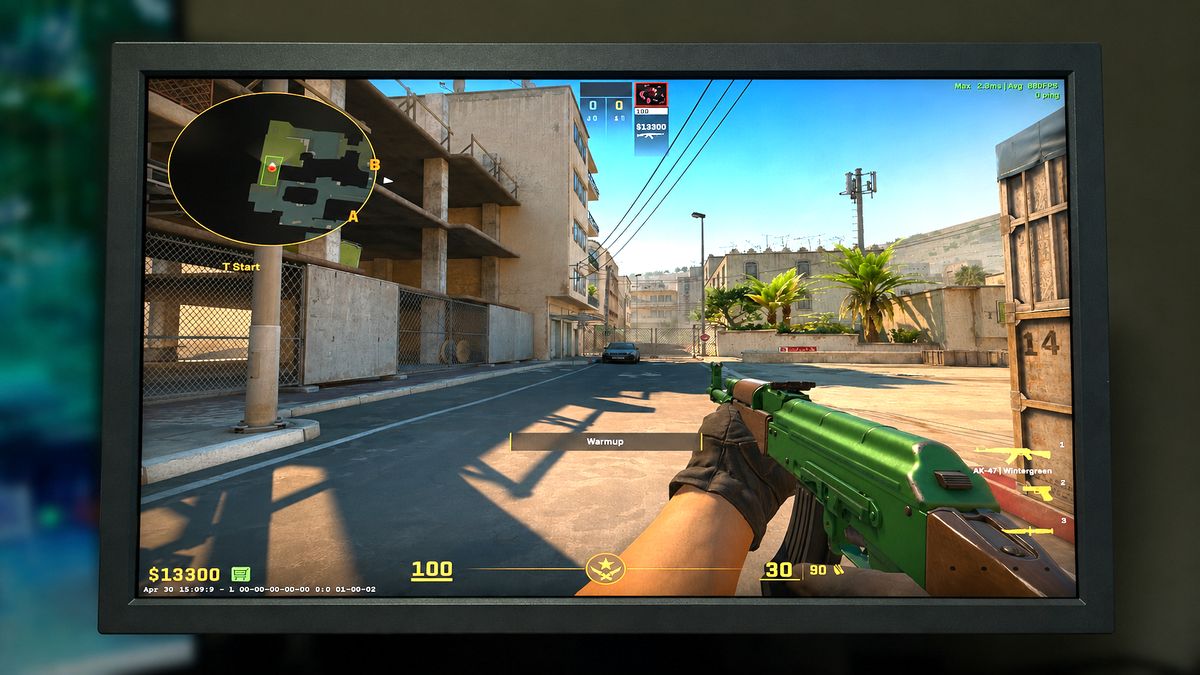
Consider a high-end modern gaming rig equipped with top-tier components—such as an AMD Ryzen 7 7800X3D processor paired with a powerful graphics card like the RX 9070 XT. Even when running Counter-Strike 2 at lowered competitive settings (such as 1280×960 or standard 1080p resolution to maximize frame rates), hitting a stable, uninterrupted 600 frames per second (fps) is an immense challenge.
In real-world gameplay scenarios, intensive smoke grenade interactions, chaotic multi-player firefights, and complex map geometries cause frame rates to fluctuate. On an elite rig, players typically hover around the 500 fps mark. When a monitor operates at 600 Hz while the system feeds it only 300 to 500 fps, the mathematical advantage of those extra 240 cycles evaporates. If the hardware cannot draw a new frame to match the display’s refresh cycle, the ultra-high refresh rate effectively idles, rendering the numerical superiority largely academic.
The Physics of Diminishing Returns
From 60 Hz to 144 Hz, the reduction in frame time is massive (from 16.67ms down to 6.94ms). Moving from 144 Hz to 240 Hz cuts frame time further to 4.17ms. The jump to 360 Hz brings frame times down to 2.78ms—an interval approaching the limits of human visual processing and reflex arcs.
Beyond 360 Hz, the incremental gains shrink exponentially. Moving from 360 Hz to 600 Hz saves a mere 1.11 milliseconds. While milliseconds matter in the hyper-competitive ecosystem of professional esports, human reaction times and biological visual processing thresholds mean that these microscopic time saves exist on the razor’s edge of perception.
Official Statements: Insights from Luminosity’s Pro Players
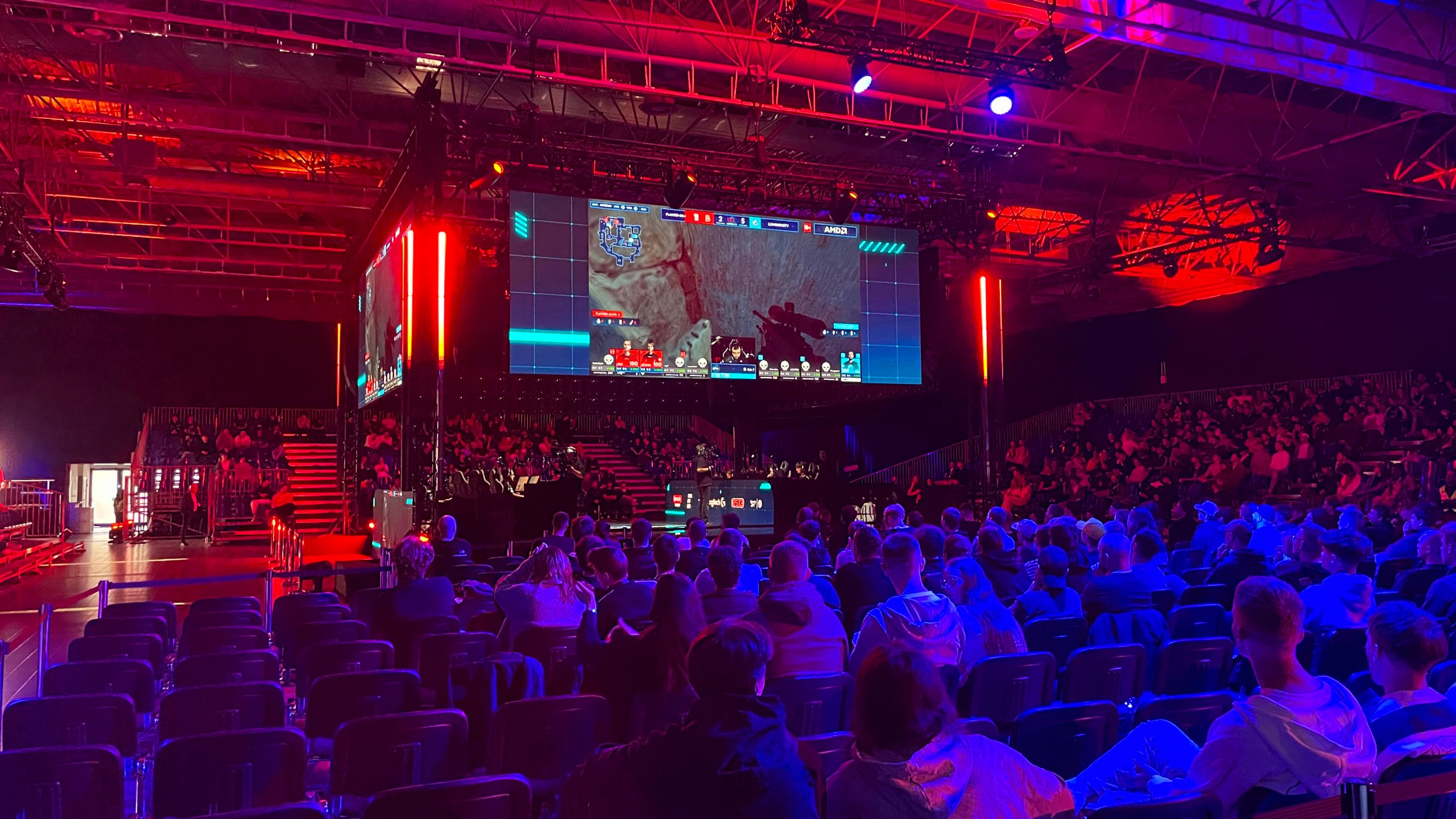
To ground these hardware metrics in actual competitive reality, we turn to the professionals who live and breathe Counter-Strike 2 at the highest level. At the Logitech G Play event in Warsaw, conversations with Oscar Bell ("Azuwu") and Simon Boije ("yxngstxr") of the prominent esports organization Luminosity provided invaluable perspective. Luminosity, a brand deeply woven into the historical fabric of competitive Counter-Strike since the classic era of 2016, offers a seasoned lens through which to view hardware evolution.
Azuwu on the Transition to 360 Hz
Reflecting on his personal experience upgrading his hardware setup, Azuwu noted a distinct psychological and physiological line in the sand regarding refresh rates:
"When I had 240 at home, I didn’t even really notice 360. But now I’m 360 I can’t go back down, you know, I feel it a lot. So I think 360, 400, 600 are all pretty similar… I’d say 400 is a nice spot and 600 is extra nice. But anyway, in a lot of PCs, you won’t hit 600 frames."
Azuwu’s observation underscores a crucial psychological phenomenon in competitive gaming: while stepping up to 360 Hz creates a permanent perceptual shift—making it painful to regress to slower panels—the subjective difference between 360 Hz, 400 Hz, and 600 Hz becomes increasingly blurred. Furthermore, his pragmatic note regarding frame rate limitations highlights the fundamental disconnect between monitor specs and real-world system output.
Yxngstxr on Placebo Effects and Motion Clarity
Echoing these sentiments, teammate Yxngstxr questioned the practical necessity of pushing past established thresholds, pointing to the psychological nature of hardware upgrades:
"I think it’s kind of a placebo, personal thing, you know? Because on most PCs you rarely get 600 fps, right?… 600 Hz with like 300 fps, it doesn’t even matter."
However, Yxngstxr was quick to point out that raw refresh rate is only one piece of the puzzle. When discussing what truly gives a player a competitive edge, he highlighted advanced hardware features rather than sheer numbers alone. Specifically, the team relies heavily on specialized display technology—such as Zowie monitors equipped with DyAc (Dynamic Accuracy) anti-ghosting technology.
"The edge of the players get more noticeable," Yxngstxr explained, emphasizing how clarity during rapid camera movement matters far more than raw numbers on a spec sheet.
The Role of Backlight Strobing (DyAc)
Proprietary backlight strobing technologies like Zowie’s DyAc are designed to combat motion blur by rapidly blinking the display backlight in sync with the refresh cycle, effectively clearing persistence blur from the human retina during fast mouse flicks. When testing ultra-fast panels like the Zowie XL2586X+, reviewers and pros alike note that while the raw 600 Hz refresh rate might be approaching overkill, the motion clarity delivered by sophisticated backlight strobing genuinely aids target acquisition.
Yet, even here, professional consensus remains grounded. Regarding DyAc technology, Azuwu offered a measured take: "I have it on, but it’s hard to tell." This candid admission reinforces the idea that while elite hardware provides marginal gains, the human element—aim training, game sense, positioning, and teamwork—will always reign supreme over minor technological micro-optimizations.
Future Outlook: Where Do Gaming Monitors Go From Here?
As the competitive hardware market continues to evolve, what can consumers and esports enthusiasts expect in the coming years?
The Convergence of OLED and High Refresh Rates
The battleground for gaming monitors is shifting away from raw, escalating refresh rate numbers toward panel technology maturation. While TN and fast-IPS panels have dominated the ultra-high refresh rate category due to their rapid pixel response times, the rise of high-refresh-rate OLED technology promises to redefine visual clarity. OLED panels offer near-instantaneous pixel response times (measured in fractions of a millisecond), virtually eliminating ghosting naturally without relying heavily on aggressive backlight strobing techniques that can sometimes cause eye fatigue or flicker.
As OLED panels successfully push past 240 Hz and into the 360 Hz and 480 Hz territory, they will likely become the preferred choice for competitive gamers. They combine the motion-clarity benefits of rapid response times with infinite contrast ratios and vibrant color reproduction, bridging the gap between breathtaking visual fidelity and competitive performance.
Redefining the "Sweet Spot"
The industry consensus solidified throughout 2026 points to 360 Hz as the definitive plateau of diminishing returns for competitive FPS gaming. While manufacturers will undoubtedly continue to engineer 500 Hz, 600 Hz, and even faster displays to showcase technological prowess and cater to the ultra-enthusiast fringe, the average competitive player—and even many esports professionals—will find that investing in a robust 360 Hz panel paired with high-end internal components yields the optimal balance of cost, performance, and visual advantage.
Ultimately, hardware can only take a player so far. As Counter-Strike 2 continues to evolve as a tactical team shooter, the wisdom of players like Azuwu and yxngstxr serves as a reminder: once you reach the 360 Hz threshold, your hardware is no longer holding you back. From that point forward, victory is earned entirely on the server.










Belum ada komentar. Jadilah yang pertama berkomentar!