

Executive Overview
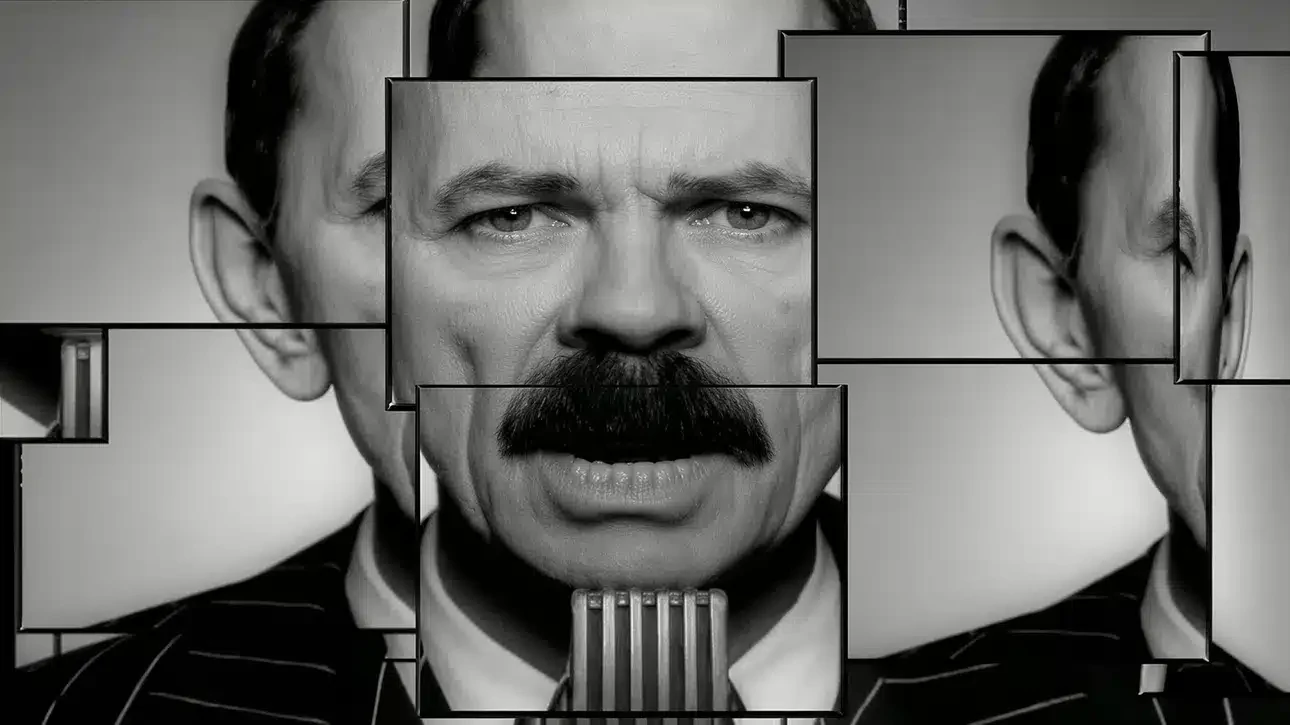
To a generation that came of age in the mid-1990s, John Larkin was an indelible icon of unbridled Eurodance euphoria. Decked out in his signature fedora and a Ned Flanders-esque mustache, the charismatic man in his fifties conquered global charts in 1995 with the smash hit "Scatman (Ski-Ba-Bop-Ba-Dop-Bop)." To millions of radio listeners, club-goers, and MTV viewers, he was simply "Scatman John"—an eccentric, novelty-adjacent pop star delivering rapid-fire vocal gymnastics over pulsating dancefloor beats. Yet, beneath the slick production and the catchy motivational refrains lay a profound paradox. The man behind the cartoonish persona was not a manufactured pop product, but a hardened, deeply troubled jazz veteran who had spent decades navigating the ferocious underbelly of the West Coast music scene.
For the vast majority of his life, Larkin waged a brutal war against personal demons. A lifelong, debilitating stutter drove him to the brink of self-destruction, fueling a severe heroin addiction and a lifestyle of drug dealing that nearly cost him his life in the early 1980s. The piano was his sanctuary; it was where he hid from a world he struggled to articulate through speech.
Long before he ever stepped foot in a Eurodance studio, Larkin was an uncompromising avant-garde jazz pianist, collaborating with legendary outcasts and channeling the fierce, dissonant energies of idols like John Coltrane and Cecil Taylor. The bridge between his harrowing past as a struggling jazz misfit and his triumphant reinvention as a global pop phenomenon reveals a complex narrative of survival, artistic compromise, and redemption. Thanks to recent biographical excavations—most notably Gina Waggott’s comprehensive 2026 work, Scatman John: The Remarkable Story of the World’s Unlikeliest Popstar—music historians are finally piecing together the true scope of Larkin’s legacy. Far from abandoning his artistic integrity, Scatman John viewed his chart-topping pop success as a Trojan horse: a vehicle that ultimately allowed him to return to the piano, conquer his speech impediment, and keep the flame of pure jazz alive.
Detailed Chronology
The West Coast Crucible and the Piano Sanctuary
Long before the global adoration of 1995, John Larkin’s musical identity was forged in the smoky, unpredictable jazz clubs of California. Working the West Coast scene since the 1960s, Larkin adapted to various commercial settings—including cruise ship residencies—just to keep food on the table. However, his true artistic impulses were volatile and uncompromising. Influenced heavily by the late-period work of John Coltrane, Larkin’s piano playing could be punishingly intense, characterized by wild, unhinged screams delivered over dissonant chords that routinely frightened casual audiences away.
Music was not merely a career for Larkin; it was a psychological fortress designed to shield him from the profound shame of his stutter. As he later explained in an interview with Konrad Schäfers of BVSS (the German National Association for Stutterers’ Self-Help):
"I hid behind the piano. I thought I could express more of my emotions through the piano rather than with words."
The late 1960s and 1970s brought a revolving door of chaotic creative partnerships and substance abuse. At one point, Larkin shared an apartment with legendary drummer Freddie Gruber—a Charlie Parker collaborator fighting his own severe demons—turning their living quarters into a pressure cooker of arguments and addiction. Later, Larkin joined a jazz group led by saxophonist Sam Phipps, best known for his work with the new wave band Oingo Boingo. While Phipps’s 1981 album Animal Sounds marked Larkin’s first officially released recording, the collaboration ended abruptly. During a live radio session, a bandmate asked Larkin to tone down his ferocious piano-banging, prompting him to walk out mid-broadcast and sever ties.
The Self-Titled Masterpiece and the Joe Farrell Connection
By the mid-1980s, Larkin’s life had descended into a perilous cycle of addiction. To fuel their habits, Larkin and his first wife resorted to drug dealing. Yet, amid this chaos, Larkin managed to assemble a dream team of jazz outcasts to record a mysterious, self-titled album.
The catalyst for the project was saxophonist Joe Farrell, a heavy-hitting jazz veteran whose staggering résumé included work with Return to Forever, Billy Cobham, Elvin Jones, and Andrew Hill. Broken by his own battles with addiction, Farrell relocated to Los Angeles in 1983 for the final chapter of his career. There, he introduced Larkin to a powerful rhythm section comprising drummer Clark Woodard and bassist Bob Harrison, cementing the John Larkin Quartet.
Recorded over two separate sessions between 1984 and 1985—with studio time financed directly by the proceeds of Larkin’s illicit activities—John Larkin stands as a masterclass in feral, avant-garde energy. The sessions were continually disrupted by the heavy drug dependencies of both Larkin and Farrell. When the album opened with "The Misfit," Larkin was clearly singing his own reality. The track is a neurotic, spasmodically fast piece driven by a relentless bassline and Farrell’s menacing tenor saxophone. When the tempo finally dips, Larkin’s eerie, Tom Waits-esque spoken-word vocals pierce the mix:
"Somebody asked, ‘What’s the meaning of jazz?’ / And I…said we’re the misfits / And all I can tell ya / Is while you’re still sleeping / The saints are still weeping / ‘Cause things you call dead / Haven’t yet had the chance / To be born."
The record balances manic energy with moments of breathtaking melodic beauty, such as the vocal jazz piece "Last Night I Dreamed," and plunges deep into free jazz territory on the sprawling, nine-minute epic "Angel’s Flight." Most striking, perhaps, is "John Coltrane," a three-and-a-half-minute track where Larkin chants his love for the jazz icon over increasingly dissonant arrangements, culminating in a cacophonous coda of feral screams.
The album was dedicated to Joe Farrell, who tragically died of cancer in January 1986, just before its private release. Printed through Larkin’s newly acquired imprint Transition—a label name he symbolically bought from a friend for a single dollar—the album received only local distribution among friends and family, disappearing into the shadows as Larkin’s life hit rock bottom.
Sobriety, Rebirth, and the Eurodance Phenomenon
The death of Joe Farrell served as a profound wake-up call. Driven by a desire to pull his life together, Larkin achieved full sobriety and met Judy McHugh, a fellow recovering alcoholic who would soon become his wife. McHugh encouraged Larkin to return to music, helping him overcome his deep-seated fear that playing again might trigger a relapse.
Relocating to Europe, Larkin reinvented himself. By blending his lifelong obsession with scat-singing—sparked decades earlier by Louis Armstrong and Ella Fitzgerald—with the booming commercial electronic rhythms of 1990s Eurodance, he created a genre-defying monster. "Scatman" was an instant global phenomenon in 1995, selling millions of copies and turning an aging, fedora-wearing jazz pianist into an unlikely international superstar.
In a brilliant stroke of poetic justice, Larkin repurposed the opening lines of his long-lost 1986 jazz album for his pop masterpiece, transforming himself from an isolated misfit into a comforting public mentor:
"I hear you all ask ’bout the meaning of scat / Well, I’m the professor and all I can tell you / Is while you’re still sleeping, the saints are still weeping / ‘Cause things you call dead haven’t yet had the chance to be born."
Supporting Context & Metrics
To fully understand the cultural and commercial footprint of John Larkin’s career, one must examine the distinct metrics separating his two musical lives:
- Commercial Reach of "Scatman": Released in late 1994 and peaking throughout 1995, "Scatman (Ski-Ba-Bop-Ba-Dop-Bop)" charted in the top 10 across virtually every major European market, hitting #1 in countries including Denmark, Spain, and Norway, while also achieving massive crossover success in Japan.
- The Rarity of the 1986 LP: The original John Larkin LP was a micro-press private release on the Transition label. For decades, it remained a phantom record known only to elite vinyl collectors. Its existence only came to light broadly in 2001 via the CD compilation Listen to the Scatman (Stunt Records), with pristine original vinyl copies subsequently hunted down by underground archival diggers like Los Angeles-based collector Jason.
- Archival Discoveries: Recent years have vastly expanded our understanding of Larkin’s pre-pop output. In 2026, Iceberg Records released Before Scatman, a 10-inch vinyl featuring Larkin’s earliest known jazz recordings dating back to 1978. Furthermore, a blistering 15-minute free jazz trio improvisation, captured live in North Hollywood in 1993, surfaced via the digital platform Nina Protocol in 2025.
Official Statements
The underground nature of Larkin’s jazz catalog has left record labels navigating a delicate balance between archival preservation and commercial viability. Representatives from Iceberg Records, the label responsible for his 1990s chart hits and recent archival releases, addressed the possibility of giving the elusive 1986 jazz album a proper commercial reissue:
"Although we don’t currently have any concrete plans to re-release the John Larkin album, it is under consideration, along with other unreleased John Larkin/Scatman material."
Despite the legal grey areas that have led to bootleg CD pressings—such as a 2006 BCS Records release credited strangely to Clark Woodard & Joe Farrell—Larkin himself never viewed his pop career as a betrayal of his jazz roots. Rather, he saw it as an essential financial and artistic lifeline. In a candid interview with the French magazine Entrevue, Larkin reflected on his dual identity:
"Playing as Scatman lets me play the piano again. The world has betrayed real, pure jazz. Not me."
Future Outlook
More than three decades after his explosive entry into the pop consciousness, and following his untimely passing in late 1999, John Larkin’s legacy is undergoing a profound and overdue reassessment. No longer dismissed as a one-hit-wonder novelty act, he is increasingly recognized as a tortured jazz virtuoso whose pop stardom was a masterclass in survival.
Biographical milestones like Gina Waggott’s Scatman John: The Remarkable Story of the World’s Unlikeliest Popstar have permanently altered how cultural critics view the man behind the fedora. As archival labels continue to unearth blistering 1970s and 1990s jazz sessions from the vaults, the demand for a definitive, official reissue of the 1986 John Larkin LP grows louder.
While major labels deliberate on future archival drops, the prevailing sentiment among jazz historians and crate-diggers is one of awe. John Larkin proved that true artists can bend the commercial machine to their own redemption. Through the stutter, the heroin addiction, the avant-garde fury, and the bubblegum Eurodance synths, the Scatman ultimately ensured that the things the world left for dead finally got their chance to be born.









Belum ada komentar. Jadilah yang pertama berkomentar!