


Executive Overview
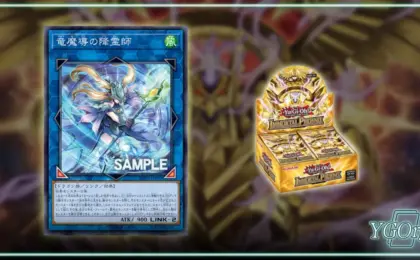
The competitive landscape of the Yu-Gi-Oh! Official Card Game (OCG) is undergoing a profound structural evolution. In a sweeping regulatory update published via the official channels, tournament organizers and card game administrators have introduced an expansive slate of formatting adjustments, point allocations, and card legality updates. Most notably, competitive OCG duelists are now officially cleared to integrate cards originating directly from the newly minted supplementary product, "Limit Over Collection: The Heroes."
This comprehensive adjustment framework—detailed extensively through a massive ledger of numerical value shifts ranging from foundational staples to niche archetype engines—signals a calculated push by developers to reshape meta-game viability, foster archetype diversity, and recalibrate the cost-to-benefit ratio of running dominant engine pieces.
For competitive players, judges, and third-party analysts, understanding these dynamic fluctuations is essential. The adjustments do not merely tweak individual card power ceilings; they represent a holistic re-evaluation of resource management, interruption utility, and board-building potential across both legacy and contemporary card pools. This report provides an exhaustive investigation into the mechanics, implications, and overarching trajectory of the latest OCG structural update.
Detailed Chronology: Mapping the Card Value and Legality Shifts
The core of the recent administrative rollout lies in an exhaustive ledger of numerical adjustments assigned to various cards within the OCG competitive ecosystem. These metrics—moving upward, downward, or freshly introduced from a baseline of zero—dictate the structural viability and deck-building parameters available to duelists worldwide.
Major Reductions: Reining in Powerhouses and Engine Accelerants
A significant portion of the update focuses on downward recalibrations, signaling a concerted effort to curb the dominance of historically oppressive or overly consistent archetypes. Prominent among these is Original Sinful Spoils – Snake-Eyes, which drops substantially from a heavy 100 down to 75. This adjustment mirrors a broader systemic cooling off for the Snake-Eye engine, which has long dominated high-tier competitive tables.
Other critical consistency tools and high-impact monsters have likewise seen marked decreases:
- One for One transitions from 91 to 66.
- Fairy Tail – Snow shifts from 85 down to 60.
- Chaos Space drops from 40 to 30.
- Emergency Teleport moves in tandem, adjusting from 35 to 30.
- Universal consistency staples such as Foolish Burial, Terraforming, Reinforcement of the Army, Bonfire, and Quick Launch have all been standardized down from 33 to 28, indicating a uniform tightening of searcher accessibility across multiple attributes and types.
Defensive interaction and hand-trap staples have also experienced structured reductions to balance their deployment rates. Glow-Up Bulb shifts from 21 to 16, while format-defining disruption tools like Mulcharmy Purulia (19 down to 14), Effect Veiler (18 down to 13), and the omnipresent Infinite Impermanence along with Forbidden Droplet (both sliding from 20 down to 15) reflect a deliberate effort to alter how players budget defensive interactions during opening turns.
Fresh Inclusions and Ascending Values: Breathing Life into Underutilized Themes
Conversely, a vast array of cards previously sitting at a baseline of zero or lower tiers have experienced upward momentum, opening structural pathways for fringe strategies and brand-new card pools.
The introduction of cards from "Limit Over Collection: The Heroes" serves as the primary catalyst for this shift, welcoming a wave of archetypal support into the active OCG meta. For instance, Kewl Tune Crackle leaps from 0 to 70, establishing itself as an immediate focal point for its respective strategy. Other supporting pieces within the same ecosystem—such as Kewl Tune Rotary (0 to 40), Elfnote Regina (0 to 40), and Kewl Tune B2B (0 to 40)—showcase a deliberate injection of high-value options for emerging deck types.
Legacy strategies are not left behind. Classic power cards and nostalgic support engines receive measured upward adjustments to reintegrate them into contemporary play without fracturing game balance:
- Pot of Greed moves from 38 to 33.
- Necrovalley shifts slightly from 40 to 35.
- Super Polymerization drops from 23 to 18, altering fusion-based disruption math.
- A myriad of Dragon Ruler components—such as Tidal, Dragon Ruler of Waterfalls (13 to 8), Blaster, Dragon Ruler of Infernos (9 to 8), Tempest, Dragon Ruler of Storms (12 to 7), and Redox, Dragon Ruler of Boulders (8 to 7)—continue to see nuanced metric shifts, illustrating a careful, calculated monitoring of graveyard-heavy elemental strategies.
Complete Phase-Outs and Zero-Value Reductions
At the opposite end of the spectrum, several cards have been systematically driven down to absolute zero or removed entirely from active competitive viability through strict classification adjustments. Kaiju variants—frequently utilized as ultimate removal options to break unbreakable enemy boards—have seen decisive cuts. Cards such as Jizukiru, the Star Destroying Kaiju (6 down to 0), Radian, the Multidimensional Kaiju (5 down to 0), Dogoran, the Mad Flame Kaiju (8 down to 0), Gadarla, the Mystery Dust Kaiju (5 down to 0), and Thunder King, the Lightningstrike Kaiju (6 down to 0) have been effectively neutralized within this specific formatting context.
Similarly, specific Runick engine components (Runick Slumber, Runick Freezing Curses, Runick Destruction, Runick Fountain, Runick Flashing Fire) have been scaled down from 1 to 0, completely dismantling the framework that allowed Runick variants to function unchecked in prior iterations of the format.
Supporting Context & Metrics: Analyzing the "Limit Over Collection: The Heroes" Integration
To fully appreciate the weight of these updates, one must examine the macroeconomic environment of the OCG card pool. The integration of "Limit Over Collection: The Heroes" is not merely an isolated product release; it is a systemic injection designed to revitalize player engagement and shake up established tournament hierarchies.
The Mechanics of Meta Shifts
In competitive trading card games, stagnation is the primary enemy of player retention and strategic innovation. When a specific archetype or engine—such as Snake-Eyes or associated Fire-attribute toolkits—reaches a critical mass of representation, tournament diversity plummets. By systematically reducing the numerical values of core enablers while simultaneously introducing new parameters for previously dormant cards, administrators achieve two vital objectives:
- Resource Re-allocation: Players can no longer rely on autopilot deck-building formulas. Staple packages that once occupied fixed slots must now compete with newly viable options from "Limit Over Collection: The Heroes" and adjusted legacy engines.
- Mitigating First-Turn Dominance: Adjustments to hand traps (Ghost Ogre & Snow Rabbit moving from 14 to 9; Ghost Mourner & Moonlit Chill dropping from 14 to 9) and board breakers dictate how safely a duelist can establish or dismantle a multi-negate setup.
Quantitative Breakdown of Engine Adjustments
A granular look at the data reveals clear thematic clustering in how adjustments were applied:
- The Fire King & Snake-Eye Downgrades: Beyond Original Sinful Spoils, cards like Legendary Fire King Ponix (15 down to 10) and Fire King Courtier Ulcanix (23 down to 18) demonstrate a systemic cooling of the Fire-type dominance that characterized previous tournament cycles.
- The Ghoti & Tistina Realignments: Deep-sea and subterranean strategies receive subtle, micro-adjusted breathing room. Ghoti components (Psiics, Paces, Snopios) hover consistently around the 4-point mark, while their structural spells and synchro bosses see precision tuning to ensure they remain viable outer-tier contenders without breaking power thresholds.
- The Exosister and White Forest Stabilization: Ritual and Xyz-centric strategies, notably Exosister and White Forest variations, experience a careful harmonization. High-utility searchers and boss monsters across these archetypes have been adjusted into narrower valuation bands (predominantly sitting between 1 and 11), ensuring that reactive playstyles maintain a fighting chance against aggressive combo decks.
Official Statements and Regulatory Intent
While tournament rulebooks and update logs are inherently data-dense, accompanying statements from design and oversight committees emphasize a core philosophy: adaptability, fairness, and long-term ecosystem health.
According to developmental briefings surrounding the implementation of the "Limit Over Collection: The Heroes" integration, the primary goal is to empower duelists to explore creative intersections between classic heroic archetypes and modern interruption frameworks. The decision to lower the cost and operational thresholds of numerous dormant cards—moving them up from zero or reducing their restrictive point values—is intended to lower the barrier to entry for brewing innovative deck lists.
Furthermore, authoritative figures within the OCG tournament circuit have underscored that these adjustments are subject to continuous telemetry monitoring. Should the newly empowered archetypes—particularly the Kewl Tune and Elfnote packages—demonstrate oppressive centralization during upcoming regional and championship qualifiers, subsequent emergency updates will be deployed to restore equilibrium.
Future Outlook: What This Means for Competitive Duelists
As the dust settles on this comprehensive update, competitive players must fundamentally re-engineer their approach to deck building, side-decking, and match-up execution.
1. The Death of the "Auto-Include" Mentality
With foundational consistency cards experiencing uniform tightening (e.g., the broad flattening of search spells to 28), the era of freely splashing high-efficiency engines into any given strategy without opportunity cost is drawing to a close. Duelists must now meticulously calculate their main-deck ratios, weighing the value of traditional consistency tools against the explosive potential offered by the new "Limit Over Collection: The Heroes" card pool.
2. Diversification of Tournament Metas
The aggressive downward scaling of oppressive mainstays—paired with the targeted elevation of niche archetypes like Lunalight, Ghoti, and various Xyz/Synchro toolkits—guarantees a more fragmented and diverse tournament meta. Rogue strategies that previously struggled to break through dense interruption boards now possess the mathematical viability required to sneak into top-cut placements.
3. Preparation for Regional and Championship Play
Competitive teams are already hitting test servers and local OTS (Official Tournament Store) locations to map out the optimal ratios under the new guidelines. As players master the nuances of the adjusted values—particularly how to leverage lower-cost defensive options while navigating the newly introduced threats—the true winners of this format shift will be those who adapt their lateral thinking the fastest.
In conclusion, the latest OCG structural update represents a masterclass in modern card game regulation. By aggressively trimming the excesses of dominant meta titans while boldly opening the door to fresh archetypal identities, the game’s administrators have set the stage for one of the most unpredictable, dynamic, and strategically rewarding competitive seasons in recent history. Duelists are advised to review their collection inventories, scrap obsolete blueprints, and prepare for a brand-new era of high-level competition.







Belum ada komentar. Jadilah yang pertama berkomentar!