

Executive Overview
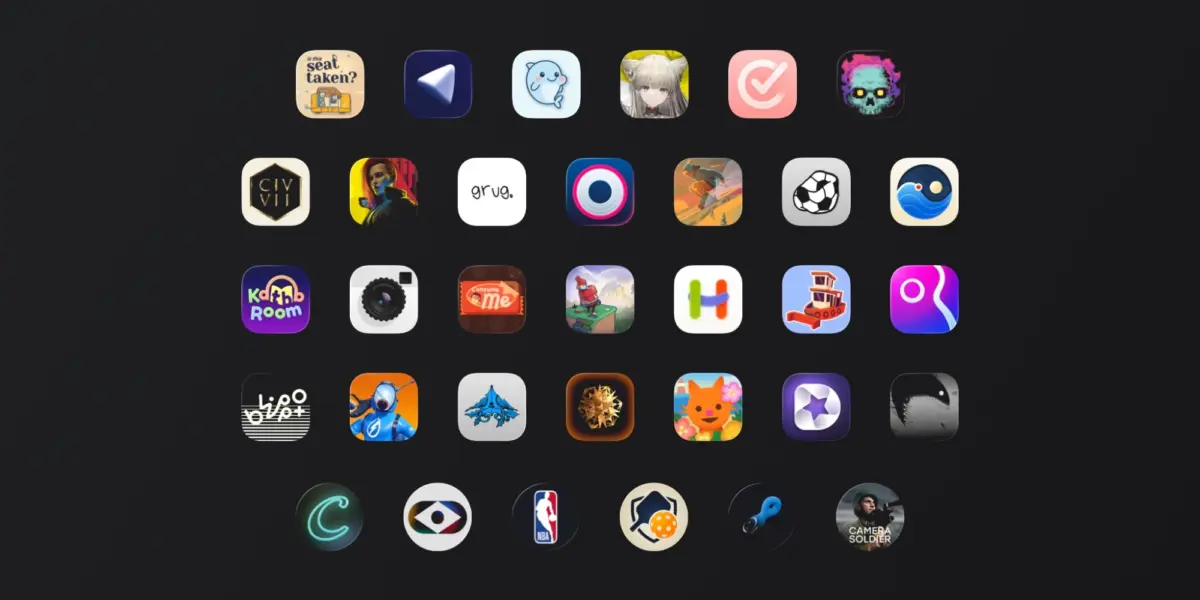
As the technology sector trains its collective gaze on Apple Park for the impending Worldwide Developers Conference (WWDC 2026), Cupertino has officially fired the starting pistol on one of the developer community’s most anticipated traditions. Following the dispatch of official press invitations for the keynote address, Apple has unveiled the complete roster of finalists for the 2026 Apple Design Awards (ADAs).
Recognizing the zenith of design, technical execution, and user experience across the sprawling ecosystem of the App Store, the ADAs continue to serve as the gold standard for independent and enterprise developers alike. This year’s cohort features 36 stellar finalists spanning six meticulously curated categories: Delight and Fun, Inclusivity, Innovation, Interaction, Social Impact, and Visuals and Graphics. Each category pits three applications and three games against one another, though several standout cross-disciplinary titles have earned nods in multiple categories, slightly streamlining the absolute count of unique nominees.
The announcement not only highlights the creative and technical achievements of developers pushing the boundaries of Apple’s hardware and software suites, but it also signals the broader thematic trends guiding the future of digital design. From leveraging advanced spatial computing paradigms and machine learning integrations to championing accessibility and mental health, the 2026 finalists offer a profound glimpse into where consumer software is heading next.
Detailed Chronology: The Road to WWDC 2026
The unfolding of WWDC season is a carefully orchestrated sequence of events that builds anticipation for both consumers and developers. Understanding the timeline of how the Apple Design Awards fit into this broader context illuminates their significance within the developer ecosystem.
The Spring Buildup and Developer Outreach
Throughout the spring of 2026, Apple’s developer relations teams have been quietly reviewing thousands of submissions from across the globe. To qualify for consideration, apps and games must demonstrate exceptional technical sophistication, creative brilliance, and a deep integration of Apple’s proprietary frameworks—whether that involves Metal for high-performance graphics, Swift for optimized performance, or visionOS capabilities for spatial environments.
The Official Announcement
In mid-May 2026, the timeline accelerated dramatically. Apple concurrently released the formal media invites for the WWDC26 keynote—slated to kick off the week-long developer conference—and published the official Apple Design Award finalists on the Apple Developer portal. This dual-announcement strategy serves to immediately pivot industry attention away from purely speculative hardware leaks and toward the software artisans who breathe life into Apple’s silicon.
The Anticipated Winner Reveal
Following the announcement of the finalists, the pressure mounts. Over the coming weeks leading up to the WWDC26 keynote and subsequent developer sessions, an anonymous panel of Apple design experts will deliberate to select the ultimate winners. The victors will be formally crowned during a dedicated ceremony at WWDC, where they will receive the iconic, physical aluminum ADA trophy—a coveted symbol of craftsmanship prized by software engineers and UI/UX designers worldwide.

Supporting Context & Metrics: The Anatomy of the 2026 Finalists
To truly understand the weight of an Apple Design Award nomination, one must contextualize the sheer scale of the modern App Store. With millions of active applications competing for consumer attention, securing a spot among the top 36 finalists is an extraordinary statistical feat.
The Six Core Categories Breakdown
Apple structures the ADAs to evaluate software not merely on how it looks, but on what it achieves for the user. The 2026 competition is distributed evenly across six distinct pillars:
- Delight and Fun: This category highlights applications and games that deliver memorable, highly engaging, and utterly satisfying user experiences. These titles elevate utility or entertainment through the seamless deployment of Apple technologies like Haptic Engine, Game Center, and Core Audio.
- Inclusivity: Reflecting Apple’s long-standing corporate commitment to accessibility, these finalists provide phenomenal experiences for users of all backgrounds, abilities, and linguistic profiles. They embody best practices in VoiceOver support, dynamic text scaling, and localized design.
- Innovation: State-of-the-art experiences live here. Finalists in this tier utilize novel combinations of Apple frameworks—such as machine learning models running locally via Core ML or advanced spatial computing triggers—to redefine what is possible within a specific app genre.
- Interaction: Usability is king in this category. Finalists deliver intuitive interfaces, frictionless navigation, and effortless controls tailored explicitly to the target platform, whether it is an iPhone, iPad, Apple Watch, Mac, or Apple Vision Pro.
- Social Impact: Software can change the world, and these nominees prove it. By tackling crucial societal issues, improving physical or mental well-being, and shining a light on underrepresented narratives, these apps genuinely improve human lives.
- Visuals and Graphics: A celebration of pure aesthetic mastery. Finalists in this category feature breathtaking imagery, meticulously crafted interface layouts, and fluid, high-frame-rate animations that share a distinctive, cohesive thematic identity.
Cross-Pollination of Excellence
A noteworthy trend in the 2026 finalist pool is the emergence of multi-category nominees. Several applications and games demonstrated such holistic brilliance that they successfully crossed boundaries—for instance, blending cutting-edge Innovation in spatial interaction with peerless Visuals and Graphics. This crossover phenomenon underscores how modern software development increasingly demands multidisciplinary mastery rather than isolated pockets of excellence.
Official Statements and Industry Impact
While individual developers often maintain a shroud of suspense regarding their final placement, the broader developer community has responded to the 2026 shortlist with immense enthusiasm.
Industry analysts point out that an ADA nomination functions as an invaluable catalyst for independent studios. Historically, inclusion on the finalist list—and even more so, winning the physical award—results in a dramatic surge in organic App Store visibility, editorial feature placement, and venture capital interest.
"The Apple Design Awards have evolved far beyond a simple pat on the back from Cupertino," notes a prominent software design strategist. "They act as a directional compass for the entire industry. When you look at which apps Apple highlights for ‘Interaction’ or ‘Innovation,’ you are essentially looking at the UX blueprints that every other developer will be studying and attempting to emulate over the next twenty-four months."
Apple’s own design philosophy, historically rooted in the intersection of liberal arts and technology, shines through the diverse array of finalists. By celebrating apps that champion social causes alongside high-octane gaming experiences, Apple reinforces its message that hardware and software are blank canvases for human expression.

Future Outlook: What the 2026 Finalists Tell Us About the Next Era of Computing
Looking beyond the excitement of WWDC26, the roster of Apple Design Award finalists provides crucial foresight into the trajectory of consumer technology.
1. Spatial Computing Maturation
With Apple Vision Pro firmly established in the hardware ecosystem, the 2026 finalists reflect a distinct maturation in spatial design language. Developers are no longer merely porting 2D paradigms into 3D environments; they are architecting native spatial interactions that respect physics, depth, and human ergonomics.
2. Hyper-Personalization and Machine Learning
The integration of on-device machine learning has transitioned from a novel gimmick to an invisible, foundational pillar of top-tier app design. Finalists across the Innovation and Delight categories demonstrate how predictive interfaces and context-aware automation can make complex software feel conversational and effortless.
3. Accessibility as a Baseline, Not an Afterthought
The caliber of nominees in the Inclusivity category highlights a vital paradigm shift in the software industry: accessibility is no longer viewed as a compliance checkbox. Instead, forward-thinking studios are baking inclusive design principles into their foundational wireframes, proving that universally accessible software frequently results in superior experiences for all users.
As the tech world converges on WWDC26, all eyes will remain locked on the stage when the final winners of the Apple Design Awards are announced. Until then, exploring the 36 finalist apps and games offers an unmatched masterclass in modern digital craftsmanship.









Belum ada komentar. Jadilah yang pertama berkomentar!