

Executive Overview
The mobile gaming landscape is on the verge of a seismic shift. Following weeks of speculation and teaser campaigns that offered glimpses of its avant-garde industrial aesthetic, the technical specifications for Lenovo’s upcoming flagship gaming smartphone—the Lenovo Legion Y90—have leaked in their entirety. Sourced from prominent industry insider Panda is bald via Weibo and corroborated by major hardware tracking platforms, these new disclosures provide a comprehensive look at what promises to be one of the most mechanically aggressive and specifications-heavy devices ever engineered for mobile gaming.
In an era where smartphone manufacturers continually push the boundaries of thermal management, raw processing power, and display fidelity, the Legion Y90 appears determined to outpace its competition. Packing Qualcomm’s bleeding-edge Snapdragon 8 Gen 1 chipset, a staggering capacity of physical and virtual memory scaling up to 22GB, and an ultra-responsive high-refresh-rate AMOLED display, Lenovo is clearly not holding back.
This report provides an exhaustive, multi-faceted analysis of the leaked Legion Y90 specifications. We will break down its hardware architecture, evaluate its thermal cooling systems, contextualize its position within the broader gaming smartphone ecosystem, and project its market trajectory as Lenovo prepares for its official rollout alongside the Legion Y700 gaming tablet ahead of mid-2022.
Detailed Chronology of the Leak
The journey toward the Legion Y90’s spec sheet revelation has been a classic masterclass in modern mobile tech marketing and organic leaks. Understanding how this information came to light offers critical insight into the device’s development timeline.
Phase One: The Aesthetic Teasers
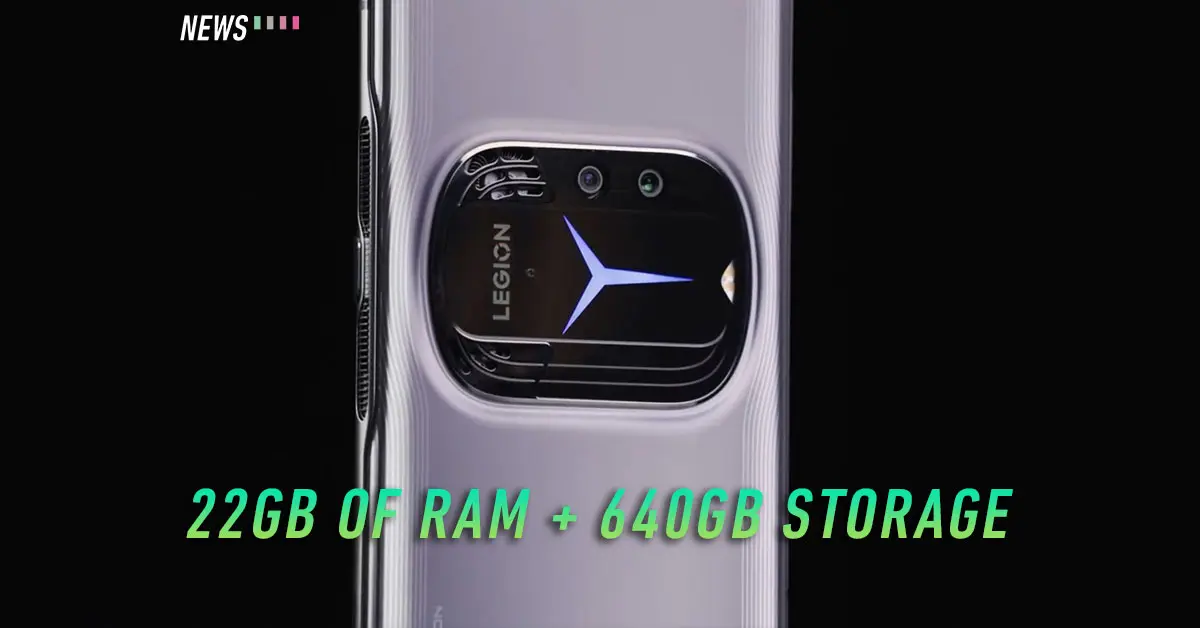
The initial narrative surrounding the Legion Y90 began when Lenovo officially broke cover to tease the smartphone’s striking design language. Known for tailoring its Legion ecosystem specifically toward uncompromising gamers, Lenovo’s early marketing materials showcased a symmetrically balanced rear chassis designed for landscape-first utilization. Unlike mainstream flagships that cater to vertical one-handed use, the Legion aesthetic has always prioritized ergonomic comfort during prolonged horizontal gaming sessions—featuring centralized cooling vents, RGB lighting accents, and a futuristic, armored chassis.
Phase Two: The Weibo Leak
As anticipation built following the design reveals, the information vacuum regarding internal hardware was decisively shattered by Weibo user Panda is bald. Recognized within the Chinese tech leak community for high accuracy regarding unreleased mobile hardware, the user posted a comprehensive specification breakdown of the Legion Y90.
The leaked documents—comprising internal testing readouts and promotional specification slides—immediately drew the attention of global tech publications, including Notebookcheck and KL Gadget Guy. These documents not only confirmed processor and display metrics but also revealed unprecedented configurations regarding memory expansion and battery architecture.
Supporting Context & Metrics: Hardware Breakdown
A surface-level glance at the Legion Y90’s specifications reveals a spec sheet designed to dominate benchmarks. However, a deeper dive into the hardware metrics uncovers how Lenovo has engineered this device to sustain peak performance under heavy operational loads.
1. Display Architecture and Visual Fidelity
At the front, the Legion Y90 is equipped with a sprawling 6.92-inch AMOLED display. For competitive mobile gamers, screen real estate and input latency are paramount. Lenovo has addressed this by outfitting the panel with:
- 144Hz Refresh Rate: Ensuring buttery-smooth motion tracking in fast-paced titles like Call of Duty: Mobile, PUBG Mobile, and Genshin Impact.
- 720Hz Touch Sampling Rate: Drastically reducing input lag to register thumb movements and taps almost instantaneously—a critical edge in competitive multiplayer environments.
- Immersive Form Factor: Avoiding punch-holes or intrusive notches where possible by optimizing bezels, ensuring uninterrupted visual layouts.
2. Processing Power and Memory Scalability
Under the hood, the device houses Qualcomm’s flagship Snapdragon 8 Gen 1 System-on-Chip (SoC). Built on an advanced 4nm manufacturing process, this processor delivers massive performance generational leaps in both CPU throughput and GPU rendering capabilities compared to its predecessor.
However, the headline-grabbing metric is memory configuration:
- 18GB of Physical LPDDR5 RAM: A massive baseline that easily outperforms many modern consumer laptops.
- 4GB of Virtual RAM Expansion: Utilizing unused internal storage as pagefile memory, the Legion Y90 can dynamically scale its total available RAM pool up to an astonishing 22GB. This ensures that background processes, operating system overhead, and high-asset games can run concurrently without ever triggering aggressive app reloading.
- Massive Storage Capacities: The leak indicates configurations scaling up to an impressive 640GB, offering ample space for heavy AAA game installations, high-resolution screen recordings, and media libraries.
3. Thermal Management: Double Engine Air Cooling Technology
Unleashing the raw power of a Snapdragon 8 Gen 1 processor inevitably generates immense thermal energy. Unchecked heat leads to thermal throttling, resulting in stuttering frame rates during extended gaming marathons.
To combat this, the Legion Y90 introduces Double Engine Air Cooling Technology. This active-passive hybrid cooling solution pairs advanced vapor chamber liquid cooling with physical, built-in dual fans (teased in earlier design leaks). By actively exhausting heat through dedicated side vents, the Legion Y90 aims to maintain sustainable peak clock speeds long after competitors have throttled down.
4. Ergonomics, Audio, and Input Controls
Mobile gaming relies heavily on tactile feedback and acoustic immersion. The Legion Y90 addresses these areas through:
- 2×2 Ultrasonic Shoulder Keys: Offering physical-like trigger buttons on the chassis edge, allowing players to map complex multi-finger control schemes without obscuring the screen.
- Dual X-Axis Linear Motors: Providing crisp, directional haptic feedback that simulates weapon recoil, footsteps, and environmental impacts with pinpoint accuracy.
- Dual Dolby Atmos Speakers: Delivering expansive, high-fidelity stereo soundstages that enable spatial audio awareness even without headphones.
5. Battery and Charging Efficiency
Powering a 6.92-inch 144Hz display and a Snapdragon 8 Gen 1 processor demands a robust power reservoir. The Legion Y90 packs a hefty 5,600mAh battery.
Recognizing that gamers often play while plugged in, Lenovo has integrated 68W fast-charging capabilities. This ensures that even when drained during intense gaming sessions, the device can rapidly refuel to get users back into the action with minimal downtime.
Comparative Analysis: The Legion Y90 in the Ecosystem
To truly appreciate the engineering philosophy behind the Lenovo Legion Y90, it must be evaluated alongside its contemporaries and stablemates.
| Specification | Lenovo Legion Y90 (Leaked) | Typical Flagship Smartphone |
|---|---|---|
| Display Size | 6.92 inches (AMOLED) | 6.1 – 6.7 inches |
| Refresh Rate | 144Hz | 120Hz |
| Touch Sampling | 720Hz | 240Hz – 480Hz |
| Processor | Snapdragon 8 Gen 1 | Snapdragon 8 Gen 1 / Dimensity 9000 |
| Max RAM | 18GB (+4GB Virtual = 22GB) | 12GB – 16GB |
| Max Storage | Up to 640GB | 256GB – 512GB |
| Cooling | Active Air Cooling + Vapor Chamber | Passive Vapor Chamber |
| Battery & Charging | 5,600mAh / 68W | 4,500mAh – 5,000mAh / 30W – 120W |
As demonstrated above, while mainstream flagships focus on sleek aesthetics, all-day battery endurance, and versatile camera systems, Lenovo’s Legion Y90 adopts an unapologetic "maximum performance" approach. Every structural decision—from the horizontal cooling vents to the shoulder triggers—is purpose-built for gaming supremacy.
Official Context and Market Strategy
While Lenovo has yet to formally publish the full data sheet leaked by Panda is bald, the company’s broader product roadmap provides strong contextual validation. The Legion Y90 is widely anticipated to debut alongside the Lenovo Legion Y700—an eagerly awaited gaming tablet powered by the Snapdragon 870 chipset, featuring dynamic aspect ratio controls designed to optimize tablet gaming ergonomics.
By pairing a specialized gaming smartphone with a dedicated gaming tablet, Lenovo is signaling a renewed, aggressive push into the mobile hardware gaming vertical. Rather than treating gaming as an afterthought feature on a general-purpose phone, Lenovo’s Legion sub-brand continues to treat gaming as a distinct lifestyle category requiring dedicated hardware paradigms.
Future Outlook & Industry Implications
As we look ahead to the official launch window slated for before mid-2022, several key questions remain for industry watchers and prospective buyers:
- Global Availability and Pricing: Historically, many specialized gaming smartphones—particularly those with aggressive cooling fan arrays—launch initially in China before seeing selective, delayed global rollouts. Consumers outside of Asian markets will be watching closely to see if Lenovo prices the Legion Y90 aggressively enough to challenge established rivals like ASUS (ROG Phone series) and Black Shark.
- Real-World Thermal Sustained Performance: While benchmark sheets and active cooling claims look phenomenal on paper, independent reviewers will ultimately test whether the Double Engine Air Cooling Technology can prevent thermal throttling during hour-long stress tests in demanding titles.
- Software Ecosystem Optimization: Hardware is only as good as the software supporting it. Lenovo’s Legion Realm software interface must deliver seamless game-mode management, custom trigger mapping, and notification suppression to ensure an interruption-free experience.
Conclusion
The Lenovo Legion Y90 is shaping up to be an engineering tour de force. By combining up to 22GB of total RAM, an ultra-responsive 144Hz AMOLED display, active air cooling, and dedicated physical triggers, Lenovo is drawing a hard line in the sand for what a mobile gaming device should be.
As we approach the official release date in the first half of 2022, all eyes are on Lenovo to confirm these leaked specifications and reveal pricing details. For mobile gaming enthusiasts demanding uncompromising performance, the Legion Y90 is rapidly shaping up to be one of the most anticipated hardware releases of the year. Stay tuned as we continue to track developments and provide comprehensive coverage upon the device’s official unveiling.









Belum ada komentar. Jadilah yang pertama berkomentar!