

Executive Overview
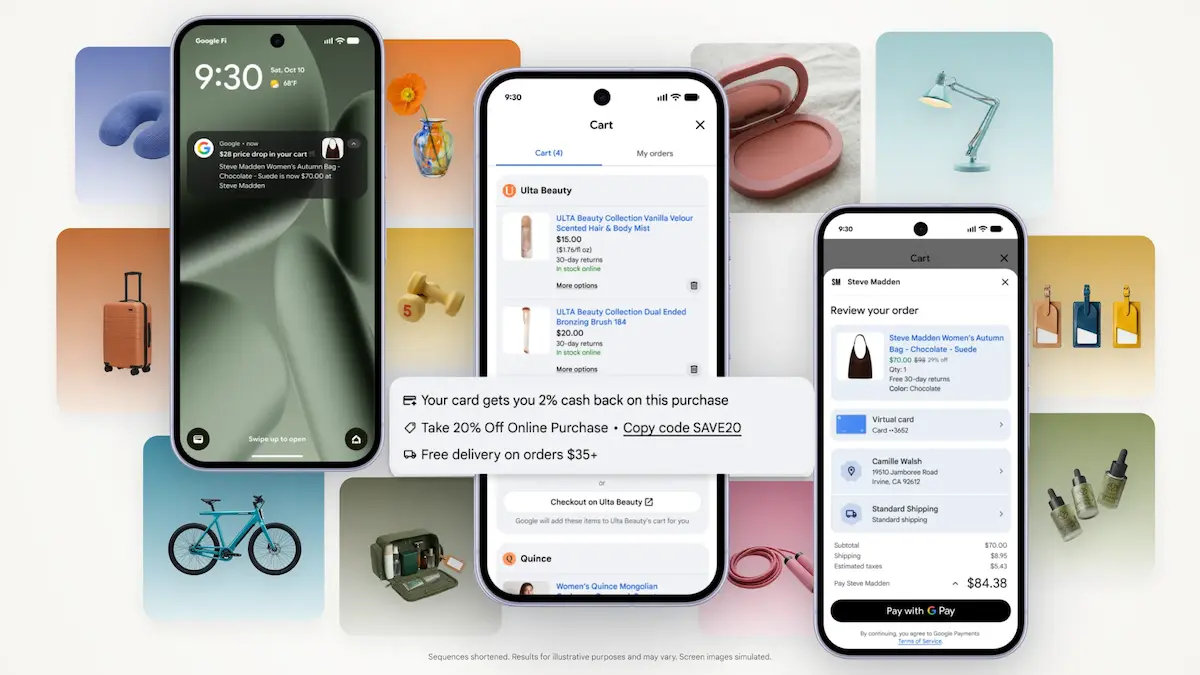
The landscape of digital commerce is undergoing a seismic shift, moving away from fragmented browser tabs and isolated retailer checkouts toward unified, AI-driven ecosystems. Google has officially announced the U.S. rollout of "Universal Cart," an ambitious tool designed to collect, monitor, and manage products discovered across Google Search and the Gemini app.
Initially previewed at the Google I/O developer conference in May, Universal Cart addresses one of modern e-commerce’s most enduring friction points: the disjointed nature of online browsing. By acting as a centralized, cross-retailer repository, the tool allows consumers to aggregate items from multiple disparate online storefronts into a single interface. When users return to continue their shopping journey, their items, price histories, and preferences remain intact, eliminating the need to hunt down previously viewed products or restart product research from scratch.
Beyond simple aggregation, Universal Cart serves as an active shopping assistant. It monitors inventory fluctuations, automatically alerts users to price drops, flags when out-of-stock items return to shelves, optimizes payment methods by evaluating credit card perks, and surfaces relevant promotional codes.
At the technological heart of this feature is Google’s Universal Commerce Protocol (UCP), an open standard introduced earlier this year designed to facilitate seamless interactions between AI agents and retailers across the entire purchasing funnel, including checkout.
The launch of Universal Cart is far from an isolated product update; it represents a calculated escalation in the tech industry’s high-stakes race toward "agentic commerce." As competitors like Amazon and OpenAI roll out their own AI-driven shopping agents, tech giants are racing to redefine chatbots from passive conversational utilities into active, transactional partners capable of navigating the web on behalf of the consumer.
Detailed Chronology: From Concept to Consumer Rollout
To understand the strategic significance of Universal Cart, it is essential to trace its development through Google’s product pipeline over the past year.
May: The Initial Preview at Google I/O
When Google first pulled back the curtain on Universal Cart during its annual I/O developer conference, the company framed it as a natural extension of its burgeoning artificial intelligence initiatives. For years, Google Search had functioned as a discovery engine—a place to research products, read reviews, and compare specifications. However, the actual act of purchasing remained heavily fragmented. Users would find a product via search, click through to a third-party retailer, navigate a new user interface, and either purchase immediately or abandon their cart, losing track of the item entirely.
Google I/O served as the proving ground for a new philosophy: what if the AI could maintain context across the entire web? Executives demonstrated how products found during conversational queries in Gemini or standard Search could be seamlessly tethered to a persistent, cross-platform cart. The reception among developers and e-commerce analysts was immediate, signaling a direct challenge to the traditional single-site shopping cart model.
Summer and Fall: The Integration of UCP and Agentic Features
Following the initial preview, engineering teams worked rapidly behind the scenes to integrate Universal Cart with Google’s broader ecosystem infrastructure. A critical component of this development phase was the refinement of the Universal Commerce Protocol (UCP).
While consumer-facing tools often capture the public imagination, open protocols like UCP are the invisible plumbing that makes agentic commerce possible. Traditional web scraping and automated checkout scripts are notoriously brittle, often breaking when retailers update their website layouts. UCP was built as an open standard to establish a standardized communication channel between AI agents and merchant platforms, ensuring that actions like checking stock, applying promotional codes, and processing checkouts could occur reliably and securely across disparate systems.
During this period, Google also began weaving Universal Cart into its broader suite of AI shopping tools, positioning it alongside conversational product discovery in Search’s AI Mode and specialized utilities like "Let Google Call"—an agentic tool that uses AI to telephone local brick-and-mortar stores to verify real-time inventory.
Today: The U.S. General Availability
With Thursday’s announcement, Universal Cart officially transitions from a developer preview to a consumer-ready utility available across the United States. U.S. users can now leverage the tool directly within Google Search and the Gemini app, marking the official opening salvo in Google’s commercialization of agentic shopping.
Supporting Context & Metrics: The Rise of Agentic E-Commerce
The launch of Universal Cart does not happen in a vacuum. It is a direct response to evolving consumer habits and a fierce competitive battleground involving the world’s most powerful technology companies.
The Problem of Digital Fragmentation
Modern online shopping is increasingly characterized by friction and fatigue. According to retail analytics data, the average consumer visits dozens of distinct digital touchpoints—ranging from social media discovery ads and video reviews to search engine queries and brand websites—before finalizing a purchase.
Historically, each retailer has guarded its own walled garden. A cart built on retailer A’s website stays on retailer A’s website. If a consumer wants to compare items across five different merchants, they must manage five distinct tabs, manually track price changes, and remember where they saw a specific SKU. Universal Cart attacks this fragmentation head-on by creating a neutral, AI-backed intermediary layer that abstracts away the individual merchant interfaces until the final moment of transaction.
The Competitive Landscape: Amazon, OpenAI, and Beyond
Google is far from alone in identifying the commercial potential of AI agents. The race for agentic commerce has ignited a multi-front war among tech titans:
- Amazon: As the reigning giant of e-commerce, Amazon has aggressively developed its own proprietary AI shopping agents. In early 2025, Amazon rolled out advanced agentic capabilities designed to autonomously shop third-party stores on behalf of users, leveraging its vast logistics network and Prime ecosystem to retain dominance.
- OpenAI: In late 2025, OpenAI escalated the competitive pressure by introducing agentic shopping systems designed to integrate directly with ChatGPT. By allowing users to discover, evaluate, and purchase products through natural conversation, OpenAI positioned itself as a direct threat to both Google’s search monopoly and Amazon’s retail dominance.
- Emerging Startups: Beyond the big tech oligopoly, a wave of venture-backed startups is building verticalized AI shopping assistants, focusing on hyper-personalized curation, automated coupon clipping, and cross-platform price arbitration.
Financial and Operational Impacts
For retailers, the rise of tools like Universal Cart and protocols like UCP represents both an opportunity and a vulnerability. On one hand, frictionless cross-platform discovery can drive higher conversion rates and capture high-intent buyers who might otherwise abandon complex checkouts. On the other hand, intermediating platforms like Google threaten to place themselves between the merchant and the end consumer, potentially eroding direct brand loyalty and shifting customer relationship ownership to the AI provider.
Official Statements and Industry Insights
In announcing the launch, Google executives emphasized the tool’s focus on utility, consumer empowerment, and seamless integration.
"The idea is to make online shopping easier to manage," Google noted in its official product release. "Find something you like, save it to your cart, and move on. When you return later, your items and shopping progress are still there, so you don’t have to hunt down the same products or start over."
Industry analysts have been quick to dissect the technical architecture enabling the rollout. The emphasis on the Universal Commerce Protocol (UCP) is seen by technology strategists as a crucial differentiator. By establishing an open standard rather than a purely proprietary closed loop, Google hopes to entice major merchant participation. Retailers are historically resistant to handing over checkout control to third-party tech platforms, but an open protocol that preserves merchant relationships while lowering friction for buyers presents a more palatable value proposition.
Furthermore, consumer advocacy groups and retail experts have pointed out the financial optimization features built into Universal Cart. By automatically factoring in credit card rewards programs—such as matching a specific purchase with a card offering 5% cashback on retail or rotating quarterly category bonuses—and aggressively surfacing verified promo codes, the tool shifts significant purchasing leverage back toward the consumer.
Future Outlook: What Universal Cart Means for the Future of Retail
As Universal Cart establishes its footing in the U.S. market, industry watchers are already looking ahead to the next phase of evolution for agentic e-commerce.
The Path to Full Autonomy
Today, Universal Cart serves primarily as an advanced collector, monitor, and checkout facilitator. However, the ultimate trajectory of agentic commerce points toward full autonomy. Future iterations of tools like Universal Cart and Gemini’s shopping assistants will likely move beyond human-in-the-loop confirmation.
Imagine a scenario where a user tells Gemini: "Find me a sustainable, high-performance coffee maker under $150, apply my available credit card rewards, secure the best discount code, and have it shipped to my house by Friday." An advanced agentic system would not only place the items in a Universal Cart but execute the entire end-to-end transaction without requiring the user to manually click "buy" across multiple verification screens.
Regulatory and Privacy Considerations
As AI agents gain deeper access to personal financial data, payment instruments, and purchasing histories, they will inevitably attract intense regulatory scrutiny. Questions surrounding data privacy, anti-competitive behavior, and algorithmic bias will dominate discussions in the coming years.
- Data Siloing vs. Open Protocols: Will dominant platforms use open standards like UCP to foster a genuinely interoperable ecosystem, or will they subtly favor their own integrated merchant partners?
- Financial Security: As AI agents handle payment orchestration and rewards optimization, securing these transaction pipelines against sophisticated cyber threats will become paramount.
Conclusion
Google’s rollout of Universal Cart marks a definitive turning point in how humanity interacts with the digital marketplace. By collapsing the distance between search and checkout, and by utilizing AI to manage the tedious minutiae of price tracking, inventory monitoring, and promotional code hunting, Google is laying the groundwork for a new era of commerce.
Whether Universal Cart ultimately becomes the definitive standard for online shopping or simply one combatant in a broader war of AI agents, one thing is clear: the traditional, tab-hopping, fragmented shopping experience of the past two decades is rapidly drawing to a close. The future belongs to the agent.









Belum ada komentar. Jadilah yang pertama berkomentar!