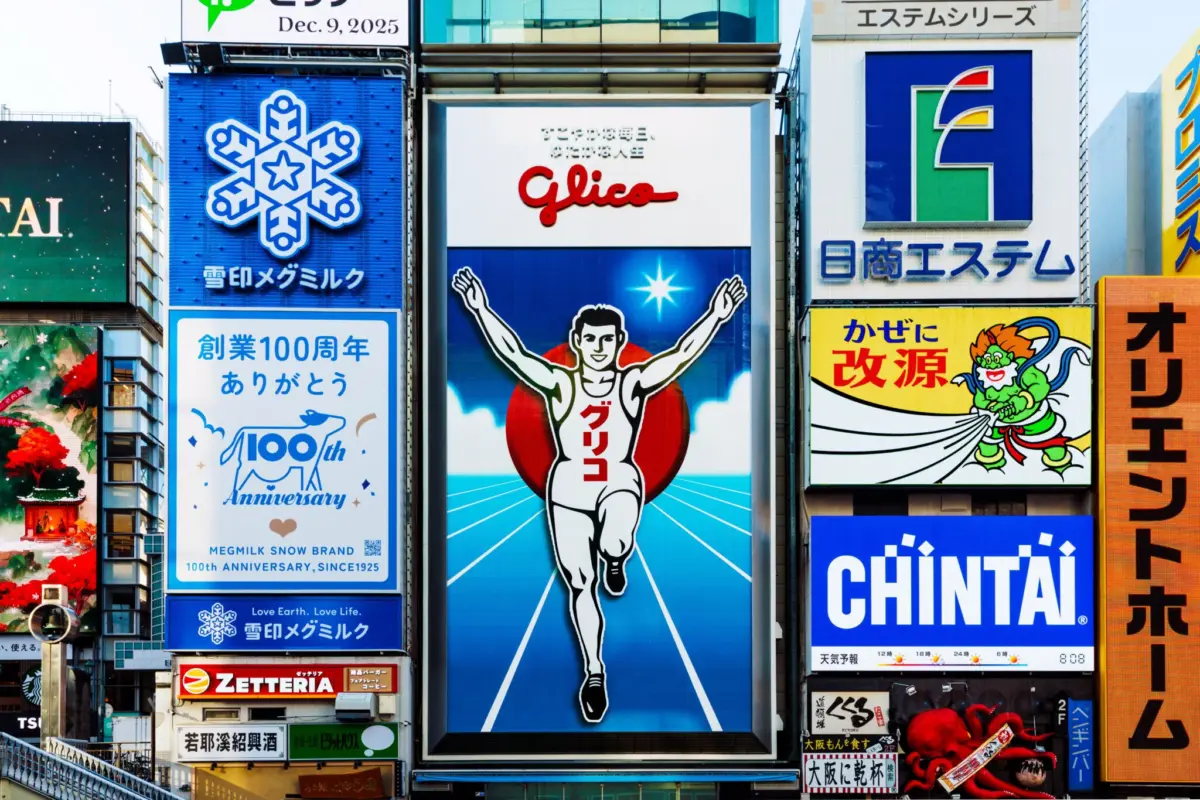
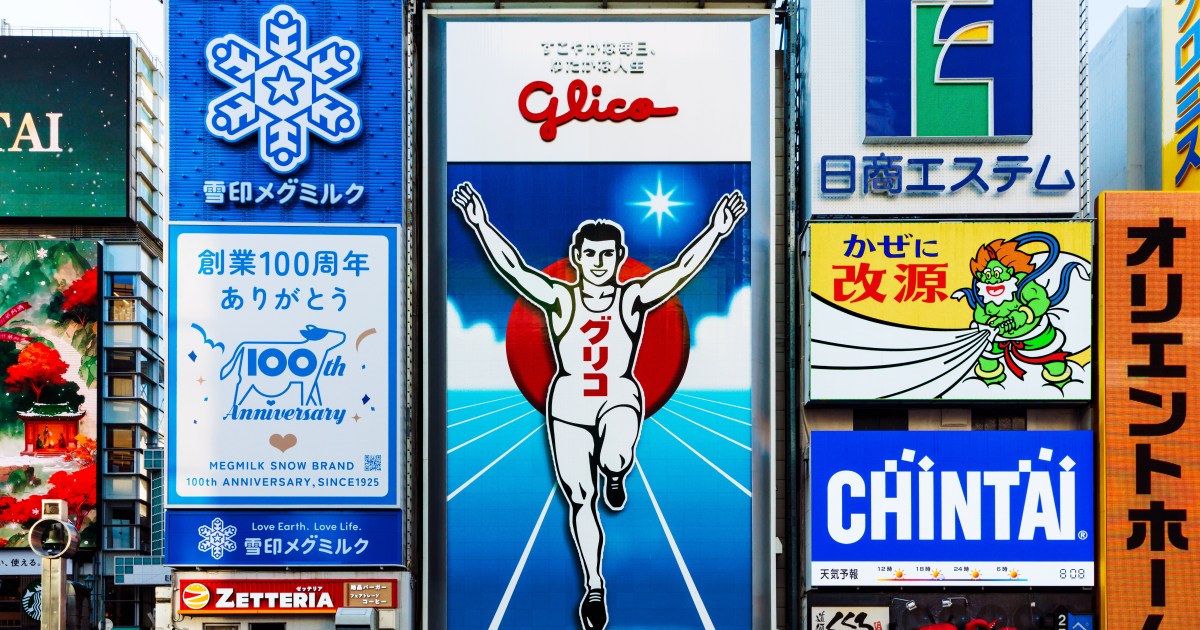
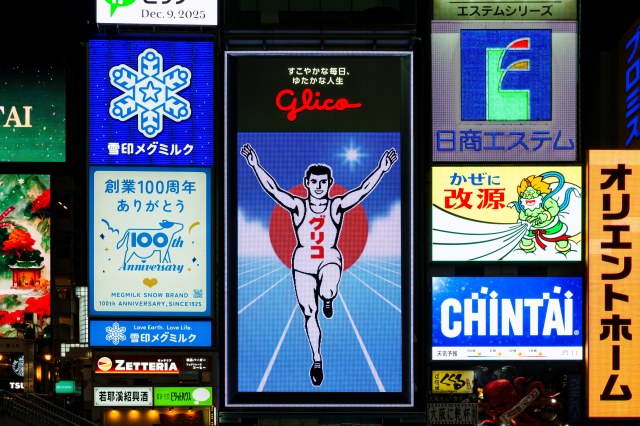
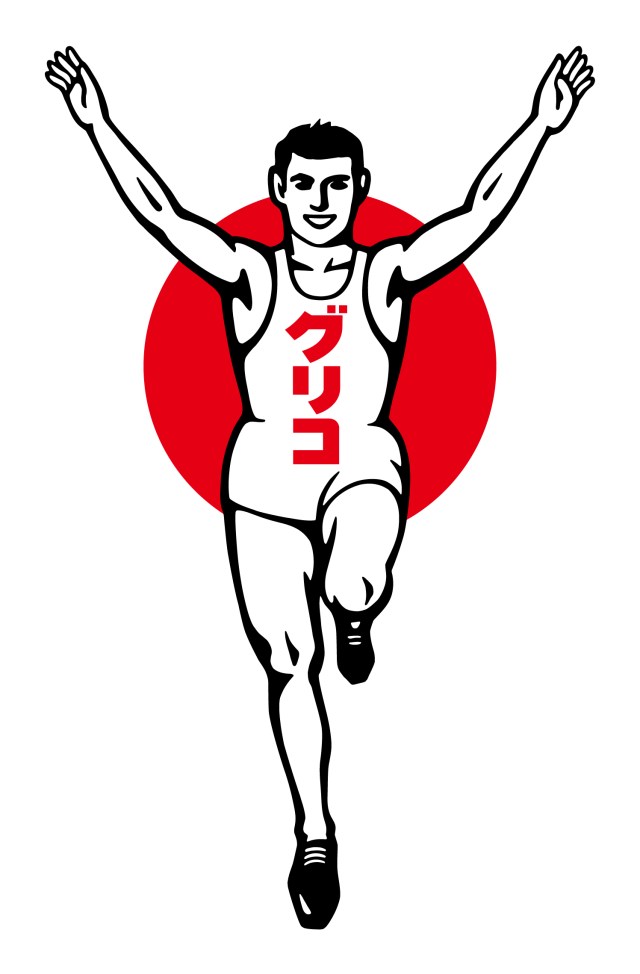
To millions of international travelers, domestic tourists, and local residents alike, the neon-lit expanse of Osaka’s Dotonbori district is inextricably linked to a single, triumphant image: a blue-clad athlete crossing a finish line with arms raised in victory. The Ezaki Glico "Running Man" sign, looming majestically over the Ebisubashi Bridge, is far more than a corporate billboard for one of Japan’s most cherished confectionery manufacturers—it is the beating cultural heart of western Japan’s largest metropolis.
However, a major page in Osaka’s modern history is about to turn. Ezaki Glico has officially announced that the current, sixth-generation iteration of the iconic signboard will be dismantled this winter. Following a multi-month hiatus for structural overhauls and technological upgrades, a seventh-generation successor is slated to debut in the spring.
For a landmark that reportedly draws an astonishing 70,000 to 80,000 visitors daily, the temporary disappearance of the Running Man marks a monumental moment for tourism, urban photography, and local heritage. This comprehensive report examines the announcement, traces the fascinating historical evolution of the Dotonbori landmark, analyzes its deep economic and cultural footprint, and looks ahead to what the next generation of Osaka’s most famous runner might bring.
Detailed Chronology: The Evolution of a Legend
The story of the Glico Running Man is a testament to the endurance of corporate branding intertwined with urban identity. Ezaki Glico, deeply rooted in Osaka since its founding 104 years ago in 1922, has used the signboard to reflect the changing technological capabilities and aesthetic tastes of nearly a century.
The Pre-War Pioneer (1935–1943)
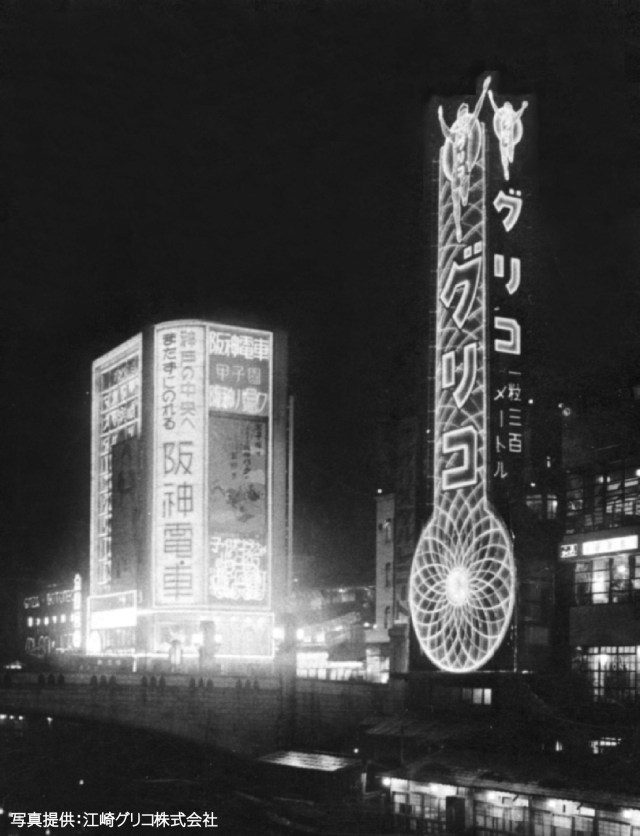
The saga began in 1935 when the very first Glico sign was erected beside the Ebisubashi Bridge. Towering at an imposing 33 meters (108 feet)—a staggering height for urban signage at the time—the initial design utilized cutting-edge neon lettering to dominate the night sky. It immediately captured the public imagination, transforming the canal area into a natural gathering spot. Tragically, this inaugural era was cut short in 1943, as the sign was systematically dismantled to reclaim vital metal and materials for the nation’s wartime mobilization efforts.
The Post-War Renaissance & The Piano-Playing Crocodile (1955–1963)
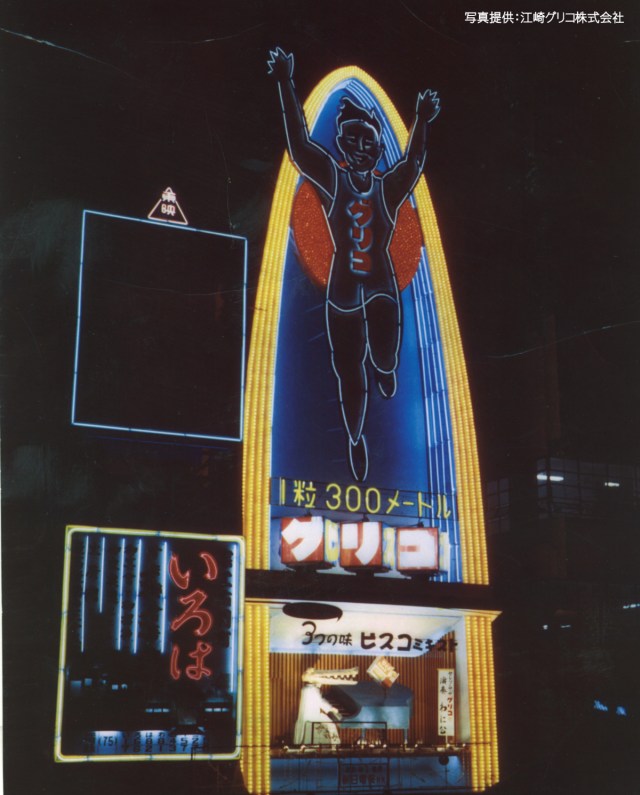
Following a decade-long absence in the wake of World War II, Glico returned to the Dotonbori canal in 1955 with its second-generation sign. This version pushed creative boundaries by introducing a theatrical stage element: beneath the running figure, a giant toy crocodile sat playing the piano. This whimsical addition set a precedent for the sign’s playful integration into the vibrant, comedic theater culture of Osaka.
The third-generation sign (1963–1972) took experiential marketing to unprecedented heights. Engineers installed an elaborate water fountain system featuring 150 distinct nozzles arranged in an arc around the runner. Pumping an impressive 12 tonnes of water, the display was illuminated by hundreds of synchronized colored lights, turning the canal into a dazzling kinetic art installation.
Modernization and the Track Era (1972–1996)
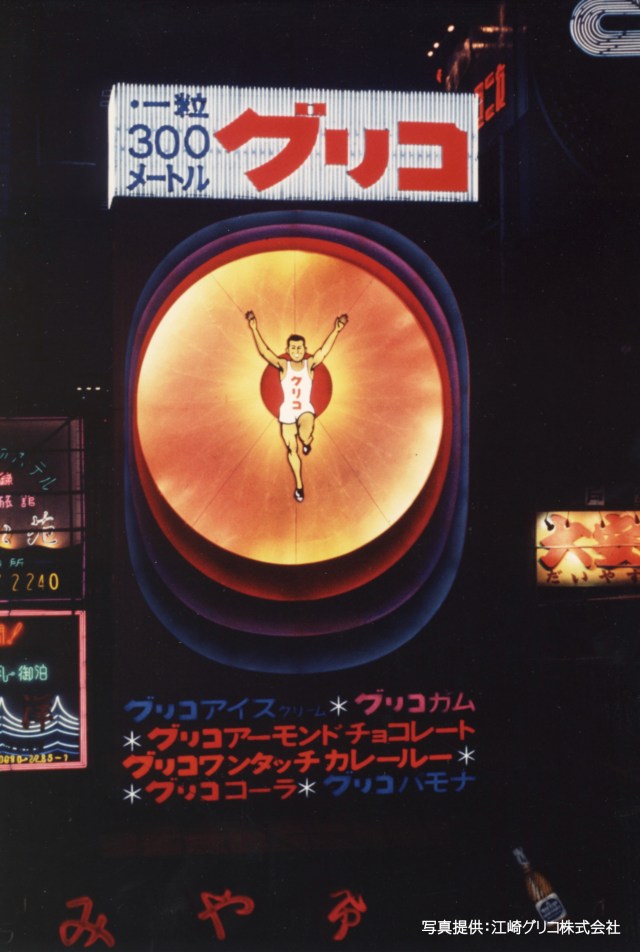
Spanning nearly a quarter of a century, the fourth-generation sign (1972–1996) laid the groundwork for the modern visual template, introducing the classic running track motif. While it provided decades of reliable service, urban development eventually forced its removal. When neighboring buildings underwent extensive structural renovations, the sign was powered down and dismantled, leaving Osaka entirely without its Running Man for a full year—a drought that local business owners and tourists deeply felt.
The Passage of Time (1998–2014)
The fifth-generation sign brought dynamic illumination technology to the forefront. Operating from 1998 to 2014, this iteration revolutionized the background imagery by dynamically shifting colors to simulate the passage of an entire day. Viewers watched as the runner seemingly raced through Osaka landscapes transitioning from the golden light of dawn, through the blazing afternoon sun, and into the deep indigo hues of night.
The LED Masterpiece (2014–Present)
Unveiled in the autumn of 2014, the current sixth-generation sign modernized the landmark for the digital age. Powered by approximately 140,000 high-efficiency LED lights, the sign expanded its narrative scope. Beyond cycling through times of day, the background animations began depicting the runner embarking on global journeys, traversing famous landmarks across Japan and around the world, reinforcing Glico’s international reach while maintaining its steadfast home in Osaka.
Supporting Context & Metrics: The Cultural and Economic Footprint
To fully understand the weight of Glico’s announcement, one must examine the staggering metrics that define the Ebisubashi Bridge vantage point.
Daily Footfall: Industry estimates indicate that between 70,000 and 80,000 people pass through or linger at the Ebisubashi Bridge viewpoint every single day. This makes the site one of the most densely populated tourist hubs in East Asia.
Economic Impact: The Glico sign serves as the gravitational center of Dotonbori’s retail, dining, and entertainment ecosystem. Millions of visitors drawn to the area for the iconic "arms-raised photo pose" subsequently spend billions of yen annually on local street food (such as takoyaki and okonomiyaki), dining, shopping, and souvenirs.
Global Digital Footprint: On platforms like Instagram, TikTok, and Google Maps, tags associated with the Glico Running Man generate millions of user-generated impressions annually. For international travelers, striking the pose in front of the neon runner is widely considered a mandatory rite of passage when visiting Japan.
Despite its commercial origins—promoting products like Pocky, Pretz, and Glico caramel—the sign has successfully transcended advertising. Sociologists and urban planners often cite the Running Man as a rare example of corporate architecture being successfully co-opted by the public as an authentic civic monument.
Official Statements and the Path to Winter Removal
The official announcement was delivered during a heavily attended press conference held in Osaka on October 14. Ezaki Glico representatives outlined the timeline for the transition and offered insights into the philosophy guiding the upcoming redesign.
Yoriko Miki, a key corporate representative for Ezaki Glico, addressed the media directly to contextualize the impending changes.
"The running man represents not only the foundational spirit of our company, but also our enduring corporate purpose: helping people enjoy ‘Healthy days, a fulfilling life,’" Miki told reporters. "While the current signboard has served us wonderfully since 2014, the time has come to look to the future. We promise that the runner will remain the undisputed main attraction of the new installation."
Glico confirmed that physical deconstruction and construction work on the signboard will officially commence in December. The sixth-generation sign will remain lit throughout the autumn months, giving local residents and fall travelers a final window to capture memories with the current LED display.
As for the specific aesthetics, technical specifications, and interactive features of the upcoming seventh-generation sign, Glico has maintained a strict veil of secrecy. Company executives have hinted that while cutting-edge display technologies will be utilized to enhance visual clarity and interactivity, the core silhouette and emotional resonance of the original runner will be preserved out of respect for its historic legacy.
Future Outlook: What to Expect Next
The announcement has triggered a wave of bittersweet nostalgia across Japan, echoing public conversations sparked by recent high-profile character transitions in the country—such as the much-discussed "graduation" of Tokyo’s Suica Penguin mascot.
With the sixth-generation runner’s days officially numbered, tourism officials in Osaka are anticipating a surge in domestic and international visitors traveling to Dotonbori this autumn to pay their respects. Social media campaigns encouraging users to share their favorite vintage photos of the sign under the hashtag #SayonaraRunner6 have already begun gaining traction.
If construction proceeds according to schedule, the new seventh-generation Glico Running Man sign is scheduled to be unveiled in March 2027. Until then, the Ebisubashi Bridge will experience a quiet winter, standing without its most famous guardian for the first time in over a decade.
For travelers planning a trip to Osaka this winter, the message from local tourism boards is clear: make your way to Dotonbori immediately to capture your final photographs, and prepare to witness the dawn of a brand-new era when the Running Man returns to the skyline next spring.











Belum ada komentar. Jadilah yang pertama berkomentar!