

Executive Overview
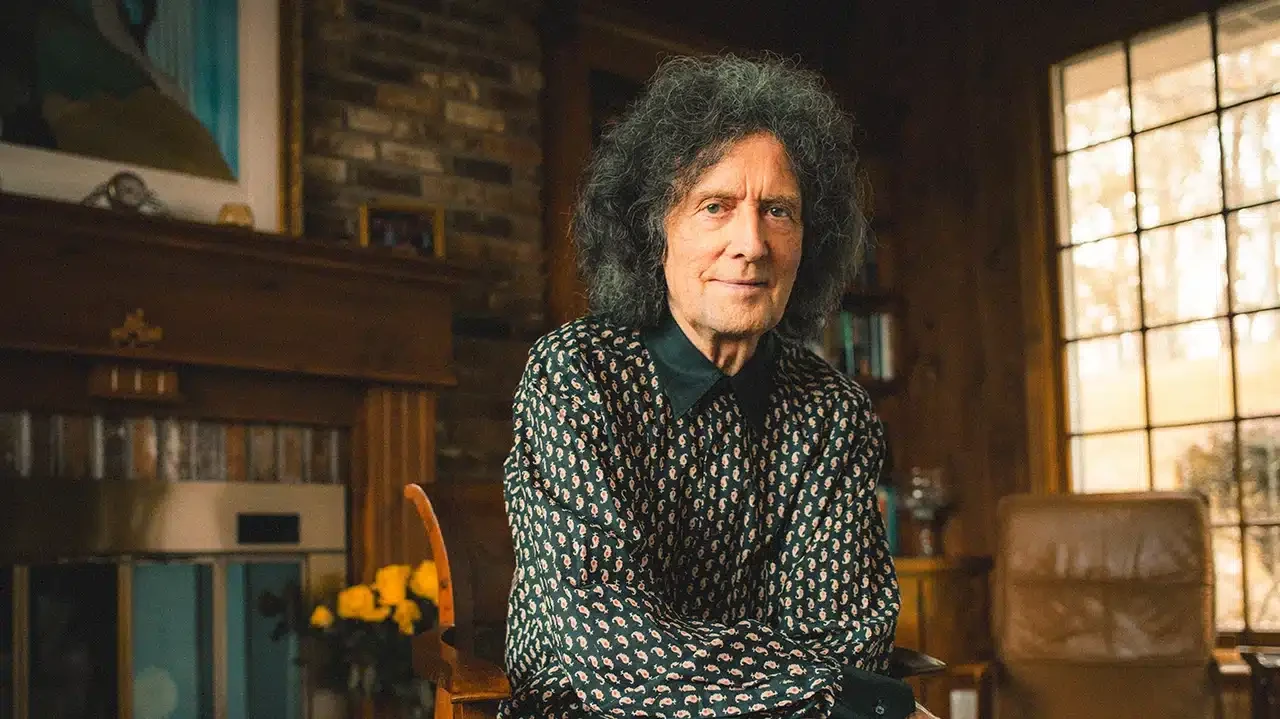
For decades, the name Gilbert O’Sullivan has conjured images of piano-driven pop perfection, melodic brilliance, and an unmistakable lyrical wit. Sitting in a luxurious Dublin hotel room, flanked by the quiet hum of Sky News on a muted television and a keyboard sitting within arm’s reach, the legendary singer-songwriter reflects on a career that spans well over half a century. Approaching his 80th birthday in December, O’Sullivan possesses the creative hunger and drive of an artist half his age.
His latest studio album, On the Record, stands as a testament to this unwavering vitality. Featuring emotional highlights like the fragile duet “Is That You?” with Andrea Corr, the record showcases an artist who refuses to be pigeonholed. Whether discussing his unique habit of de-tuning pianos, his historical connections to members of Supertramp, or his fiercely guarded Irish identity—cemented by receiving the Freedom of Waterford City and County in 2024—O’Sullivan remains an uncompromising musical force. This profile explores his rich history, his creative process, and the timeless philosophy that continues to fuel his enduring career.
Detailed Chronology
The Early Years and Musical Foundations
Long before chart-topping singles like “Alone Again (Naturally),” “Clair,” and “Get Down” made him a household name across the globe, a young Gilbert O’Sullivan was cutting his teeth in the fertile musical grounds of the 1960s. Raised in Waterford before moving to Britain, his early artistic life was shaped by the seismic cultural shift of the British Invasion.
When the Beatles first broke onto the scene, O’Sullivan eagerly picked up the guitar. However, a comical hurdle stood in his way: his mother strictly forbade him from playing left-handed, despite it being his dominant side. Realizing the futility of fighting domestic tradition, he adapted his musicality toward the piano, developing a style so rhythmic and dynamic that he often approached the keys with the percussive instincts of a guitarist.
The Supertramp Connection
Before achieving solo stardom, O’Sullivan’s path crossed with Rick Davies, who would go on to found the legendary progressive pop-rock band Supertramp. In the mid-1960s, the two musicians joined forces in a band alongside a guitarist and a bassist.
"Rick was working on a farm, then a factory; up at six in the morning. I was cleaning windows, so we wanted to become professional," O’Sullivan recalls with a grin.
While the band ultimately dissolved because the other members clung to their safer, trade-based apprenticeships, O’Sullivan and Davies maintained a mutual respect. When O’Sullivan found sudden, massive success with his 1970 breakthrough single “Nothing Rhymed,” he paid it forward. On his second record, he invited Davies and Supertramp to mime on Top of the Pops and had Davies play on his record, offering a vital early boost to the band that would later define 1970s art-rock. Davies’ passing in 2025 permanently closed the door on any potential future reunions, marking the end of a foundational era in O’Sullivan’s musical journey.
The Evolution of a Catalogue
Throughout the 1970s and 1980s, O’Sullivan cemented his legacy as a master craftsman of pop melody. Hits like “Matrimony” and “No Matter How I Try” showcased his knack for narrative-driven lyrics and instantly memorable hooks. Yet, unlike many of his contemporaries who chased modern digital trends, O’Sullivan remained steadfastly committed to organic, live-in-the-room instrumentation.
This philosophy carried him through decades of shifting musical landscapes, culminating in recent critically acclaimed works produced in collaboration with modern luminaries like Ethan Johns, bridging the gap between classic 1960s craftsmanship and contemporary production values.
Supporting Context & Metrics
The Mechanics of Sound: De-Tuned Pianos and Vocal Delivery
One of the most fascinating revelations about O’Sullivan’s artistic process involves his instruments. Ask him if his vocal delivery has dropped in pitch over the years—as is common for aging rock and pop icons like Paul McCartney or Rod Stewart—and he will pivot to an entirely unique technical quirk.
"Every piano I have ever owned is a semi-tone below concert pitch," O’Sullivan explains.
When he moved to London in 1967 to break into the music business, he managed to squeeze an upright piano into a tiny bedroom he shared with two roommates. Unable to afford a professional piano tuner—which cost a steep £10 at the time—he left it out of tune. That happy accident set a lifelong precedent. Today, the vast majority of his songs are composed and performed on pianos kept deliberately below standard concert pitch.
When it comes to recording vocals, O’Sullivan rejects the modern industry standard of piecing together a track line-by-line, a meticulous technique famously favored by artists like Dusty Springfield due to nervous perfectionism. Instead, O’Sullivan tracks live:
"I do one take, and Andy, my producer, will ask for another, and then I’ll do a third. He will take those three, and get the best parts."
He draws a parallel to John Lennon, who famously hated hearing his own voice and despised the double-tracking pushed by producer George Martin. O’Sullivan, however, mastered double-tracking during his early sessions, utilizing it to add commercial sheen without relying on headphones or digital manipulation, resulting in the rich vocal textures heard on classics like "No Matter How I Take It" and "Nothing Rhymed."
Creative Independence in Jersey
For over a decade, O’Sullivan has made his home on the island of Jersey. Free from motorways and the sensory overload of bustling metropolises, the island provides the ultimate sanctuary for his craft.
"It does in that it gives me room to write," he confirms. "I don’t drive, and there’s no motorways in Jersey. I’m not a socializer, and like being alone. That was always good for my writing."
Having built a purpose-from-the-ground-up studio equipped with live rooms and analog-digital hybrid capabilities, O’Sullivan operates entirely on his own terms, hosting trusted collaborators like Ethan Johns away from the frantic pace of the commercial music machine.
Official Statements
On Identity and Roots
Despite living in Britain and Jersey for the majority of his adult life, O’Sullivan’s heart remains firmly tethered to Ireland. That bond was formally recognized in 2024 when he was granted the prestigious title of Freedom of Waterford City and County.
"It’s my place of birth," he smiles, visibly moved. "It was a great honour to get the ‘Freedom of City’. I feel a great connection to the place."
This deep-rooted identity has frequently bled into his songwriting, inspiring socially conscious and culturally observant power ballads like “The Luck of the Irish” and “Divorce Irish Style.” He admits a lingering frustration that reviewers historically overlooked the nuances of these specific compositions, yet his pride in his heritage remains entirely unshaken.
On Aging and Modern Relevance
Approaching his landmark 80th birthday, O’Sullivan is fiercely protective of his generation’s cultural footprint. Alongside peers like Paul McCartney, Bob Dylan, and members of The Who, he views his demographic not as relics of the past, but as active participants in ongoing musical history.
Addressing themes of mortality on his latest record, he points out tracks like “See Us Gone,” which touches on global anxieties and the terrifying prospect of modern warfare, while firmly rejecting the notion that his upbeat anthem “Growing Old Disgracefully” is a somber meditation on decline.
"There’s optimism on that one in being old," he insists. "I’ll be 80 in December. All that generation… we are still out there. Dylan doesn’t have a great voice, but it’s distinctive, and I don’t have a great voice, but it’s distinctive. I think there’s something better because of that."
Future Outlook
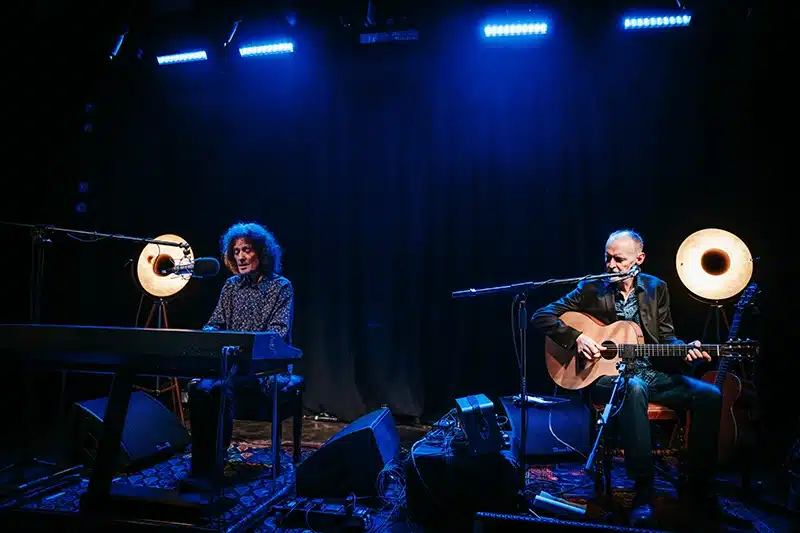
As Gilbert O’Sullivan prepares for an intimate, stripped-back live performance in Dublin alongside longtime guitarist Bill Shanley, his momentum shows zero signs of slowing down. Rather than leaning exclusively on nostalgia, his current live set weaves iconic global anthems like "Alone Again (Naturally)" and "Matrimony" with fresh, lyric-forward material from On the Record.
The music industry has evolved in unimaginable ways since O’Sullivan first started cleaning windows in London and hammering out demos on de-tuned pianos. Yet, his commitment to organic musicianship, distinct vocal delivery, and uncompromising artistic integrity ensures his continued relevance.
As long as he remains fit, healthy, and behind a keyboard, Gilbert O’Sullivan will continue to write, record, and perform. Popular music owes him a debt far greater than he could ever owe it—and with On the Record, he proves that the final chapter of his storied career is still unspooling in real time.






Belum ada komentar. Jadilah yang pertama berkomentar!