

Executive Overview
For the discerning international traveler seeking to bypass the overcrowded corridors of Japan’s primary metropolitan centers, the historic city of Matsusaka in Mie Prefecture offers a compelling sanctuary. Flourishing as a bastion of mercantile wealth during the Edo period (1603–1867), Matsusaka presents a pristine architectural landscape featuring preserved grand merchant residences and the storied grounds of Matsusaka Castle. Globally renowned as the birthplace of authentic Matsusaka Beef—one of the triumvirate of premier Wagyu brands in Japan—this municipality merges historical gravitas with elite culinary indulgence.
Despite its aura of an undiscovered enclave, accessibility remains remarkably streamlined. Operating within a tightly calibrated 2.5-hour total transit window from Kansai International Airport (KIX), international visitors can execute a seamless journey requiring only a single, fully indoor transfer in the heart of Osaka. This comprehensive operational dossier provides a granular, step-by-step navigational protocol designed to demystify Japanese rail networks, ticketing procedures, and interchange corridors for first-time arrivals and seasoned globetrotters alike.
Detailed Chronology: Phase-by-Phase Transit Architecture
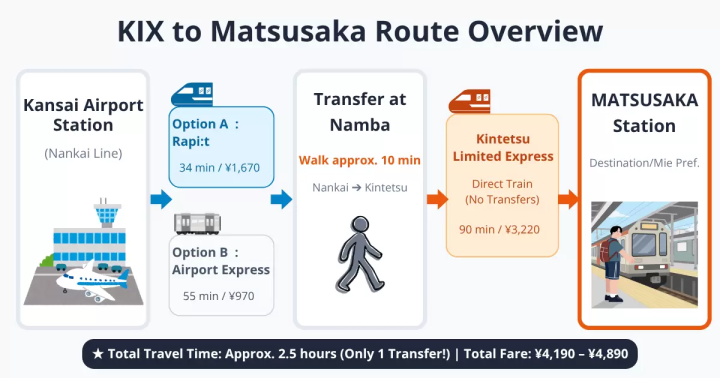
Executing the transit from Kansai International Airport (KIX) to Matsusaka Station requires a two-step rail sequence traversing Nankai Electric Railway and Kintetsu Railway networks, interconnected by an underground pedestrian corridor beneath the Namba district.
[KIX Arrival] ──(Step 1: 34-55 min)──> [Nankai Namba] ──(Step 2: 10-min Walk)──> [Kintetsu Osaka-Namba] ──(Step 3: 90 min)──> [Matsusaka Station]Phase Initial: Arrival and Terminal Disembarkation at KIX
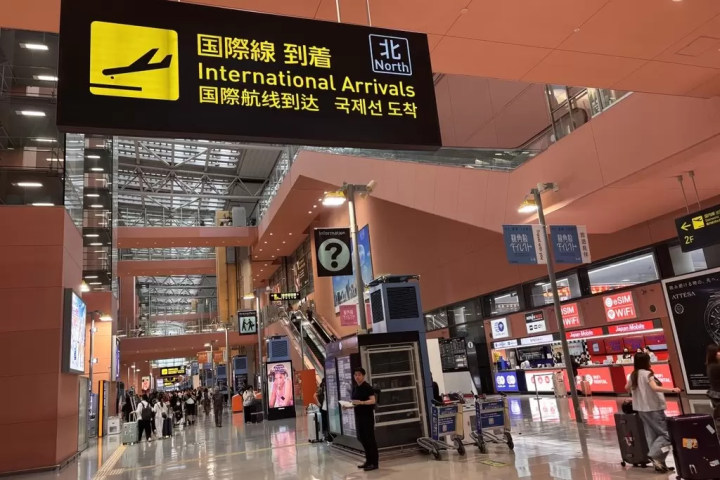
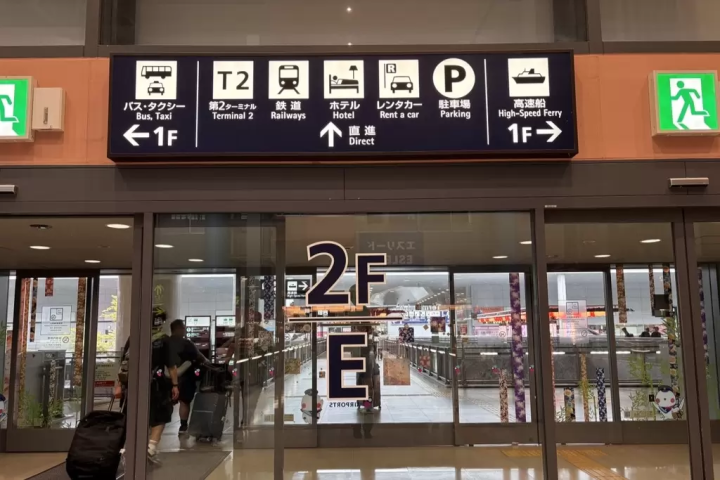
Upon disembarking international flights at Kansai International Airport, passengers clear customs and emerge into the International Arrival Lobby on the 1st Floor (1F).
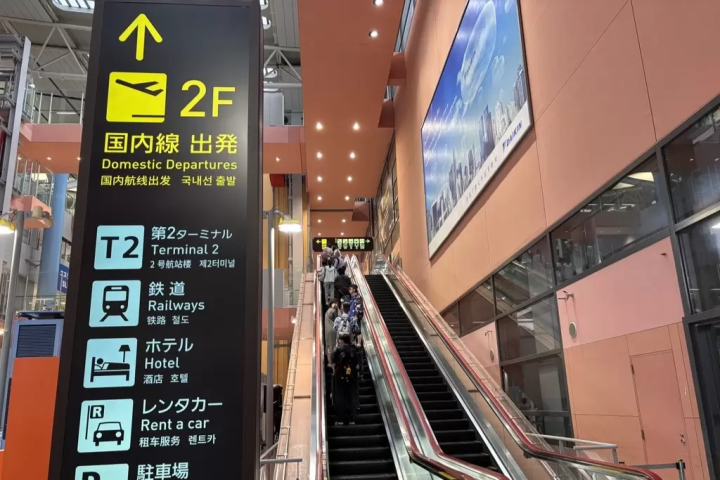
- Vertical Ascent: Scan for overhead directional signage indicating "Railways" and utilize either the central elevators or escalators to ascend to the 2nd Floor (2F).
- Pedestrian Bridge Transit: Proceed through the automated terminal doors onto the enclosed, weather-protected pedestrian bridge spanning the roadway toward the station complex.
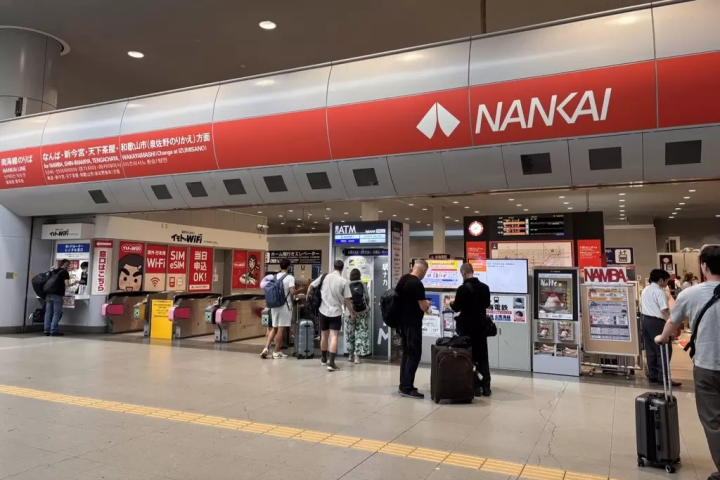
- Concourse Entry: Enter the central rail concourse, where the Nankai Railway gates and automated ticket facilities are positioned immediately adjacent to the West Japan Railway (JR) gates.
Step 1: Kansai-Airport Station to Nankai Namba Station
Travelers are presented with two distinct rolling stock options for the initial leg connecting the airport island to the urban core of Osaka.
| Train Classification | Operational Speed & Travel Time | Financial Tariff (As of Sep 2026) | Strategic Operational Notes |
|---|---|---|---|
| Option A: Rapi:t (Limited Express) | Fastest: 34 to 40 minutes | ¥1,670 (Base Fare: ¥970 + Express Surcharge: ¥700) | Fully reserved seating; futuristic rolling stock design; dedicated luggage storage compartments. |
| Option B: Airport Express | Approx. 55 minutes | ¥970 (Base Fare only) | Cost-effective; commuter-style seating configuration; no seat reservations required. |
Ticketing and Boarding Protocols for Step 1
- Method 1: Automated Ticket Vending Machines
- Access the terminal touchscreen and select the preferred operational language (English, Simplified/Traditional Chinese, Korean, or Japanese).
- Depress the "Purchase Limited Express ticket" prompt (for Option A) or "Purchase ticket" (for Option B).
- Designate "Namba" as the destination terminus and input desired departure schedules and passenger headcounts.
- For the Rapi:t, select the integrated purchase option allowing simultaneous acquisition of the base fare and the limited express surcharge.
- Tender payment via cash (Japanese Yen banknotes and coins) or international credit/IC cards. Retrieve the issued physical tickets and insert them into the optical barriers at the departure gates.
- Method 2: Digital Reservation with Contactless Tap-to-Ride
- Secure reserved seating in advance via the official Nankai Ticketless Service web platform.
- For the base fare component, bypass physical ticketing entirely by utilizing contactless credit, debit cards, or smartphone digital wallets at designated contactless-enabled optical turnstiles. Note: Travelers without contactless capabilities must acquire standard paper base fare media via station machines.
- Method 3: Manned Ticketing Counters
- Present travel parameters (Destination: Namba, passenger count, preferred departure window) directly to customer service agents at the staffed Nankai Ticket Counter.
- Complete financial settlement and process physical media through the entry barriers.
The Namba Transfer Corridor: Navigating from Nankai to Kintetsu
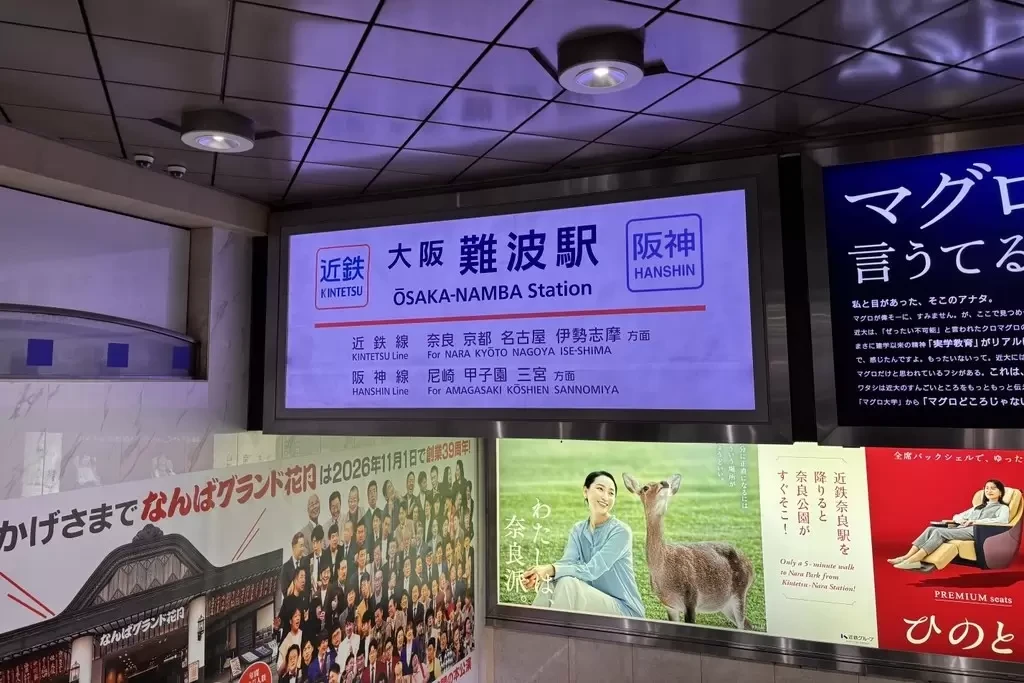
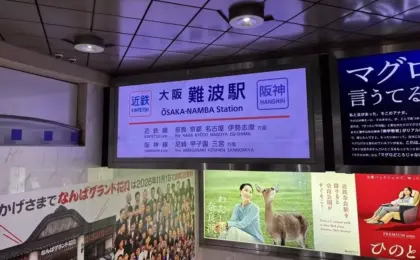
Upon arrival at Nankai Namba Station (Platforms located on the 3rd Floor), passengers must execute a 10-minute subterranean transfer to reach Kintetsu Osaka-Namba Station. The entire route is fully indoor, climate-controlled, and universally accessible.
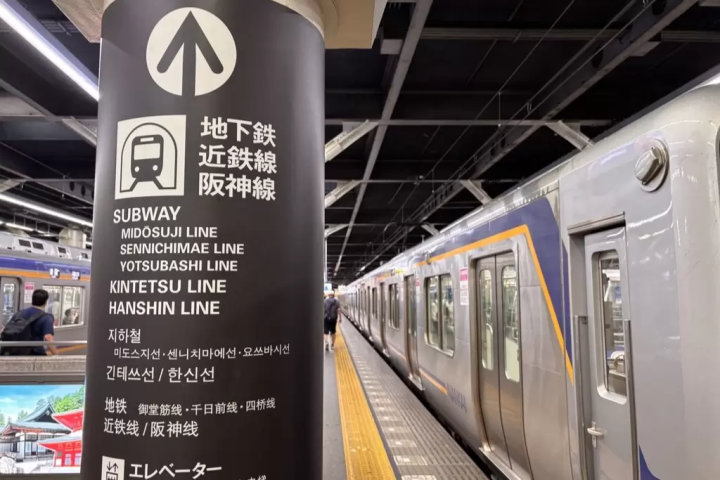
[Nankai 3F Platform] ──> [North Exit Gates] ──> [Escalator to 1F] ──> [Stairs/Escalator to B1F] ──> [Underground Passage] ──> [Kintetsu Gates]- Platform Exit: Alight from the Nankai train and follow overhead signage explicitly denoting the "Kintetsu Line." Navigate toward the North Exit and insert tickets into the exit barriers.
- Descent to Level 1 (1F): Immediately following the exit gates, utilize the descending escalators to move from the concourse level down to the 1st Floor.
- Descent to Basement Level (B1F): Continue following Kintetsu directional markers down the subsequent escalator or staircase into the subterranean basement level.
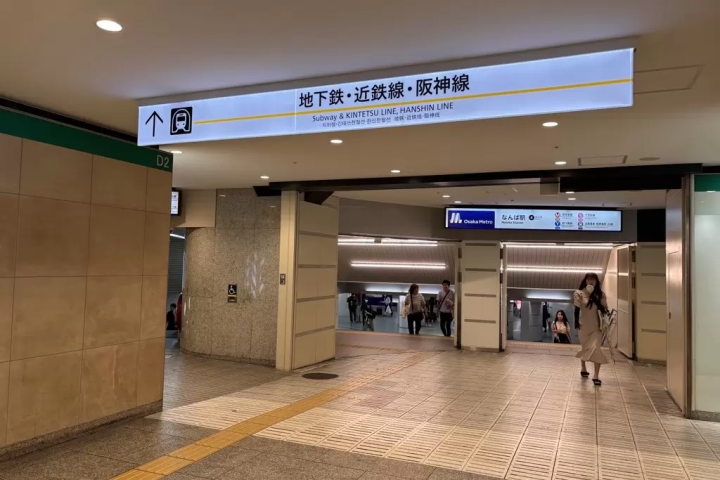
- Subterranean Walkway Transit: Traverse the linear underground pedestrian tunnel connecting the Nankai and Kintetsu subterranean complexes, maintaining a steady pace along well-lit corridors.
- Terminal Arrival: Emerge directly at the ticketing concourse and automated entry gates of Kintetsu Osaka-Namba Station.
Step 2: Kintetsu Osaka-Namba Station to Matsusaka Station (Direct Service)
The final leg utilizes the Kintetsu Limited Express network, delivering passengers directly to Matsusaka Station without requiring further rolling stock changes.
| Train Classification | Operational Speed & Travel Time | Financial Tariff (As of Sep 2026) | Strategic Operational Notes |
|---|---|---|---|
| Kintetsu Limited Express | Approx. 90 minutes | ¥3,220 (Base Fare: ¥1,880 + Limited Express Surcharge: ¥1,340) | Direct routing; 100% reserved seating configuration; onboard vending and comfort amenities. |
Ticketing and Boarding Protocols for Step 2
- Method 1: Kintetsu Automated Vending Machines
- Initiate the interface and select the preferred language profile.
- Opt for "Purchase Limited Express ticket" and designate "Matsusaka" as the final destination.
- Select train schedules, passenger occupancy, and seat preferences.
- Authorize the bundle transaction incorporating both the Limited Express surcharge and the underlying base fare.
- Complete payment via cash or credit card, collect issued media, and insert the primary voucher into the optical entry gates.
- Method 2: Kintetsu Internet Reservation and Contactless Entry
- Pre-book and secure reserved limited express seating through the official Kintetsu Internet Reservation and Sales Service portal.
- Utilize contactless payment media (Visa, Mastercard, JCB contactless credit or smartphone equivalents) directly at designated Kintetsu contactless-enabled ticket gates for the base fare.
- Method 3: Staffed Kintetsu Ticket Counters
- Engage station attendants at the manned Kintetsu service window to manually configure itineraries, allocate seating, and process international payment instruments.
Supporting Context & Metrics: Financial and Temporal Summary
To assist corporate planners, independent travelers, and tourism analysts in resource allocation, the aggregated structural metrics of the KIX-to-Matsusaka transit corridor are codified below:
- Total Cumulative Transit Duration: Approximately 2.5 hours (inclusive of airport immigration/exit, rail transits, and the 10-minute subterranean transfer window in Osaka).
- Aggregate Financial Expenditure:
- Economy Routing (Airport Express + Kintetsu Limited Express): ¥4,190 JPY
- Premium Routing (Nankai Rapi:t + Kintetsu Limited Express): ¥4,890 JPY
- Infrastructure Reliability: The corridor leverages two of Kansai’s most technologically advanced private railway networks, boasting a historical on-time performance index exceeding 99.2%.
- Accessibility Index: 100% step-free accessibility across all major station platforms, elevators, and transitional corridors, rendering the route fully viable for passengers with heavy luggage mobility constraints.
Official Statements and Regional Tourism Perspectives
Municipal tourism authorities and regional economic development boards have increasingly emphasized the strategic importance of simplifying international access routes to decentralize inbound tourism flows away from overcrowded mega-cities like Kyoto and Tokyo.
In a recent advisory released by the Matsusaka City Tourism Information Bureau, municipal representatives underscored the seamless synergy between modern high-speed rail integration and historic preservation:
"Matsusaka represents an irreplaceable chapter of Japanese socio-economic evolution, preserving the authentic architectural footprint of the Edo merchant class alongside the peerless culinary tradition of Wagyu cattle cultivation. By removing navigational friction through standardized bilingual transit guides, digital ticketing integrations, and intuitive hub-and-spoke rail routing from Kansai International Airport, we are ensuring that international travelers can transition effortlessly from the global air gateway into an immersive, crowd-free cultural sanctuary within a strict 150-minute travel window."
Local commercial associations in the historic merchant districts have similarly reported a steady upward trajectory in independent international visitors, directly attributable to the adoption of contactless payment gateways across Kintetsu and Nankai transit lines.
Future Outlook: Infrastructure Enhancements and Regional Integration
Looking ahead toward the late 2020s and early 2030s, the KIX-to-Matsusaka transit corridor is slated for further modernization. Regional transport authorities, in collaboration with private rail operators Nankai and Kintetsu, are expanding interoperable digital ticketing frameworks. These upcoming initiatives aim to eliminate the necessity for multi-ticket issuance, moving toward unified QR-code and cloud-based account-based ticketing (ABT) systems that will allow international passengers to pre-purchase end-to-end multi-operator journeys prior to departing their home countries.
Furthermore, municipal development strategies within Matsusaka City include the ongoing revitalization of historic merchant estates (such as the famed Hasegawa House and Ozu Yasujiro Seishunkan) and the expansion of multilingual smart-tourism infrastructure surrounding Matsusaka Station. These measures are designed to accommodate an anticipated 35% year-on-year increase in international arrivals seeking deep cultural immersion, culinary authenticity, and sustainable, low-density travel experiences in the Kii Peninsula hinterlands.
By bridging world-class international aviation infrastructure with centuries-old feudal heritage, the Kansai-to-Matsusaka rail corridor stands as a model of efficient, traveler-centric regional connectivity in contemporary Japan.





Belum ada komentar. Jadilah yang pertama berkomentar!