

Executive Overview
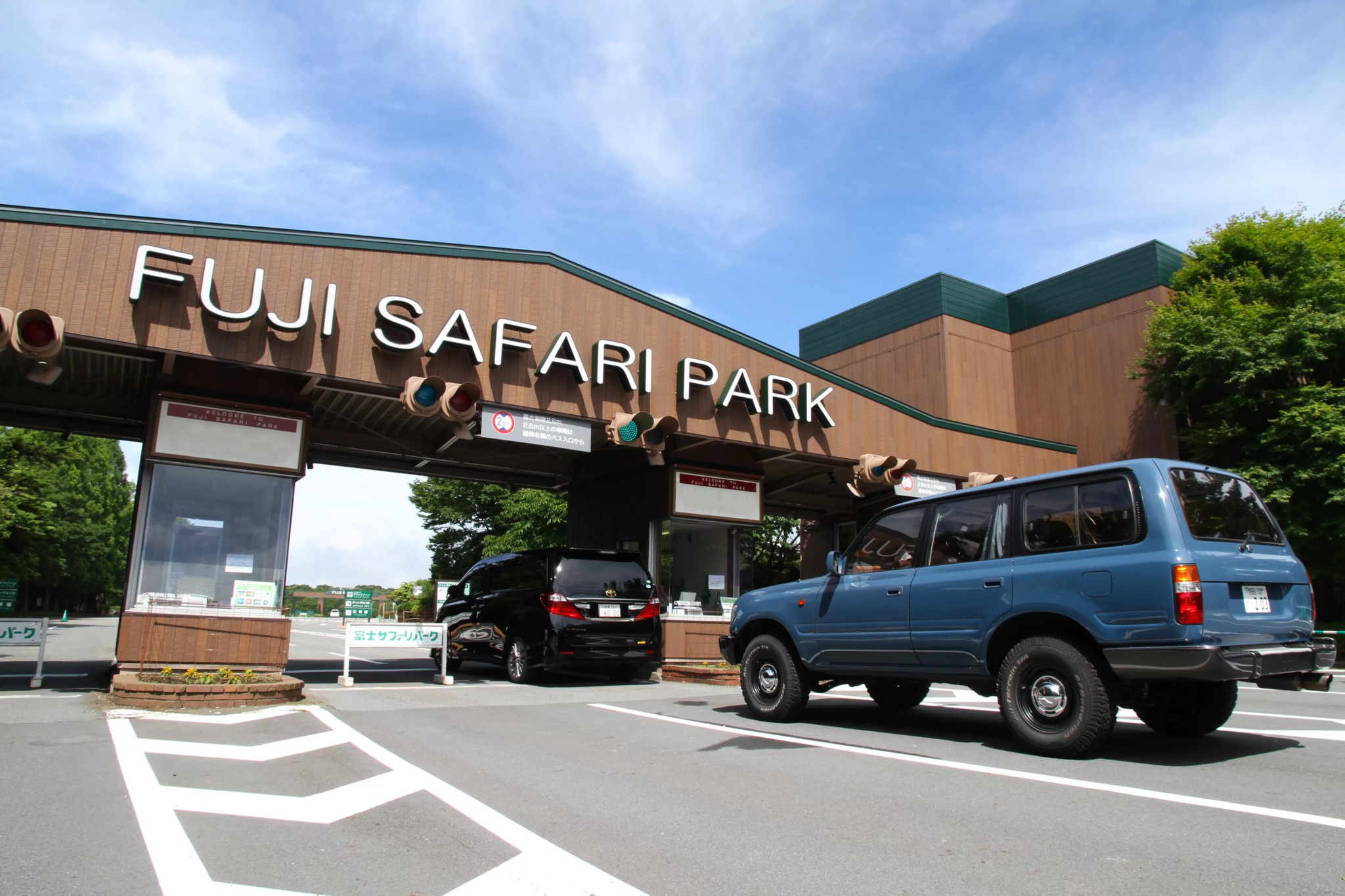
Set against the majestic, snow-dusted backdrop of Mt. Fuji in Shizuoka Prefecture, Fuji Safari Park stands as one of Japan’s premier and most expansive wildlife facilities. Spanning vast, naturalistic terrain, the park serves as a sanctuary for approximately 900 animals representing some 60 distinct species. From apex predators like lions, tigers, and cheetahs to towering giraffes, lumbering elephants, and specialized mountain herbivores, the park provides an environment designed to mirror the natural habitats of its residents as closely as possible.
For visitors seeking an immersive, adrenaline-fueled encounter with nature, nothing compares to the park’s signature attraction: the Jungle Bus. These specially modified, animal-themed touring vehicles feature reinforced wire-mesh sides that replace traditional glass windows, bringing passengers within a mere 20 centimeters of some of the planet’s most formidable creatures.

This comprehensive report examines every facet of the Fuji Safari Park experience—from logistical planning, ticket pricing structures, and advanced booking strategies to an in-depth chronological walkthrough of the Safari Zone zones and the meticulous safety protocols that govern the world-famous animal-feeding excursions.
Detailed Chronology: A Step-by-Step Guide to Your Safari Adventure
To maximize a visit to Fuji Safari Park, travelers must navigate a carefully orchestrated sequence of operational checkpoints, ticketing procedures, and zone transitions. Below is the chronological breakdown of a standard visitor’s journey through the park.

Phase 1: Arrival and Toll Booth Processing
Your journey begins the moment your vehicle approaches the entrance toll booth of Fuji Safari Park. Here, visitors must pay the mandatory general admission fee, which grants access to both the Safari Zone and the Interaction Zone.
Standard admission rates at the gate are structured as follows:

- Adults (High school students and above): 3,200 JPY
- Seniors (Ages 65 and above): 2,500 JPY
- Children (Ages 4 to junior high school): 2,000 JPY
- Toddlers (Ages 3 and under): Free of charge
Payment at the toll booth can be settled via cash or major credit cards. However, savvy travelers looking to optimize their budget frequently utilize the park’s digital infrastructure prior to arrival.
Phase 2: Parking and Jungle Bus Ticket Acquisition
Once past the entrance gate, visitors park their personal vehicles in the designated central lots. Because Jungle Bus tickets cannot be purchased at the entrance toll booth, guests must walk to the Information Desk, located immediately adjacent to the toll plaza.

Inside the Information Desk, automated ticket kiosks allow visitors to select their preferred departure times from the master bus schedule.
- Weekday Frequency: Departures every 30 minutes.
- Weekend and Holiday Frequency: Departures every 10 minutes to accommodate higher visitor volumes.
It is critical to note that while online reservations are available via the park’s digital membership platform, they are strictly capped at approximately 10% of the daily operating capacity. The remaining 90% of tickets are sold strictly on a first-come, first-served basis on the day of the visit.

Phase 3: Boarding and Pre-Departure Briefing
Ticket holders must assemble at the designated Jungle Bus boarding platform exactly five minutes prior to their scheduled departure time. Because the vehicles feature open wire mesh in place of solid glass windows, passengers are briefed on critical safety rules:
- Restroom visits must be completed beforehand, as passengers cannot exit the vehicle while the safari is in motion.
- Eating, drinking, and the use of umbrellas are strictly prohibited on board.
- In the event of rain, precipitation may blow directly into the passenger compartment; visitors are advised to purchase a poncho-style raincoat (available on-site for 200 JPY) rather than relying on umbrellas, which pose safety hazards.
Phase 4: Venturing into the Seven-Zone Safari Circuit
Once aboard, the Jungle Bus embarks on a 50-minute, 4.5-kilometer circuit around the perimeter of the fenced Safari Zone. The tour is led by a professional driver who doubles as an expert guide, providing detailed, live commentary (delivered in Japanese) regarding the behaviors, biology, and ecology of the park’s residents.
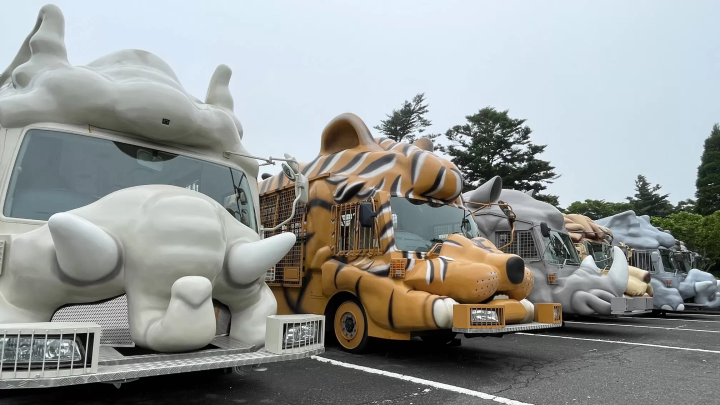
The safari circuit guides visitors through seven distinct, specialized environments:
- The Bear Zone
- The Lion Zone
- The Tiger Zone
- The Cheetah Zone
- The Elephant Zone
- The General Herbivore Zone
- The Mountain Herbivore Zone
Phase 5: The Feeding Encounters
Integrated seamlessly into the safari circuit are three distinct, highly anticipated feeding stops where passengers interact directly with the wildlife using specialized safety equipment. These tactile exchanges represent the absolute pinnacle of the Jungle Bus experience.

- Stop 1: The American Black Bear Zone. Passengers use iron tongs stored safely beneath their seats to pass apples and carrots through the double-layered wire mesh. Because bears can reach the ground with their heels, they frequently rear up onto their hind legs, providing an impressive display of scale and strength.
- Stop 2: The Lion Zone. Guests are provided with long metal tongs to feed raw meat—such as beef heart or chicken pieces—directly to the pride. This close proximity allows passengers to witness the terrifying yet mesmerizing power of a lion’s jaws, observing their rough tongues and razor-sharp fangs at arm’s length.
- Stop 3: The Herbivore Zone. The final feeding stop features Bactrian camels and llamas. Passengers offer specially formulated grass-and-mineral nutrient pellets, marveling at the dexterity with which these animals use their specialized lips to pluck food from the tongs.
Supporting Context & Metrics
To fully appreciate the scale and economic mechanics of Fuji Safari Park, industry analysts and tourism boards look to a robust set of operational metrics and demographic data.
Statistical Overview of Fuji Safari Park
- Total Animal Population: Approximately 900 individual animals.
- Species Diversity: 60 distinct species spanning mammals, birds, and reptiles.
- Geographical Footprint: Expansive naturalistic zones nestled in the foothills of Mt. Fuji, Shizuoka Prefecture.
- Safari Zone Circuit Length: 4.5 kilometers.
- Jungle Bus Tour Duration: Approximately 50 minutes.
- Jungle Bus Pricing: 1,500 JPY per person (applicable to all passengers aged 3 and older). Children under 3 ride free of charge when seated on a guardian’s lap.
Digital Ticketing and The "MySAFARI" Economy
In an era dominated by mobile-first tourism, Fuji Safari Park has modernized its ticketing architecture through its proprietary digital service platform, MySAFARI. Registering for a free account grants visitors access to discounted electronic admission tickets, significantly reducing friction at the entrance gates.

Comparative General Admission Pricing:
- Standard Gate Pricing (Adults): 3,200 JPY
- MySAFARI Electronic Ticket Pricing (Adults): 2,700 JPY (A savings of 500 JPY)
- Standard Gate Pricing (Children, Ages 4–Junior High): 2,000 JPY
- MySAFARI Electronic Ticket Pricing (Children): 1,700 JPY (A savings of 300 JPY)
Operational Caveat: While MySAFARI electronic tickets offer compelling financial incentives, park management enforces strict policy constraints. E-tickets remain valid for a single use within a 90-day purchase window, but cannot be refunded or modified post-purchase. Consequently, financial advisors and park concierges universally recommend purchasing electronic tickets on the exact morning of the intended park visit.

Official Statements & Safety Directives
Operating a facility where the public is brought into direct spatial proximity with apex predators requires uncompromising adherence to safety regulations. Management and veterinary teams at Fuji Safari Park maintain rigorous protocols to ensure both animal welfare and human safety.
Statement on Animal Welfare and Educational Engagement
Park education coordinators emphasize that the Jungle Bus is designed not merely as an amusement ride, but as an interactive biological classroom. During the transit through the herbivore and predator zones, guides share intricate biological insights:

"Did you know that rhinoceros horns are composed of keratin—the exact same structural protein found in human hair and fingernails? Furthermore, despite their massive, armored frames, rhinos can achieve explosive running speeds of up to 40 kilometers per hour."
Through such educational commentary, the park seeks to foster a deeper conservation mindset among visitors, transforming casual tourists into active advocates for global wildlife preservation.

Rigid Health and Safety Contraindications
Because the Jungle Bus transitions from smooth, paved maintenance roads onto rugged, unpaved terrain during the animal feeding sequences, the vehicle experiences intermittent, sharp physical jolts and vibrations. Citing liability and passenger safety, park operations enforce strict riding prohibitions.
The following demographic and medical groups are strictly prohibited from boarding the Jungle Bus:

- Individuals who have consumed alcohol.
- Those prone to severe motion sickness.
- Passengers incapable of maintaining a stable, upright posture independently in their seats.
- Individuals diagnosed with high blood pressure, or cardiovascular, spinal cord, neck, back, or lumbar disorders.
- Expectant mothers (pregnant women).
- Individuals with specific physical or cognitive disabilities that may prevent them from safely navigating the physical constraints of the vehicle; such guests are requested to contact park administration well in advance of their visit to discuss accessibility accommodations.
Future Outlook
As the tourism landscape in Japan continues to evolve post-pandemic, heading into the late 2020s, Fuji Safari Park remains committed to modernizing its guest experience while maintaining its core commitment to animal conservation and natural habitat preservation.
Future development initiatives focus on expanding digital infrastructure through the MySAFARI ecosystem, potentially increasing the allocation percentage for advance online Jungle Bus reservations to reduce morning congestion at the information desk. Additionally, the park is exploring sustainable energy upgrades for its visitor facilities and touring fleets, investigating hybrid and electric vehicle technologies capable of navigating the rugged terrain of the Shizuoka foothills with zero direct emissions.

By seamlessly blending high-adrenaline wildlife interaction, rigorous safety compliance, and accessible digital ticketing, Fuji Safari Park secures its enduring status as a world-class destination—inviting travelers from across the globe to experience the raw, untamed beauty of nature right at the foot of Mt. Fuji.





Belum ada komentar. Jadilah yang pertama berkomentar!