

Executive Overview
Nestled in the central heartland of Mie Prefecture, flanked by the historical heavyweights of Kyoto and Nara to the west, lies Matsusaka City—an urban enclave where Japan’s feudal heritage remains remarkably intact. Far more than a mere geographical transit point, Matsusaka boasts a storied identity forged during the Edo period (1603–1867). Once flourishing as a powerhouse of commerce, the city earned an illustrious reputation as a stronghold of immensely wealthy merchants whose financial acumen and industrial reach fundamentally shaped modern Japanese capitalism.
Today, Matsusaka offers travelers a rare, living time capsule. From impeccably preserved timber merchant mansions and the birthplace of the nation’s most formidable financial dynasties to world-renowned indigo-dyed textiles and legendary culinary masterpieces like Matsusaka beef, the city provides an unmatched cultural itinerary. This comprehensive guide explores the historical anchors, textile traditions, and gastronomic icons that make a day trip or extended journey to Matsusaka an essential pilgrimage for any serious cultural tourist.
Detailed Chronology & Historical Attractions
A walking tour through Matsusaka reveals a landscape meticulously preserved across centuries. The city’s urban layout and architectural preservation offer an unobstructed view into the daily lives, economic clout, and aesthetic sensibilities of Japan’s early modern elite.

The Ozu Seizaemon Family Mansion: Monument to an Edo-Era Tycoon
Located roughly a ten-minute stroll from JR/Kintetsu Matsusaka Station, the Ozu Seizaemon Mansion stands as a masterclass in domestic Edo-period merchant architecture. Ozu Seizaemon was a titan of his era, operating what was historically recorded as the largest paper wholesaling enterprise in Edo (modern-day Tokyo).
The surviving estate comprises a sprawling main house, heavily fortified storehouses (kura), and a grand front storehouse that collectively illustrate the sophisticated logistics and domestic lifestyle of early modern entrepreneurial royalty. Designated as a tangible cultural property by Mie Prefecture and an official historic site by Matsusaka City, the museum invites visitors to walk across polished cedar flooring and inspect the ingenious security and fire-prevention architecture of the merchant class.
- Address: 2195 Honmachi, Matsusaka City, Mie Prefecture 515-0081
- Opening Hours: 9:00 – 17:00 (Last entry at 16:30)
- Closed: Wednesdays (or the following weekday if Wednesday is a national holiday), New Year holidays
- Admission: Adults: ¥200 | Children (6–18 years): ¥100
The Birthplace of the Mitsui Family and the Wealthy Merchant Pocket Park
Matsusaka’s economic legacy is permanently etched into global financial history as the cradle of the Mitsui family—founders of the legendary Mitsui Zaibatsu, whose corporate descendants continue to dictate major currents of Japan’s modern economy.

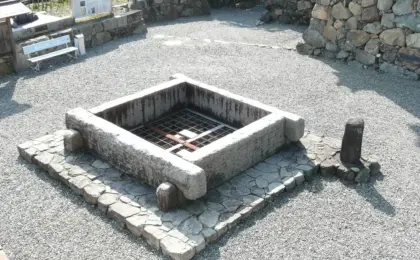
Deep within the city’s historic district lies the sacred ground of Mitsui Takatoshi’s birth (1622–1694), the visionary who launched the Echigoya drapery store in Edo, an enterprise that evolved directly into the modern-day Mitsukoshi Department Store empire. Though the original residential structures are no longer standing, the site preserves the historical well used for Takatoshi’s first ritual bath (ubuyu), accompanied by an authoritative commemorative monument.
Adjacent to this hallowed ground sits the Wealthy Merchant Pocket Park, instantly identifiable by a commanding bronze lion statue. This sculpture is a direct replica of the iconic guardian lions gracing the flagship Mitsukoshi store, which were themselves modeled after the majestic monuments at the base of Nelson’s Column in London’s Trafalgar Square. Local folklore suggests that straddling the back of this bronze lion bestows good fortune and grants heartfelt wishes—a whimsical modern tradition that adds a touch of playful engagement to serious historical exploration.
- Address (Birthplace): 2214 Honmachi, Matsusaka City, Mie Prefecture 515-0081 (Note: The interior of the birthplace is generally closed to the general public)
- Address (Pocket Park): 2176-10 Honmachi, Matsusaka City, Mie Prefecture 515-0081
The Hasegawa Family Residence: Cotton Wealth and Scenic Refinement
Ranking alongside the Mitsui and Ozu dynasties, the Hasegawa family dominated Matsusaka’s commercial landscape through their operation of "Tamba," a massive cotton wholesaling enterprise. Today, the Hasegawa Family Residence operates as a nationally designated Important Cultural Property, as well as a Prefectural Historic Site and Scenic Spot.

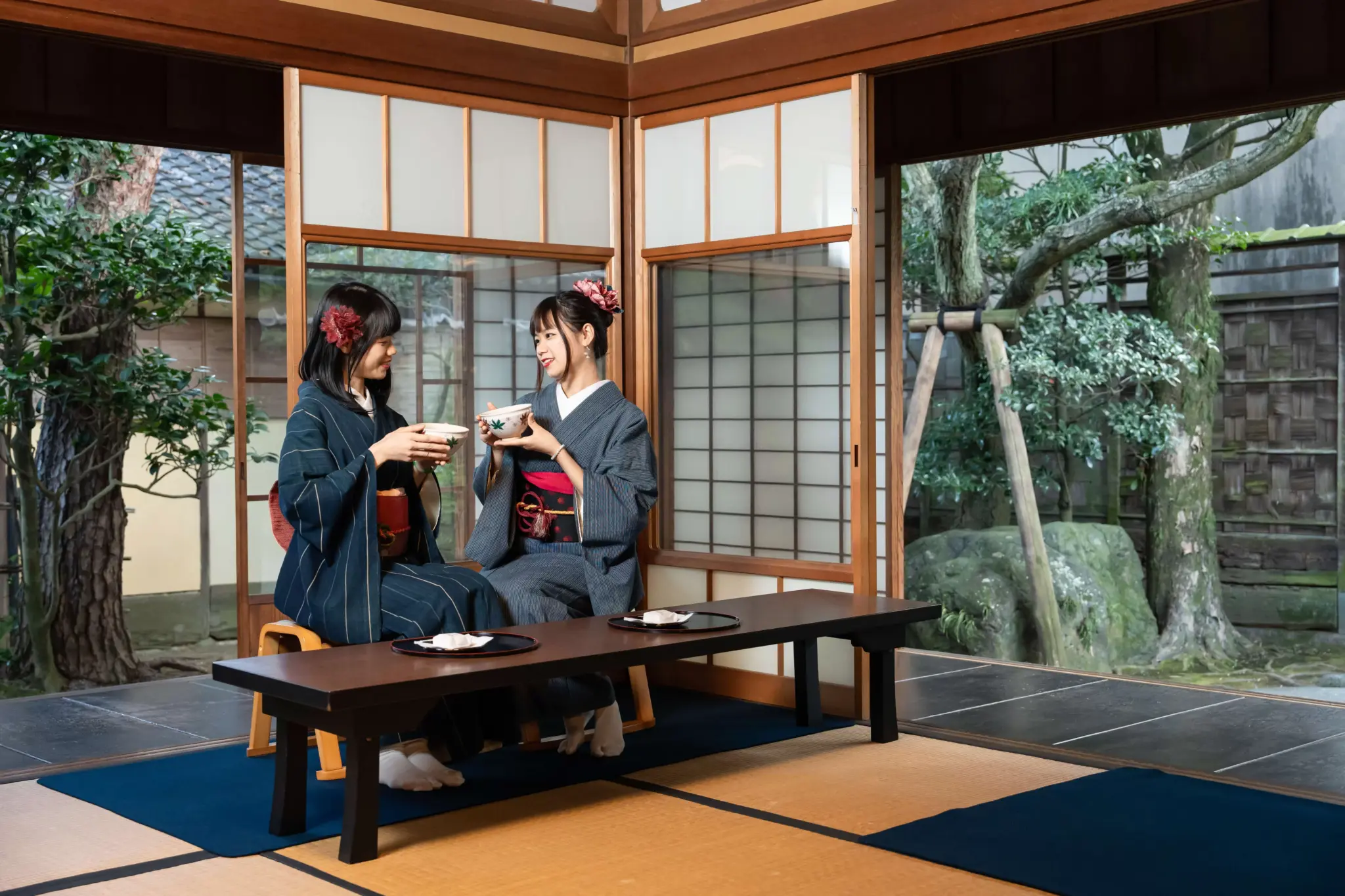
Unlike sites that merely display empty rooms, the Hasegawa estate preserves an astonishing volume of primary source materials, including commercial ledgers, trade contracts, and ancient manuscripts that shed invaluable light on early modern Japanese trade networks. Visitors can tour the sprawling multi-room residence before relaxing in the tatami rooms to sip authentic whisked matcha while gazing out at an impeccably manicured traditional Japanese garden. This landscape reaches a breathtaking visual crescendo during the late autumn foliage season from late November to early December.
- Address: 1653 Honmachi, Matsusaka City, Mie Prefecture 515-0082
- Opening Hours: 9:00 – 17:00 (Last entry at 16:30)
- Closed: Wednesdays (or the following weekday if Wednesday is a national holiday), New Year holidays
- Admission: Adults: ¥400 | Children (6–18 years): ¥200
Supporting Context & Metrics: The Phenomenon of Matsusaka Momen
No comprehensive evaluation of Matsusaka’s historical economy is complete without examining its signature textile: Matsusaka Momen (Matsusaka Cotton).
Economic Engine of the Edo Period
During the Edo period, when the population of the shogunate capital hovered around one million, Matsusaka Momen achieved unprecedented market dominance. Driven by the entrepreneurial spirit of merchants like the Hasegawa family, this high-grade cotton fabric was shipped to Edo at a staggering volume exceeding 500,000 bolts annually.

The fabric is characterized by its use of yarn dyed exclusively with natural indigo (ai), woven into intricate striped patterns known as Matsusakajima. From a distance, garments crafted from Matsusaka Momen present a sophisticated, understated solid hue. Upon closer inspection, however, the fabric reveals a mesmerizing complexity of fine, chic indigo stripes that epitomized the restrained aesthetic—iki—favored by urban commoners and trendsetting Kabuki actors alike.
Living Tradition: The Matsusaka Cotton Hand-Weaving Center
To preserve this endangered craft, the Matsusaka Cotton Hand-Weaving Center offers visitors an immersive, hands-on opportunity to engage with the medium. Located on the ground floor of the Matsusaka City Industrial Promotion Center, the facility sells authentic, hand-crafted indigo goods and allows travelers to participate in supervised hand-weaving workshops using traditional wooden looms.
- Address: 1F Matsusaka City Industrial Promotion Center, 2176 Honmachi, Matsusaka City, Mie Prefecture 515-0081
- Opening Hours: 9:00 – 17:00
- Closed: Tuesdays
Stepping Back in Time: Kimono Rental Incentives
For travelers looking to fully transcend the boundaries of modern tourism, the Matsusaka Momen Kimono Rental Center provides authentic indigo-striped garments for day-long excursions. Beyond the visual aesthetic and tactile connection to the past, the city of Matsusaka offers a unique cultural incentive: visitors exploring the historic district dressed in a Matsusaka Momen kimono are granted free admission to several of the city’s premier cultural institutions, including:

- The Motoori Norinaga Memorial Museum
- The Matsusaka City Cultural Properties Center
- The Matsusaka City History and Folklore Museum
- The Matsuura Takeshiro Memorial Museum
Practical metrics and operational details for travelers planning an extended cultural itinerary in Matsusaka are synthesized below:
| Attraction / Facility | Primary Significance | Standard Admission Fee | Proximity to Station |
|---|---|---|---|
| Ozu Seizaemon Mansion | Edo-period paper wholesaler estate | Adults: ¥200 / Children: ¥100 | ~10-minute walk |
| Mitsui Family Birthplace | Cradle of the Mitsui financial dynasty | Exterior viewing only (Free) | ~10-minute walk |
| Wealthy Merchant Pocket Park | Mitsukoshi lion statue & photo spot | Free | ~10-minute walk |
| Hasegawa Family Residence | Cotton magnate estate & matcha garden | Adults: ¥400 / Children: ¥200 | ~10-minute walk |
| Matsusaka Cotton Hand-Weaving Center | Working textile studio & retail shop | Free entry (Workshop fees apply) | ~10-minute walk |
Official Statements & Cultural Preservation Insights
Municipal authorities and heritage boards have consistently emphasized the importance of safeguarding Matsusaka’s built environment not merely as tourist scenery, but as an active repository of economic history.
In promotional framing released by the Matsusaka City Tourism Information Office, local representatives highlight the interconnected nature of the city’s assets:

"Matsusaka was never a sleepy castle town defined solely by samurai administration; it was an epicenter of dynamic commercial risk-taking. The fortunes built here by the Ozu, Mitsui, and Hasegawa families laid the infrastructural groundwork for modern Japanese commerce. When visitors walk these historic pathways, they are traversing the very incubator of Japanese capitalism."
Furthermore, academic assessments from conservation architects underscore the rarity of the surviving merchant townhouses (machiya). Unlike urban centers heavily impacted by twentieth-century industrialization or wartime destruction, Matsusaka’s core preserves contiguous blocks of traditional rooflines, deep urban lots, and authentic fire-resistant storehouses. This architectural continuity provides historians with pristine spatial data regarding how elite merchant families balanced industrial storage, retail storefronts, and private residential quarters during the Tokugawa shogunate.
Culinary Heritage: The Legendary Art of Wadakin
No journey to Matsusaka is culturally complete without addressing its crowning gastronomic achievement: Matsusaka Beef. Universally recognized alongside Kobe and Omi beef as one of the "Three Great Wagyu" varieties of Japan, authentic Matsusaka beef is celebrated for its exceptionally fine, evenly distributed fat marbling, velvety texture, and a rich, melt-in-the-mouth profile that develops from rigorous rearing standards.

While numerous establishments across the city serve local beef, culinary pilgrims frequently make their way to Wadakin, a venerated, long-established sukiyaki institution that draws epicures from across the Japanese archipelago and beyond. Founded on a tradition of uncompromising quality control, Wadakin prepares thick-cut, masterfully marbled slices of Matsusaka beef at the table in traditional iron sukiyaki pots, simmering the meat in a perfectly balanced sweet soy broth (warishita) alongside fresh local vegetables.
- Restaurant Name: Wadakin (Wada Kin)
- Address: 1878 Ichochō, Matsusaka City, Mie Prefecture 515-8558
- Business Hours:
- Weekdays: 11:30 – 19:00 (Last order at 20:00 / Closing at 21:00)
- Weekends and National Holidays: 11:00 – 19:00 (Last order at 20:00 / Closing at 21:00)
- Closed Days: Irregular closures (verify via official channels)
- Access: Approximately 10 minutes on foot from JR/Kintetsu Matsusaka Station
- Official Website: e-wadakin.co.jp/en/
Future Outlook
As international tourism to Japan continues to evolve beyond major metropolitan hubs like Tokyo, Kyoto, and Osaka, secondary and tertiary historical destinations are stepping into the spotlight. Matsusaka City is strategically positioned at the vanguard of this sustainable tourism shift.
Future municipal initiatives aim to further integrate the city’s rich archival assets with digital wayfinding and multilingual interpretation programs, ensuring that international visitors can fully comprehend the nuanced economic history behind the timber beams and indigo threads. By harmonizing rigorous architectural preservation with living crafts like Matsusaka Momen weaving and world-class culinary tourism centered around Wadakin, Matsusaka offers a compelling blueprint for how regional Japanese municipalities can honor their past while welcoming the global community of the twenty-first century.

For travelers seeking further planning resources, official guidance and real-time updates can be accessed through the official portals:





Belum ada komentar. Jadilah yang pertama berkomentar!