

Executive Overview
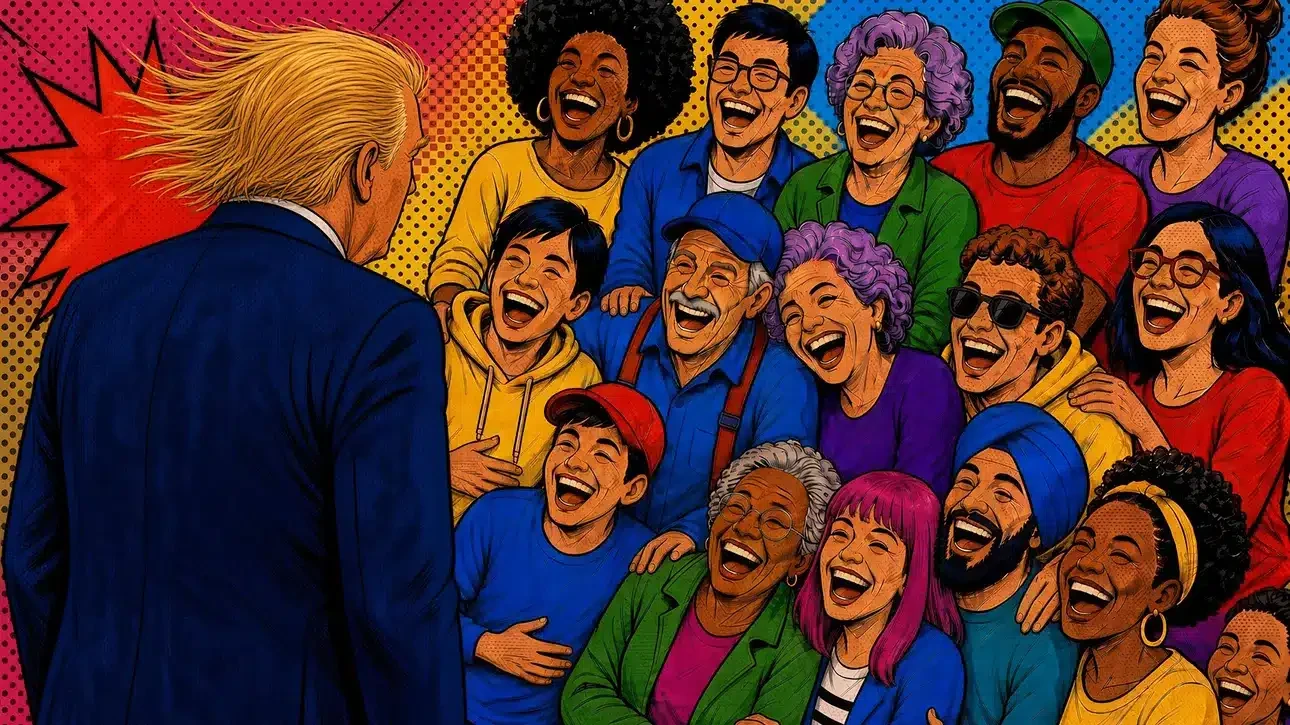
In an era where democratic norms face unprecedented erosion, the traditional pillars of institutional accountability—ranging from legislative opposition to mainstream journalism—have frequently found themselves stymied by systemic paralysis and self-censorship. With the executive branch, both houses of Congress, and the judiciary often aligned with or cowed by authoritarian impulses, a vacuum of oversight has emerged. Into this breach have stepped an unlikely vanguard of defenders: late-night television satirists.
Political humor has long served as an instinctive social corrective, operating historically as an antidote to tyranny from ancient Athens to the salons of the Enlightenment. Today, however, American late-night comedy has evolved far beyond mere entertainment. It functions as a primary repository of collective conscience and a critical news source for a populace disillusioned by conventional media outlets that trade hard-hitting investigative journalism for access and "fair and balanced" equivocations.
The friction between the rising tide of autocracy and the unyielding machinery of satire recently culminated in a high-stakes, real-world showdown: the coordinated silencing and subsequent triumphant return of ABC’s Jimmy Kimmel. This watershed moment—involving federal regulatory threats, corporate capitulation, mass consumer mobilization, and a dramatic defense of First Amendment rights—underscores a fundamental truth of modern politics. As authoritarian figures attempt to construct humor-free zones of unthinking obedience, public resistance anchored in collective laughter and economic leverage remains one of democracy’s most potent deterrents.
Detailed Chronology: The Anatomy of a Crackdown
The collision between the second-term Trump administration and the late-night comedy establishment was neither sudden nor accidental; it represented the systematic execution of a playbook designed to dismantle dissent and neuter institutional critics.
The Prelude: Targeting the Networks
The pressure campaign began not with executive orders, but with corporate consolidation and quiet administrative coercion. In July 2025, Paramount—the parent company of CBS—sought federal regulatory approval for a massive corporate merger. Operating in an environment where government concessions depend heavily on executive goodwill, the network announced the imminent cancellation of Stephen Colbert’s long-running program. Emboldened by this uncontested scalp, the administration set its sights on the remaining critics of the late-night fraternity, with President Trump publicly signaling that ABC’s Jimmy Kimmel was next in line.
The Catalyst: The Charlie Kirk Shooting
The pretext for the administration’s direct intervention arrived in September 2025 following the assassination of far-right activist Charlie Kirk. The tragedy ignited a firestorm within MAGA information ecosystems, generating intense demands for retribution against perceived ideological enemies.
During his September 25, 2025 monologue, Jimmy Kimmel directly addressed the fallout from the shooting, asserting that far-right actors were aggressively weaponizing the tragedy to score political points regardless of factual realities. As expected, the remarks triggered a coordinated wave of outrage across right-wing media silos, quickly metastasizing into a broader cultural flashpoint.
The Regulatory Pincer and Corporate Capitulation
Sensing an opening, Federal Communications Commission (FCC) Chairman Brendan Carr swiftly moved to exploit the moment, echoing Kimmel’s predictions by leveraging regulatory threats against ABC and its parent company, Disney. Nexstar Media Group, a major operator of ABC-affiliated stations, preemptively pulled Jimmy Kimmel Live! from its broadcasts.
Simultaneously, Disney—beset by its own pending corporate mergers requiring federal clearance—capitulated to administrative pressure. Instructing ABC to halt all broadcasts, the network suspended Kimmel indefinitely. Pushing for a total victory, a triumphant Trump declared the move "great news for America," believing the comedy world’s most persistent thorn had finally been extracted.
The Resistance Strikes Back
Unlike the quiet demise of previous programming, the suspension of Kimmel triggered an immediate and asymmetric counter-offensive from the American public and the creative community. Late-night competitors immediately offered full-throated condemnations of the suspension, framing it as a direct assault on the free press.
Crucially, the years of public trust invested in Kimmel paid massive dividends. Outraged citizens organized rapid-response demonstrations and threatened widespread consumer boycotts of Disney products. Within days, Disney’s stock value suffered a sharp decline as subscribers canceled streaming services en masse. Recognizing that the economic fallout far outweighed the value of appeasing the administration, Disney, ABC, Carr, and the White House executed a hasty tactical retreat. Kimmel returned to the airwaves to record ratings, cemented not merely as an entertainer, but as a national hero of free expression.
Supporting Context & Metrics: The Cognitive Mechanics of Satire
To understand why authoritarian figures react with visceral hostility to comedians, one must examine the cognitive and sociological mechanics of humor. As philosopher and scholar John Moreall observes in Taking Laughter Seriously, "[People] with a sense of humor can never be fully dominated."
The Incompatibility of Fascism and Laughter
Authoritarian regimes demand two emotional extremes: uncritical hero-worship and paralyzing fear. Fascism specifically attempts to weaponize rage, directing public anger toward scapegoated "others" to maintain social cohesion through division.
Humor, conversely, is inherently decentralizing and egalitarian. Satire forces the human mind to confront incongruities, hypocrisy, and moral failings. It bridges divides through shared laughter, establishing a universal baseline of human reason that exposes the fragile vanity of autocrats. While democratic systems absorb critique as a matter of course, narcissists and egotists find themselves entirely unequipped to handle ridicule. For an aspiring dictator whose power rests on an illusion of absolute omnipotence, a comedian’s monologue acts as a direct challenge to their constructed reality.
The Erosion of Traditional Journalism
The societal reliance on late-night comedy is intrinsically linked to the systemic failure of mainstream American journalism. Unlike their counterparts in the United Kingdom, where political interviewers routinely subject officials to relentless, unyielding scrutiny, American journalists have largely capitulated to a culture of access journalism. Fearing exclusion from favored press corps or retaliation via dismissive insults, Washington reporters frequently abandon rigorous lines of inquiry in favor of "fair and balanced" false equivalencies.
This failure has driven the electorate toward late-night satirists. As media scholar Geoffrey Baym noted in his foundational analysis of The Daily Show, late-night programs engage in "discursive integration," offering a "rhetoric of challenge" that blends news reporting, media critique, and moral philosophy. By interrogating both political hypocrisy and journalistic cowardice, programs hosted by Kimmel, Colbert, and their predecessors provide a model of deliberative democracy that resonates far more deeply with the public than standard evening broadcasts.
Official Statements and Institutional Reactions
The fallout from the Kimmel suspension and the broader war on late-night satire elicited sharp commentary across the political and media landscapes:
-
On Regulatory Overreach:
Critics of the FCC’s involvement pointed to the weaponization of independent agencies. Writing in Time, journalist Philip Elliott observed: "Jimmy Kimmel’s silencing echoes Bill Maher’s after 9/11—but Trump is no Bush," highlighting how a compliant regulatory apparatus was deployed to exact partisan vengeance under the guise of public interest. -
On the Weaponization of Late-Night:
Reflecting on the unique cultural status of talk shows, The New York Times noted the unprecedented nature of the conflict: "How Jimmy Kimmel Went from ‘The Man Show’ to MAGA Adversary," illustrating the paradigm shift wherein entertainers have been forced to shoulder the accountability journalism abandoned. -
On Corporate Cowardice and Public Pushback:
Reporting on the swift escalation and de-escalation of the feud, The Guardian detailed the mechanics of the executive pressure campaign: "Trump v Kimmel: Simmering Feud Ends with Comedian’s Talkshow Yanked off Air"—before noting that the subsequent economic backlash forced an embarrassing retreat from both the network boardrooms and the West Wing.
Future Outlook: A Cautionary Tale for Democratic Resilience
The resolution of the Kimmel-Kirk saga offers both a stark warning and a profound blueprint for democratic resilience in the twenty-first century.
First, it demonstrates that authoritarian overreach is not an unstoppable force, but a calculated stress-test of institutional and civic endurance. When corporate entities like Disney and regulatory bodies like the FCC discover that capitulation carries a devastating economic price—via consumer boycotts, plunging share prices, and ruined public relations—their appetite for censorship wanes rapidly.
Second, the crisis cements the evolution of late-night satire from a peripheral cultural artifact into an indispensable pillar of democratic infrastructure. As long as traditional media institutions struggle to hold power to account without fear or favor, citizens will continue to rally around voices that speak moral truths in defense of foundational constitutional liberties.
Ultimately, the attempt to purge American television of critical humor serves as a cautionary tale for any aspiring autocrat. Dictatorships require silence, obedience, and the systematic elimination of joy. Yet, so long as a populace retains its capacity to laugh at the emperor’s lack of clothes—and possesses the economic and civic courage to defend that right—democracy retains its most resilient defense mechanism.







Belum ada komentar. Jadilah yang pertama berkomentar!