

Executive Overview
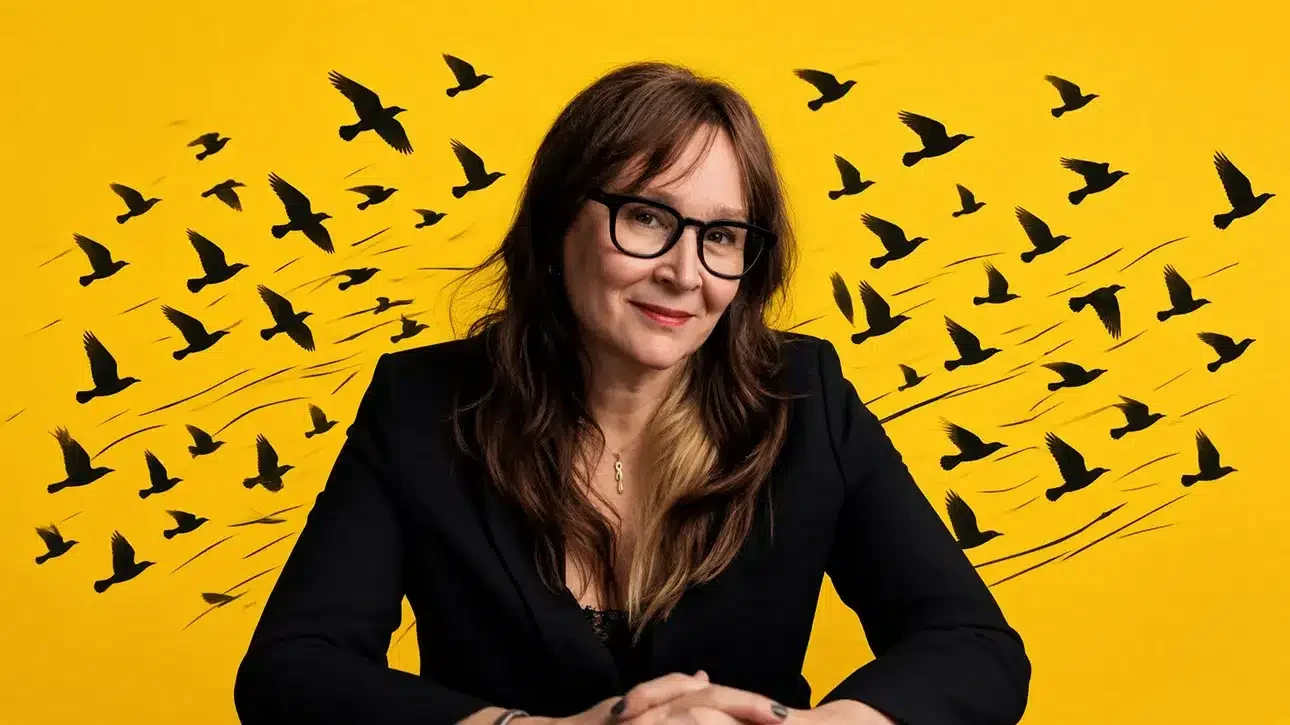
In the literary landscape of contemporary music fiction, the narrative arc typically follows a predictable trajectory: an artist claws their way from obscurity to dizzying heights of fame, navigates the ensuing chaos of commercial success, and either triumphs over systemic pressures or burns out brilliantly. Susannah Felts’ latest literary novel, The Come Apart, radically subverts this established formula. Set against the backdrop of the early-2000s indie rock scene, the novel follows Maggie Corbin—a sharp-tongued songwriter and vocalist for the fictional band Spinning Birds—as she confronts the painful collapse of her creative ambitions in Chicago and returns to her roots in Nashville.
Rather than culminating in chart-topping glory or tragic self-destruction, Maggie’s journey explores a quieter, more profound realization: that artistic fulfillment does not require global validation. Through an exploration of shifting industrial landscapes, interpersonal friction, and tactile domestic arts like baking and agriculture, The Come Apart poses an existential question for creators across generations: Is a soul less valuable if its voice never tops the charts? This investigative feature examines Felts’ thematic framework, situates the novel within the broader genre of musical fiction, and explores the enduring tension between human-led artistry and modern commercial pressures.
Detailed Chronology: The Arc of Maggie Corbin
To understand the heartbeat of The Come Apart, one must trace the geographic and psychological migration of its protagonist. The narrative unfolds primarily in two distinct cultural hubs: the kinetic, high-stakes environment of early-aughts Chicago and the grounded, music-saturated terrain of Nashville, Tennessee.
The Chicago Years: Building and Fracturing
Maggie Corbin and her creative partner, Matt, spend years navigating the grueling underground music circuit in Chicago. Their dedication initially bears fruit, yielding a critically acclaimed debut album for their indie rock outfit, Spinning Birds. However, the subsequent era is defined not by triumph, but by erosion. As interpersonal dynamics fracture and creative visions diverge, Maggie finds herself slowly marginalized within the very project she helped build.
The tipping point arrives through a series of subtle yet seismic shifts in the band’s instrumentation. When their long-time drummer is sidelined by an injury, Matt introduces a drum machine. Shortly thereafter, he acquires a Mellotron. To Maggie, these electronic and synthetic additions are not merely stylistic choices; they represent a fundamental breach of trust, a loss of creative control, and an alienating drift from the organic, acoustic-driven foundation she envisioned for Spinning Birds.
The Nashville Return: Unearthing the Roots
Fleeing the wreckage of her romantic and creative partnership, Maggie retreats to her hometown of Nashville. This return home acts as a catalyst for profound personal reckoning. Stripped of the protective structures she built in Chicago, Maggie begins to engage with her environment in a tactile, unhurried manner.
She finds unexpected solace in baking—a physical manifestation of creation that yields immediate, sensory reward rather than deferred corporate approval. Furthermore, she reconnects with her late father’s legacy by engaging with the rural land and local farm life he once tended. In this stillness, music does not abandon Maggie; rather, it is reclaimed. She begins writing songs purely for the visceral joy of the process—the movement of the pen, the vibration of the strings, and the breath of the melody—divorced from the anxiety of commercial metrics.
Supporting Context & Metrics: The Archetype of the Struggling Artist
The Come Apart occupies a rich literary lineage that examines the precarious realities of women navigating the music industry. By placing Maggie Corbin alongside contemporary fictional counterparts, Felts’ work highlights a universal anxiety among creative professionals approaching turning points in their lives and careers.
Literary Parallels in Musical Fiction
Maggie shares strong thematic DNA with protagonists from recent prominent releases:
- Claire in Laura Hankin’s Happy & You Know It (2020): Like Maggie, Claire is a rough-edged indie artist nearing the age of thirty who struggles to reconcile her youthful ambitions with adult realities. Both women face displacement from their creative collaborations—Claire ousted from her band for a more marketable alternative, and Maggie iced out by her romantic and creative partner. While Claire turns to hosting musical playgroups for affluent mothers to sustain her dream, Maggie shifts toward domestic and agrarian art forms.
- Daisy Jones in Taylor Jenkins Reid’s Daisy Jones & The Six (2019): While Reid’s novel leans heavily into the high-octane drama, excess, and media-fueled chaos of 1970s rock stardom, both works share an intimate focus on sharp, talented women forging an identity within male-dominated musical spaces.
However, Maggie’s trajectory diverges sharply from her literary peers. While characters like Daisy Jones often grapple with the toxic social dynamics and self-destructive pitfalls of fame, Maggie is spared the misery of the spotlight. Her narrative offers a blueprint for graceful redirection, proving that abandoning an unworkable dream can open doors to unexpected, sustainable contentment.
Industry Shifts: From Early Streaming to the Age of AI
The backdrop of The Come Apart captures the nascent tremors of the digital music revolution in the early-to-mid 2000s, when traditional distribution models began to crumble under the weight of early streaming platforms. Reflecting on this era, Felts notes a disheartening continuity in the music industry’s structural challenges:
"It’s almost quaint now to think about streaming and its arrival in the early-to-late-aughts. It’s like we’ve come so far, but we really haven’t come far at all because we’re seeing the same problems, except they’re magnified and sort of accepted as the norm."
Today, this historical anxiety has been eclipsed by a more profound systemic threat: artificial intelligence. While streaming fundamentally altered how artists monetized their labor, generative AI presents an existential challenge to the very concept of human authorship. Felts contrasts the two eras, observing that while streaming sparked economic distress, AI threatens the foundational validity of human-created art itself. Despite these mounting pressures, Felts remains steadfastly optimistic, championing the enduring power of live, human-in-the-room performances as an irreplaceable source of cultural vitality.
Official Statements & Author Insights
In exclusive commentary and discussions surrounding the release of The Come Apart, Susannah Felts opens up about the psychological architecture of her characters, the sensory mechanics of songwriting, and the universality of the creative brain.
On Crafting the Musical Mind
Bringing a career musician to life on the page required deep observational empathy. Felts notes that capturing the authentic headspace of a songwriter relies less on technical jargon and more on perceptual orientation:
"A lot of it, if it’s on-target, comes simply from the universality of the creative brain, of having a mind that is forever attending to certain aspects of perception. It’s what you notice, and the kinds of things you’re distracted by, in a good way. It’s the way you filter the sensory input of the world around you."
Felts translates this philosophy into her prose, infusing the novel with striking observations on the creative act. As she writes in the novel: "Some songs were a long birth—excruciating but productive. Others were an enchantment, a blow to the chest, in and out of you, done."
On Solitude, Rupture, and Natural vs. Synthetic Metaphors
Discussing the friction caused by the introduction of drum machines and Mellotrons into Spinning Birds’ workflow, Felts explains that these instruments function as physical manifestations of deeper internal fractures:
"There are two different tracks Matt and Maggie are going down. Neither one is wrong, but with the Mellotron, what Maggie maybe can’t see yet… is that she’s not listening to her inner self. It’s telling her, ‘Maybe you should be doing something else for a while.’ These instruments become obstacles and stand in for what Maggie can’t see: a greater sense of rupture."
This tension mirrors a broader philosophical divide in the novel: the contrast between the natural and the synthetic, the physical record and the digital file, and how internal emotional turmoil ultimately seeks external expression.
Future Outlook: Embracing the Unwritten
As The Come Apart reaches readers, its message extends far beyond the confines of the music industry or the specific geography of Nashville and Chicago. It serves as an urgent reminder to creatives of all disciplines to protect their intrinsic motivation from the corrosive effects of external validation.
Felts’ concluding advice to artists and dreamers encapsulates the spirit of her protagonist’s transformation:
- Grant Permission to Create: Allow yourself to enter a flow state without immediately demanding a commercial return or structural perfection.
- Embrace Association: Step away from the analytical, organizational parts of the brain and allow associative energy and sensory details to guide production.
- Redefine Success: Measure creative output by the internal joy and grounding it provides, rather than its proximity to the charts.
Ultimately, Susannah Felts’ The Come Apart stands as a vital literary achievement—one that urges us to let go of rigid, hyper-ambitious expectations so that we might pick up the pieces, rebuild our relationship with art, and discover a quieter, more enduring harmony.







Belum ada komentar. Jadilah yang pertama berkomentar!