

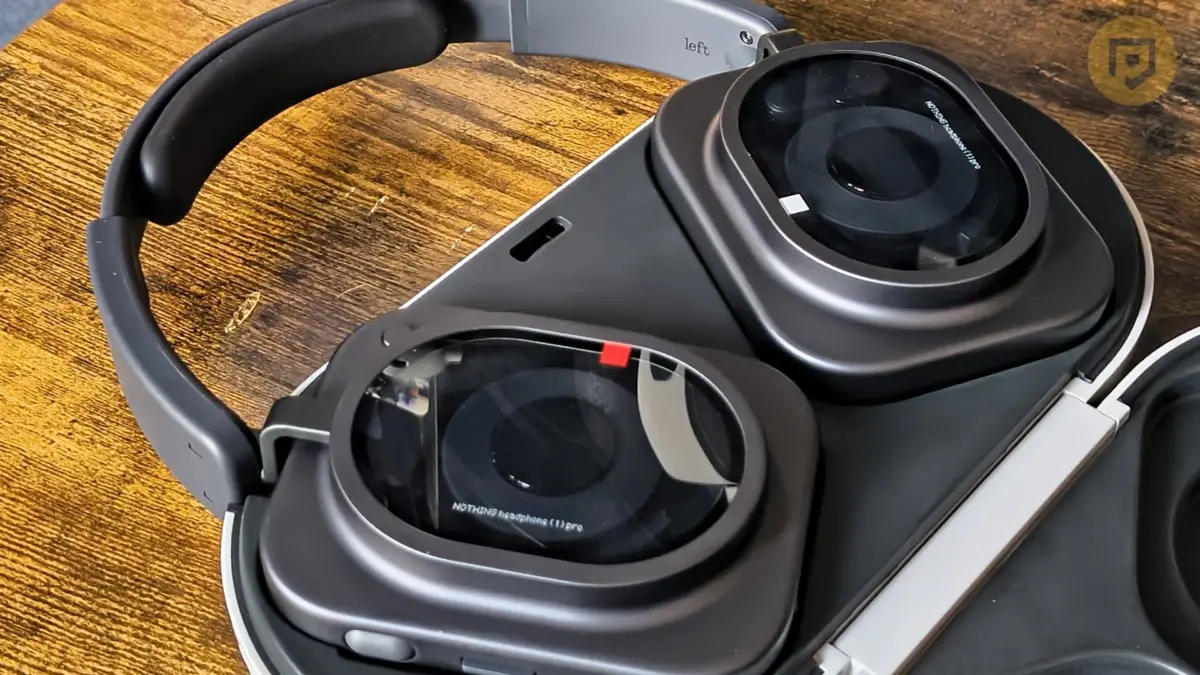
London-based Consumer Technology firm Nothing has formally consolidated its shift from quirky market disruptor to serious audio competitor with the release of the Nothing Headphone (1) Pro. Retailing at £349 in the United Kingdom and $399 in the United States, the new flagship over-ear headset marks a calculated foray into the premium audio landscape—a domain historically dominated by legacy brands like Sony, Bose, and Sennheiser.
Positioned above the original Headphone (1) and the budget-conscious Headphone (a), the Headphone (1) Pro achieves an impressive 9/10 score, establishing itself as the brand’s most sophisticated audio product to date. Featuring a bespoke triple-driver acoustic architecture, xMEMS micro-transducer treble technology, 46dB adaptive Active Noise Cancellation (ANC), and an innovative physical Flat EQ hardware toggle, the device bridges the gap between consumer-centric wireless convenience and audiophile-grade fidelity.
While the £349/$399 price tag places it squarely in competition with established industry benchmarks, the Headphone (1) Pro justifies its premium positioning through a combination of high-grade materials—including titanium alloy arms, machined aluminum, and scratch-resistant glass—and battery performance offering up to 68 hours of playback.
Key Performance Profile & Hardware Specifications
| Parameter | Specifications & Capabilities |
|---|---|
| Retail Price | £349 (UK) / $399 (US) |
| Acoustic Layout | Triple-Driver System (40mm Dynamic Bass Driver, Mid/Precision Driver, xMEMS Treble Transducer) |
| Chassis Materials | Machined Aluminum, Titanium Alloy Arms, Scratch-Resistant Glass |
| Device Mass | 327 grams |
| Active Noise Cancellation | Adaptive ANC up to 46dB utilizing a 10-Microphone Array |
| Wireless Codecs | LDAC, AAC, SBC |
| Wired Playback | USB-C Lossless Audio (24-bit / 192kHz); Requires Power-On |
| Battery Stamina | 68 Hours (ANC Off, AAC) / 30 Hours (ANC On, AAC) |
| Fast-Charge Metric | 5 Minutes Charge = 4 Hours Playback (ANC Off) |
| Physical Controls | Tactile Volume Roller, Track Paddle, Dedicated Hardware Flat EQ Switch |
Detailed Chronology: The Design & Audio Lineage of Nothing
From Glyph Disruption to Audio Fidelity
Since its launch in 2020 by former OnePlus co-founder Carl Pei, Nothing built its brand identity around transparent industrial design, retro-futuristic aesthetics, and stripped-back user interfaces. The original Ear (1) earbuds served as a proof-of-concept for this design philosophy, proving that striking visual aesthetics could coexist with competitive performance.
However, as Nothing expanded its hardware ecosystem—spanning successive phone generations like the Nothing Phone (4a) Pro and multi-tiered audio accessories—the company faced growing consumer demand for higher acoustic performance. The original Headphone (1) proved that Nothing could translate its transparent styling to an over-ear form factor, but feedback highlighted areas for improvement in material luxury, high-frequency extension, and active noise attenuation.

[Ear (1) Debut] ──> [Headphone (1) Launch] ──> [Headphone (a) Mid-Tier] ──> [Headphone (1) Pro Flagship]
   (Proof of Concept)      (First Over-Ear Entry)     (Accessible Value)          (Audiophile Architecture)
The Product Evolution Spectrum
The development of the Headphone (1) Pro reflects a mature approach to iterative engineering:
- Initial Exploration (Headphone 1): Introduced the physical roller and paddle controls alongside the signature transparent earcups, offering good mid-tier performance but constrained by standard dual-dynamic driver limitations.
- Ecosystem Diversification (Headphone a): Focused on accessibility and lightweight materials, utilizing a fabric carrying case and simplified acoustic chambers to reach a broader market.
- The Flagship Realization (Headphone 1 Pro): Retained the beloved tactile control interfaces while overhauling the acoustic engine from the ground up, integrating solid-state xMEMS driver technology, reinforced metallic structural components, and advanced thermal/acoustic tuning.
Comprehensive Engineering Analysis & Audio Performance Metrics
                    ┌─────────────────────────────────────────────────────────┐
                    │               Nothing Headphone (1) Pro                 │
                    └────────────────────────────┬────────────────────────────┘
                                                 │
         ┌───────────────────────────────────────┼───────────────────────────────────────┐
         │                                       │                                       │
┌────────┴────────┐                     ┌────────┴────────┐                     ┌────────┴────────┐
│ Acoustic Engine │                     │ Hardware Build  │                     │ ANC & Wireless  │
├─────────────────┤                     ├─────────────────┤                     ├─────────────────┤
│ • 40mm Bass     │                     │ • 327g Mass     │                     │ • 46dB ANC      │
│ • Mid Precision │                     │ • Titanium Arms │                     │ • 10-Mic Array  │
│ • xMEMS Treble  │                     │ • Hard Shell    │                     │ • LDAC & USB-C  │
└─────────────────┘                     └─────────────────┘                     └─────────────────┘
Acoustic Architecture: Triple-Driver Layout & xMEMS Integration
The defining technical achievement of the Headphone (1) Pro is its triple-driver acoustic configuration. Traditional wireless headphones usually rely on a single dynamic driver to replicate all frequencies, which often leads to intermodulation distortion when heavy bass overwhelms high-frequency detail.
Nothing addresses this challenge by dividing the frequency spectrum across three dedicated transducers:
- Primary 40mm Dynamic Bass Driver: Engineered to handle low-end response down to sub-bass regions, ensuring clean bass reproduction without muddying the lower-mids.
- Precision Midrange Driver: Dedicated exclusively to vocal clarity, instrumental separation, and speech frequencies.
- xMEMS Micro-Transducer: Utilizing a solid-state silicon architecture, this microscopic transducer handles treble reproduction. Because xMEMS drivers switch state almost instantaneously compared to traditional voice coils, high-frequency transients—such as drum cymbals, acoustic guitar plucks, and vocal sibilance—are rendered with exceptional speed and precision.
Supporting high-resolution streaming, the headset offers native LDAC codec support alongside lossless USB-C audio reaching up to 24-bit/192kHz. This setup allows the drivers to effortlessly resolve complex musical arrangements, from the dense synth layers of Fontaines D.C. to heavy, drop-tuned metal guitars.
Frequency Spectrum Allocation:
[ Sub-Bass & Bass (20Hz - 250Hz) ] ──> Handled by 40mm Dynamic Driver
[ Midrange & Vocals (250Hz - 4kHz) ] ──> Handled by Precision Mid Driver
[ Highs & Harmonics (4kHz - 40kHz) ] ──> Handled by xMEMS Silicon Transducer
Ergonomics, Build Integrity, and Visual Aesthetics
Tipping the scales at 327 grams, the Headphone (1) Pro is heavier than lightweight plastic competitors like the Sony WH-1000XM5 (250g), but it distributes its mass effectively. The headband architecture and memory-foam ear cushions have been redesigned to balance clamping force against passive sound isolation.

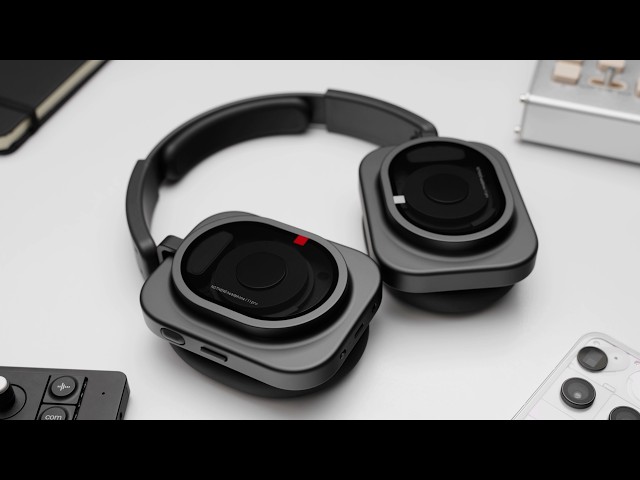
Nothing has upgraded structural durability by swapping out exposed plastics for machined aluminum and titanium alloy adjustment arms. The signature transparent earcups are protected by scratch-resistant glass, preserving the retro sci-fi aesthetic over long-term use.
Unboxing the device reveals a custom silver, textured presentation box housing a protective hard-shell carrying case—a marked upgrade over the soft fabric pouch bundled with the lower-tier Headphone (a).
Material Composition Breakdown:
[ Structural Arms ] ──────> Titanium Alloy (High tensile strength, low weight flex)
[ Ear-Cup Enclosure ] ───> Machined Aluminum & Transparent Scratch-Resistant Glass
[ Contact Surfaces ] ────> High-Density Memory Foam & Synthetic Leatherette
Active Noise Cancellation (ANC) Performance & Microphonic Array
Noise mitigation is powered by an onboard processing chip tied to a 10-microphone array. This hardware engine delivers up to 46dB of adaptive noise cancellation, continually sampling external ambient sounds to adjust inverse phase waves in real time.
Ambient Sound Input (Outside Noise)
        │
        ▼
[ 10-Microphone Sampling Array ]
        │
        ▼
[ Adaptive ANC Engine (Real-Time Phase Inversion up to 46dB) ]
        │
        ▼
Attenuated Signal to Ear (Quiet Audio Stage)
In real-world testing across urban transit networks and office environments, the adaptive ANC effectively suppresses low-frequency engine rumbles and mid-range chatter. While rival flagships from Bose maintain a slight edge in absolute silence generation, Nothing’s implementation delivers natural acoustic dampening without inducing ear pressure or disturbing the music’s spatial soundstage.
Signal Processing, Codec Support, and Hardware Control Ergonomics
While touch pads on over-ear headphones are often prone to accidental swipes, Nothing retains physical, tactile control mechanisms:

- Tactile Roller: Controls volume adjustments with refined mechanical detents.
- Multi-Function Paddle: Handles track selection, call management, and toggle functions cleanly.
- Dedicated Flat EQ Hardware Switch: Located on the earcup rim, this switch instantly disables sound processing and custom EQ profiles from the Nothing X app.
The Flat EQ switch allows audio enthusiasts to bypass digital coloring instantly, revealing the raw, unadulterated acoustic response of the triple-driver engine.
[ Normal Mode ]   ──> Nothing X App DSP Enabled (Spatial Audio / Custom EQ)
                         │
                         ▼ (Flip Physical Switch)
[ Flat EQ Mode ]  ──> DSP Bypass (Raw Uncolored Hardware Signal Output)
Ecosystem Strategy & Industry Context
Competitive Benchmarking: Nothing vs. Sony, Bose, and Apple
The premium wireless market is one of the most competitive segments in consumer electronics. Nothing’s price point places the Headphone (1) Pro directly alongside established heavyweights.
                                Premium ANC Headphone Comparison
   £400/ $400 ────────────────────────────────────────────────────────── Apple AirPods Max ($549)
               ┌────────────────┐   ┌────────────────┐   ┌────────────────┐
   £350/ $350 ─│ Nothing        │───│ Sony           │───│ Bose           │
               │ Headphone (1)  │   │ WH-1000XM5     │   │ QC Ultra       │
               │ Pro (£349/$399)│   │ (£349/$399)    │   │ (£379/$429)    │
   £300/ $300 ─└────────────────┘───└────────────────┘───└────────────────┘
               [Triple-Driver/    [Industry Standard    [Class-Leading
xMEMS / Metal] ANC / Plastic Build] Comfort & ANC]- Sony WH-1000XM5: While Sony’s software ANC algorithms remain slightly superior in isolating unpredictable mid-band sounds, Nothing surpasses Sony in physical build quality—utilizing metal alloys over plastic—and offers clearer treble detail thanks to its xMEMS drivers.
- Bose QuietComfort Ultra: Bose maintains the lead in pure spatial audio synthesis and active noise suppression, but Nothing counters with a longer battery life (68 hours vs. Bose’s 24 hours) and superior tactile control hardware.
- Apple AirPods Max: The AirPods Max share a similar metal-heavy design aesthetic, but at $549, they remain noticeably more expensive. Additionally, the Headphone (1) Pro offers native high-res LDAC support and standard USB-C audio transparency, areas where Apple’s ecosystem remains restricted.
Market Position and Availability Challenges
Despite its technical achievements, Nothing faces logistically challenging retail realities outside core regions. Distribution is concentrated through official web storefronts across the UK and the US, with third-party retail channels in Europe, Asia, and Latin America still ramping up.
Furthermore, audiophiles should note a specific structural detail: while wired listening via USB-C is fully supported, the headphones must be powered on to operate over a physical connection. Users cannot run the headphones passively if the lithium-ion battery empties entirely.
Strategic Outlook & Final Verdict
The Road Ahead for Nothing Hardware
The launch of the Headphone (1) Pro signals a maturation of Nothing’s business model. By demonstrating that it can successfully engineer complex multi-driver acoustic systems while maintaining its distinct visual identity, Nothing establishes itself as a legitimate high-end hardware maker rather than a niche lifestyle brand.
Integration of emerging technologies like solid-state xMEMS drivers positions Nothing at the forefront of transducer technology, forcing legacy brands to adapt. As seamless multipoint switching expands across secondary devices—such as mobile phones, laptops, and next-generation consoles like the Nintendo Switch 2—Nothing’s unified ecosystem strategy through the Nothing X app creates a sticky software footprint for future hardware releases.
          ┌──────────────────────────────────────────────────────────────┐
          │                    Nothing Ecosystem Hub                      │
          └──────────────────────────────┬───────────────────────────────┘
                                         │
        ┌────────────────────────────────┼────────────────────────────────┐
        │                                │                                │
┌───────┴───────┐                ┌───────┴───────┐                ┌───────┴───────┐
│ Smartphone    │                │ Mobile Audio  │                │ Next-Gen      │
│ Integration   │                │ Ecosystem     │                │ Gaming Hubs   │
├───────────────┤                ├───────────────┤                ├───────────────┤
│ Nothing Phone │ <────────────> │ Headphone (1) │ <────────────> │ Switch 2 / PC │
│ Ecosystem     │   (Nothing X)  │ Pro Flagship  │  (Multipoint)  │ Consoles      │
└───────────────┘                └───────────────┘                └───────────────┘
Final Verdict
The Nothing Headphone (1) Pro represents a major leap forward for the brand. Combining robust materials, a versatile triple-driver acoustic system, class-leading battery efficiency, and intuitive tactile controls, it earns its 9/10 score as a genuine premium contender.
For users seeking a distinct alternative to standard plastic headphones—without sacrificing modern conveniences like adaptive ANC and high-resolution wireless audio—the Headphone (1) Pro stands out as an exceptional choice in the current audio landscape.
Pros & Cons Summary
-
Pros:
- Highly detailed audio delivered via an innovative triple-driver engine (including an xMEMS treble transducer).
- Exceptional battery endurance (up to 68 hours ANC off / 30 hours ANC on).
- Premium structural build featuring titanium alloy, aluminum, and scratch-resistant glass.
- Tactile, mechanical control interface supplemented by an instant physical Flat EQ toggle.
- Strong 46dB adaptive active noise cancellation backed by a 10-microphone array.
- Included hard-shell protective case and premium unboxing experience.
-
Cons:
- Wired connection modes require the device to be powered on.
- At 327g, it is heavier than plastic-focused competitors.
- Regional availability outside primary UK/US channels remains somewhat constrained.
- At £349/$399, it requires a significant financial investment.







Belum ada komentar. Jadilah yang pertama berkomentar!