

Executive Overview
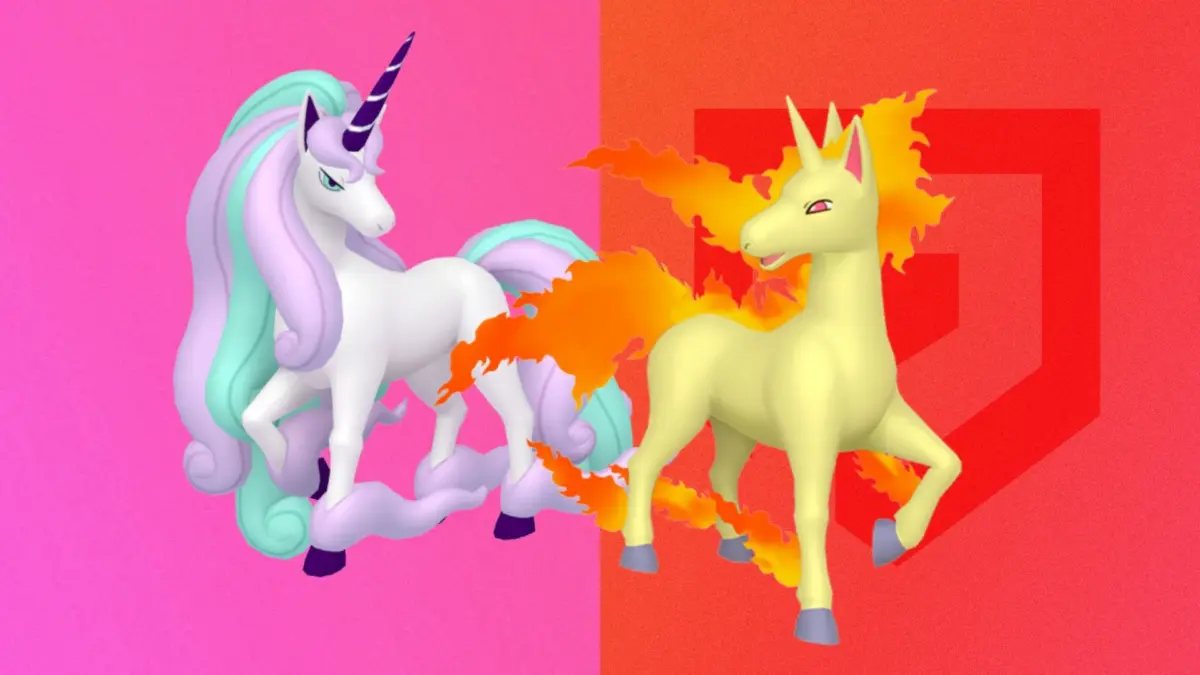
National Pokédex entry #0078, known universally as Rapidash, represents one of the most enduring design archetypes in the Pokémon franchise. Introduced in Generation I as a pure Fire-type, the Unique Horn Pokémon established an early standard for high-speed, physical Fire-type attackers. Over twenty-five years later, the species underwent a radical reinvention in Generation VIII with the introduction of its Galarian regional variant—a dual Psychic/Fairy-type adapted to enchanted forest ecosystems.
| Parameter | Kantonian Rapidash | Galarian Rapidash |
|---|---|---|
| National Pokédex # | #0078 | #0078 |
| Primary Typing | Fire | Psychic / Fairy |
| Primary Abilities | Run Away / Flash Fire | Run Away / Pastel Veil |
| Hidden Ability | Flame Body | Anticipation |
| Catch Rate | 14.8% (60) | 14.8% (60) |
| Gender Ratio | 50% Male / 50% Female | 50% Male / 50% Female |
| Egg Group | Field | Field |
| EV Yield | +2 Speed | +2 Speed |
Mechanically, both variants share an identical Base Stat Total (BST) of 500, prioritized heavily toward physical Attack (100) and Speed (105). Despite sharing a stat backbone, their battle roles, defensive matrices, and move pools diverge significantly. Kantonian Rapidash operates primarily as a fast, fire-coated physical pivot utilizing powerful STAB (Same Type Attack Bonus) moves like Flare Blitz. Conversely, Galarian Rapidash functions as a supportive offensive hybrid, leveraging immunities and status mitigation through its unique ability, Pastel Veil.
This comprehensive analysis documents the historical trajectory, competitive metrics, geographic distribution, and strategic evolution of Rapidash across all major mainline generations.
Detailed Chronology of Regional Presence and Availability
Rapidash’s availability across video game titles reflects broader shifts in game design, pokedex selectivity, and regional distribution mechanics. Below is the historical chronology of how players have acquired Rapidash across nine generations of mainline titles.
       [GEN I - III]                [GEN IV - VI]               [GEN VII - IX]
  Kanto Debut & Trades  --->  Sinnoh Prominence & BDSP  --->  Galar Regional Variant
  (Level 40 Evolution)        (Crucial Fire-Type Pivot)       (Psychic/Fairy Paradigm Shift)
Generation I: Kanto Debut
In Pokémon Red, Blue, and Yellow, Rapidash could not be captured directly in the wild in standard encounters; it was exclusively obtainable by leveling up Ponyta to Level 40. Ponyta was restricted to late-game locations such as Pokémon Mansion on Cinnabar Island and Route 17 (Cycling Road).
Generation II: Johto and Kanto Expansion
In Pokémon Gold, Silver, and Crystal, wild Rapidash became accessible directly in the end-game regions. Players could encounter wild specimens at Route 28 and the slopes of Mount Silver. In addition, Gold and Silver introduced an in-game trade in Pewter City, allowing players to exchange a Gloom for a Rapidash.

Generation III: Hoenn and the Sevii Islands
In the Hoenn-based titles (Ruby, Sapphire, and Emerald), Rapidash was completely absent from native ecosystems, requiring direct trade from FireRed and LeafGreen. In the Kanto remakes (FireRed/LeafGreen), wild Rapidash inhabited Kindle Road and Mount Ember within the Sevii Islands archipelago. The spin-off title Pokémon XD: Gale of Darkness featured Shadow Rapidash on Citadark Isle.
Generation IV: Sinnoh and Johto Remakes
Rapidash played a historically significant role in Pokémon Diamond and Pearl. Due to a severe scarcity of native Fire-type Pokémon in the initial Sinnoh Pokédex, the Ponyta-Rapidash line served as one of only two viable Fire-type options (alongside the starter Chimchar). In Platinum, expanded availability corrected this imbalance, though Rapidash remained a core encounter. In HeartGold and SoulSilver, wild Rapidash retained its Gen II locations on Route 28 and Mount Silver.
Generation V & VI: Unova, Kalos, and Hoenn Remakes
In Pokémon Black and White, wild Rapidash was placed on Route 12 in the post-game eastern half of Unova. In Black 2 and White 2, it transitioned back to a transfer-only/trade-only asset. Generation VI (X and Y, Omega Ruby and Alpha Sapphire) relied on evolving Ponyta caught via the Friend Safari or DexNav Mirage Spots.
Generation VII: Alola and the Return to Kanto
In Sun, Moon, Ultra Sun, and Ultra Moon, Rapidash was unobtainable in the wild, depending entirely on the Pokémon Bank migration tool. However, Pokémon Let’s Go, Pikachu! and Let’s Go, Eevee! revitalized wild Rapidash encounters on Route 17, allowing players to ride the burning equine across the overworld.
Generation VIII: The Galarian Paradigm Shift and Hisui
Generation VIII represented the most substantial transformation for the species:
- Pokémon Sword and Shield: Introduced Galarian Rapidash (Psychic/Fairy). Galarian Ponyta evolved into Galarian Rapidash at Level 40. The original Kantonian form was accessible strictly via in-game trades or transferred via Pokémon HOME. In Pokémon Shield, wild Galarian Rapidash roamed areas including Bridge Field, Hammerlocke Hills, Lake of Outrage, and the Rolling Fields, with expansion pass additions in Ballimere Lake and Giant’s Bed.
- Brilliant Diamond and Shining Pearl: Restored Kantonian Rapidash as a key Fire-type pick within the Sinnoh remakes.
- Pokémon Legends: Arceus: Featured Kantonian Rapidash prominently across the Obsidian Fieldlands (specifically Horseshoe Plains) and the Coronet Highlands. The game featured an aggressive, persistent "Alpha Rapidash" in the Obsidian Fieldlands, serving as an early-game territorial threat to players.
Generation IX: Paldea and Beyond
In Pokémon Scarlet and Violet (including its DLC expansions, The Teal Mask and The Indigo Disk), neither Kantonian nor Galarian Rapidash is present in the regional data roster, marking a period of total exclusion from active competitive and regional play.

Supporting Context & Technical Metrics
Base Statistics Profile
Both variants of Rapidash share identical stat distributions. The species is built as a fast, physical glass cannon, relying on high Speed to execute attacks before taking damage.
HP           [65]  ■■■■■■
Attack      [100]  ■■■■■■■■■■
Defense      [70]  ■■■■■■■
Sp. Atk      [80]  ■■■■■■■■
Sp. Def      [80]  ■■■■■■■■
Speed       [105]  ■■■■■■■■■■■
Total: 500- Hit Points (HP): 65 – Relatively low pool, leaving it vulnerable to strong neutral physical hits.
- Attack: 100 – Solid physical output, enabling lethal usage of recoil-heavy STAB moves.
- Defense: 70 – Below-average physical bulk; highly susceptible to priority moves like Aqua Jet or Accelerock.
- Special Attack: 80 – Moderate; usable for mixed coverage (Fire Blast, Psychic), though physical sets remain optimal.
- Special Defense: 80 – Moderate baseline special bulk.
- Speed: 105 – Excellent speed tier, allowing it to outpace major unboosted threats.
Type Matchup Comparative Matrix
The typing split between the two forms creates starkly different defensive utility profiles on the battlefield.
Kantonian Rapidash (Pure Fire)
Resistances (0.5x) : Bug, Fairy, Fire, Grass, Ice, Steel
Weaknesses (2.0x)  : Ground, Rock, Water
Immunities (0.0x) : None (Flash Fire grants Fire immunity if active)- Strengths: Six key resistances, allowing efficient switch-ins against Grass, Steel, and Fairy attacks.
- Weaknesses: Vulnerable to universal offensive types—Ground (Earthquake), Rock (Stealth Rock), and Water (Scald/Liquidation).
Galarian Rapidash (Psychic / Fairy)
Resistances (0.5x) : Fighting, Psychic
Weaknesses (2.0x)  : Ghost, Poison, Steel
Immunities (0.0x) : Dragon- Strengths: Complete immunity to Dragon-type moves; double resistance to Fighting and Psychic types.
- Weaknesses: Susceptible to common competitive coverage types, notably Poison, Ghost (Shadow Ball/Poltergeist), and Steel (Iron Head).
Move Pool and Competitive Versatility
The tactical viability of Rapidash is largely governed by its high-leverage physical attacks and utility options introduced across generations.
Kantonian Rapidash Primary Moveset Profile
Level-Up Highlights:
  Lvl 15: Flame Charge (Speed Boost)
  Lvl 25: Flame Wheel
  Lvl 49: Inferno
  Lvl 56: Fire Blast
  Lvl 63: Flare Blitz (120 Base Power Physical STAB)

Key Technical Machines (TMs/TRs):
  - High Horsepower / Drill Run (Ground-type coverage against Rock/Fire)
  - Megahorn (Bug-type anti-Psychic/Dark coverage)
  - Will-O-Wisp (Status pressure via Burn)
  - Wild Charge (Electric-type coverage against Water)
  - Swords Dance (Physical setup)
Galarian Rapidash Primary Moveset Profile
Level-Up Highlights:
  Lvl 15: Fairy Wind
  Lvl 25: Psybeam
  Lvl 49: Dazzling Gleam
  Lvl 56: Psychic
  Lvl 63: Healing Wish (Sacrificial team support)

Key Technical Machines (TMs/TRs):
  - Psycho Cut / Zen Headbutt (Physical Psychic STAB)
  - Play Rough (Physical Fairy STAB)
  - High Horsepower (Ground coverage for Steel/Poison weaknesses)
  - Calm Mind / Swords Dance (Setup options)
  - Magic Room / Trick Room / Misty Terrain (Field manipulation)
Breeding and Egg Move Mechanics
Through targeted breeding within the Field Egg Group, both forms gain access to high-utility technical moves:
- Double Kick (Fighting): Provides multi-hit coverage against Normal, Rock, and Ice types (Bred via Blaziken, Cinderace, Dubwool).
- Morning Sun (Normal): Offers reliable 50% HP recovery under clear weather conditions (Bred via Espeon).
- Hypnosis (Psychic): Delivers wide-accuracy status sleep control (Bred via Musharna).
- Horn Drill (Normal): One-hit knockout option for unranked casual formats (Bred via Rhyperior, Excadrill).
Official Lore, Canon, and Design Philosophy
The structural evolution of Rapidash illustrates Game Freak’s changing approach to ecological world-building over successive hardware generations.
[KANTO FORM]                                [GALAR FORM]
Habitat : Open Plains / Grasslands         Habitat : Enchanted Forests (Glimwood Tangle)
Concept : High-Speed Fire Equine           Concept : Unicorn / Pastel Mythological Beast
Ecology : Flame grows longer at speed      Ecology : Stores magical energy in mane & horn
Kantonian Lore: Speed and Fiery Passion
canonical Pokédex descriptions establish Kantonian Rapidash as an embodiment of raw acceleration. It is reported to reach top speeds of up to 150 miles per hour (240 km/h) within ten strides. Its mane burns intensely when running, lengthening as its momentum accelerates.

Lore consistently emphasizes the bond between rider and Pokémon: the flames of its mane and tail will not burn a rider if the Rapidash trusts them, a theme featured prominently in early anime episodes (e.g., Episode 33, "The Flame Pokémon-Rathon!").
Galarian Lore: Environmental Adaptation
The Galarian variant shifts from a flame-based equine to a mythical unicorn motif. According to official Galar lore, generations of exposure to the abundant life energy of Glimwood Tangle transformed the species over centuries.
Galarian Rapidash stores ambient psychic and fairy energy in its long, pastel-colored mane, which glows when releasing power. Its unique ability, Pastel Veil, mechanically reflects this medicinal, purified nature by preventing the Rapidash and its allies from suffering the Poison status condition and instantly curing any poisoned ally upon switching into battle.
Future Outlook
Rapidash occupies a unique position within the competitive and thematic meta-structure of the Pokémon franchise. While its exclusion from Generation IX (Scarlet and Violet) temporarily removed it from official VGC (Video Game Championships) formats, its presence in historic titles highlights a persistent niche:
- Competitive Tiering History: Rapidash has historically served as a potent lower-tier dynamic pivot (frequently residing in Smogon’s NU/PU tiers). Its combination of 105 base Speed, Swords Dance, and fast status applications via Will-O-Wisp allows it to pressure defensive structures.
- Regional Variant Framework: The introduction of Galarian Rapidash set a design precedent for updating classical Gen I Pokémon with modern dual-typing combinations.
- Prospects in Upcoming Titles: With Pokémon Legends: Z-A scheduled to return players to the urban-centric Kalos region (Lumiose City), speculation remains high regarding whether classic physical pivots like Rapidash will re-enter the regional roster or receive new gameplay mechanics (such as Mega Evolution reinventions).
Whether in its classic blazing Kantonian form or its mystical Galarian incarnation, Rapidash remains a cornerstone design in Game Freak’s creature architecture—serving as a bridge between pure Generation I simplicity and modern regional adaptation.









Belum ada komentar. Jadilah yang pertama berkomentar!