

Executive Overview
In the sprawling, hyper-digitized landscape of modern music consumption, where algorithms spoon-feed sterile master files to apathetic listeners, the physical artifact retains a defiant, talismanic power. For the dedicated vinyl collector, a record is never merely a medium for audio reproduction; it is a time capsule, a fragile piece of fine art, and an intimate archaeological dig.
Consider the prized trophy of a recent Tokyo-leaning secondhand shop excursion: a pristine, Japanese pressing of Sylvie Vartan’s 1974 album La Reine de Saba (The Queen of Sheba). What elevates this particular acquisition from a routine bargain-bin find—snagged for a mere single US dollar, down from a marked $19—is not just the glistening, scratch-free wax resting inside the gatefold sleeve. It is the presence of the obi.
For the uninitiated, an obi is a paper band wrapping around the left edge of a Japanese LP, functioning simultaneously as a promotional flyer, an informational placard, and a physical seal of authenticity. In the ecosystem of secondary markets like Discogs or eBay, an album described as "with obi" commands instant reverence. It signals to the cognoscenti that the original owner handled the artifact with immense care; if the paper sash remains intact, the vinyl within is almost certainly pristine.
Beyond its collector-market valuation, La Reine de Saba represents a fascinating crossroads in pop history. Released in 1974—past the initial, sun-drenched zenith of the 1960s yé-yé movement—the record finds French pop royalty Sylvie Vartan curating a deeply personal, emotionally resonant song cycle explicitly tailored for her fiercely devoted Japanese fanbase. Part retrospective, part genre-crossing experiment, the album bridges the gap between classic Parisian chanson and early-1970s global pop-rock, offering a window into an era of transnational musical exchange that modern streaming services frequently flatten out.
Detailed Chronology: The Genesis, Journey, and Evolution of La Reine de Saba
To truly understand the gravity of La Reine de Saba, one must trace the historical and cultural trajectory that led to its 1974 pressing in Japan, subsequent releases in South Korea, and its slow creep toward global digital recognition decades later.
The 1960s: The Yé-Yé Golden Age and Vartan’s Ascent
The narrative begins in the early 1960s, an epoch immortalized by the stylish, breathless framing of French New Wave cinema. Think of the cool, detached dance sequences in Jean-Luc Godard’s 1962 Vivre Sa Vie or 1964’s Bande à Part. Sylvie Vartan emerged as the living embodiment of that kinetic, effortlessly chic youth culture. Alongside compatriots Françoise Hardy, France Gall, Serge Gainsbourg, and Johnny Hallyday—whom she married in 1965—Vartan defined an era where French pop functioned like musical pastries: brief, confectionary gems driven by infectious rhythmic hooks and pristine melodies.
However, as the 1960s yielded to the 1970s, rock and roll grew increasingly self-serious, transforming into "rock," and the innocent sparkle of early French pop began to fade. Mainstream pop culture drifted into overripe, overly sweet territories. Yet, while tastes shifted across Europe and North America, Vartan maintained an unbreakable, symbiotic bond with Japanese audiences who appreciated the sophisticated elegance of the French chanson tradition.
1974–1987: Transnational Pressings and the Japanese Connection
Recognizing this enduring devotion, Vartan recorded La Reine de Saba specifically for her admirers in the Far East. Inside the gatefold sleeve, alongside Japanese liner notes and striking imagery, lies a reproduction of a handwritten note from the singer herself:
"Je sais que tous mes amis japonais aiment beaucoup ‘la chanson’. C’est pour vous que j’ai enregistré spécialement ce l.p. avec les plus belles chansons françaises et certaines autres que j’aime. J’espère que vous pourrez autant de plaisir à les écouter que moi à les enregistrer. Votre amie."
(English translation: "I know that all my Japanese friends are very fond of ‘la chanson’. It’s for you that I especially recorded this LP with the most beautiful French songs and some others that I like. I hope that you enjoy listening to them as much as I did recording them. Your friend.")
The album’s appeal quickly transcended Japan’s borders. South Korea embraced the release, pressing it on vinyl in 1975 and issuing a cassette version in 1987. For decades, the album remained an elusive international artifact. While French reissues were rumored or occasionally attempted, La Reine de Saba did not officially hit the compact disc market until 2013, appearing simultaneously in France and Japan. This digital release finally allowed global Vartan aficionados to catch up with a masterclass in interpretive vocal performance.
Supporting Context & Metrics: Side A and Side B Deconstructed
La Reine de Saba is structurally divided into two distinct emotional and sonic hemispheres. Face A serves as a masterclass in classic ballads and timeless chanson, while Face B ventures into an eccentric grab bag of pop-rock adaptations and glam-adjacent experiments.
+-----------------------------------------------------------------------+
|                       LA REINE DE SABA: ALBUM MAP                     |
+-----------------------------------+-----------------------------------+
|             FACE A                |             FACE B                |
|       (The Ballad Tradition)      |       (The Pop-Rock Odyssey)      |
+-----------------------------------+-----------------------------------+
| • La Reine de Saba                | • Holidays                        |
| • Love Is Blue (L'amour est bleu) | • Rock'n Roll Man                 |
| • Hymne à l'amour                 | • Ne Me Quittes Pas               |
| • Les Feuilles Mortes             | • Bang Bang                       |
| • The Music Played                | • Dadou Ron Ron                   |
| • Les Moulins de Mon Coeur        | • Qui Saura                       |
+-----------------------------------+-----------------------------------+
Face A: The Classic Ballad Suite
- "La Reine de Saba": Written by Michel Laurent as "Ma Reine de Saba" in 1967, the title track bridges European composition with Japanese market appeal (Laurent notably recorded a Japanese-language version around the same time). Vartan’s orchestrated pop rendition dusts off the original, displaying a confident elegance that proves her mettle as a world-class vocalist.
- "Love Is Blue" (L’amour est bleu): Originally composed by André Popp with lyrics by Pierre Cour, this track channels Vicky Leandros’s 1967 hit and Paul Mauriat’s orchestral success. Vartan infuses a proto-disco propulsion that edges the song toward the dancefloor, all while eschewing the sugary sweetness of her contemporaries.
- "Hymne à l’amour": Entering sacred territory, Vartan tackles the definitive Édith Piaf classic. Eschewing the background chorus of the original, Vartan adds a dramatic drum roll and deploys her naturally deeper, commanding vocal prowess to stand shoulder-to-shoulder with the "Little Sparrow."
- "Les Feuilles Mortes" ("Autumn Leaves"): Originally a hit for Yves Montand in 1949 via Jacques Prévert and Joseph Kosma, Vartan’s French interpretation balances an unadorned xylophone with soaring strings, letting a subtle vocal crack betray the melancholy hidden beneath her impervious exterior.
- "The Music Played" & "Les Moulins de Mon Coeur": Moving through Udo Jürgens’ torch songs and Michel Legrand’s cinematic "Windmills of Your Mind," Vartan utilizes baroque piano figures and a rare, lightly jazzy rhythm section to ground high drama in authentic emotional vulnerability.
Face B: The Stylistic Frontier
- "Holidays": Written by Michel Polnareff and Jean-Loup Dabadie, this track offers a mellow glam gloss reminiscent of David Bowie’s 1971 Hunky Dory era. Vartan leans heavily into crunchy guitar riffs and an infectious vocal delivery.
- "Rock’n Roll Man" & "Dadou Ron Ron": Written by Tommy Brown and covered by Johnny Hallyday, "Rock’n Roll Man" provides a quirky, 1970s-groovy diversion featuring a small horn section and female backing vocals. Meanwhile, "Dadou Ron Ron" puts a French boogie spin on the classic Phil Spector-produced Crystals hit, driven by driving guitars and absolute vocal commitment.
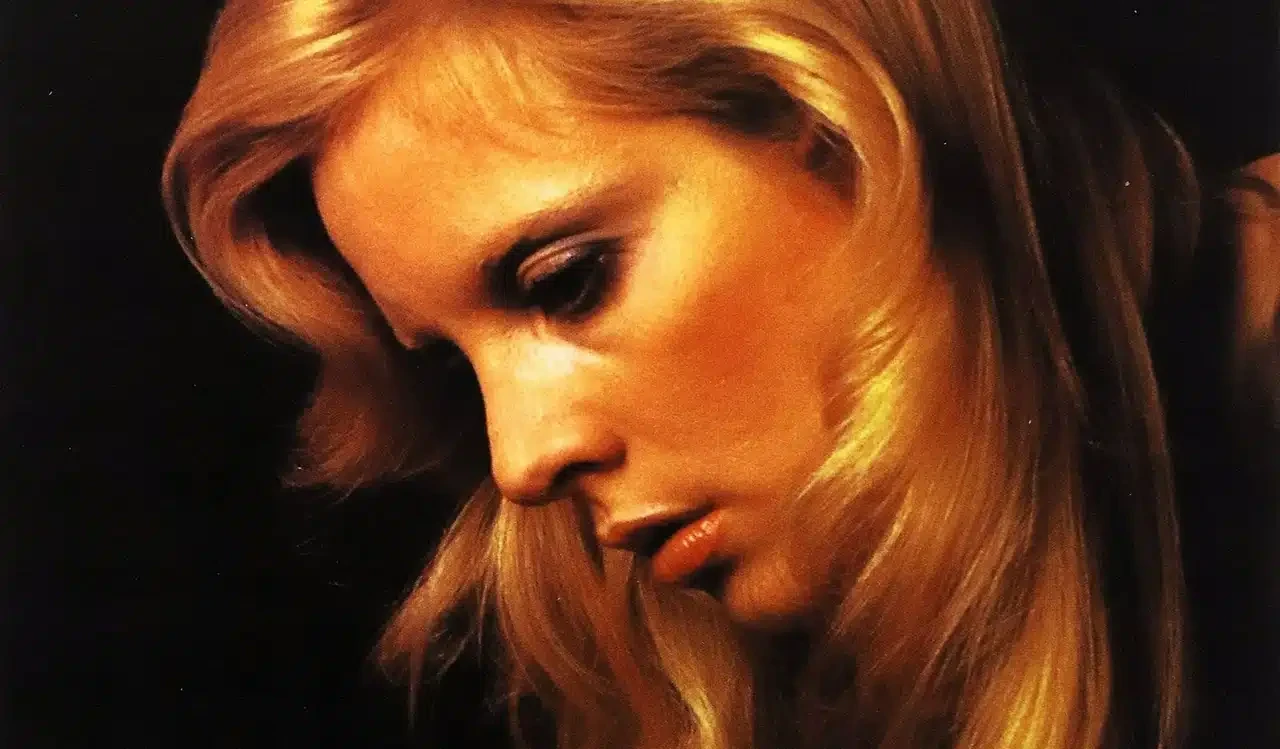
- "Ne Me Quittes Pas" & "Qui Saura": Jacques Brel’s immortal lament receives a dignified, piano-led treatment characterized by elegant vibrato, while the album-closing "Qui Saura" (adapting Jimmy Fontana’s Italian hit via Mike Brant) deploys double-tracked vocals to embody the mildly troubled mindfulness captured on the album’s iconic front cover.
Official Statements & Archival Insights
The intimacy of La Reine de Saba invites musicologists and critics to evaluate whether the record functions as a covert career autobiography or a conceptual love letter. While no overarching narrative officially binds the tracks beyond their shared Frenchness, Vartan’s active curation of the tracklist reveals a deliberate artistic statement.
In her liner note message, preserved across Japanese and South Korean pressings, Vartan explicitly positions the project as an offering of cultural diplomacy and personal gratitude:
"It’s for you that I especially recorded this LP with the most beautiful French songs and some others that I like. I hope that you enjoy listening to them as much as I did recording them."
Music critics and archival historians note that Vartan’s ability to strip away the occasional bombast of original recordings transformed what could have been a standard compilation into a cohesive, auteur-driven statement. By honoring her French roots while experimenting with contemporary glam and pop-rock idioms on foreign soil, Vartan successfully bridged local Parisian nostalgia with international sonic ambitions.
Future Outlook: The Digital Resurgence and Physical Preservation
As physical media continues its stubborn, culturally vital renaissance in the 21st century, releases like La Reine de Saba occupy an increasingly valued space. The intersection of analog vinyl collecting, digital preservation, and internet remix culture points toward a thriving future for neglected international pop gems.
- Digital Remediation and Fan Remixes: As demonstrated by dedicated archivists and YouTubers (such as Sergio BR’s 2023 extended 12-inch mix isolates of Vartan’s vocal tracks), physical vintage records are increasingly being cross-pollinated with modern digital production techniques. The intricate orchestrations of tracks like "Les Moulins de Mon Coeur" offer fertile ground for future electronic and ambient re-contextualization.
- The Escalating Value of Obi-Strip Vinyl: As physical grading standards tighten on platforms like Discogs, records featuring intact, pristine obi strips will continue to appreciate as premier collector artifacts. They serve as physical proof of an era when labels went to extraordinary lengths to curate localized packaging for discerning overseas markets.
- Revisiting the Yé-Yé Legacy: With younger generations continually rediscovering the mid-century modern aesthetic of 1960s and 1970s French pop through curated playlists and cinematic syncs, artists like Sylvie Vartan are poised for broader retrospective evaluations. Far from being mere footnotes in European pop history, records like La Reine de Saba stand as enduring testaments to the power of cross-cultural artistic exchange—best enjoyed, whenever possible, with the obi securely wrapped around the cover.









Belum ada komentar. Jadilah yang pertama berkomentar!