

Executive Overview
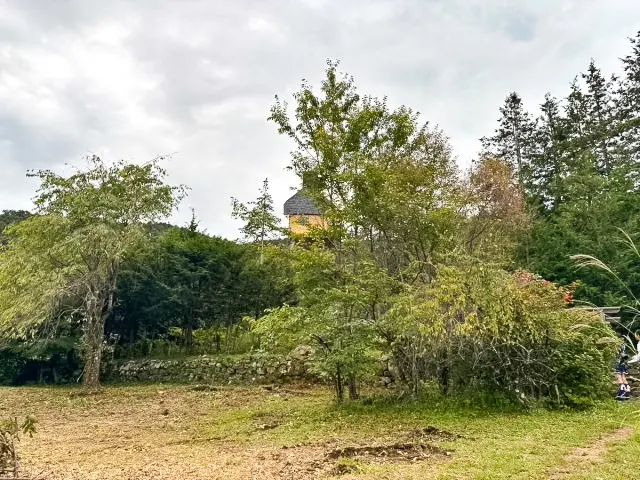
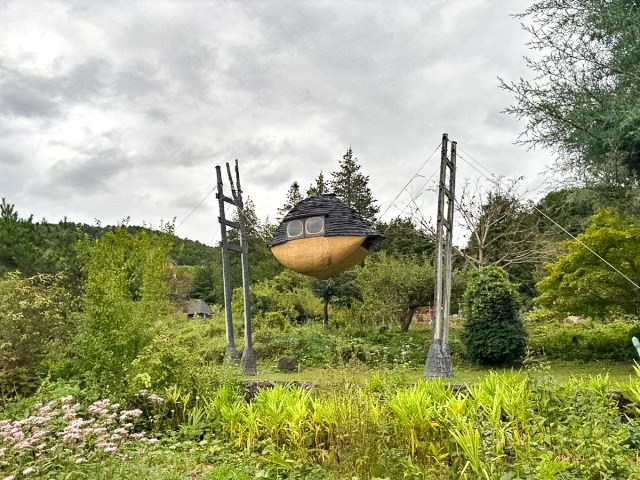
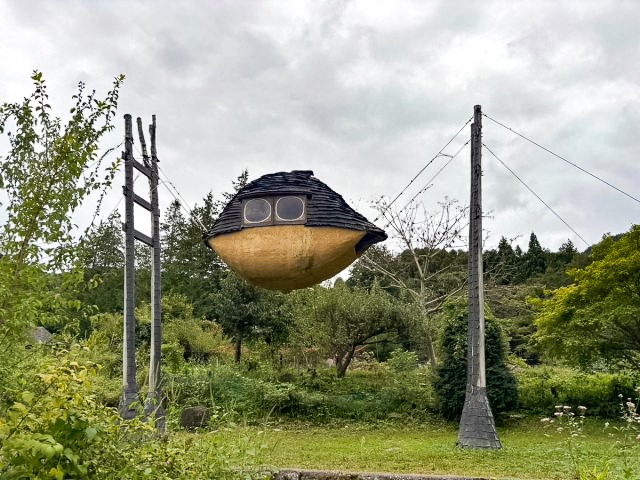
Tucked away within the verdant, tranquil landscapes of Chino City in Nagano Prefecture, Japan, lies a surreal architectural enclave that feels less like a product of modern engineering and more like a portal into a hand-drawn fantasy film. Known colloquially and internationally for its whimsical aesthetic, this off-the-beaten-path destination features a collection of unorthodox teahouses that completely upend centuries of Japanese architectural convention. At the center of this surrealist woodland compound is the Sora Tobu Dorobune—universally translated as the "Flying Mud Boat."
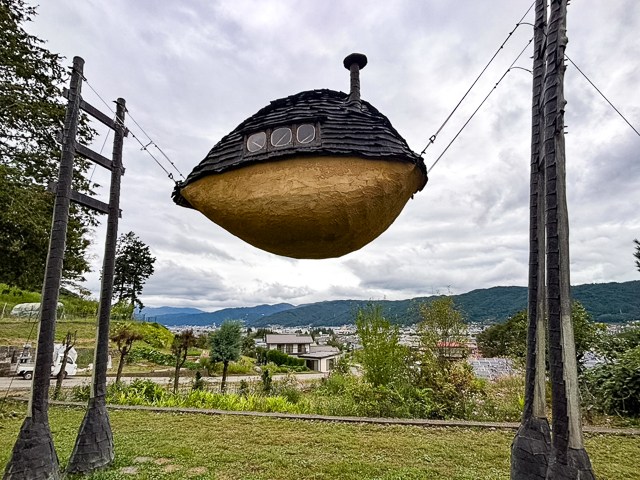
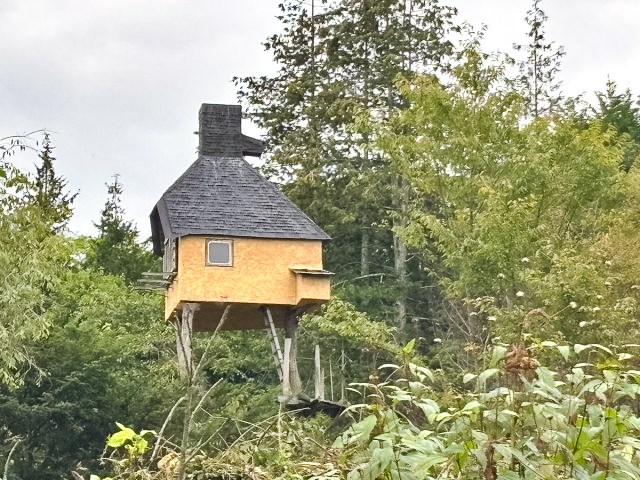
Designed by the visionary architect, architectural historian, and professor Terunobu Fujimori, the Flying Mud Boat hangs suspended in midair, defying conventional gravity and challenging our fundamental assumptions about how buildings should interact with the earth. Alongside its sister structures—the notoriously vertiginous Takasugi-an ("Too-High Teahouse") and the subterranean-adjacent Hikusugi-an ("Too-Low Teahouse")—this site represents a masterclass in playful, organic, and boundary-pushing design.
Recently, reporting teams journeyed deep into the rural expanses of Nagano to investigate this architectural marvel. What they uncovered was a living testament to an artist’s lifelong obsession with elevated spaces, natural materials, and the childlike wonder of storytelling design. While the structures are rarely open for casual walk-ins, the mere exterior experience of viewing these gravity-defying sanctuaries offers a profound perspective shift, proving that architecture can be both structurally sound and utterly magical.
Detailed Chronology: The Evolution of Fujimori’s Midair Obsession
The genesis of the Flying Mud Boat and its towering companions did not happen overnight. To truly understand the philosophical weight behind these suspended creations, one must trace the intellectual and creative evolution of Terunobu Fujimori, whose career has long been defined by a playful subversion of Japanese architectural norms.
The Formative Student Years (1970s)
Long before he achieved global acclaim for his eccentric wooden towers and mud-plastered hideaways, Fujimori was a young architectural student nursing a singular, seemingly impossible dream: he wanted to build a structure that floated entirely in midair. During an era heavily influenced by brutalism and rigid modernist concrete slabs, Fujimori found himself drawn to the primitive, the whimsical, and the historical. He envisioned a retreat detached from the ground—a sanctuary suspended by tension rather than anchored by heavy foundations. However, engineering constraints, academic expectations, and a lack of practical commissions kept this dream confined to sketchbooks and daydreams for decades.
The Breakthrough: Takasugi-an (2004)
Fujimori’s first major breakthrough in vertical experimentation came in 2004 with the completion of Takasugi-an ("Too-High Teahouse") in Chino City. Perched precariously atop two living chestnut trees, this remarkably slender teahouse reaches dizzying heights that leave visitors breathless from the ground up. The structure pushed engineering limits so far that international media took notice; TIME magazine famously named Takasugi-an one of the "Top 10 Most Dangerous Buildings in the World," placing it in elite, heart-stopping company alongside architectural anomalies like the Leaning Tower of Pisa. This international recognition proved that Fujimori’s fantastical visions had real-world viability and structural integrity, setting the stage for even bolder experiments.
The Realization of a Lifelong Dream: The Flying Mud Boat (2010)
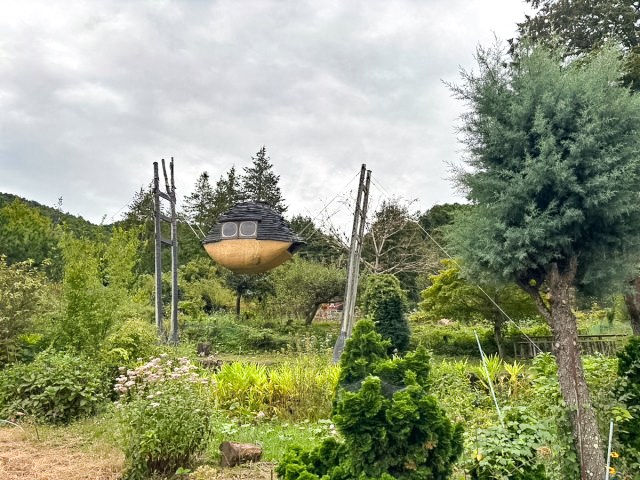
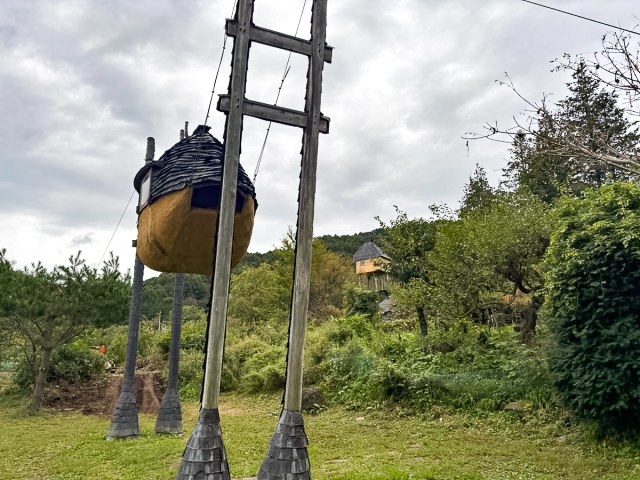
Six years after the completion of Takasugi-an, Fujimori finally realized his ultimate student-era fantasy. In 2010, coinciding with a special architectural exhibition, the Sora Tobu Dorobune (Flying Mud Boat) was officially erected on a plot of land in Chino City that already housed his previous conceptual works. Utilizing a complex, hidden network of tension wires and steel-reinforced framing concealed within natural finishes, Fujimori successfully suspended a boat-like plaster structure in midair.
Unlike traditional buildings that transfer their loads directly downward into foundations, the Flying Mud Boat relies on a delicate dialogue of pull and counter-pull. It stands as a physical manifestation of a lifelong ambition—proof that with enough ingenuity, childhood dreams can literally be lifted off the ground.
Supporting Context & Metrics: Architecture, Geography, and Design Philosophy
To appreciate the significance of Chino City’s architectural cluster, one must examine the physical metrics, materials, and philosophical underpinnings that govern Fujimori’s work.
Location and Accessibility
- Prefecture: Nagano Prefecture
- Municipality: Chino City (Chino-shi, Miyagawa)
- Specific Address: Nagano-ken, Chino-shi, Miyagawa 389-1
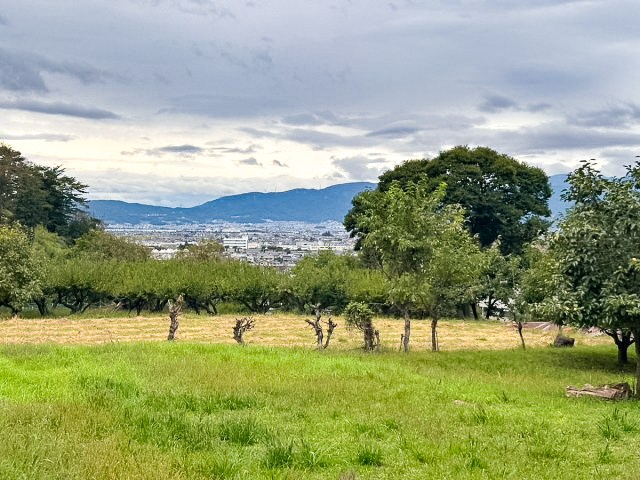
- Setting: Nestled in a quiet, rural district surrounded by dense foliage, agricultural plots, and mountainous backdrops, the site is deliberately removed from urban sprawl to preserve the meditative, otherworldly atmosphere essential to traditional Japanese tea culture (chado).
Architectural Metrics and Counter-Conventional Elements
Fujimori’s structures reject the sterile glass-and-steel lexicon of contemporary urban architecture in favor of a raw, tactile, and highly organic vocabulary.
-
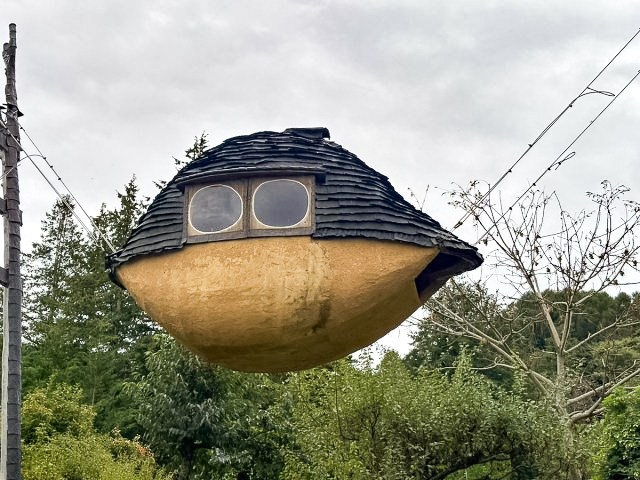
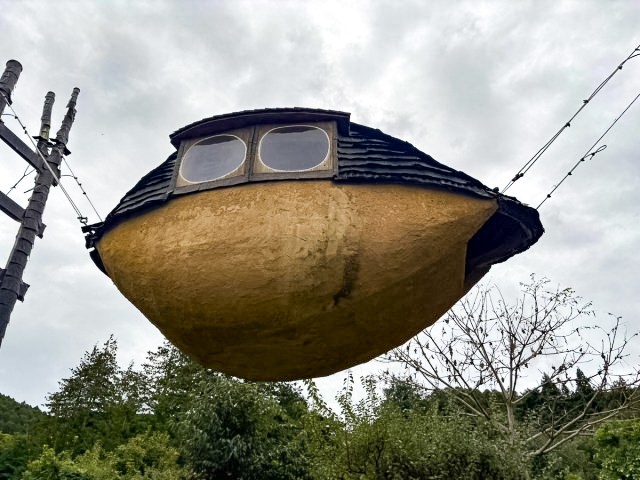
The Flying Mud Boat (Sora Tobu Dorobune):
- Suspension System: Held aloft by high-tensile steel cables anchored securely to nearby structural supports and earth-bound anchors, creating the unmistakable optical illusion of a vessel drifting through the sky.
- Exterior Materiality: Traditional mud plaster (shikkui), charred cedar wood (yakisugi), and natural earthen tones that allow the hull-like structure to weather organically, changing its patina with the seasons.
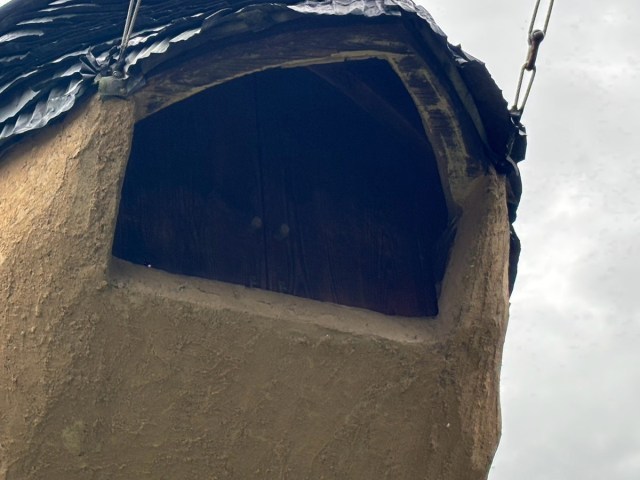
- Access: Normally restricted to preserve the delicate interior, entry is occasionally facilitated during special guided architectural tours via a temporary wooden ladder that allows visitors to climb up and crawl through a diminutive entryway.
-
The Too-High Teahouse (Takasugi-an):
- Elevation: Perched roughly platform-high atop two independently growing chestnut trees, forcing the building to sway gently with the natural movement of the wind.
- Interior Dimensions: Exceptionally compact, adhering strictly to the minimalist ethos of the historical chashitsu (tea room) pioneered by Sen no Rikyū, yet elevated to extreme verticality.
-
The Too-Low Teahouse (Hikusugi-an):
- Design Contrast: Serving as the structural and conceptual foil to Takasugi-an, this teahouse is built partially underground, utilizing the earth itself as insulation and shelter. It physically embodies humility, sitting in the literal and figurative shadow of its towering neighbor.
The Ghibli Effect: Why the World Compares Fujimori to Anime
It is virtually impossible to discuss Terunobu Fujimori’s portfolio without invoking the cinematic universe of Studio Ghibli. Masterpieces like Spirited Away, Howl’s Moving Castle, and My Neighbor Totoro are celebrated for architecture that feels alive—buildings constructed from mismatched timber, patched with mud, skewed at impossible angles, and swallowed by lush vines.
Fujimori’s structures evoke this exact brand of "anime wizardry." By utilizing natural raw timber, charred wood panels, copper roofs that develop a rich green patina, and hand-applied plaster finishes, his buildings do not look manufactured; they look as though they sprouted organically from the soil or were dropped into the Nagano forest by a passing spirit. This deliberate blurring of the line between nature and artifice is what draws international travelers, architecture enthusiasts, and pop-culture pilgrims to Chino City year after year.
Official Statements and Cultural Impact
While formal ribbon-cutting ceremonies and corporate PR campaigns are absent from these rural retreats, the cultural footprint left by Fujimori’s creations has been extensively documented by architectural historians, cultural journalists, and municipal bodies.
Local tourism authorities in Chino City have increasingly embraced the site as a cornerstone of the region’s off-the-beaten-track appeal. In official municipal literature regarding local attractions (Chino-shi Miyagawa Machizukuri), the teahouses are highlighted not merely as eccentric photo-ops, but as serious contributions to contemporary Japanese spatial design.
Art critics frequently cite Fujimori’s work as a necessary antidote to the hyper-rationalization of modern urban environments. In retrospective essays on his career, critics note:
"Fujimori reclaims architecture as a form of play. By stripping away the ego of corporate scale and replacing it with the scaled-down intimacy of the teahouse, he reminds us that buildings can evoke wonder, humor, and deep philosophical reflection all at once."
Furthermore, reporters who have visited the site on assignment—such as travel correspondents from cultural outlets like SoraNews24—consistently emphasize the emotional impact of the encounter. Observers note that standing beneath the suspended hull of the Flying Mud Boat or gazing upward at the wind-swayed apex of Takasugi-an induces a rare sense of childlike awe. It challenges visitors to reconsider the rigidity of their own daily environments and opens their eyes to what is possible when structural engineering bends to the whims of artistic imagination.
Future Outlook: Preservation and the Path Forward
As the Flying Mud Boat, Takasugi-an, and Hikusugi-an continue to age gracefully into their forest surroundings, questions regarding their long-term preservation and public accessibility remain paramount.
Managing Tourism and Preservation
Because these structures are constructed from organic, highly tactile materials—such as raw wood, unsealed mud plaster, and natural hemp or steel tension cables—they are inherently susceptible to the harsh weathering of Nagano’s mountainous climate, which features heavy winter snowfalls, freezing temperatures, and humid summers.
Local preservation groups and architectural conservators work closely to monitor the structural integrity of the suspension wires on the Flying Mud Boat and the arboricultural health of the living chestnut trees supporting Takasugi-an. Balancing the desire for public access with the physical fragility of these art pieces requires a delicate touch. Currently, interior access remains strictly controlled, permitted only during organized local tours or special exhibition windows. This restricted access ensures that the delicate interior tatami mats, handmade plaster walls, and complex joinery remain protected from excessive foot traffic and moisture damage.
A Beacon for Alternative Architecture
Looking ahead, the Chino City teahouse cluster serves as an enduring inspiration for a new generation of architects rebelling against homogenized urban development. As global interest in sustainable, locally sourced, and emotionally resonant design grows, Fujimori’s playful manifestos in wood and mud look increasingly prophetic.
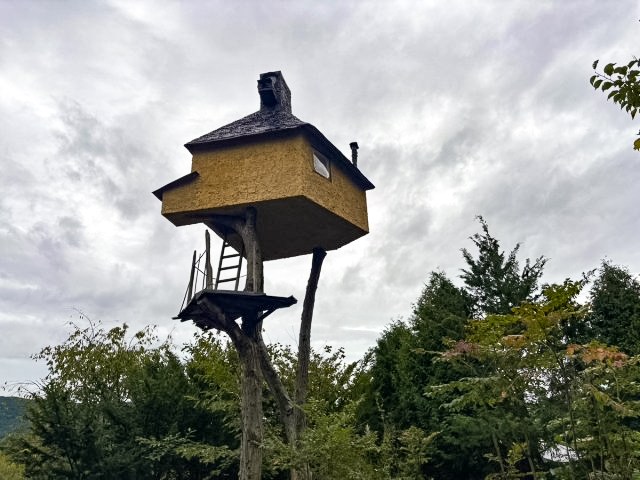
For travelers planning a pilgrimage to Nagano Prefecture, the site stands ready as a breathtaking day-trip destination. Whether viewed from the perimeter path during a quiet afternoon walk or experienced from the inside during a rare guided climb, the Flying Mud Boat and its companions offer a profound reminder: architecture does not always have to be heavy, serious, or bound to the earth. Sometimes, it can simply take flight.
Quick Visitor Reference
- Site Name: Flying Mud Boat (Sora Tobu Dorobune), Takasugi-an, and Hikusugi-an
- Location: Chino City, Nagano Prefecture, Japan
- Best Time to Visit: Spring through Autumn (to experience the surrounding greenery and foliage in full Ghibli-esque splendor). Note: Check local municipal tourism websites for updated guidelines on guided tour availability and exterior viewing accessibility before planning your journey.





Belum ada komentar. Jadilah yang pertama berkomentar!