

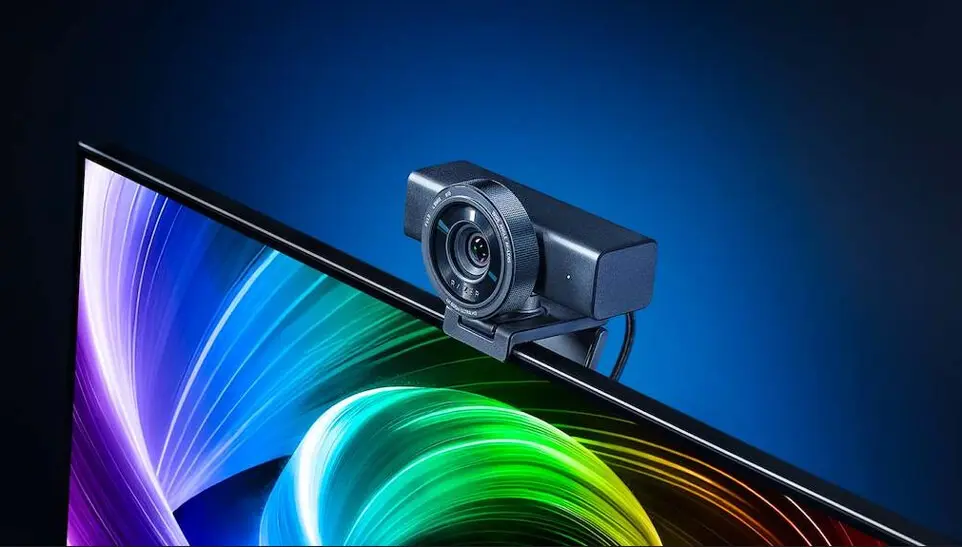
Executive Overview
The intersection of high-fidelity content creation and accessible hardware has reached a new paradigm. Razer, a globally recognized leader in high-performance gaming hardware, software, and systems, has officially taken the wraps off its most ambitious dedicated webcam to date: the Razer Kiyo V2 Pro. Tailored meticulously for professional live streamers, competitive esports athletes, virtual content creators, and remote corporate professionals who demand uncompromising visual fidelity without the financial and logistical overhead of a traditional mirrorless or DSLR camera rig, this device bridges the gap between consumer plug-and-play convenience and cinema-grade image processing.
At the core of the Kiyo V2 Pro’s marketing and technical proposition is its headline capability: uncompromised 4K recording and streaming at a buttery-smooth 60 frames per second (fps). Historically, content creators faced an arduous compromise when selecting a webcam. They could either opt for high-resolution 4K output that was chronically throttled to a sluggish 30fps—resulting in motion blur, stutter, and an unnatural, cinematic judder unsuited for fast-paced gaming—or settle for high-frame-rate 1080p feeds that lacked the crispness demanded by modern high-density displays. By fusing an advanced Sony STARVIS 2 sensor with robust onboard and software-driven image processing pipelines, Razer aims to render this historical compromise obsolete.
Beyond raw resolution and frame rate metrics, the Kiyo V2 Pro integrates a suite of intelligent features designed to democratize professional video production. These include automated digital framing, advanced low-light optimization, Ultra-High Dynamic Range (HDR) support, and a flexible physical mounting architecture complete with an integrated privacy shutter.
Priced at US$299.99 / €319.99 and rolling out globally through Razer’s direct channels and authorized retail partners, the Kiyo V2 Pro positions itself firmly at the premium end of the USB webcam market. This comprehensive review and investigative report explores the technical architecture, market implications, software ecosystem, and broader industry context surrounding Razer’s latest flagship imaging peripheral.
Detailed Chronology and Technical Evolution of the Kiyo Series
To fully appreciate the engineering milestone represented by the Kiyo V2 Pro, one must trace the evolutionary lineage of Razer’s webcam portfolio. When Razer first entered the dedicated streaming camera market with the original Razer Kiyo, it revolutionized the space by introducing a physical, adjustable ring light directly onto the chassis of the webcam. This solved an immediate, pervasive pain point for entry-level streamers: abysmal indoor lighting. However, that first-generation device was fundamentally limited by its 1080p30 output and standard CMOS sensor performance.
Subsequent iterations, such as the Kiyo Pro, shifted focus away from integrated physical lighting and pivoted heavily toward sensor performance, introducing an advanced back-illuminated CMOS sensor capable of capturing uncompressed 1080p footage at 60fps with HDR capabilities. Yet, as streaming platforms like Twitch, YouTube, and specialized enterprise conferencing software rapidly adopted higher bitrates and 4K streaming protocols, the market demanded a device that could marry the high-frame-rate fluidity of the Kiyo Pro with the crystalline resolution of a native 4K imaging pipeline.
The development cycle of the Kiyo V2 Pro represents a multi-year engineering initiative by Razer’s hardware and optical research teams. The timeline leading up to this release was characterized by several key technical breakthroughs:
- Sensor Selection and Integration: The adoption of the Sony STARVIS 2 sensor family marks a critical turning point. Originally engineered for high-end security and surveillance applications where low-light clarity and dynamic range are matters of operational security, the STARVIS 2 architecture brings unprecedented pixel-level light gathering to a consumer desktop form factor.
- Thermal and Processing Optimization: Pushing 4K resolution at 60 frames per second via a USB interface generates massive amounts of raw uncompressed or compressed data. Razer’s engineering team had to design efficient onboard encoding and thermal dissipation methods within a compact desktop footprint to prevent thermal throttling during marathon streaming sessions.
- Software Synergy: Hardware is only as capable as the software driving it. Razer’s development of the One-Click Image Enhancement pipeline, coupled with partnerships for advanced framing solutions like Camo Pro, indicates a strategic shift toward a software-augmented hardware ecosystem.
Supporting Context & Metrics: Under the Hood of the Kiyo V2 Pro
A deep-dive technical analysis of the Razer Kiyo V2 Pro reveals a sophisticated array of hardware components and software algorithms designed to maintain image integrity across wildly disparate environmental conditions.
The Optical Architecture: Sony STARVIS 2 and the 86-Degree Lens
At the heart of the Kiyo V2 Pro lies the aforementioned Sony STARVIS 2 sensor. Unlike standard consumer-grade CMOS sensors found in typical laptop webcams, the STARVIS 2 utilizes back-illuminated pixel technology designed to maximize quantum efficiency in both the visible light and near-infrared light spectrums. This translates directly to cleaner low-light footage, drastically reduced shadow noise, and superior color fidelity in dimly lit gaming dens or home offices.
The sensor is paired with a custom-engineered 86-degree wide-angle lens. In the world of desktop streaming, field-of-view (FOV) is a delicate balancing act. A narrow FOV restricts the user to a tight head-and-shoulders shot, while an overly wide fisheye lens introduces grotesque edge distortion, warping the streamer’s face and exposing the messy corners of their room. Razer’s 86-degree optic strikes an optimal balance, offering ample horizontal coverage to display dual-monitor setups, desktop peripherals, and immersive room aesthetics while utilizing precise optical geometry to keep edge distortion well within acceptable, professionally tolerated limits.
High-Frame-Rate 4K Performance
The ability to capture 4K video at 60fps is no small feat. Standard USB 3.0 interfaces possess the theoretical bandwidth required to handle such high-throughput data streams, but efficient compression algorithms (such as MJPEG, H.264, or YUY2 handling) are critical to maintaining low latency. By sustaining 60 frames per second at full 4K resolution, the Kiyo V2 Pro eliminates the motion stutter that typically plagues high-resolution webcams. Rapid hand gestures, fast-paced game reflections, and swift head movements are rendered with fluid, life-like realism.
Intelligent Exposure, Dynamic Range, and Manual Tuning
Recognizing that the vast majority of creators do not operate inside climate-controlled, professionally lit television studios, Razer has heavily emphasized adaptive software automation:
- One-Click Image Enhancement: This proprietary algorithm dynamically evaluates the scene in real time, instantaneously modulating exposure levels, white balance parameters, and temporal noise reduction to compensate for shifting ambient light (such as clouds passing outside a window or the flickering RGB glow of a gaming rig).
- Ultra-High Dynamic Range (HDR): Backlit scenarios—such as a streamer sitting in front of a bright window or a glowing white wall—frequently result in silhouetted subjects or blown-out highlights. The Kiyo V2 Pro’s HDR implementation captures multi-exposure frames simultaneously, merging them to preserve intricate shadow detail while clipping harsh highlights.
- Granular Manual Controls: For professional colorists and technical perfectionists who prefer manual intervention over automated heuristics, Razer provides an exhaustive suite of manual tuning parameters. Users can fine-tune color saturation, ISO limits, shutter speeds, contrast, and sharpness metrics down to the individual digit.
Framing, Mounting, and Physical Privacy
Physical versatility is another cornerstone of the Kiyo V2 Pro’s design philosophy:
- Dynamic Auto-Framing: Utilizing software-driven digital pan, tilt, and zoom (PTZ) capabilities, the webcam can intelligently track and center the user within the frame as they shift posture or lean forward and backward, mimicking the effect of a physical camera operator.
- Universal Pivoting Mount: The camera rests upon a robust, highly adaptable mounting mechanism designed to clamp securely onto ultra-thin laptop bezels, standard desktop monitors, or thread directly onto industry-standard tripods and studio boom arms.
- Integrated Privacy Shutter: In an era where digital privacy and cybersecurity are paramount, Razer has bypassed flimsy, easily misplaced clip-on lens covers. The Kiyo V2 Pro features a built-in, twist-operated mechanical privacy shutter that physically blocks the optical path when the device is not in use, offering absolute peace of mind to the user.
Official Statements and Industry Perspective
While Razer has maintained a focused rollout strategy for the Kiyo V2 Pro, official product documentation and accompanying corporate communications emphasize the company’s intent to disrupt the mid-to-high-end creator market.
Industry analysts tracking the peripheral market note a distinct trend: consumers are experiencing "upgrade fatigue" regarding dedicated mirrorless cameras. While mirrorless setups offer breathtaking image quality, they require dummy batteries, dedicated capture cards (such as Cam Link devices), complex mount configurations, and constant firmware management. Furthermore, many modern mirrorless cameras suffer from overheating issues when outputting clean 4K/60fps HDMI feeds over extended periods.
Razer’s official product positioning frames the Kiyo V2 Pro as the ultimate antidote to these logistical headaches. By delivering studio-adjacent performance wrapped in a streamlined USB-compatible form factor, Razer is targeting both aspiring creators who find DSLR setups prohibitively expensive and complex, as well as established professionals looking to streamline their desk setups without sacrificing broadcast-tier visual standards.
Moreover, Razer’s strategic inclusion of Camo Pro software access signals a collaborative approach to software ecosystems. Rather than forcing users onto a monolithic, proprietary software suite that may lack advanced third-party integrations, Razer is leveraging industry-recognized third-party utilities to ensure broad compatibility across popular streaming suites such as OBS Studio, Streamlabs, XSplit, Discord, Zoom, and Microsoft Teams.
Future Outlook: The Implications for the Streaming and Creator Economy
The launch of the Razer Kiyo V2 Pro arrives at a critical juncture for the digital creator economy. As streaming platforms aggressively push for higher default bitrates and viewers increasingly consume content on high-resolution 4K mobile and desktop displays, sub-standard webcams are becoming glaringly obvious bottlenecks in broadcast production value.
Looking ahead, we can expect several cascading effects across the hardware and streaming landscapes:
- Heightened Baseline Expectations for USB Peripherals: As 4K/60fps capture trickles down from high-end cinema gear into consumer-facing USB webcams, competing manufacturers will be forced to accelerate their own research and development pipelines to match Sony STARVIS 2-level performance. The era of the mediocre 1080p webcam dominating the mid-tier market is drawing to a close.
- The Software-Defined Hardware Paradigm: The value proposition of webcams is shifting rapidly from pure optical hardware to the intelligence of the software stack governing it. Features like AI-driven auto-framing, real-time background segmentation, and neural noise suppression will increasingly dictate consumer purchasing decisions. Razer’s bundled integration with platforms like Camo Pro underscores this reality.
- Regional Pricing and Global Availability: As of the time of writing, the Razer Kiyo V2 Pro commands an MSRP of US$299.99 / €319.99, placing it firmly in the premium peripheral tier. While official pricing and distribution timelines for Southeast Asian markets—including Malaysia—have yet to be formally ratified by regional distributors, past product launches suggest a localized rollout within the coming quarters, subject to regional import tariffs and regulatory certifications (such as SIRIM approvals in Malaysia).
In conclusion, the Razer Kiyo V2 Pro is much more than a routine hardware refresh. It is a calculated statement of intent from a brand that understands the evolving demands of modern content creators. By successfully marrying the optical brilliance of Sony’s STARVIS 2 sensor with uncompromising 4K/60fps throughput, intelligent adaptive software, and robust physical design, Razer has set a formidable new benchmark for what a desktop webcam can—and should—achieve.








Belum ada komentar. Jadilah yang pertama berkomentar!