

Executive Overview
The spatial computing landscape is undergoing a significant expansion of its entertainment ecosystem. Valve, the powerhouse behind the dominant digital distribution platform Steam, has officially announced the rollout of a native Steam Link application tailored specifically for Apple’s visionOS. While the Apple Vision Pro has firmly established itself as a premier destination for media consumption—bolstered by rapidly growing Immersive Video catalogs and continuous operating system refinements—its gaming library has occasionally faced scrutiny regarding the availability of traditional, high-end titles.
The introduction of the Steam Link app fundamentally alters this equation. By bridging the gap between host gaming rigs (PCs and Macs) and Apple’s high-end spatial headset, the new application opens the door to an expansive library of titles that users can stream directly into their virtual environments.
Currently launched in its initial beta phase via Apple’s TestFlight service, the application represents a major step forward for hybrid entertainment on visionOS. Although the current iteration is strictly confined to 2D gaming experiences rather than native virtual reality (VR) streaming, it introduces powerful features such as streaming capabilities of up to 4K resolution, enhanced network performance, and dynamic panoramic display curvature adjustments. This development signals a collaborative milestone between two massive tech ecosystems, promising to transform how users interact with their favorite desktop games inside a personalized, floating virtual display.
Detailed Chronology: The Road to Spatial PC Gaming
The journey toward integrating PC gaming libraries with Apple’s visionOS hardware has been a gradual, highly anticipated evolution rather than an overnight breakthrough. To understand the significance of this latest release, it is necessary to trace the trajectory of both the Apple Vision Pro’s software updates and Valve’s cross-platform streaming initiatives.
The Foundation of visionOS and Early Limitations
When Apple first introduced the Vision Pro, the device stunned consumers and critics alike with its ultra-high-resolution micro-OLED displays, advanced eye-tracking, and seamless hand-gesture controls. Early adopters quickly recognized its potential as a portable personal cinema and a multi-monitor workstation. However, gaming on the platform initially relied heavily on titles specifically developed for Apple Arcade, native visionOS games, or standard iPad applications running in compatibility mode. While these offerings demonstrated the hardware’s capabilities, core gamers hungered for a way to tap into their existing, robust libraries housed on traditional gaming PCs.
Incremental Software Milestones
Over the subsequent months, Apple steadily laid the technical groundwork to accommodate more intensive media and gaming workflows. Recent updates—culminating in the rollout of visionOS 26.4—brought substantial under-the-hood improvements to rendering pipelines, latency reduction, and spatial audio fidelity. These operating system refinements provided developers with the low-latency networking primitives necessary to stream high-frame-rate video feeds from external hosts without inducing motion sickness or frustrating input lag.
Valve’s Cross-Platform Expansion
Simultaneously, Valve has spent years refining its Steam Link technology. Originally deployed as a piece of hardware designed to beam PC games to living room television sets, Steam Link has since evolved into a versatile software protocol. Valve successfully deployed Steam Link applications across a wide array of consumer electronics, including iOS devices, iPadOS, macOS, Apple TV, Android platforms, and select smart TVs.
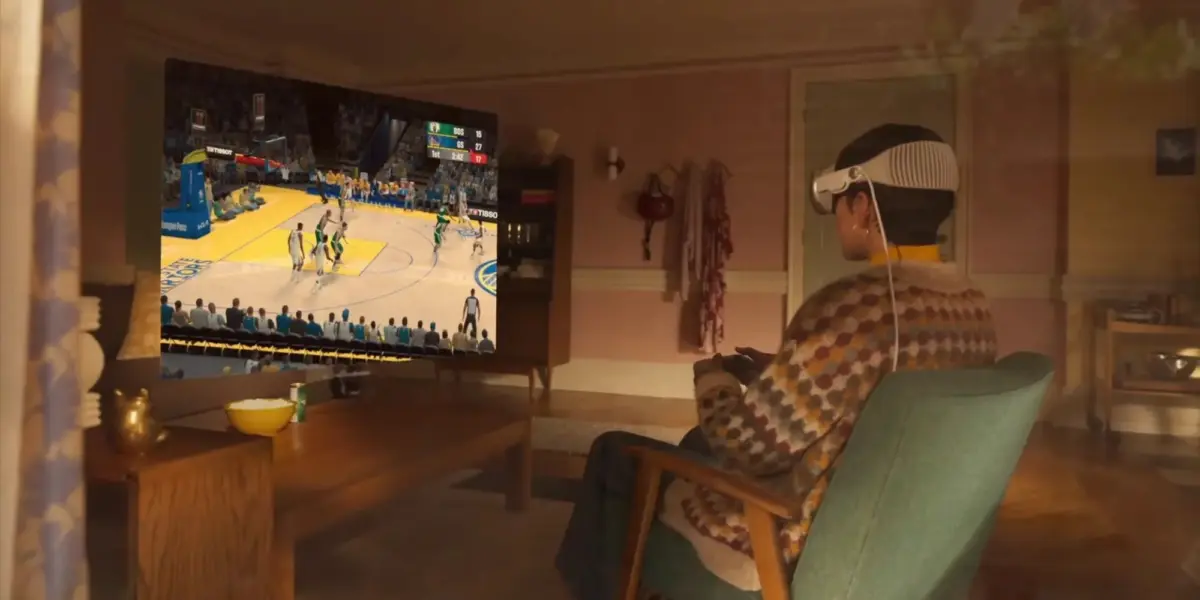
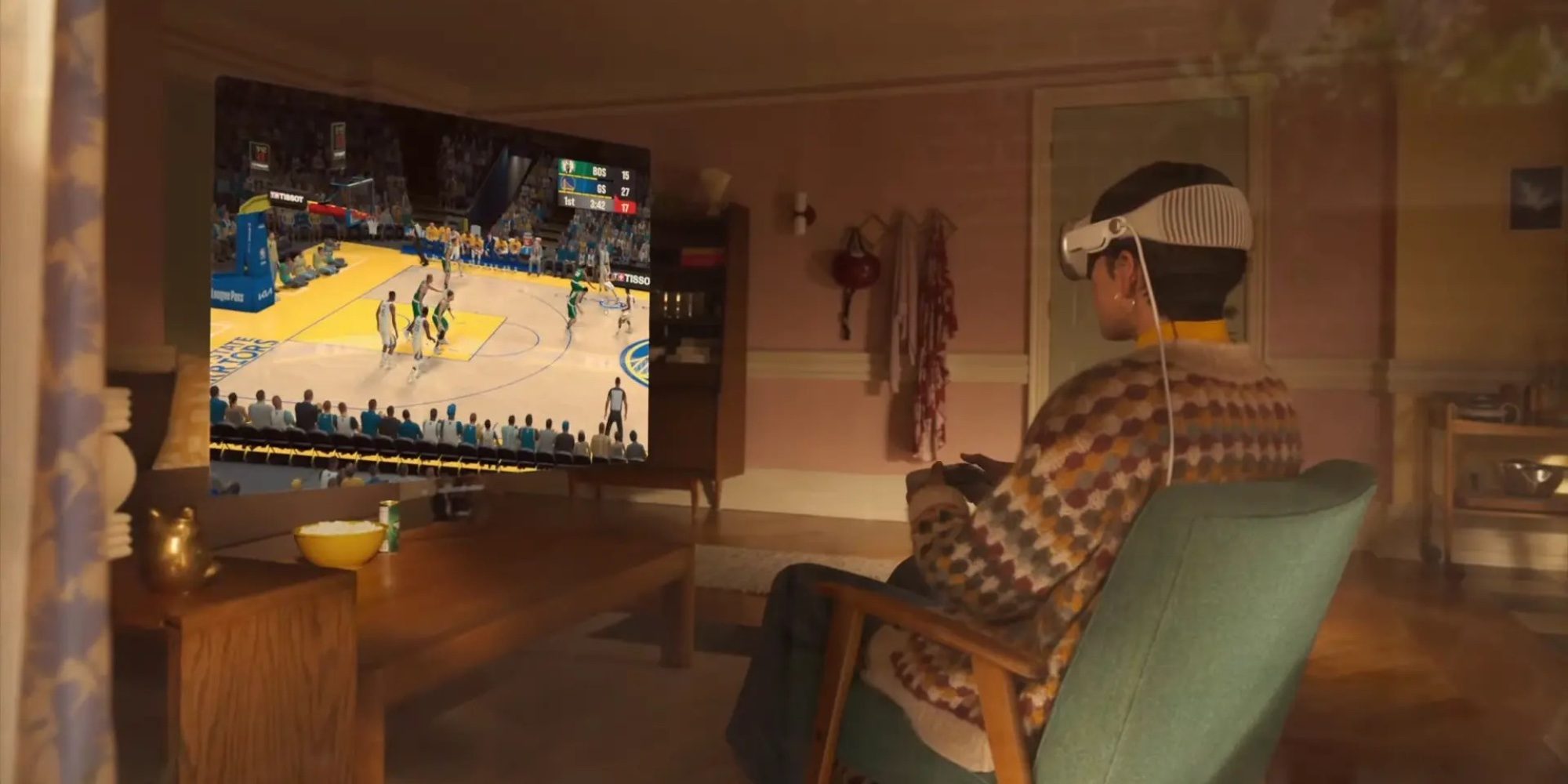
The logical next frontier for the protocol was spatial computing hardware. By targeting visionOS, Valve has closed the loop within the Apple ecosystem, ensuring that users can transition seamlessly from streaming games on their Mac or iPad to immersing themselves in a massive, theater-scale virtual screen hovering inside their living room via the Apple Vision Pro.
Supporting Context & Metrics: Performance and Specifications
Bringing high-end PC gaming to a spatial headset requires immense data throughput, ironclad network optimization, and meticulous rendering management. Valve’s initial technical documentation for the visionOS Steam Link beta outlines a robust feature set designed to meet these exacting demands.
Technical Specifications of the visionOS Steam Link Beta
- Resolution Support: The application is engineered to handle streaming resolutions of up to 4K, ensuring that players can leverage the near-4K per-eye resolution of the Apple Vision Pro hardware.
- Display Modalities: Users can experience their games in a massive, floating virtual monitor. A standout feature of the visionOS client is the inclusion of panoramic mode, which features dynamically adjustable display curvature to wrap the game interface naturally around the user’s field of view.
- Network Performance: Optimized network protocols minimize packet loss and round-trip latency, critical factors when transmitting high-bitrate video feeds over Wi-Fi networks to a head-mounted display.
- Content Scope: The client is explicitly built for 2D streaming only. It does not currently support native PC-VR titles (such as those designed for OpenXR or SteamVR headsets).
The Hardware and Network Prerequisites
To achieve an optimal experience with the Steam Link beta on visionOS, users must ensure their local infrastructure meets rigorous performance standards. Because the heavy computational lifting—rendering graphics, calculating physics, and processing audio—is handled by the host PC or Mac, the quality of the stream relies heavily on local network stability.
- Host Machine: A capable gaming PC or Mac running Steam, connected to the local network ideally via a wired Ethernet cable to minimize latency.
- Network Infrastructure: A high-speed Wi-Fi 6 or Wi-Fi 6E router is strongly recommended to handle the massive bandwidth requirements of 4K video streaming with minimal latency.
- Client Device: An Apple Vision Pro running a compatible version of visionOS, with the Steam Link TestFlight beta installed.
- Peripherals: Compatible game controllers, such as PlayStation DualSense, Xbox Wireless Controllers, or standard mouse and keyboard setups paired directly to the host PC or Apple Vision Pro depending on the input routing.
Official Statements and Industry Impact
The announcement has sent ripples through both the Apple and PC gaming communities, prompting commentary regarding the evolving relationship between closed architectural ecosystems and open distribution platforms.
Valve’s Official Release Notes
In the official Steam community announcement detailing the rollout, Valve highlighted the technical achievements of the new build:
"This update improves network performance, allows streaming up to 4K resolutions, and allows you to dynamically adjust the curve of the display in panoramic mode. This client is for 2D streaming only and does not support VR content."
This statement underscores Valve’s pragmatic approach to spatial computing. Rather than attempting an immediate, complex port of the entire SteamVR runtime architecture to visionOS—a task complicated by differing tracking systems, controller philosophies, and proprietary graphics APIs—Valve has chosen to focus on delivering a flawless, high-resolution 2D streaming experience. This allows millions of traditional flat-screen Steam games to become instantly playable on Apple’s hardware.
Industry Reception and Analyst Perspective
Industry analysts view the move as a mutually beneficial arrangement. For Apple, onboarding Steam Link addresses a persistent critique from hardcore gamers regarding the platform’s lack of AAA desktop gaming titles. Users who invest heavily in the premium Vision Pro hardware now have a frictionless method to access vast libraries of indie darlings, strategy epics, and cinematic action games without needing a physical television or a dedicated desktop monitor setup.

For Valve, the integration extends the reach of the Steam ecosystem deeper into emerging hardware categories. Even without native VR support in this initial phase, positioning Steam as the central hub for gaming entertainment within Apple’s spatial computing environment ensures that Valve remains the dominant storefront regardless of the physical form factor consumers choose to wear on their heads.
Future Outlook: What Lies Ahead for Spatial Gaming
As the Steam Link beta for visionOS undergoes rigorous testing and community feedback gathering via Apple’s TestFlight program, the tech world is already looking toward the horizon. The introduction of 2D streaming is widely perceived as a foundational stepping stone rather than the final destination for spatial PC gaming.
The Potential for Native VR Integration
The most prominent question circulating within developer forums and enthusiast communities is whether Steam Link on visionOS will eventually support VR content. Technical hurdles remain significant: Apple Vision Pro utilizes advanced outward-facing cameras and computer vision algorithms for inside-out tracking optimized for visionOS applications, while traditional PC-VR headsets rely on SteamVR-compatible runtimes, base stations, or specialized controller pairing protocols.
However, third-party developers have already demonstrated proofs-of-concept bridging PC-VR titles to the headset using specialized compatibility layers. Should Valve and the development community succeed in solving these integration challenges in future updates, the Vision Pro could theoretically morph into a high-end display client for full-fledged virtual reality masterpieces.
Enhancing the Spatial Experience Today
Even in its current 2D-only state, the Steam Link app redefines personal entertainment. Imagine sitting in a custom, immersive virtual environment—or your own living room with a transparent passthrough view—while a massive, curved 4K screen floats before you, rendering a complex strategy game or a fast-paced action title with pristine clarity.

For early adopters eager to test the boundaries of what their hardware can achieve, the beta is accessible right now. Users can join the evaluation phase by downloading the TestFlight application on their Apple devices and registering via the official Steam Link beta link provided by Valve.
As developers collect telemetry data, squash bugs, and fine-tune network stability over the coming months, the public release of the native visionOS Steam Link app will undoubtedly solidify the Apple Vision Pro’s status not just as a productivity powerhouse and media viewer, but as a remarkably versatile portal for the world’s most comprehensive PC gaming library.








Belum ada komentar. Jadilah yang pertama berkomentar!