

Executive Overview
The mobile gaming landscape is undergoing a structural evolution. For years, mobile esports enthusiasts and high-performance gamers have had to compromise: they either accept the ergonomic limitations and thermal throttling inherent to standard smartphones, or they invest in dedicated, bulky portable gaming consoles that lack cellular connectivity and daily-driver versatility. Infinix is moving aggressively to bridge this gap.
By expanding its specialized GT gaming portfolio beyond smartphones, the brand is introducing two high-performance hardware accessories designed to transform a compatible mobile device into a modular, multi-format powerhouse. The newly unveiled GT NX Controller and GT NX Station represent a calculated push into mobile accessory ecosystems, offering players console-grade inputs and desktop-class thermal and display capabilities.
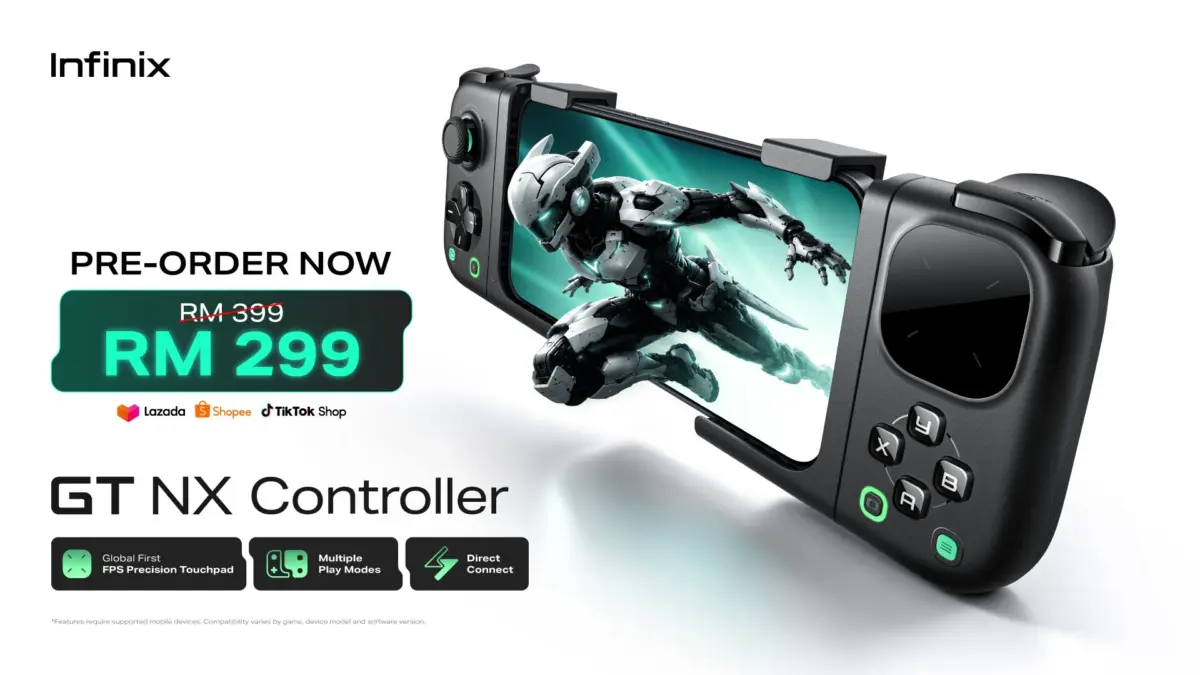
Currently available for online pre-order in Malaysia, these devices carry a recommended retail price (RRP) of RM399 each, paired with an enticing introductory promotional price of RM299. For consumers aiming to overhaul their entire mobile gaming setup in one fell swoop, Infinix has curated the GT NX Bundle starting from RM549. Following the initial online pre-order window, the hardware is slated to hit physical Infinix brand stores nationwide in early October 2026, subject to stock availability.
However, as mobile hardware converges with desktop productivity and console ergonomics, technical nuances—ranging from proprietary multi-chip architectures to stringent device compatibility lists—will dictate whether these accessories can successfully transcend the niche mobile hardware market.
Detailed Chronology & Market Rollout
The Evolution of the GT Ecosystem
Infinix’s sub-brand strategy has long focused on delivering high-refresh-rate displays, aggressive cyber-punk aesthetics, and optimized processors at aggressive price points. Until recently, this ambition was confined strictly to the chassis of its GT-series smartphones. Recognizing that intense processing loads during prolonged gaming sessions often result in battery degradation, uncomfortable thermal output, and imprecise touchscreen inputs, Infinix’s engineering divisions began developing a hardware ecosystem that decouples controls and thermal management from the phone itself.
Malaysian Launch Timeline and Pricing Structure
The rollout strategy for the GT NX ecosystem follows a tiered availability model designed to capture early adopters online before driving foot traffic to brick-and-mortar retail locations:
- Online Pre-Order Phase: Live now across official Malaysian e-commerce platforms, including Shopee, Lazada, and TikTok Shop.
- Pricing Tiers:
- Individual Accessories (GT NX Controller or GT NX Station): RM399 RRP, discounted to an introductory promotional price of RM299.
- GT NX Bundle (Both Accessories): Starting at RM549.
- Nationwide Retail Release: Early October 2026, rolling out across physical Infinix brand stores while supplies last.
While Infinix has not yet disclosed a definitive expiration date for the introductory RM299 pricing, market analysts note that promotional hardware windows typically span the pre-order phase and the first few weeks of retail availability. Prospective buyers are advised to verify active store listings and terms of service before finalizing purchases.
Deep Dive: Hardware Architecture & Engineering
GT NX Controller: Redefining Mobile Ergonomics and FPS Precision
Mobile first-person shooter (FPS) titles have historically suffered from a lack of tactile feedback, forcing players to obscure portions of their screens with thumbs or rely on imperfect on-screen virtual joysticks. The GT NX Controller addresses this pain point through a split gamepad design that physically clamps around a smartphone, adapting to various device dimensions.
The Glass Touchpad Innovation
The crown jewel of the GT NX Controller’s design is its large glass touchpad, engineered specifically to elevate precision in first-person shooters. Infinix characterizes this component as a "pixel-level FPS precision touchpad." Unlike standard thumbsticks that rely on continuous directional displacement, this touchpad accommodates rapid swipe gestures or can be toggled into a dedicated mouse mode. This dual-input approach affords players a granular method for crosshair placement and camera panning that mimics desktop mouse sensitivity without sacrificing the portability of a smartphone framework.
Processing Architecture and Multi-Configuration Versatility
Under the hood, input lag is mitigated by a sophisticated three-chip architecture distributed across the two controller halves. This localized processing power coordinates input transmission seamlessly, ensuring that response times remain competitive even in fast-paced multiplayer environments.
Furthermore, the controller features four-zone independent mapping. This software-level feature is targeted squarely at games that lack native controller support, allowing users to map physical inputs to specific on-screen touch areas. To maximize its utility, the hardware supports multiple deployment configurations:
- Phone-Clamp Configuration: The classic portable handheld console experience.
- Desktop Configuration: Used in tandem with external displays and docks.
- Single-Hand Configuration: For asymmetric gaming setups or casual media consumption.
Battery Longevity and Advanced Haptics
Power management on mobile controllers is critical. Infinix rates the internal battery of the GT NX Controller for more than 22 hours of continuous gameplay, comfortably outlasting most mobile phone batteries during heavy gaming sessions.
Tactile immersion is driven by customizable haptic feedback managed via Infinix’s proprietary XArena software. Users can cycle through three distinct haptic intensity levels. More impressively, the mapping mode can generate context-aware vibration cues synced to specific FPS game events. For instance, players might experience sustained, heavy feedback during an aircraft take-off sequence or parachute drop, contrasted with shorter, sharper pulses as the play zone shrinks in a battle royale scenario. Naturally, the execution of these haptic triggers remains contingent on game design, control modes, and underlying device software.
GT NX Station: The 9-in-1 Docking and Cooling Command Center
Mobile gaming processors frequently suffer from thermal throttling—automatically reducing clock speeds to prevent overheating during sustained loads. The GT NX Station is engineered to combat this phenomenon while transforming a smartphone into a fully fledged desktop workstation or console rig.
Comprehensive Connectivity and Thermal Management
Housed in a foldable 9-in-1 desktop chassis accented with customizable RGB lighting, the GT NX Station consolidates the functions of a desktop hub, a network adapter, and a heavy-duty cooling fan into a single unit. The port array includes:
- HDMI output port
- Gigabit Ethernet port (for low-latency, stable wired networking that bypasses congested Wi-Fi signals)
- Two USB-A ports
- USB-C host cable connection
- Additional USB-C data port
- USB-C Power Delivery (PD) input port (ensuring the phone stays charged throughout multi-hour sessions)
- MicroSD card slot
- 3.5mm audio jack
At the core of the station’s thermal strategy is a built-in thermoelectric cooler. By actively drawing heat away from the rear chassis of the phone, the system aims to sustain peak processing performance over extended periods. However, thermal physics dictate that actual temperature reductions and sustained performance gains will vary depending on the specific phone model, ambient room temperature, and system workloads.
Display Modes: Mirror vs. Extend
The GT NX Station supports dual display topologies:
- Mirrored Mode: Duplicates the smartphone screen directly onto the external monitor or television.
- Extended-Display Mode: A standout productivity and gaming feature. Extend mode allows the game to occupy the entirety of the external screen while liberating the smartphone display for secondary tasks—such as viewing interactive game wikis, managing in-game inventories, or replying to messaging apps. Alternatively, users can switch off the phone’s physical display entirely while docked to minimize power consumption and reduce localized heat generation.
Technical Specifications & Compatibility Matrix
While Infinix markets the GT NX ecosystem with broad strokes, prospective buyers must perform due diligence regarding device compatibility. Despite the universal framing often associated with USB-C peripherals, external video output and advanced software mapping are hardware-dependent.
| Feature / Metric | GT NX Controller | GT NX Station |
|---|---|---|
| Retail Price (RRP) | RM399 | RM399 |
| Introductory Price | RM299 | RM299 |
| Bundle Pricing | From RM549 (Combined with Station) | From RM549 (Combined with Controller) |
| Core Architecture | Three-chip split input architecture | 9-in-1 Foldable Docking Hub |
| Special Features | Glass touchpad, 4-zone mapping, 22hr+ battery | Thermoelectric active cooler, RGB lighting, Gigabit Ethernet |
| Software Integration | XArena (3-level haptics, event vibration cues) | XOS display management / DisplayPort protocol |
| Compatibility Requirements | Adjustable phone-clamp dimensions | Selected Infinix models (XOS 16.3+), native DP-out iOS/Android |
The Compatibility Caveat
External-display support and advanced software modes (such as Extended-Display mode) are not universally guaranteed across all USB-C smartphones. Infinix officially specifies that these advanced functions work seamlessly with:
- Selected Infinix smartphone models running XOS 16.3 or newer.
- Android and iOS devices that support native DisplayPort (DP) output over USB-C.
For other Android devices lacking native DP-out capabilities, third-party software drivers supplied through the dock may be required. Furthermore, utilizing the desktop output capabilities of the GT NX Station requires an external monitor or television equipped with a standard HDMI input.
Future Outlook and Market Implications
Infinix’s launch of the GT NX Controller and GT NX Station signals a broader maturation of the mobile gaming hardware market. For years, mobile gaming accessories were treated as afterthoughts—fragile Bluetooth controllers with generic button layouts or rudimentary clip-on cooling fans powered by basic micro-USB cables.
By introducing ecosystem-level hardware characterized by split-controller haptics, glass touchpads, thermoelectric cooling, and 9-in-1 desktop docking, Infinix is challenging traditional boundaries between mobile and fixed-platform gaming. If the GT NX ecosystem resonates with consumers in Malaysia and subsequent global markets, it could prompt competing smartphone manufacturers to invest more heavily in proprietary modular accessories.
Ultimately, the success of the GT NX series will hinge on software optimization, game developer adoption of multi-zone mapping profiles, and consumer willingness to embrace a hybrid mobile-desktop playstyle. As mobile silicon continues to approach the raw compute power of traditional entry-level desktop hardware, accessories like the GT NX Controller and Station may well transform smartphones from compromise gaming devices into the primary computing hubs of the modern gamer.



Belum ada komentar. Jadilah yang pertama berkomentar!