

Executive Overview
In the sprawling landscape of popular music culture, few phenomena are as enduring—or as fiercely debated—as the elaborate conspiracy theories constructed by devoted fanbases. From the persistent, albeit anatomically impossible, urban legend of Paul McCartney’s untimely demise and clandestine replacement in the Beatles, to the labyrinthine cipher-hunting surrounding modern alternative royalty, listener communities have long acted as amateur detectives. No group in contemporary rock has cultivated a more fertile breeding ground for this brand of speculative folklore than Radiohead.
Characterized by complex polyrhythms, abstract lyrical themes, and an aggressively reclusive public image, the British art-rock ensemble has spent over three decades crafting an enigmatic aura. This aesthetic canvas has invited followers to chase invisible threads across music videos, unearth clandestine audio backmasking, and posit the existence of unreleased, phantom albums.
Among the myriad fan-generated conjectures that populate forums and musicology blogs, none has achieved quite the mythical status of the Binary Theory. First conceptualized by journalist Kevin Flick shortly after the arrival of Radiohead’s seventh studio album, In Rainbows (2007), the theory posits a mathematical and narrative bridge connecting that record to the band’s 1997 monumental breakthrough, OK Computer. By reading the two albums as binary counterparts—where OK Computer represents "01" and In Rainbows represents "10"—proponents claim the records were engineered to be interleaved into a single, complementary twenty-one-track playlist.
This deep dive tests the structural integrity of the Binary Theory against musicological analysis, empirical data, and the band’s own amused evasions. Furthermore, it explores the broader socio-psychological mechanics of modern music marketing, investigating how scarcity, cognitive avoidance, and participatory fan culture transform listener imagination into a self-perpetuating promotional machine.
Detailed Chronology: Radiohead’s Enigmatic Evolution and the Birth of Fan Lore
To understand why fans are primed to uncover hidden architectures within Radiohead’s catalog, one must trace the band’s historical trajectory away from conventional rock stardom. Emerging from Abingdon, Oxfordshire, the five-piece found early, albeit reluctant, commercial success with their 1992 grunge-inflected anthem "Creep." However, global critical acclaim arrived with the 1997 release of OK Computer, a record that captured the rising anxieties of a hyper-technological, pre-millennial world.
Rather than capitalizing on stadium-sized stardom, the band executed a sharp left turn. Fleeing the pressures of traditional promotional cycles, Radiohead retreated into avant-garde electronic textures, jazz-infused polyrhythms, and ambient soundscapes with Kid A (2000) and Amnesiac (2001). This pivot cemented their reputation as a band that prized artistic obfuscation over accessibility.
Throughout this evolution, Radiohead’s visual and auditory output became synonymous with narrative ambiguity:
- The Mystery of "Just" (1995): The music video features a distraught man lying motionless on a London sidewalk, refusing to explain his actions to baffled onlookers. At the song’s climax, he whispers something to the gathering crowd, prompting every single bystander to lie down beside him. Director Jamie Thraves famously withheld the man’s final words, leaving the audience in permanent suspense.
- The Driverless Threat in "Karma Police" (1997): A lone man is pursued down a desolate highway by a speeding vehicle, only for the audience to realize at the final frame that the car is entirely driverless.
- Metrical Illusion and Pyramidal Math: On a strictly musicological level, Radiohead frequently employ rhythmic illusions. In "Pyramid Song" (2001), a veiled 4/4 time signature is masked by syncopated piano chords and a palindromic 3-3-4-3-3 rhythmic structure. Music theorist Brad Osborn has noted how this geometry physically mirrors the shape of a pyramid, complete with a transpositional nod to the legendary BACH musical cipher.
- Backward Messages and Hidden Booklets: Following the Beatles’ footsteps, Radiohead incorporated backmasking into tracks like "Daydreaming" (2016), where a reversed vocal snippet hints at themes of profound loss. Earlier, physical editions of Kid A featured a secret booklet hidden deep within the cardboard jewel case.
Against this backdrop of deliberate secrecy, the arrival of In Rainbows in October 2007 was met with unprecedented anticipation. Released via an innovative "pay-what-you-want" digital download model, the album stripped away conventional industry marketing. It was this atmosphere of disruption that birthed Kevin Flick’s Binary Theory, transforming a standard release into a cryptographic puzzle.
Supporting Context & Metrics: Deconstructing the Binary and Golden Ratio Theories
The architecture of the Binary Theory rests primarily on numerology and structural symmetry. According to Flick, the number ten permeates the In Rainbows rollout:
- The album announcement was allegedly preceded by nine cryptic, ungrammatical messages featuring the Roman numeral "X" (e.g., xendless xurbia).
- The album was officially announced on October 1, 2007, leaving fans precisely ten days until its October 10 release date.
- Rumors circulated that the initial digital distribution relied on exactly ten servers.
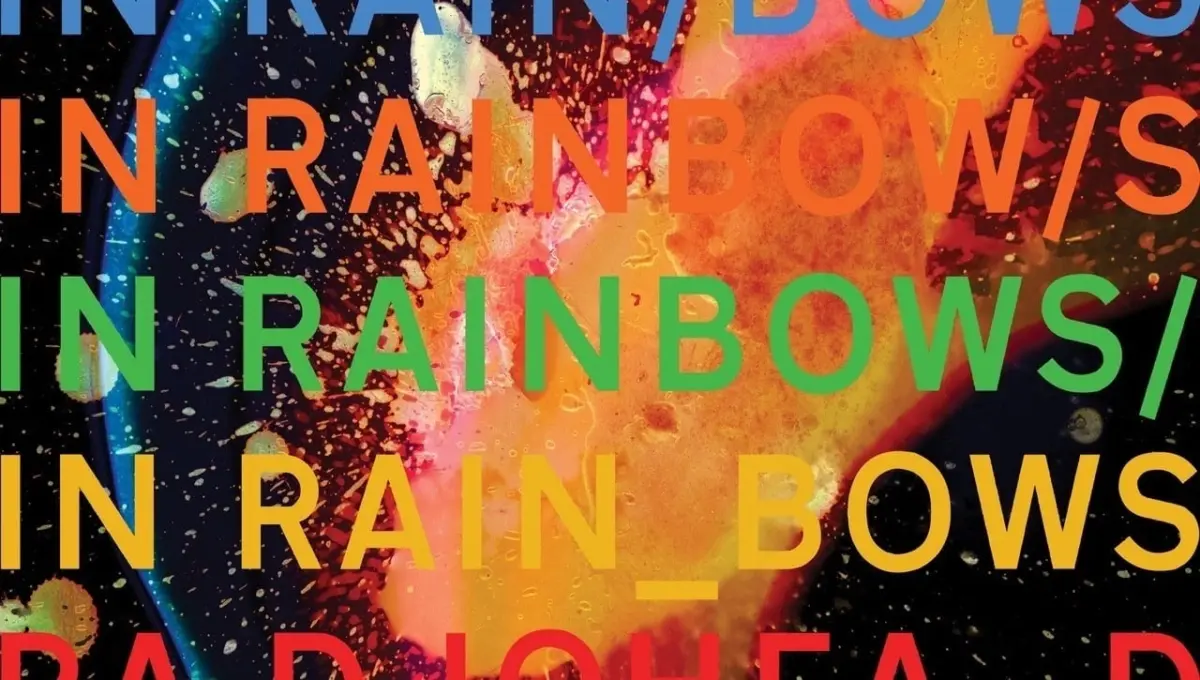
- The title In Rainbows contains ten letters; the typography on the cover art makes the letters "i" and "o" resemble the binary digits 1 and 0; and the tracklist comprises exactly ten songs.
By pairing OK Computer (representing "01") with In Rainbows (representing "10"), proponents built an alternating playlist that begins with OK Computer‘s opening track, "Airbag," and concludes with In Rainbows‘ closer, "Videotape."
When tested analytically, the playlist yields surprising moments of sonic synergy. For instance, the mechanical metronome beats leading into "15 Step" (track two of the hybrid playlist) pick up cleanly from the rhythmic fade of "Airbag." Similarly, the reverb-laden decay of "Subterranean Homesick Alien" provides a jarringly smooth transition into the ethereal opening of "Nude."
The Cracks in the Code
Despite these serendipitous alignments, the Binary Theory collapses under rigorous scrutiny:
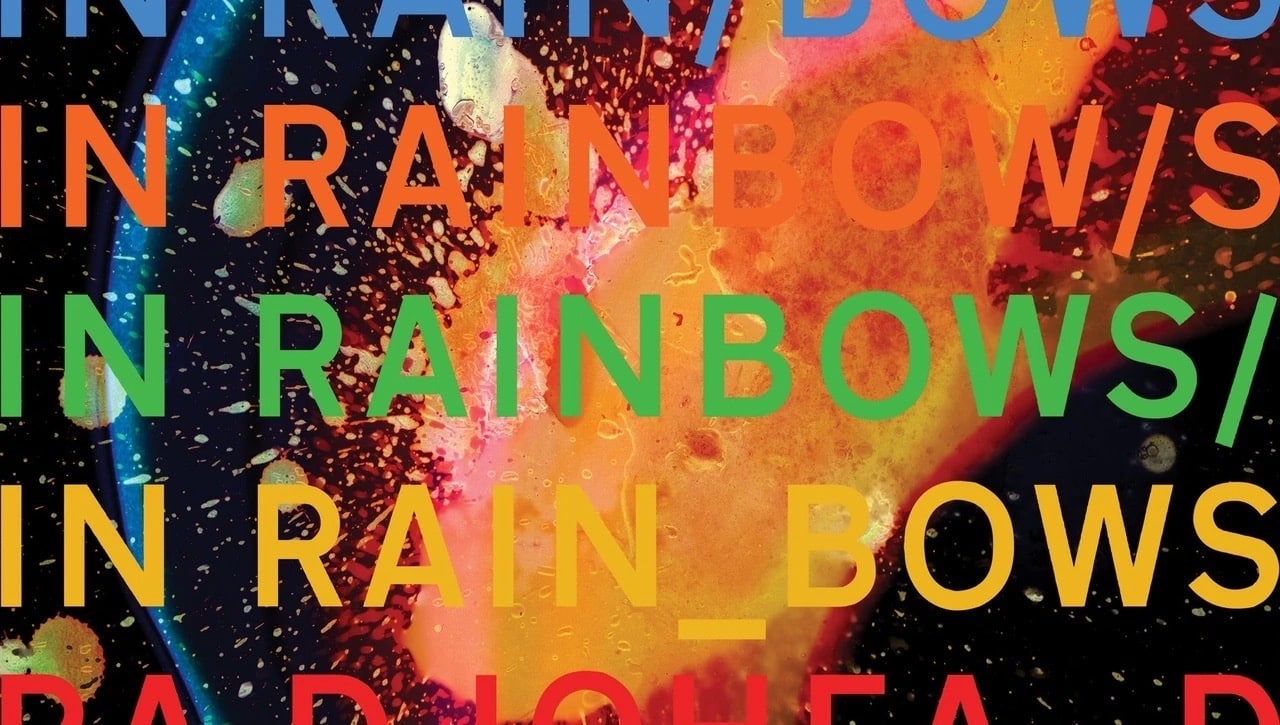
- The Track Count Discrepancy: Alternating the ten tracks of In Rainbows with the eleven tracks of OK Computer mathematically requires an uneven distribution. To make the sequence function without starting and ending on songs from the same album, theorists conveniently excise the spoken-word interlude "Fitter Happier" from OK Computer.
- Lyrical and Historical Voids: Aside from "Nude"—a song that originated during the OK Computer writing sessions but sat unfinished for a decade—there are no direct musical or lyrical allusions connecting the two records. Radiohead has a well-documented habit of recycling older material; tracks like "True Love Waits" and "Burn the Witch" remained in live rotation for decades before finding a home on A Moon Shaped Pool (2016).
- Factual Inaccuracies in the Data: Closer inspection reveals that Flick’s numerological claims are overstated. The original release dates (May 21, 1997, and October 10, 2007) do not align neatly, and archival checks of the early promotional campaign reveal eight cryptic images rather than the claimed nine.
As if to highlight the perils of numerical obsession, the Binary Theory is not even the only mathematical construct attributed to In Rainbows. A competing fan theory posits a link to the Golden Ratio ($phi$). Proponents claim that the title phrase "in rainbows" is whispered in the backing vocals of "Reckoner" at the exact temporal milestone matching the golden ratio of the album’s total duration (42 minutes and 39 seconds). While guitarist Ed O’Brien has publicly praised the poetic elegance of this coincidence ("It says that you get to the heart of the record right in the middle of ‘Reckoner’… which is true, but it wasn’t deliberately done like that, obviously"), it remains another monument to overactive listener imagination.
Official Statements: How the Band Reacts
Faced with elaborate fan conspiracies, Radiohead have consistently walked a tightrope between polite validation and deadpan mockery, rarely offering definitive closures.
When pressed about the validity of the Binary Theory in interviews, drummer Phil Selway offered a characteristically diplomatic, highly amusing dodge:
"I’m sure that there must be. No smoke without fire… I feel like the custodian of Radiohead secrets here."
Frontman Thom Yorke has been similarly playful, acknowledging the ingenuity of his followers while gently pulling back the curtain on fan fanaticism:
"There’s one about… ‘ten’ comes up a lot… Every time… I get asked about it, I say, ‘Oh, yes, absolutely! We thought of all that.’ Yes… [The fans are] usually slightly wrong… I think it’s nice that people are interested enough to come up with all these mad ideas."
These responses demonstrate a calculated refusal to demystify their work. By declining to issue flat denials, Radiohead preserves the air of mystery that fuels their cultural relevance.
Future Outlook: The Psychology of Enigmatic Marketing
How do these theories persist in the face of contradictory evidence and logical debunking? The answer lies at the intersection of cognitive psychology and modern music marketing.
Radiohead’s business strategy masterfully leverages principles identified by behavioral psychologists:
- The Principle of Scarcity (Robert Cialdini): Humans are inherently more motivated by the thought of losing access to something than by gaining something of equal value. By maintaining long gaps between album releases, withholding traditional press tours, and utilizing ephemeral messaging (such as the fictional character Chieftain Mews or mysterious postcards sent to fans), Radiohead creates a vacuum of information.
- The Paradox of Choice (Barry Schwartz): In an era where digital streaming platforms flood consumers with thousands of new tracks daily, choice overload breeds fatigue. Radiohead’s minimalist approach acts as an antidote to market oversaturation, driving listeners to focus intently on a curated few artists.
- The Rule of Reciprocity: By offering radical gestures—such as letting fans name their own price for In Rainbows or releasing free standalone singles like "Spectre" (2015)—the band fosters a profound psychological bond. Fans respond by investing emotional labor, transforming themselves from passive listeners into active participants who decode clues, compile playlists, and construct intricate lore.
- Social Identity Theory (Henri Tajfel): Belonging to an insular fan community that decodes complex puzzles provides individuals with a validated sense of self. Theories like the Binary Theory become pillars of identity, sustained by social proof and the psychological drive for consistency.
As Radiohead members focus on side projects—such as Thom Yorke and Jonny Greenwood’s critically acclaimed vehicle The Smile, which released three records in a rapid two-year span, alongside high-profile cinematic score work for films like Suspiria (2018) and One Battle After Another (2025)—talk of a full-scale Radiohead reunion remains speculative.
Yet, whether or not the band ever returns to the studio under the moniker, the mechanisms they set in motion are permanent fixtures of modern music culture. Fan theories like the Binary Theory may not survive strict academic or mathematical audits, but they accomplish something far more powerful: they bridge the gap between creator and consumer, turning the solitary act of listening into a communal, living mythology. In the world of Radiohead, the missing piece of the puzzle is never meant to be found—the joy has always been in the search.







Belum ada komentar. Jadilah yang pertama berkomentar!