

Executive Overview
DC Studios is branching out into uncharted territory, setting its sights on one of Batman’s most enduring, complex, and iconic rogues. According to industry reports, the studio has entered the early stages of development for a live-action Poison Ivy television series destined for HBO. While the project is still in its absolute infancy—currently lacking a dedicated writer’s room or a finalized showrunner—the behind-the-scenes scaffolding is already taking root.
Crucially, sources indicate that The Penguin showrunner and executive producer Lauren LeFranc is attached to executive produce the series, bringing her gritty, character-driven noir sensibilities back to the broader DC landscape. Unlike Matt Reeves’ isolated The Batman universe, this upcoming project is expected to plant its vines squarely within James Gunn and Peter Safran’s overarching, interconnected DC Universe (DCU).
This pivotal expansion marks a significant milestone for Pamela Isley. Despite reigning for decades as a staple of DC Comics, animation, and video games, Poison Ivy has historically been relegated to the silver screen sidelines or ensemble television arcs. A dedicated, prestige-format HBO series signals a monumental shift, promising to dive deep into the eco-terrorist’s complex evolution from radical scientist to beloved anti-hero and cultural icon.
Detailed Chronology: The Evolution of Pamela Isley
To understand the weight of a standalone Poison Ivy series, one must trace the botanical villain’s rich history across page, screen, and shifting cultural tides.
The Comic Book Origins (1966–Present)
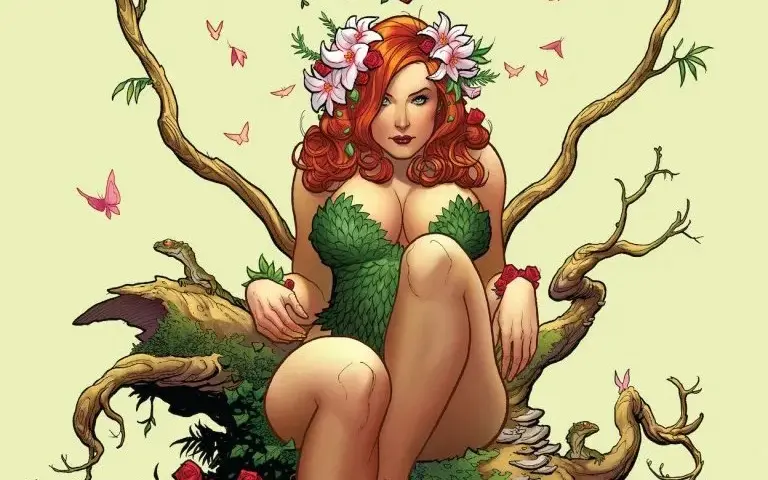
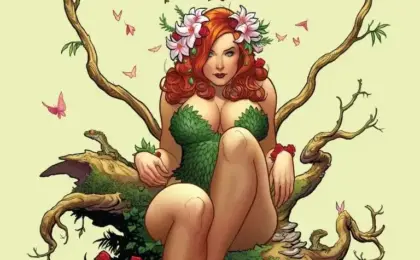
Created by writer Robert Kanigher and artist Carmine Infantino, Poison Ivy first made her debut in Batman #181 in June 1966. Originally introduced as a glamorous, eco-obsessed botanical fanatic operating out of Seattle before moving to Gotham City, Pamela Isley was a brilliant botanist whose life changed forever following a catastrophic betrayal. Seduced and poisoned by a colleague—or transformed by a lab accident involving experimental toxins, depending on the continuity iteration—Isley developed an immunity to all plant toxins, fungi, and bacteria, alongside a severe physiological mutation. Her skin turned a chlorotic green, and her body began exuding intoxicating pheromones that granted her absolute control over plant life and the ability to seduce or kill with a single kiss.
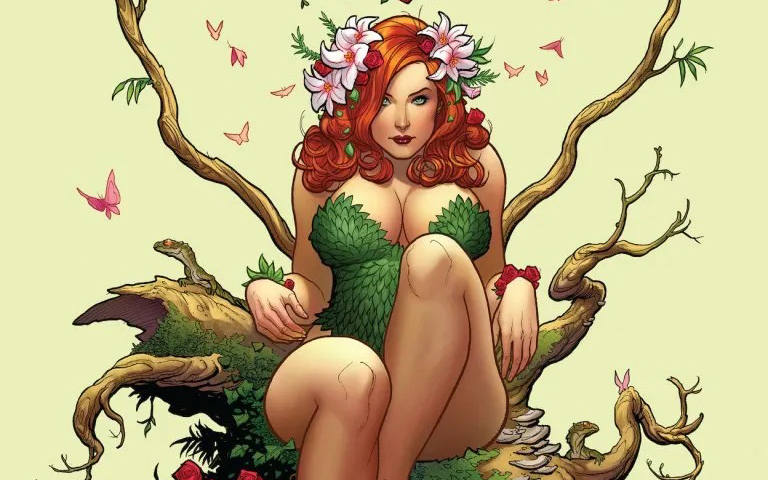
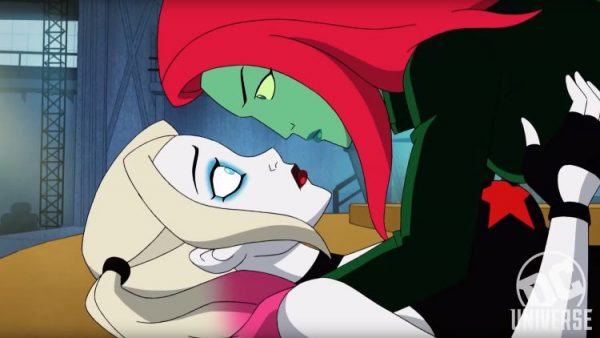
Over the decades, Ivy’s motivations transformed from standard comic book villainy into a terrifyingly logical crusade. Her radical ecoterrorism sought to violently punish humanity for the destruction of the natural world. However, modern storytelling has elevated her past simple criminality. In recent years, her narrative arc has transitioned into an anti-heroic journey, most notably defined by her complex, deeply affectionate romantic relationship with Harley Quinn. Together, "Harlivy" has blossomed into one of the most celebrated, popular, and culturally significant queer couples in modern comic book history.
Adaptation History: From Silver Screen to Television
Despite her towering status in pop culture, Poison Ivy’s live-action translation has experienced a rocky path:
- The Big Screen: Ivy has only crossed over to major theatrical films once. In 1997, Uma Thurman famously breathed theatrical, campy life into the character in Joel Schumacher’s polarizing Batman & Robin. Thurman’s portrayal leaned heavily into a retro-vamp, eco-goddess aesthetic, complete with theatrical monologues and lethal botanical traps.
- Live-Action Television: On the small screen, the character has been adapted in various capacities. Clare Foley, Maggie Geha, and Peyton List each played different iterations of Ivy Pepper across the FOX prequel series Gotham. Meanwhile, Bridget Regan brought a live-action, leather-clad menace to The CW’s Batwoman.
- The Animated Renaissance: Animation has historically treated the character with far more reverence and narrative depth. Diane Pershing defined the quintessential, sultry, and intellectual iteration of the character in Batman: The Animated Series and across the broader DC Animated Universe (DCAU). More recently, Lake Bell took over the role in HBO Max’s critically acclaimed, foul-mouthed adult animated series Harley Quinn. Bell’s performance, paired with Kaley Cuoco’s Harley, brought their romance to the forefront of a mainstream Batman-adjacent narrative for the very first time, skyrocketing the character’s mainstream popularity.
Supporting Context & Metrics: Where Poison Ivy Fits in the New DCU
The announcement of a Poison Ivy series arrives at a pivotal juncture for Warner Bros. Discovery and DC Studios. As co-CEOs James Gunn and Peter Safran methodically build their new multi-platform DCU, the strategy relies heavily on balancing foundational heroes with prestige character studies.
The DCU Landscape
While the theatrical slate is still finding its footing—highlighted by high-profile releases like Superman, Supergirl, and the recent cinematic exploration of Clayface—the television arm has proven to be an equally vital testing ground.
If Poison Ivy receives an official greenlight from HBO, it will join an increasingly robust roster of live-action and animated DCU television projects:

- Peacemaker: The continuation of James Gunn’s raucous, character-driven anti-hero showcase.
- Lanterns: The gritty, space-faring procedural that recently concluded its critically lauded first season.
- Creature Commandos: The animated vanguard of the new DCU continuity.
- Mister Miracle: Additional prestige projects currently moving through development pipelines.
The HBO Advantage and the Lauren LeFranc Factor
Placing Poison Ivy at HBO—as opposed to a broadcast network or a broader streaming tier—is a massive indicator of tone. HBO has long been synonymous with high-end, morally gray character studies (e.g., The Sopranos, The Wire, Succession, and more recently, DC’s own The Penguin).
The involvement of Lauren LeFranc as a producer is perhaps the most promising indicator of the show’s potential direction. LeFranc earned widespread critical acclaim for her work as showrunner and executive producer on The Penguin, a series that proved Warner Bros. is willing to let creators strip away superhero tropes to focus on raw, grounded, character-driven crime dramas. Applying that same uncompromising, psychological depth to Pamela Isley—a scientist driven to radicalization by corporate greed and environmental collapse—presents a tantalizing creative prospect.
Official Statements and Industry Insights
While Warner Bros. Discovery has yet to drop an expansive press release outlining plot details, casting, or release windows, entertainment journalism heavyweights like Deadline have shed light on the early corporate maneuvers.
Industry analysts note that DC Studios is deliberately keeping its cards close to its chest regarding the overarching structure of the series. Because the project is currently in the earliest stages of development, executive discussions are centered primarily on nailing down the precise tonal baseline. Will the show lean heavily into psychological thriller territory, examining Isley’s descent into eco-terrorism? Or will it chart a high-stakes, morally ambiguous romantic narrative that brings her partnership with Harley Quinn into live-action continuity?
Publicly, fans and creators alike have taken to social media to celebrate the prospect of a live-action reclamation for the character. The overarching sentiment within the comic community is that Poison Ivy has long deserved a platform that honors her intellectual brilliance, philosophical motivations, and emotional complexity, rather than reducing her to a one-dimensional femme fatale.
Future Outlook: What Lies Ahead for Gotham’s Botanical Terrorist?
As DC Studios continues to piece together its ten-year roadmap, the inclusion of Poison Ivy signals an intentional pivot toward spotlighting dynamic, complex female anti-heroes.
Immediate next steps for the project will involve securing a lead writer and officially opening a writers’ room to hash out the series bible, episodic arcs, and seasonal mythology. Should the script drafts meet the stringent quality thresholds set by Gunn, Safran, and HBO executives, a formal series greenlight could follow before the year is out.
Furthermore, fans will inevitably speculate on how this live-action Ivy will intersect with the broader DCU. With the theatrical slate pushing forward—including the upcoming Superman sequel, Man of Tomorrow, starring David Corenswet and Milly Alcock—the universe is rapidly expanding. Whether this version of Pamela Isley will eventually cross paths with other Gotham-based characters, or if she will carve out an entirely isolated, prestige crime-drama niche on HBO akin to Gotham’s dark underbelly, remains one of the most exciting questions in modern franchise media.
One thing is certain: the seeds have been planted. If handled with the same gritty prestige that defined The Penguin, DC’s Poison Ivy series could blossom into one of the most compelling comic book adaptations of the decade.





Belum ada komentar. Jadilah yang pertama berkomentar!