

Executive Overview
In the sprawling landscape of popular music culture, few phenomena rival the cultural longevity of an elaborate fan conspiracy. While the Beatles’ legendary “Paul Is Dead” myth remains the undisputed apex of rock-and-roll urban legends—handicapped only by the stubborn survival of Paul McCartney himself—other British bands have cultivated similarly fertile ground for listener-generated mythology. None, however, have mastered the architecture of mystery quite like Radiohead.
For over three decades, the Oxford-formed alternative rock outfit has woven an intricate web of enigmatic imagery, cryptic marketing campaigns, avant-garde sonic structures, and abstract lyricism. From hidden messages tucked away in music videos to the persistent rumor of unreleased secret albums, Radiohead’s fanbase has treated the band’s entire oeuvre as a vast, interactive puzzle box.
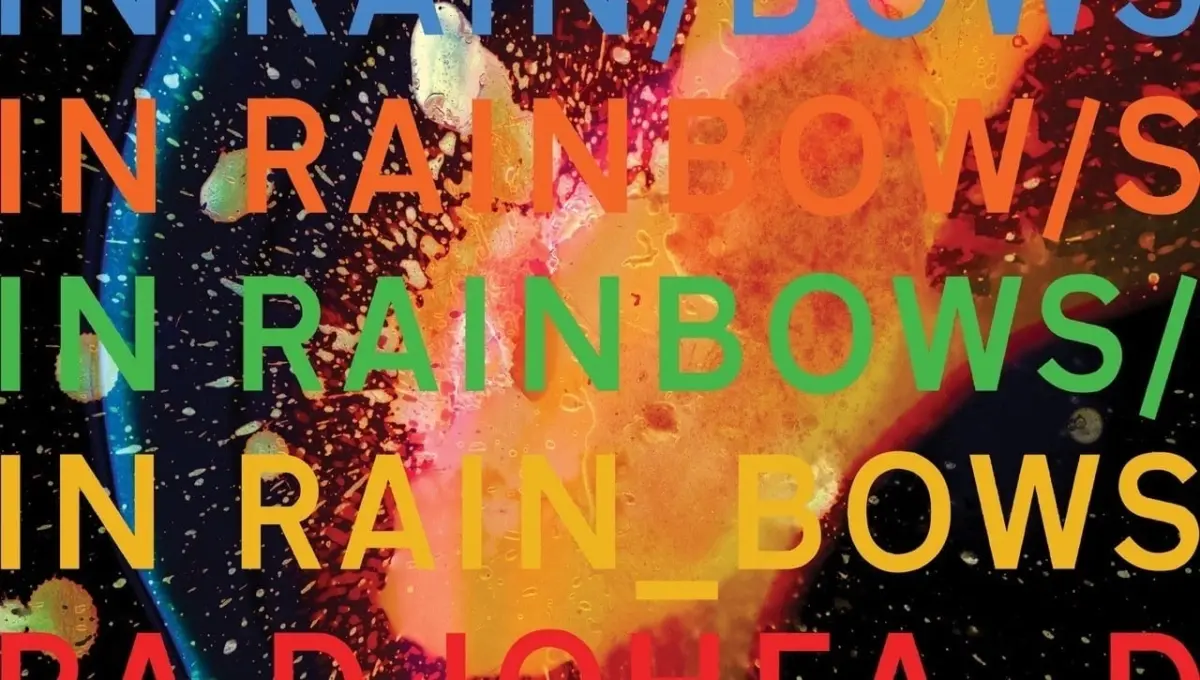
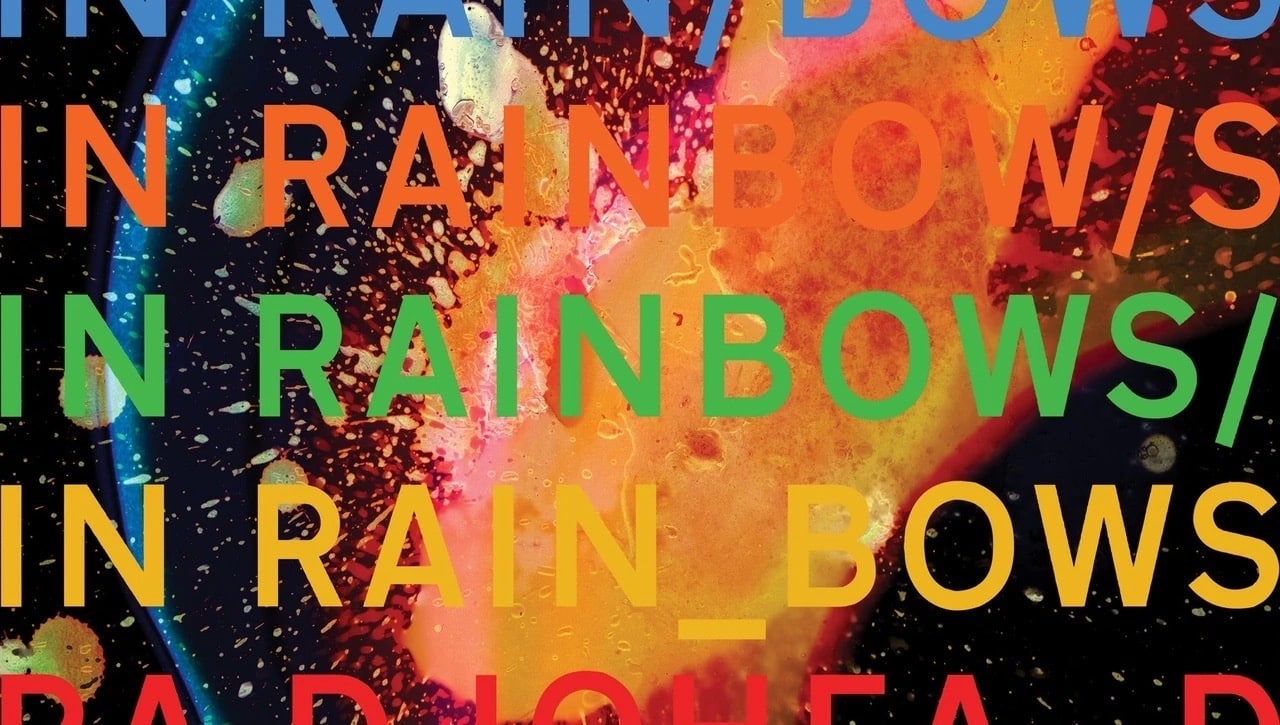
Among the countless theories generated over the years, the "Binary Theory" has emerged as one of the most compelling and rigorously debated. First proposed shortly after the 2007 release of Radiohead’s landmark seventh album, In Rainbows, the theory argues for a profound, structural link between that record and the band’s 1997 masterwork, OK Computer. According to its proponents, the two albums—released exactly a decade apart—are binary counterparts (01 and 10) designed to be interleaved into a single, seamless, alternating playlist.
This article follows the proverbial breadcrumbs down the rabbit hole, examining the structural mechanics of the Binary Theory alongside competing hypotheses like the "Golden Ratio" model. More broadly, it investigates why such theories persist in the face of contradictory evidence, analyzing how Radiohead’s unique approach to independent music marketing, consumer psychology, and participatory culture inadvertently fuels the fires of modern musical folklore.
Detailed Chronology: From OK Computer to the Birth of a Theory
To understand the mechanics of the Binary Theory, one must retrace the historical trajectory of Radiohead’s output, specifically the decade separating their commercial breakthrough from their radical indie evolution.
The 1997 Paradigm Shift: OK Computer
Following early commercial success with their 1992 grunge-pop breakout single "Creep," Radiohead famously retreated from mainstream expectations. In May 1997, they released OK Computer, an album that signaled a seismic shift in alternative rock. Marrying anxious, dystopian lyrics about modern technology and alienation with sprawling, complex arrangements, the record achieved global critical acclaim and commercial dominance. It was during this era that the band toyed with numerical concepts; the album’s working title was reportedly Ones and Zeroes, a direct nod to the foundational binary code that underpins computing.
The Wilderness Years and Digital Disruption
Over the subsequent decade, Radiohead doubled down on abstraction. Albums like Kid A (2000) and Amnesiac (2001) eschewed traditional single releases in favor of cryptic animated "blips" and hidden CD booklet art. When the band finally fulfilled its major-label contract with EMI in 2005, they seized absolute artistic and financial autonomy.
This freedom culminated in the shocking, unannounced rollout of In Rainbows in October 2007. Distributed primarily as an online download using an unprecedented "pay-what-you-want" pricing model, the album bypassed traditional promotional windows entirely. It was praised for its stripped-down, organic warmth, yet it retained the band’s signature rhythmic illusions and numerological quirks.
The Genesis of the Binary Theory
Shortly after In Rainbows hit the digital ether, journalist Kevin Flick published an analysis on the blog Puddlegum that galvanized the fanbase. Flick posited that OK Computer (representing binary "01") and In Rainbows (representing binary "10") were conceptually linked by a pervasive obsession with the number ten.
According to Flick’s initial framing, the album’s release was preceded by a series of cryptic digital communications and countdowns, culminating in a ten-day warning before its October 10 release date. By alternating the tracklists of both albums—starting with OK Computer’s opening track, "Airbag," and concluding with In Rainbows’ closing track, "Videotape"—supporters claimed listeners could unlock a unified, thirty-track master composition.
Supporting Context & Metrics: Examining the Evidence
When subjected to casual listening, the interleaved "Binary Playlist" works with eerie, uncanny precision. For instance, the mechanical metronome beats that bridge OK Computer’s "Airbag" into In Rainbows’ opening track, "15 Step," establish a seamless rhythmic continuity. Similarly, the reverb-laden fadeouts connecting "Subterranean Homesick Alien" to "Nude" offer moments of startling sonic synergy.
However, a rigorous investigative audit reveals significant discrepancies:
- The Tracklist Mismatch: OK Computer features 11 tracks (including the spoken-word interlude "Fitter Happier"), while In Rainbows contains exactly 10. To force a clean alternation, theorists must conveniently excise "Fitter Happier" from the equation, sacrificing mathematical purity for structural convenience.
- The Numerological Mirage: Flick’s claims of precisely nine or ten pre-release promotional messages collapse under scrutiny; archived links reveal only eight cryptic images, none of which featured the specific "xendless xurbia" phrasing cited in the original blog post. Furthermore, the album title In Rainbows appears only seven times across the original physical artwork, falling short of the required numerological ten.
- The Absence of Direct Allusions: While Radiohead is known for recycling musical motifs—such as lifting the outro chord progression of OK Computer’s "Paranoid Android" for 2001’s "Knives Out"—In Rainbows contains no explicit musical or lyrical nods to its predecessor. Although "Nude" originated during the 1997 OK Computer sessions, Radiohead frequently incubates songs for decades before official release (as seen with A Moon Shaped Pool tracks "Burn the Witch" and "True Love Waits").
The Golden Ratio Contender
As if one elaborate mathematical framework were insufficient, a competing fan theory emerged linking In Rainbows to the divine proportions of the Golden Ratio ($phi$). Theorists pointed out that the spoken vocalization of the album’s title within the track "Reckoner" occurs precisely at the structural midpoint of the album’s runtime, aligning with mathematical perfection. Although guitarist Ed O’Brien admitted in interviews that the alignment was entirely accidental ("I love that… but it wasn’t deliberately done like that, obviously"), the Golden Ratio theory remains mathematically cleaner—and therefore more seductive—than its binary counterpart.
Official Statements and Artist Responses
How do the members of Radiohead react when confronted by decades of intricate fan conspiracies? Consistently, their responses oscillate between bemused detachment, deadpan humor, and diplomatic ambiguity.
When directly questioned about the validity of the Binary Theory, drummer Phil Selway offered a characteristically wry appraisal:
"I’m sure that there must be. No smoke without fire… I feel like the custodian of Radiohead secrets here."
Frontman Thom Yorke has similarly leaned into the comedic absurdity of the phenomenon, noting in interviews:
"There’s one about… ‘ten’ comes up a lot… Every time I get asked about it, I say, ‘Oh, yes, absolutely! We thought of all that.’ Yes… [The fans are] usually slightly wrong… I think it’s nice that people are interested enough to come up with all these mad ideas."
Rather than offering outright debunks that might alienate their devoted following, Radiohead’s leadership prefers to preserve the mythos. Their calculated coyness ensures that the conversation remains alive, functioning as a perpetual motion machine of organic public relations.
Future Outlook: The Psychology of the Riddle
Why do intelligent music lovers persist in constructing elaborate narratives when tangible proof is entirely lacking? The answer lies at the intersection of cognitive psychology, social identity theory, and modern music marketing.
1. The Psychology of Scarcity and Paradoxical Choice
As marketing scholar Robert Cialdini outlines in his foundational text Influence, human decision-making is heavily dictated by the "principle of scarcity"—we inherently place higher value on information or items that feel exclusive or difficult to obtain. In an era defined by digital oversaturation—where thousands of new tracks flood streaming platforms daily—Radiohead’s deliberate withholding of information acts as a powerful antidote to choice fatigue (what Barry Schwartz famously termed "the paradox of choice"). By retreating from conventional promotion and offering sparse, cryptic communications via fictional entities like "Chieftain Mews," the band trains its audience to dig deeper.
2. The Rule of Reciprocation and Participatory Culture
Radiohead has consistently rewarded fan engagement through participatory initiatives: releasing audio stems for The King of Limbs to encourage community remixes, hosting fan-art video contests for In Rainbows, and scattering physical newspapers like Universal Sigh across global metropolitan outposts. Cialdini’s "rule of reciprocation" suggests that when an artist offers unconventional value—such as a pay-what-you-want album release—fans feel a psychological obligation to repay that gesture through intense emotional investment, community-building, and obsessive analysis.
3. Social Identity and Continuity Theory
Drawing from Henri Tajfel’s social identity theory, a fan’s personal sense of self is deeply intertwined with their group memberships. Participating in online forums to decode the Binary Theory or trace numerological patterns transforms passive listening into an active tribal ritual. According to continuity theories of aging and identity, maintaining these long-term attachments to a cherished artistic community provides a stabilizing anchor of self-consistency across decades of life.
Conclusion
Ultimately, the Binary Theory does not survive rigorous academic or empirical scrutiny. It is an artifact of overactive fan imagination, sustained by the human brain’s innate tendency to seek out patterns where none were intentionally sown.
Yet, to dismiss these fan theories as mere delusion is to misunderstand their cultural function. For Radiohead, these intricate myths operate as a brilliant, zero-budget, self-perpetuating marketing engine. For the fans, they provide a profound sense of cognitive pleasure, communal belonging, and a rare opportunity to co-create meaning with an otherwise reclusive art-rock institution. As long as artists continue to weave ambiguity into their work, listeners will gladly pick up the thread—happily losing themselves down the rabbit hole, waiting for the next jigsaw piece to fall into place.








Belum ada komentar. Jadilah yang pertama berkomentar!